Eileen

‘You’re very different these days. You’re almost interesting.’

Based on Ottessa Moshfegh’s 2015 novel of the same name, the eponymous Eileen (Thomasin McKenzie) lives something of a lonely half-life in 1960s New England, USA. She wakes, she goes to work at the local prison, buys alcohol for her ex-cop father (Shea Whigham) and lives vicariously through her daydreams – until the glamorous and captivating Rebecca (Anne Hathaway) arrives, changing everything. Eileen quickly falls under her spell, but is the new-found freedom Eileen is experiencing also fraught with the possibility of danger?

This is William Oldroyd‘s follow up to his 2016 directorial debut Lady Macbeth, which introduced the world to Florence Pugh and there’s definitely parallels between the two films. Both films have women at the centre who are trapped and confined by the expectations of their respective time period. They yearn to feel something that they ‘should’ consider wrong, contemplating illicit means to finally fulfil that innate desire they crave. Their sense of despair may as well be an additional character. Whereas Lady Macbeth is set in 19th century rural England, many of the same constraints present themselves in Eileen’s existence in 1960s New England. Although she in her early 20s, she has simultaneously been forced into being older, near enough a carer to her no-longer working alcoholic father, yet has also been infantilised by the rigid and intrusive attitudes of her small-town life.

McKenzie plays these contradictory depths with aplomb, a wonderous mix of unknowable and inscrutable yet ultimately transparent. Eileen’s motivations are clear, but her actions to achieve them are unpredictable, as if she herself is uncertain of the extents she will go to just to feel something. Having spent a life being unperceived, Rebecca’s gaze is both hypnotic and euphoric. Moshfegh named the character after the unseen yet powerful eponymous figure in Daphne du Maurier novel and Alfred Hitchcock’s 1940 adaptation. In Rebecca she has died prior to the story starting, yet she her hold and power over the household remains – they continue to be shackled to her wants and ways. It’s true of her namesake, Hathaway’s Rebecca is in less of the film as you may expect – but she lingers beyond the frame, just as she lingers within Eileen’s mind, upending all she has known before.

Oldroyd and writer Luke Goebel, who adapted the story with Moshfegh, are successful at establishing the inner life of Eileen and making the viewer unwittingly complicit in her twisty tale of obsession. Together they navigate both tonal shifts and irregular pacing that would otherwise induce whiplash and a blurring of reality & fantasy they make every next step uncertain. Where the film struggles is in maintaining this throughout, what starts out initially as intriguing ultimately becomes frustrating in it’s noncommittal unknowability. The consistent use of dream sequences reduce the impact of an outrageous final act, as we wait to discover if it too really happened.

The result is an unsettling feel-bad almost-psychological thriller with gothic undertones, driven by two stunningly sensuous performances by actresses at the height of their powers.

[3.5/5 stars]

Eileen is in UK cinemas from Friday 1st December.

Wish

‘Introverts deserve sanctuary!’

It’s been 100 years since Walt Disney and his brother, Roy, signed an agreement to produce an animated series called Alice Comedies. In 1928, Steamboat Willie came along – introducing the world to both Mickey Mouse and animation being screened in a cinema with synchronised sound. In 1937 they released their first feature film, Snow White and the Seven Dwarves. And the rest, as they say is history. To mark their centenary they’ve made a film, their 62nd feature film, celebrating their history with a very literal look at what happens when dreams & wishes do or don’t come true. Suffice to say, Disney have a lot riding on this one.

Life in the Kingdom of Rosas is a pretty sweet deal. Founded by King Magnifico (Chris Pine) and his wife Amaya (Angelique Cabral), he uses his sorcery to protect his citizens from harm. All he asks for in return is that, on their 18th birthday, each person must hand over their wish – their heart’s truest desire. He protects these wishes in his tower, each month granting a different wish as a sign of his great leadership and benevolence. Asha (Ariana DeBose) is 17 years old and is desperate to be the King’s newest apprentice, but during her training she quickly realises all is not well and will do all she can to stop it.

The biggest problem that Wish has is that it is fine. It’s neither amazingly good, nor is it bad by any stretch of the imagination. It’s a pass. Nice. All-right. A-Okay. It does relatively well with balancing nods to the past with some lovely little Easter Eggs along the way. There’s a couple of good gags for all ages. It’s heroine is very likeable, endearing, funny and kind. The ensemble cast is great and the supporting characters memorable. The songs vary between solid to ear-worm potential. The animation style is unique, maybe slightly-off if we’re being honest, but there’s beauty within it.

It’s just. That’s it. It does the job, no more and no less. There’s nothing superlative about it, which feels a bit sad for something that is being pitched as so monumental. But perhaps that’s where the problem lies, the weight of expectation, purpose and meaning weighs every moment down. It’s been robbed from being a film in it’s own right, instead it is a self-appointed monument to the studio’s legacy. This feels more content than movie. They’ve simultaneously followed the formula whilst having also metaphorically plastered ‘This is significant!’ across the screen in bright, flashing lights. Never is this more felt than during at least two of the musical numbers, which both have a subsequent pause that seems almost expectant, if not even demanding of applause – a la a live theatrical performance. I mean, the songs are good. But they’re not *that* good…

Wish doesn’t necessarily shine incandescently, but there’s enough of a glow that it’s worth giving a go. [3/5 stars]

Wish is in UK cinemas from Friday 24th November.

May December

‘My love, I think about you all the time.

The premise behind May December is one that feels so obvious and yet is rarely ever depicted, what happens after the headlines? When you’ve been exposed, your life laid bare in the media, your personal life and choices reduced to scandal other people consume over their breakfast – what comes next?

Loosely inspired by a true story, that of Mary Kay Letourneau, we meet Gracie (Julianne Moore) twenty years after she was imprisoned for her love affair to her now-husband Joe (Charles Melton). That’s how she views it. In actuality, she was then a married woman in her 30s and he was 13 years old. An actress, Elizabeth (Natalie Portman), has come to visit them as she’s going to play Gracie in an adaptation of her life and she wants to research them. Forced to revisit their past, uncomfortable and potentially catastrophic tensions form between the trio.

This is a Todd Haynes joint through-and-through. It’s scandalous, precise and oft-uncomfortable – with Samy Burch‘s script is packed full of biting one liners and social critique that the characters seem blithely unaware of.

Timely in its arrival – as we continue, on a societal level, to do some much needed scrutiny of relationship dynamics of our recent and not-so-recent past. Gracie is oblivious to her role, both then and now, as predator; adamant that she was the seduced and not the seducer, she refuses to accept any blame or acknowledge any harm she caused. This is reinforced by a small but impactful supporting turn by Cory Michael Smith, who plays her son from her first marriage, who is the exact same age of her husband in her second marriage. He is now an agent of chaos, traumatised by his mother’s actions, almost frozen-in-time in behaviour and lifestyle choices. A sequence in the film, in a restaurant where both of Gracie’s family collide it wincingly delicious to watch.

That’s also the perfect way to describe Moore’s incredible performance here. Her Gracie is, quite rightly, irredeemable and Moore fully embraces this. She’s self-obsessed, unable to care about others and unaccepting of any other narratives but her own. Her frenemy dynamic with Portman’s invading actress is such a joy to watch play out, both actress at their height of their respective powers. It’s like something out of a nature documentary, they eye each other warily, uncertain of the threat that awaits and ready to fight when the first blow lands.

Melton is an unexpected wonder as Joe. It’s a difficult role which he plays with careful aplomb. His Joe was forced to grow up far too long, manipulated by someone older – yet, decades on, still viewing it as love instead of abuse – he is incredibly lost. His interactions with his children, all three now-older than he was when he first met their mother, are as subtle as they are achingly profound.

May December is lightly told yet packed full of punch; intimately profound, bitterly funny and bitingly sad. An essential watch. [4.5/5 stars]

May December will be in UK cinemas on 17 November and Sky Cinema from 8 December 26.

Chasing Chasing Amy

‘Life’s not about finding your heroes, it’s about finding yourself.’

Nearly everyone has a film that they consider their lifeboat film. They saw it at a crucial time in their lives and it made an inedible impression, it could have been life-saving in one way or another. Sometimes, however, with time, that film may not have aged as well as the person who loves it so much. That film may have become increasingly problematic, maybe having already been so from the outset, and that adoration face challenges from a complex legacy.

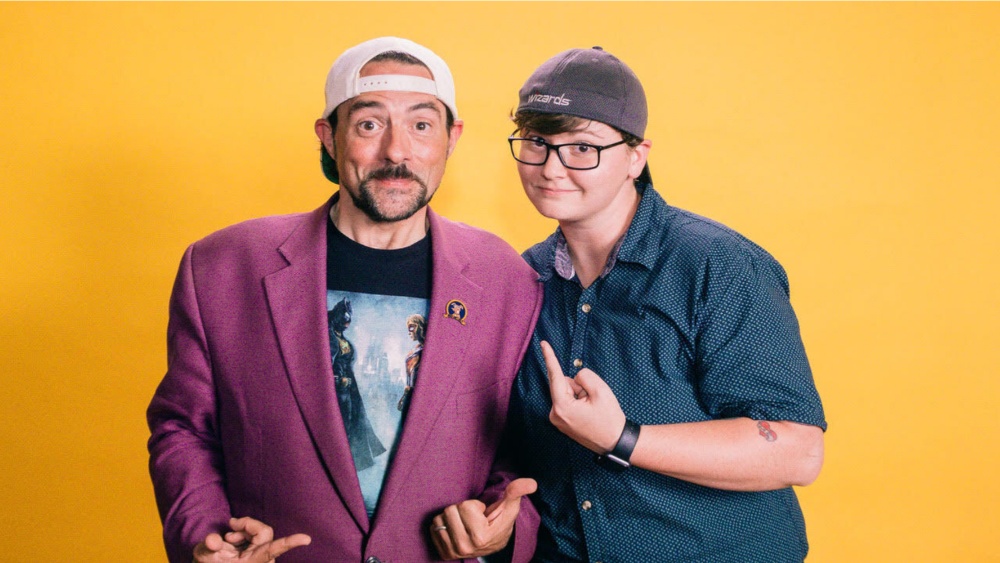
That’s the situation the writer-director-star of Chasing Chasing Amy faces. Sav Rodgers credits Kevin Smith’s 1997 film Chasing Amy with saving his life. It’s not hyperbole, as he explains in his 2018 TED Talk. Growing up in Kansas, as a queer person, Sav struggled with representation and limited positive LGBTQ+ role models. Having struggled with feeling isolated, facing abuse from his peers and fearing that these bleak feelings would be ever-permanent, a chance encounter with Chasing Amy changed his life and gave him hope.

Now, depending on how well you know that movie will impact your reaction to this declaration. For the story of Chasing Amy is a semi-biographical tale of Holden (played by Ben Affleck) who falls Alyssa (Joey Lauren Adams) but finds his hopes for romance crushed when he finds out she’s a lesbian. The film was reasonably well received on release, with Roger Ebert praising the film for being ‘moving and yet written with the skill of a screwball comedy’. And yet, in the 27 years since it’s release, it feels increasingly icky as a film concept and, as demonstrated by some of the talking heads in this documentary, feels like an unlikely film to warrant as much adoration and esteem as Rodgers holds it in. So, now older, wiser and happily partnered up, he’s finally ready to look into the legacy of Kevin Smith’s indie hit.

What follows is a documentary of discovery, of how cinema can be entwined with sense of self and identity. It’s also a story of two halves, with Rodgers getting to fanboy over both the film and getting to the confidences of Kevin Smith. But, after an interview with a member of the film’s cast (to name them would be a spoiler) goes off the wheels, Rodgers is forced to confront their purpose for the film and revaluate what loving it so unconditionally really means.

There’s a lot to like here, as the making of Chasing Amy and it’s aftermath – both at point of release and over time – get explored. Rodgers is a wonderful person to follow – open, honest, warm and endearingly earnest in every emotion they experience throughout this journey. At times, however, it does get frustrating at how superficial and unquestioning some of the peeling back of layers really is. Huge points of contention are identified but never fully investigated, with Rodger’s awe and hesitancy – a state most of the voices within the documentary seem to reside in – resulting in a lack of nuance in confronting the very issues they are there to discuss.

The final product is a personal essay on how important one film can be to someone. What it may lack in a critical voice, it makes up for in abundance with the passion and joy it feels over its subject matter.

[3.5/5 stars]

Chasing Chasing Amy had it’s UK premiere at London Film Festival on October 14th.

Haunted Mansion (2023)

‘I know this place isn’t as warm as I hoped. But I’m gonna light a vanilla candle, and it’s gonna be a game-changer.’

I’ve written before about what happens when bad films happen to good actors, but I feel like Haunted Mansion warrants a new sub-genre – what happens when a film has the best ingredients and manages to fumble them completely. As harsh as it may sound, that is the prevailing thought when watching this latest fare from the House of Mouse because, really, the most impressive thing about it is how unimpressive it is. Which is fascinating when you consider it’s parts.

The Haunted Mansion ride first opened in Disneyland in the 1960s, with four cousins appearing at it’s kinderlands over the decades. A film adaptation appeared in 2003, with Eddie Murphy in the lead role. 10 year-old me loved it, but I’d dare not watch it now. In 2010 we were teased and tantalised by the prospect of a Guillermo del Toro production. Oh, what might have been.

Instead, in 2023, we are gifted a flat and overlong attempt at a family friendly spooky comedy movie that is too convoluted for kids and without enough jokes for the adults. It’s so overly dependent on both formula and nostalgia that it just ends up being a dull cash grab.

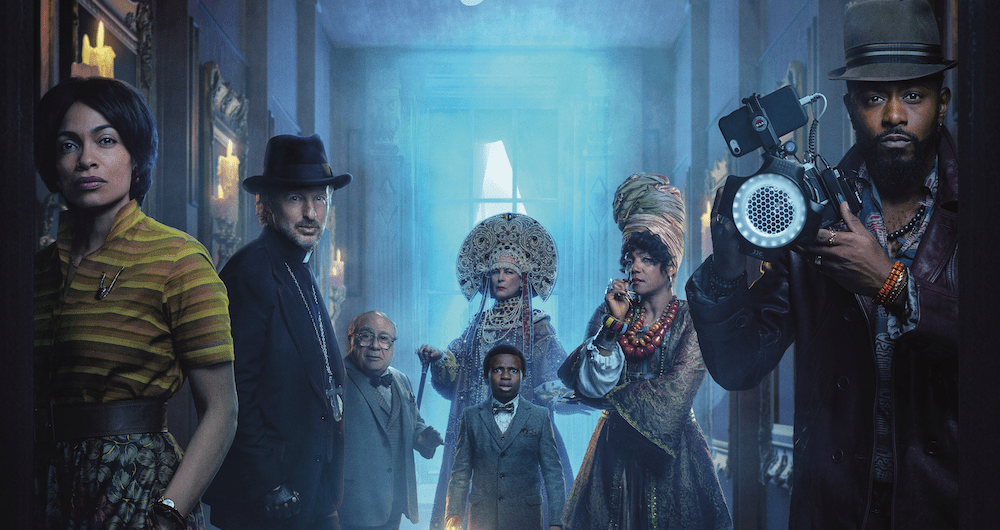
New Orleans-based scientist turned tour guide Ben (LaKeith Stanfield) is in such a state of grief that he’s drifting through life, until a surprise visit from a priest (Owen Wilson) offers a chance at putting his unique skills to the test, or at least making a wad of cash. The job? Visit the new home of single mother Gabbie (Rosario Dawson) and her son Travis (Chase Dillon) to help them exorcise the ghosts that are haunting them. The scale of the job is so big that they need to rope in a medium (Tiffany Haddish), a historian (Danny DeVito) and a spirit entrapped in a crystal ball (Jamie Lee Curtis). But, with their lives in increasing danger, can they stop the mysterious malicious force that may doom them all?

Look at the cast involved. The talent. The charisma. The screen presence. Now, imagine they are given an overly plotted, poorly dialogued script and occupy a screen full of some dodgy-looking special effects. There, now you’ve pretty much seen the film and I’ve saved you 123 minutes of your lives. And you’ve not had to endure Jared Leto. You’re welcome.

The really frustrating factor here is that it feels like such an own-goal that should have worked, but really doesn’t. It wants to be a Ghostbusters or Coraline, and it has the potential to do so with it’s grief-leaning storyline, but instead it gets weighted down by attempts at jokes that fail to raise anybody’s spirits.

[2/5 stars]

Haunted Mansion is in UK cinemas from Friday 11th August.

Red, White and Royal Blue

‘It’s like there’s a rope attached to my chest, and it keeps pulling me towards you.’

Any regular readers of my reviews knew there’d be a strong chance that I’d like this movie, right? A based-on-a-book romantic comedy with the enemies to lovers trope? Sign me up! Based on Casey Mcquiston’s 2019 viral book sensation – arguably one of founding pillars of BookTok – it was inevitable that a film adaptation would follow. What would be less certain, however, is how good it would be. And the verdict? A rather charming adaptation that follows the heart (if, perhaps advisably, not the full plot) of the original novel.

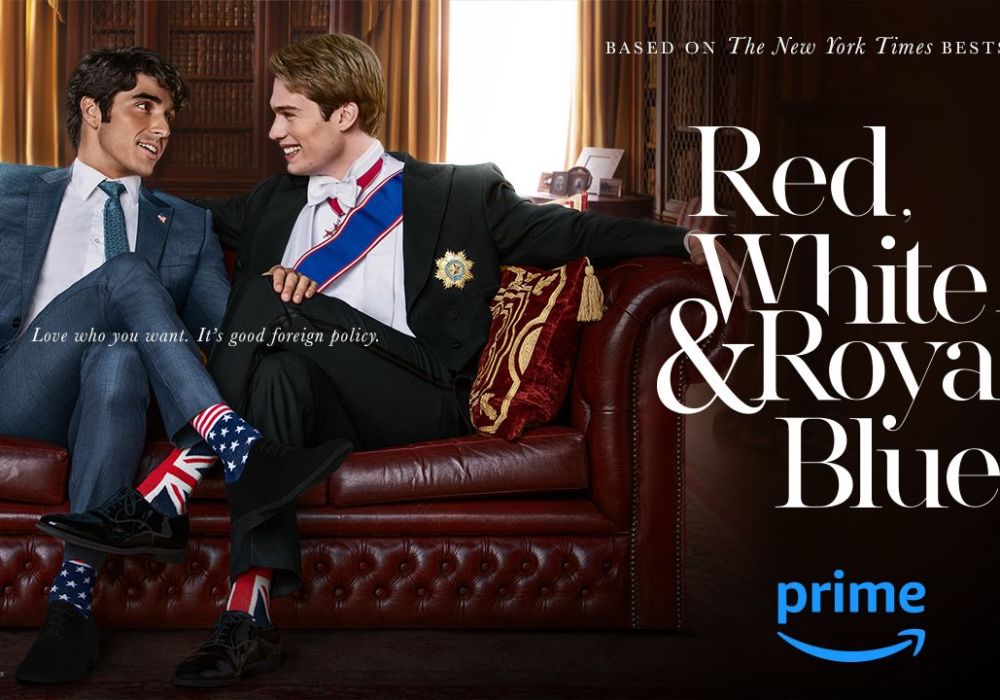
Alex Claremont-Diaz (Taylor Zakhar Perez) is the son of the president of the USA, Ellen Claremont (Uma Thurman). The world’s eyes are constantly upon him, and they like what they see – he’s warm, witty and personable. The only person who is seemingly immune to his charms is Henry (Nicholas Galitzine) who happens to be a British Prince. The pair become a source of gossip at the wedding of Henry’s older brother, the heir to the throne, when a cake-tastrophe occurs. Their respective advisors decide the only thing to fix things would be to stage a friendship between the pair. False platitudes quickly become real, and something far deeper than either of them ever expected forms. But can their love really be possible?

Mcquiston developed the book during the 2016 US Presidential elections, and it’s not hard to see why. There’s a hopefulness in the story being told and the world in which it resides. This is not our world currently, but maybe it could be. One day. And, for the film’s two hours runtime, we get to immerse ourselves in a world that is supportive, optimistic and LGBTQ+ friendly.

The film’s central romance between Henry and Alex is so joyful to follow, believable how it grows from texts and emails (surely some of the most realistic representation of young people using phones we’ve had in a long time!) to a deep and supportive intimacy that both surprises and scares them. In an age where romantic comedies feel increasingly PG (this scene from 2019’s Isn’t It Romantic sums it up beautifully) there’s a wonderful tactile quality to proceedings here. The use of touch between them, form the quieter moments to some surprisingly tender and sexy sex scenes. The rapport between Zakhar Perez and Galiztine is key to making their relationship so believable, there’s a palpable want and desire between their characters which writer-director Matthew López‘s dialogue expresses so swooningly. It ‘s also fiercly funny as well as romantic, packed full of laughs and funny moments. MVP has to go to Sarah Shahi as the Chief of Staff, who steals every scene she is in.

All-in-all, this is a sugary cinematic treat and an excellent addition to the (much-needed) growing number of gay romcoms.

[3.5/5 stars]

Red, White and Royal Blue is available on Prime Video from Friday 11th August.

Teenage Mutant Ninja Turtles: Mutant Mayhem

Humans are the demon scum of the earth

Before today’s screening, they played this trailer for PAW Patrol: The Mighty Movie. What a way to set a mood. However, inadvertently or otherwise, it served as something of a reverse palette cleanser, a reminder of how *ahem* animated family movies can be, setting the bar properly on the floor – surely whatever was to come next had to be better than that?!?

Rather happily, TMNT: Mutant Mayhem is above and beyond the trailer to the sequel (How? Why? Really?!?) of 2021’s PAW Patrol: The Movie. It’s not just one of the finest animated movies of the year so far, it’s one of the finest movies of the year so far, as well as proving that we are in a golden age of animation.

The film requires no prior knowledge needed, having watched or read any of the previous incarnations is not a prerequisite. Although there’s a few nods and Easter eggs for those familiar to the franchise, the focus is – rather savvily – on introducing new generations to the 2023 variants of our beloved heroes in a half shell. Littered with accurate cultural references and perfectly-pitched banter they sound, and act, believably like real 15 year-olds.

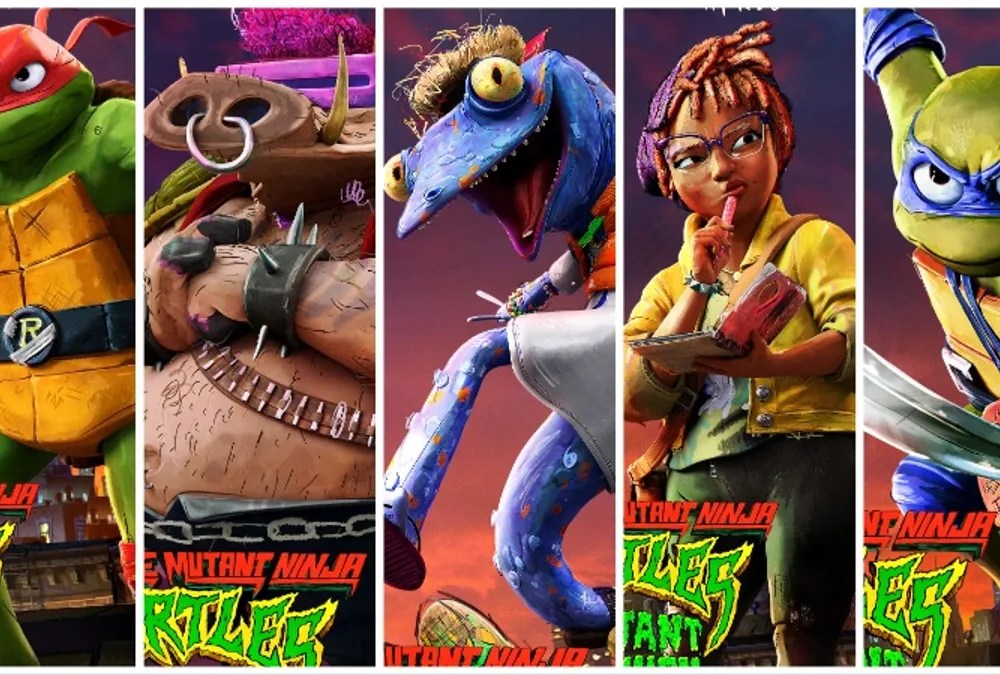
Within the film’s first ten minutes we are swiftly (re)introduced and provided the back story to our mutant turtle quartet – leader Leonardo (Nicolas Cantu), creative Donatello (Micah Abbey), powerhouse Raphael (Brady Noon) and easy-going Michelangelo (Shamon Brown Jr.). They’ve spent their 15 years looked after by a mutant caregiver rat Master Splinter (Jackie Chan). A yearning to leave the ‘safety’ of their sewer home (exemplified by an epically chosen film reference) is forced into realisation by a chance-encounter with April O’Neil (Ayo Edebiri).

This isn’t your typical drawn-out origin story that is simply setting up to get going in the sequel. This is a non-stop 99-minute-long joyous rollercoaster ride, packed full of laughs from all manner of sources and means. This is a rare example of an IP that doesn’t ‘milk’ it’s source material (you’ll really appreciate that after you’ve seen the movie…). Instead we have a refreshing update of both the content and its characters.

For one thing, this is an April O’Neil we have never seen before. She’s plus-size, black and unafraid to stand her ground. Leonardo falls in love with her at first sight, repeatedly describing her as ‘beautiful’ and clearly being enamoured with both her personality and appearance. Although this may sound small ,this kind of representation matters so, so much. To have a plus size character be plus-size without having her weight ever mentioned or questioned or used as a punchline, whilst also having her as a romantic interest, desired by Leonardo who is never laughed at for liking her and is supported by his brothers’ in his interactions with her – that mattered a lot to me watching it aged 30. I can only imagine the impact it’ll have on so many young people.

The animation style is gorgeous, the pacey story packed full of jokes as well as heart about the important of acceptance, the characters are so immensely likeable and hilariously quotable dialogue – this is a total win for all the family.

[4.5/5 stars]

Teenage Mutant Ninja Turtles: Mutant Mayhem is in UK cinemas from Monday 31st July.

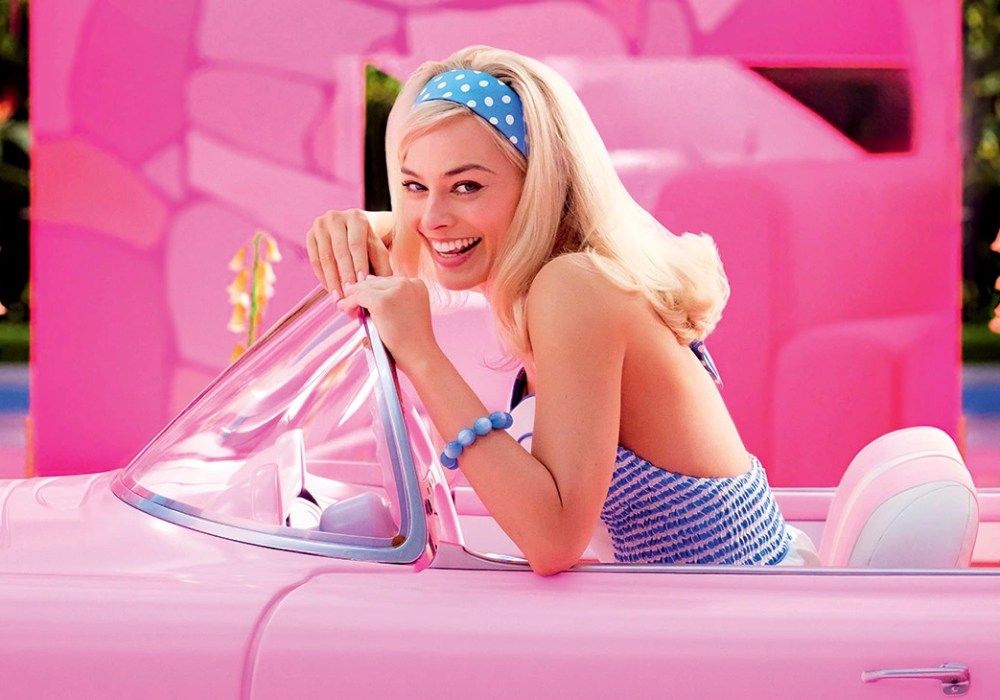
Barbie (2023)

‘It is the best day ever. So was yesterday, and so is tomorrow, and every day from now until forever.’

Few films have nailed their marketing deals and branding collabs as well as Barbie. Despite celebrating her 64th birthday this year, Barbie is, quite possibly, more popular and more visible than ever. And yet, that only added pressure to the expectation and hype surrounding Greta Gerwig’s third run at director. There’d always have been scepticism over how to follow-up after Lady Bird (2017) and Little Women (2019) – why on Earth would Gerwig pick a little blonde doll that is the figure of both such divided scorn and admiration?

It’s within mere moments of it’s opening, barely out of the credits, when it really clicks and all doubt fades away. Of course, this choice makes total sense for a writer-filmmaker who reflects upon the bittersweet joys of the female experience. In Lady Bird, the titular role (Saoirse Ronan) collides with near-enough everyone – mother (Laurie Metcalf), best friend (Beanie Feldstein), love interests (Lucas Hedges & Timothée Chalamet) as she navigates the complicated battlefield of womanhood and the contradictory expectations for a teenage girl in noughties America. In Little Woman, all four of the sisters and their mother navigate the complicated battlefield of womanhood and the contradictory expectations for little/grown women in 19th century America. Who could forget this incredible monologue from Jo (Saoirse Ronan) expressing the yearning created by the confliction between what is expected, wanted and needed.

And so, once more into the breach dear friends, we return to the complicated battlefield of womanhood and expectations for women, but this time we’re seemingly in the present day – although not in the world as we know it. Our story starts in Barbieland, where everything is near enough perfect. There’s a Barbie in every occupation, at every professional level, achieving extraordinary things – day in and day out, then choregraphed dance sequences into the night. There’s even the added bonus, not sole focus, of Kens’ knocking around who are keen to stay over and do ‘boyfriendgirlfriend stuff’ – but who’s sure what that is.

This life seems to suit Barbie (Margot Robbie), until it starts not to, when she inexplicably starts to suffer a crisis that leads her to question her world and her existence. Under the guidance of Barbie (Kate McKinnon) she travels to the Real World to seek answers to her questions. Ken (Ryan Gosling) is there too.

To say more beyond that would deprive you of the utter joy of watching this film unfurl. No matter how ready you think you are, you aren’t. No matter what you think it’s going to be like, you’re wrong. What I can say, though, is that Gerwig has created one of the finest comedies in years – with an impeccable gag rate which address all manners of humour, some feeling especially targeted towards this writer…

Robbie is the perfect Barbie, quite literally as she’s Stereotypical Barbie, with a performance that is totally committed and utterly believable. Her peeling back her layers on her journey of discovery is so wholesome and wonderfully earnest, believable and somehow astoundingly relatable. Gosling provides a comedy powerhouse masterclass. It’s been far too long since 2019’s The Nice Guys, where his slapstick skills got the showcase they deserved. But this, what he gives us here, this is something to behold. He is Ken in every way possible, and some that seem almost impossible. Every single line delivery and every single reaction shot warrants memorisation, tribute and recreation. To describe him as immensely watchable is an understatement. In a film packed full of comedy genii (Will Ferrell, Kate McKinnon, Michael Cera, Jamie Demetriou, Simu Liu, Kingsley Ben-Adir, Nicola Coughlan – to name those you’ve seen in the trailer already, there’s more to be discovered) he nails every single possible moment and then some.

The cinematography is sumptuous, the choreography (just you wait!) is impeccable, the costumes are to-die-fore and are as gorgeously enviable as the cast wearing them. But it is the message, those articulations and frustrations about 21st Century life for women, and men, it’s there that this film deserves GOAT status. Especially about motherhood and mother-daughter relationships. Again, the spoiler territory feels fraught, so much so that I can see myself returning for a spoiler-ific essay on why I think this film is so damn important. Suffice to say, there’s a speech here that is equal to Jo’s literal battle cry in Little Women.

By the end of Barbie’s 114 minute runtime, which flies by, your face will ache from the laughing and smiling but your heart will hurt from the hurting and raging. Sublime! [5 stars]

Barbie is in UK cinemas from Friday 21st July.