Eileen

‘You’re very different these days. You’re almost interesting.’

Based on Ottessa Moshfegh’s 2015 novel of the same name, the eponymous Eileen (Thomasin McKenzie) lives something of a lonely half-life in 1960s New England, USA. She wakes, she goes to work at the local prison, buys alcohol for her ex-cop father (Shea Whigham) and lives vicariously through her daydreams – until the glamorous and captivating Rebecca (Anne Hathaway) arrives, changing everything. Eileen quickly falls under her spell, but is the new-found freedom Eileen is experiencing also fraught with the possibility of danger?

This is William Oldroyd‘s follow up to his 2016 directorial debut Lady Macbeth, which introduced the world to Florence Pugh and there’s definitely parallels between the two films. Both films have women at the centre who are trapped and confined by the expectations of their respective time period. They yearn to feel something that they ‘should’ consider wrong, contemplating illicit means to finally fulfil that innate desire they crave. Their sense of despair may as well be an additional character. Whereas Lady Macbeth is set in 19th century rural England, many of the same constraints present themselves in Eileen’s existence in 1960s New England. Although she in her early 20s, she has simultaneously been forced into being older, near enough a carer to her no-longer working alcoholic father, yet has also been infantilised by the rigid and intrusive attitudes of her small-town life.

McKenzie plays these contradictory depths with aplomb, a wonderous mix of unknowable and inscrutable yet ultimately transparent. Eileen’s motivations are clear, but her actions to achieve them are unpredictable, as if she herself is uncertain of the extents she will go to just to feel something. Having spent a life being unperceived, Rebecca’s gaze is both hypnotic and euphoric. Moshfegh named the character after the unseen yet powerful eponymous figure in Daphne du Maurier novel and Alfred Hitchcock’s 1940 adaptation. In Rebecca she has died prior to the story starting, yet she her hold and power over the household remains – they continue to be shackled to her wants and ways. It’s true of her namesake, Hathaway’s Rebecca is in less of the film as you may expect – but she lingers beyond the frame, just as she lingers within Eileen’s mind, upending all she has known before.

Oldroyd and writer Luke Goebel, who adapted the story with Moshfegh, are successful at establishing the inner life of Eileen and making the viewer unwittingly complicit in her twisty tale of obsession. Together they navigate both tonal shifts and irregular pacing that would otherwise induce whiplash and a blurring of reality & fantasy they make every next step uncertain. Where the film struggles is in maintaining this throughout, what starts out initially as intriguing ultimately becomes frustrating in it’s noncommittal unknowability. The consistent use of dream sequences reduce the impact of an outrageous final act, as we wait to discover if it too really happened.

The result is an unsettling feel-bad almost-psychological thriller with gothic undertones, driven by two stunningly sensuous performances by actresses at the height of their powers.

[3.5/5 stars]

Eileen is in UK cinemas from Friday 1st December.

Wish

‘Introverts deserve sanctuary!’

It’s been 100 years since Walt Disney and his brother, Roy, signed an agreement to produce an animated series called Alice Comedies. In 1928, Steamboat Willie came along – introducing the world to both Mickey Mouse and animation being screened in a cinema with synchronised sound. In 1937 they released their first feature film, Snow White and the Seven Dwarves. And the rest, as they say is history. To mark their centenary they’ve made a film, their 62nd feature film, celebrating their history with a very literal look at what happens when dreams & wishes do or don’t come true. Suffice to say, Disney have a lot riding on this one.

Life in the Kingdom of Rosas is a pretty sweet deal. Founded by King Magnifico (Chris Pine) and his wife Amaya (Angelique Cabral), he uses his sorcery to protect his citizens from harm. All he asks for in return is that, on their 18th birthday, each person must hand over their wish – their heart’s truest desire. He protects these wishes in his tower, each month granting a different wish as a sign of his great leadership and benevolence. Asha (Ariana DeBose) is 17 years old and is desperate to be the King’s newest apprentice, but during her training she quickly realises all is not well and will do all she can to stop it.

The biggest problem that Wish has is that it is fine. It’s neither amazingly good, nor is it bad by any stretch of the imagination. It’s a pass. Nice. All-right. A-Okay. It does relatively well with balancing nods to the past with some lovely little Easter Eggs along the way. There’s a couple of good gags for all ages. It’s heroine is very likeable, endearing, funny and kind. The ensemble cast is great and the supporting characters memorable. The songs vary between solid to ear-worm potential. The animation style is unique, maybe slightly-off if we’re being honest, but there’s beauty within it.

It’s just. That’s it. It does the job, no more and no less. There’s nothing superlative about it, which feels a bit sad for something that is being pitched as so monumental. But perhaps that’s where the problem lies, the weight of expectation, purpose and meaning weighs every moment down. It’s been robbed from being a film in it’s own right, instead it is a self-appointed monument to the studio’s legacy. This feels more content than movie. They’ve simultaneously followed the formula whilst having also metaphorically plastered ‘This is significant!’ across the screen in bright, flashing lights. Never is this more felt than during at least two of the musical numbers, which both have a subsequent pause that seems almost expectant, if not even demanding of applause – a la a live theatrical performance. I mean, the songs are good. But they’re not *that* good…

Wish doesn’t necessarily shine incandescently, but there’s enough of a glow that it’s worth giving a go. [3/5 stars]

Wish is in UK cinemas from Friday 24th November.

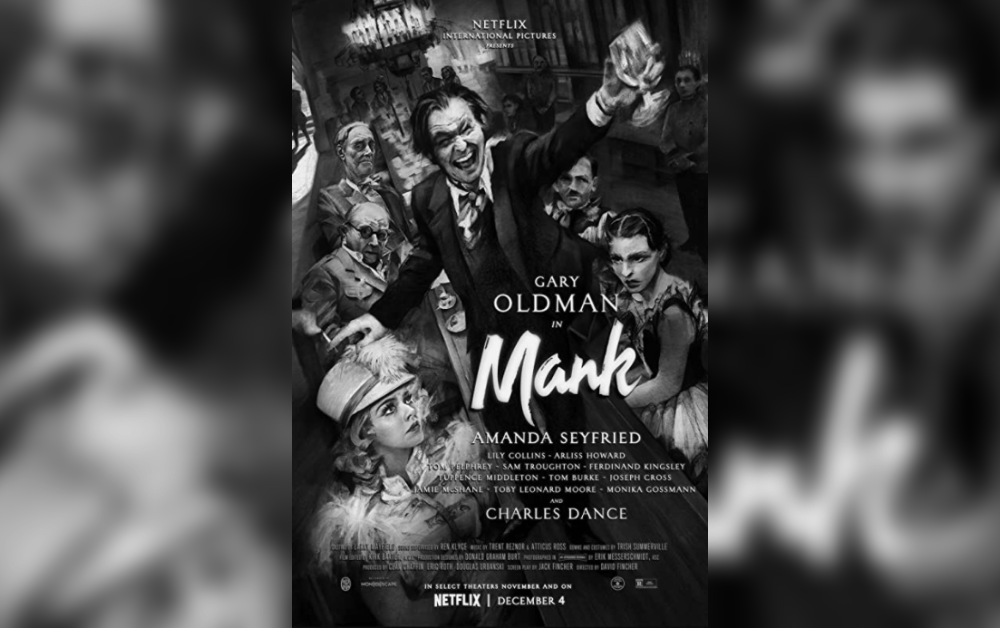
Mank

‘This is the business where the buyer gets nothing for his money but a memory’

A proposal – how much you enjoy a film and how much you appreciate it can provide distinctly different answers. David Fincher return to the big screen, 6 years after Gone Girl, is the epitome of this. It’s already something of a hard sell, a film following screenwriter Herman J. Mankiewicz‘s tumultuous development of Orson Welles‘ iconic 1941 masterpiece Citizen Kane. Although having watched Citizen Kane isn’t a requirement or prerequisite, prior knowledge does help certain narrative beats and jokes land. (If 119 minutes of classic cinema doesn’t appeal, The Simpsons parody ‘Rosebud’ from the show’s fifth season is one of the finest episodes it’s ever made.)

We open on Mank’s present day in 1940, with an injured and rather-down-on-his-luck Mank (Gary Oldman) pitching up to a cabin in the middle of nowhere. He’s there to write a script for new Hollywood Wonder Kid Orson Welles (Tom Burke) and he’s only got 60 days to do it, with two assistants (Lily Collins and Monika Gossmann) to aid him and decades worth of issues to get in his way. The main narrative tension is the rather age-old trope of struggling writer battling his demons – the fact we know he manages it as Citizen Kane is an actual film that exists (and is regularly voted the Greatest Film Of All Time in industry polls) does slightly undercut proceedings. Instead the drama comes from his past, the things and battles he has faced in his past that have lead him to his now – bedridden and determined to write a scathing take down of media baron William Randolph Hearst (Charles Dance). Even if it means hurting close friend, and Heart’s lover, Marion Davies (Amanda Seyfried) in the process – not to mention destroying his own reputation and any hope of a career.

It’s clear from the outset that this is a passion project for Fincher, with the screenplay itself having been written by his father (who passed away in 2003). Every frame feels personal, as if there’s a direct link between what is being told and the story behind it. Visually how that story is told is spectacular, the cinematography has such wondrous depth and full of cigarette-tinted sumptuous. The soundtrack, by long-time collaborators Trent Reznor and Atticus Ross, is moody and atmospheric – superbly enhancing the paranoia and uncertainty that plagued 1930 and 40s Hollywood, with concerns over Hitler’s rise in Germany and the homegrown fears surrounding socialism, which would go onto leading to an actual Hollywood blacklist in the late 40s. The cast mirror this tone perfectly – with Oldman disappearing into the role as the likeable but hugely flawed writer, Seyfried delivering a femme fatale-esque dame with a steely edge and a career-finest Dance as the elusive tycoon. Burke also deserves a mention for being able to capture a young and righteously indignant Welles so perfectly with not-that-much screen time.

While there are some really great scenes here, they feel too-much like a patchwork pastiche to the work that inspired. Just as with Citizen Kane, the flashbacks are used to flesh out our main character – in a search to both expose faults but also create empathy – some are more interesting or purposeful seeming that others. But the problem is it’s nigh-on impossible to form an attachment to any of these characters. Following them around is entertaining enough, but there’s something of a block between us and them that leaves the viewer feeling cold. There’s also an unevenness about the film’s tone, shifting between drama and comedy of sorts with little prep or transition time. It’s as if it’s not quite sure what it wants to be, beyond a love letter to Golden Hollywood. (Which in turn just made me want to dig out Hail Caesar (2016))

Mank is going to be the kind of film that has a limited audience, but that audience will be ardent and love it dearly. That audience will be enamoured with it’s swoony yet intellectual take on cinematic myth. The rest may just struggle with a film that isn’t quite sure what it is, other than a dense and slow-burn meditative biopic.

[3/5 stars]

Mank is out in selected UK cinemas now and on Netflix worldwide from Friday 4th December.