Hunger Games Mockingjay Part 2

The least ‘Hunger Games’ of the ‘Hunger Games’ Franchise 

After 7 years it is time to say goodbye to Katniss Everdeen and the dystopian post-apocalyptic nation of Panem. Suzanne Collins mega-success trilogy was given what shall hereby be known as ‘The Harry Potter Treatment’ and had its final book split into two films *cough for more money cough*. How successful that decision actually was will divide audiences. Part two picks up straight after part one, literally straight after, with Katniss awakening from her reunion/fight with love-interest Peeta.

[2/3 of this review will be spoiler-free, the final 1/3 entitled ‘Ugly’ will not be]

Katniss (Jennifer Lawrence) awakens with injuries both physical (damaged vocal chords, swelling and bruising around her neck) and mental (having witnessed her once-fiancee’s resulting psychotic break after mental torture). Aware that the gentle and warm Ying to her brusque and cold Yang has been tortured, possibly beyond repair, her endeavour to destroy the totalitarian regime of President Snow (Donald Sutherland) is stronger and more determined than ever. Whilst continuing to undertake the P.R stunts set for her by President Coin (Julianne Moore) Katniss decides to set her own agenda by sneaking into the Capital and wreak her own personal vengeance against Snow. 

The Good

The acting in this film is absolutely top-class. Lawrence is continually astounding as Katniss, playing her with a believable and engaging distance. Katniss has seen and done to many horrific things – Jennifer manages to present this in such a way that the audience still manages to connect with Katniss even when Katniss disconnects herself from everyone on-screen. Moore is fantastic as President Coin, presenting a character with understated depth. Woody Harrelson is as enjoyable as ever as Haymitch, as is Elizabeth Banks as Effie. Though have far less to do in this than the three other films their roles are still scene-stealing. Donald Sutherland is so good at being bad, presenting Snow almost as Nero watching Rome burn. The stand-out has to be Plutarch as played by Phillip Seymour Hoffmann (who sadly passed away on Feb 2nd 2014, mid-way through filming this movie). Although Hoffmann’s presence in the film is not unexpected, he was present in the previous two films, there is still a slight and devastating surprise at seeing him on-screen. The success of his character is a staunch reminder of what a great loss he was.

The Bad

For many, ‘Mockingjay’ is the weakest of the literary trilogy. Tonally it is very different from the other two books, less ‘Battle Royale’ and more political assassination. With the film adaptations ‘Mockingjay Part One’ was rather exposition-heavy, a lot of talking and borderline critique of politics. This film is almost-stoppy starty in tone, with time often needlessly given to scenes which did not require quite-so-much screen time. There are many sequences in the film which are stand-out. When the Games themselves are brought into the Capital there are some real frights.  However there are many scenes which almost drag-along, talking about what characters are going to do next then showing them as opposed to getting straight into the action. The whole ’76th Hunger Games’ aspect is cut too-short far too-soon. There is also too much screentime given to pontifications on leadership and power, speeches which become rather mawkish after a certain amount of time.

The Ugly (Herebe the Spoilers!)

The ending. When referring to the ending I don’t mean the final face-off between Katniss and Snow, or Katniss’s decision over her love interests. I mean that final 2 minute long sequence with Katniss five years into the future. It’s exactly how the book ended, though that was set further into the future and was perhaps reduced to minimize any necessity for  Harry Potter epilogue-esque aging make-up, so arguably it’s the source material which is being questioned here as opposed to the film-makers.  It is truly hard to really feel comfortable with ‘that’ ending (with Katniss, Peeta and their two young children sat in a field). For a film which prides itself on it’s strong female lead, who was not laden with any limiting feminine attributes and could truly hold her own on a battlefield, then ending with the ‘reward’ of children and a nuclear family. On the one hand it could be read as symbolic, thanks to the actions of their parents these two children will not have to undergo the horrors of the Hunger Games. Yet it could easily be read as a patriarchal return, shedding her warrior status for frumpily-dressed mother. Either way, the ending is less than a bang and more of a whimper.

If you’ve seen the previous three films it makes sense to see the finale on the big screen. But lower your expectations, set them to’ very slightly disappointing’ and embrace the film for what it is. Whilst it may have uneven pacing, the ensemble cast present a masterclass in acting. Focus on enjoying the stand-out sequences and saying goodbye to some fantastic characters.

Burnt

A rather overcooked romantic dramedy

Does anyone these days aspire to be Gordon Ramsey? Do they wish to control a kitchen as their lair, spewing and spouting swearwords and insults as they prowl? Ramsey had his peak popularity in the mid-noughties, which is probably when this film was first placed on the boil. It then got forgotten about, rushed to be finished with all of its ingredients past sell their best before date.

Adam Jones (Bradley Cooper) is in New Orleans shucking oysters, noting down the amount as he does so. He hits one million, downs his tools and walks out despots protestations of his employer. Those million oysters were his penance for his past indiscretions, now complete he can have a second chance. He goes to London to reunite his crew, although there is much bad blood between them. Adam was a rock star chef in 90s Paris – renowned for his ability and persona. However Adam was also a drugs, alcohol and sex addict who managed to burn all of his bridges who was forced to flee Paris and go into hiding. He must be forgiven by his old friends and new (Sienna Miller’s Helene) to his dream of three Michelin stars.

The film’s main ingredient (when will the cooking puns end?!?) is Bradley Cooper. Considering the fact the film’s main plot is so outdated it is perhaps the only reason people will go to see the film. However his character is so unappealing and unsympathetic that you’ll feel had. His character’s closest real-life counterpart is Gordon Ramsey, swearing continuously and having frequent blow-ups about food, with every other character either swooning over his apparent but unproven genius or admonishing him for wasting said-genius. There is genuinely no reason to like his character, which is this film’s fatal flaw. As the narrative limbers from one ‘disaster’ to a next tension is supposedly created by our concern on how he will cope/survive. If we don’t like the character enduring the trials then we don’t really care. This isn’t helped by the lack of realism within these trials – he is hounded by drug lords for the money he owes them. These drug lords are immensely polite, turning up occasionally to speak to him away from other people, and only visiting once or twice to hound him for the large amount he owes them. We are meant to care about Cooper’s character – experience concern that he may not achieve his ambition for three Mitchelin stars. Instead we experience disinterest or distain for such an ass-hat of a character.

Sienna Miller however is gutsy, transforming herself into a tattooed, pierced and partly shaven-haired single mother sous chef. Her character is far appealing than Cooper’s. Yet she is forced to endure conversations with Cooper’s character of the nature of food and eating. These conversations are nauseating to watch, not because they are hunger-inducing but for the sheer pretentiousness of their proclamations.  ‘We eat to stop eating.’ – That’s sooo deep! The rest of the friendship group are entertaining if one-note; the ex-prisoner, the novice, the daddy issues, the rival etc. The script is bland, drifting from one drama to another, and filled with stupid lines about how John Adams used to be an addict and how he hurt people when he was an addict. It’s all so ridiculous and bordering-on fluff.

If you’re seeing this for Bradley Cooper then don’t waste your time. If you’re seeing it for the food, just re-watch an episode of Hell’s Kitchen. An incredibly dated waste of a movie.

Kill Your Friends

How to succeed in business without any sense of morality

With a title like that, the content of this film really shouldn’t surprise you. We have copious usage of drugs and alcohol, some rather legendary use of swearing (‘Do these shoes look like the shoes of someone who gives a fuck about The Velvet Underground?’) and of course the aforementioned killing of friends. Why? Well it’s set in 1997 and it’s about the music industry. You don’t need to be musicophile to have a rough idea what the music industry was like in the 1990’s. The people at the top possessed little musical talent themselves and gave little care to whether the artists they were choosing to spend their thousands on were ‘good’ artists or in fact whether they were producing ‘art’. Could this unsigned act make me a fortune? Yes, well sign here on the dotted line. So you four girls can’t actually sing or dance, but you’re all rather fit..? Well The Spice Girls are big right now, so we’ll take you. We’ll just get recording artists to sing your music which you’ll mime, and we’ll give you a really crappy basic routine for everyone to copy. You’re hired! This is the sole focus of Kill Your Friends, a study in the middle management wanting to become the top dog focusing less on making good music but more on making lots and lots of money…

It’s 1997 and Britpop is ruling the airwaves. Twenty-seven year old A&R man Steven Stelfox (Nicholas Hoult) doesn’t like Britpop, or any other type of music at all actually. He’s not in the job for the music, he is far from a music puritan. He’s just in it for the money, lots and lots of money. Considering he works in an industry ‘no one knows anything’ there is little stability. Every deal you offer an act is make or break. If an act doesn’t sell, your career is broken. Fuelled by greed, ambition and Class-A drugs he craves the promotion to Head of A&R at his record label and will refuse to let his opposition, his ‘friends’, take the job from him. His calculating approach to manoeuvring the music industry will be taken to a murderous new level.

First things first – substitute music for Wall Street and 90s for 80s and this sounds rather like another film doesn’t it? There have been lots and lots of the reviews for Kill Your Friends that make a comparison between it and this other film. Let’s be straight, this is not the new American Psycho. Instead of a critique of the works of Huey Lewis and The New we have a reflection on the writing prowess of Paul Weller. Whilst is may sound like it, and makes some very noble steps to try and replicate it – Kill Your Friends is the inferior product by quite a long way. Having not read either books, I cannot comment on the book-to-film transition. However I can say from a film point of view American Psycho utilises filmic elements to greater effect, particularly in the representation of the central character which makes the audience question if the murderous acts actually happened or where in his mind. Kill Your Friends does not do this, and presents Steven’s homicidal behaviour with seemingly little consequences. It should also be said just how repellent Steven Stelfox is. He is horrific. Cold and calculating, with malice seeping from every pore, the audience is forced to spend 103 minutes with him. With no redeeming qualities whatsoever, it does become an endurance test. Whilst it should be stated that this is somewhat of a success on Hoult’s part, especially considering how likeable many of his other roles have portrayed him to be, the lack of bite or satire in the script rather ill-serves him.

That is the fatal flaw of this film. It doesn’t question the ethics, lack therefore of,  of these corporate men. It doesn’t poke fun at them, nor glorify it. As I stated in the start, if you even have a passing knowledge of the music industry, you’ll know what sort of scenes crop up in this film. There’s nothing new or particularly fresh. Whilst what is shown is good and well-acted, there are no surprises. The storyline follows Steven negotiating through one drama to the next. Considering how little we care about his character we are not really going to care if he gets caught. In fact considering the nature of his crimes, there is a degree of audience desire that is hoping he does get caught.

This film is joyless, grubby and gruelling. See at your peril.

Spectre

Is it Spectre-ular..?

This will probably read as a rather unique review of the latest James Bond release, as I have to make the admission that I have never actually seen a James Bond movie at the cinema. In fact, I have never seen the entirety of a James Bond movie. From bits I’d seen and tropes that have entered cultural infamy (cars, women, booze, guns and repeat) I had somewhat written them off. But – if you have forgiven this near-heresy and are still reading this – you may be pleased to hear that I may be willing to admit I was wrong. Well, a tiny bit. All of the factors that put me off are present by are portrayed in a way that is almost self-referential, lovingly poking fun at the Bond mythology without crossing into the boundary of satire. The tone is almost playful, with nods and winks instead of revelling in history. Yet, whilst reliant on what I can ascertain to be the well-established 007 formula, Spectre is a compelling and exhilarating movie. The fact it manages to maintain viewer interest when clocking in at 2.5 hours is no mean feat…

James Bond (Daniel Craig) is in Mexico during Día de Muertos (Day of the Dead). Bond’s order is to kill an assassin who was previously unknown to him. Upon returning to London, as a result of his actions in Mexico, Bond is placed on leave by the current M (Ralph Fiennes). But, believing there to be more to his mission than he initially realised, he must rely on the help of Moneypenny (Naomie Harris) and Q (Ben Whishaw) uncover threats both personal and that could destroy the 00 programme forever.

Bond and his helpers are incredibly well-played. Craig is a balance of head-strong and charming, playing his Bond as rather self-aware. His rapport with Q, Moneypenny, M and the Bond girls is whip-crack smart and believable. The main threat to his current way of existence is C (Andrew Scott), who believes the 00 programme to be out-dated – that the only way countries can monitor national threats is through constant surveillance and sharing of information between countries. Scott uses his experience as Moriarty in the BBC series Sherlock to great effect – creating a seemingly sinister and smarmy character. Mr. Hinx (Dave Bautista) is a fantastically malicious force, though with little dialogue he manages to have truly terrifying screen presence. Franz Oberhauser (Christoph Waltz) is a rather great Bond villain – essentially presented with less obvious malice than Bautista’s Hinx, he is swiftly revealed to be a true threat.

The opening sequence of the film, set in Mexico during Día de Muertos, is a stand-out sequence. Well-paced and action-packed it hooks the viewer in. The amount of extras is extraordinary, literally thousands all dressed in astonishingly beautiful costumes. It is then followed by a truly weird titled sequence, with a use of octopuses that seemed akin to a certain genre of Hentai. Perhaps an attempt to ensure the Japanese box office..? In this – admittedly rather bizarre context – the song works. Sam Smith’s Writings on the Wall sets up the films bittersweet tinge. The film that then proceeds has enough twists to entertain, big set pieces set all across the world and is solidly good. Perhaps on the overlong side, Spectre is a solid packed with enough punches to ensure that you’re paying attention, and filled with some excellent cast performances.

It’s good. As good as you’d exSpectre…

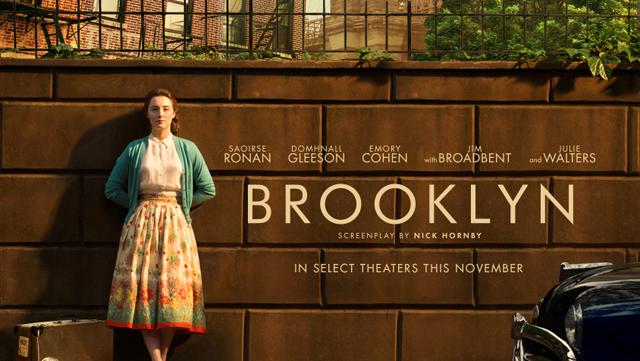
Brooklyn

A sweeping and soaring romantic epic

Whenever my Grandma watches something she really likes or is moved by she’ll simply say, with her Welsh twang ‘Oooh that’s lovely!’ As soon as the credits starting rolling on Brooklyn I found myself uttering her almost-catchphrase, as the film that had gone on before was one of pure and unadulterated loveliness. With the three charismatic central leads, the countless scene-stealing supporting roles and spectacular scenery, told with such carefully constructed and emotive style, Brooklyn is a shoe-in for the awards season.

In 1952 Ellis Lacey (Saoirse Ronan) hands in the notice for her Sunday job at the local shop. She is leaving her small village in Ireland, her home and the only place she has ever known, to move to Brooklyn. On Ellis’ behalf her older, and much- adored older sister Rose (Fiona Glascott), wrote to Father Flood (Jim Broadbent) an Irish Catholic Priest living in Brooklyn asking to give Ellis a chance. Flood agrees to sponsor Ellis – paying for her travel, the start of her accommodation and finding her a job – as there are no opportunities for a bright girl like her his offer is a life-line to a new life. The ferry journey to America is hard, the first few weeks in Brooklyn even harder. She feels so homesick she is scared that she is going to die. It does fade however with time and love – in the form of Italian-American plumber Tony Fiorello (Emory Cohen). But when tragedy strikes she must return to Ireland.  Ellis soon becomes torn between her new life in American and a new life being offered by a possible new love, eligible bachelor Jim Farrell (Domhnall Gleeson). She must choose between both countries, and they both promise.

This film is good. So good in fact that ‘good’ is an inadequate adjective. It’s marvellous. It’s wonderful. It’s exquisite. Few films are this charming: so full of pathos that stimulates both heart and mind. It even appears impossible to think of one negative trait that this film possesses – no fatal Achilles heel is present here. The performances by the entire cast are outstanding, allowing for the creation of an astonishingly well-crafted very real-seeming world.

Each character is three dimensional and rounded, yet this is Ronan’s movie. Her Ellis’ is able to articulate so much with the smallest of expressions – her internal turmoil revealed with looks rather than prosaic audible contemplations. Cohen and Gleeson both hold their own, creating characters that are shown to be equal in terms of romantic possibilities. Often films with a romantic triangle will be unfairly weighted in favour of one of the choices, pushing the audiences favour in one way. This is not true of Brooklyn as the polar opposite men, confident alpha-male Tony and charmingly unassuming Jim both offering lives which could suit Ellis, if only she could work out what it is that she wants.

Set in the 1950s, it is the perfect time capsule movie. The costumes are jaw-droppingly and envy-inducingly gorgeous. The characters are believable for the era, Julie Walters is truly hilarious as the owner of the single women’s boarding house. The music makes the heart-strings pull that much tighter.

The fear of choice, of choosing the road not yet taken, is portrayed tenderly and with nuance. Not a hint of melodrama here. A timeless must-see movie.

Suffragette

‘I’d rather be a rebel than a slave’

Upon reflecting on the important role the suffragettes have in history in their obtaining the right for women to vote, it’s incredibly hard to believe that in the eighty-seven years since all women in Britain over the age of 21 could vote this is the first movie to actually portray the events that provided the catalyst for the 1928 parliamentary decision. It was actually in 1918 that the first women of Britain could actually vote – but they had to be over the age of thirty and meet certain property conditions. Suffragette does not focus on either of those periods of time, but looks at what is perceived as a turning point in the movement – the early 1910s – when social views of the suffragette movement shifted. At the start of the era, like the start of the film, the media and therefore society is fiercely damning of these immoral women. By the end of the film, on the cusp of WW1, things had started to turn. That was through the great sacrifices by many women, and the ultimate sacrifice by one woman. That is the complete narrative arc of the film – whilst an excellent insight into this era it seems an unusual choice for a film which could have instead focused on portraying the actual granting of the vote. Consequently the impact of the film is almost limited, which, considering how much build-up and anticipation there was prior to release, may ultimately frustrate some viewers.

Bethnal Green, 1912. Maud Watts (Carey Mulligan) is a married mother in her early twenties. She works long hours in brutal conditions at a laundry, then goes home and cares for her young son and husband Sonny (Ben Whishaw). She’s aware of the women wanting the vote, but it seems so distant and irrelevant to her that she pays in little attention or mind. However a blossoming friendship with Violet (Anne-Marie Duff) leads to Maud giving a personal statement on her work and living conditions to a committee of MPs. ‘Laundry work is short if you are a woman’, she tells them. Maud’s mother died at work, scolded by a boiling vat of water. Maud has already been badly injured at work, and even faced sexual abuse. Should she have more children, her future-daughters will work there, facing the same risks and dangers. The cycle will continue, unbroken and relentless, unless Maud can do something to make it change. Violet invites Maud to attend a meeting with the East End Suffrage Movement. There she meets Edith Ellyn (Helena Bonham Carter), Emily Davison (Natalie Press) and later, albeit briefly, Emmeline Pankhurst (Meryl Streep). Maud tentatively but swiftly joins their ranks and campaigns for the right for women to vote but with the government, in the form of Inspector Arthur Steed (Brendan Gleeson), desperate to quell any uprising Maud is risking all she has to make a difference.

Perhaps because of the incredibly high expectations placed upon the film, it is not fully the fault of the film-makers that Suffragette does disappoint to some extent. The cast are truly extraordinary, and create characters so heart-breakingly believable that it would be nigh-on-impossible not to engage emotionally with this film. However, it doesn’t quite feel enough. Firstly, as previously mentioned, the creative decision to focus on less than three years is one worthy of debate. It allows a heightened focus on a short but important period of time, yet consequently drags out certain moments for too long. There is then the fact that, although Mulligan is fantastic in her role, Maud did not actually exist. Unlike the majority of other characters, Maud was a fictional creation for the purpose of the film. Though based in testimonies of real women from the era, her character arc is cherry-picked from multiple sources. The purpose of a composite character, as is true of this case, is to serve as a cipher; an ‘Every-Woman’ to act as an entry point and an emotional compass to the events we witness as an audience. For the most part this is successful, yet is at times almost frustrating. There are other characters in the story, real-women who do not get their voice heard as a result. Although the life of Maud is used to articulate the difficulties of life for the working class women, as opposed to the middle-class Mary Poppins suffragette, it feels rather rote. Maud, instead of feeling like a real character, almost feels like a narrative tool used to access the greatest hits of the suffrage. This has not been helped by the misleading advertising surrounding the film – yes Mulligan is our lead and Bonham Carter plays an important role, but Streep’s role is not nearly significant to require the top-billing the promotional material has given her. Although she does deliver a rather inspiring speech, her thirty-seconds of running time seems anti-climactic as a consequence.

Although Suffragette does offer some clear insight into the era, from the hunger strikes and force-feeding to the police brutality and social ostracisation that came with being a suffragette, it does not feel enough. Whilst it is a no-frills look into a momentous period of history, at times it feels more like a dry history lesson than the visceral and powerful movie these women deserve.

Crimson Peak

A film review/love letter for Guillermo Del Toro’s macabre masterpiece.

Finally. Six months in and 40 reviews written this film comes along. A Neo-Gothic epic. This is my kind of movie. The Gothic is arguably one of cinemas most underappreciated genres. This is a huge error as the tropes of the Gothic allow itself to become the truest articulation of the psychological state. Guillermo Del Toro knows this. He’s made a career of it. And this film could be his mainstream opus. The intent and scope of Crimson Peak is worthy of the highest praise: the end product astonishingly beautiful.

As an aspiring author Edith Cushing (Mia Wasikowska) revels in Romantic turmoil.  Her father Carter (Jim Beaver) is devoted to her and her literary exploits; having lost his wife when Edith was ten he is all too aware of the loss and pain that love can bring. His protective paternal instincts kick in when a mysterious stranger arrives into town. Thomas Sharpe (Tom Hiddleston) intent is to persuade self-industrialist Carter to invest in his machinery – it’s the last hope for he and his sister Lucille (Jessica Chastain) to restore their family estate. Carter takes an instant dislike to the Sharpe siblings; upon observing Thomas’s intent towards his daughter he becomes determined to drive them apart. However, when tragedy strikes, Edith and Thomas are pushed further together – they marry and brings her to England. Upon arrival at Allerdale Hall, observing the decrepit building and the red clay-tainted oil that desecrates the landscape, Edith realises that she must try and escape the ghosts of the past and the threats in her future.

It is impossible to over-appreciate what Del Toro has achieved here. He has utilised the motifs of the genre – the double, the spiral staircase, the brooding stranger and the desperate maiden clasping at a candle which represents her life – to create a gloriously grotesque tribute to the original 1940s Gothics whilst utilising contemporaneous cinematic creativity. The Gothic triumphed in literature during the early 1800s, and peaked in cinema during the 1940s. Though set in the same era the filmic versions of the Gothic reflected the fears of the then-present. Women were leaving the household and entering the workplace; then forced back into the home when they returned from war. Unsurprisingly there was a flux of marriages; women agreeing to marry men they had just meet believing they would not return from war. Yet so of them did, and these women realised the once-romantic gesture had in fact resulted in their being married to strangers. Films like Rebecca, The Spiral Staircase, Secret Beyond The Door and Sleep, My Love utilised this intrinsic, yet utterly understandable fear to great effect. What united them thematically was a narrative that echoed Charles Perrault’s folktale Bluebeard – what is essentially a fable warning women against marrying alluring strangers. Why this is all relevant is because few new films, one that are not reliant on being literary adaptions, even attempt to make a film in this style – let alone join the canon.

An unholy union is made between set, music, cinematography and mise-en-scene. The sets in particular are astonishing and breath-taking – with so much to see it becomes almost overwhelming, echoing the confusion of our maiden in distress.  Crimson Peak is a product of passion. Every aspect has clearly been carefully chosen and with love, which pays off ten-fold in the film’s visceral emotive impact. Combined Wasikowska, Hiddleston and Chastain make a character triangle which entraps the viewer – ensnaring them in this house of fear. This is a world where ghosts breathe and houses bleed. Melodramatic? Yes. Unashamedly and unabashedly so. Whether the film ultimately gets lost at this point, with a third act that becomes overwhelmed by pastiche, is up for personal debate. Ultimately this film is delightfully creepy – with sumptuous sets, creepy casts and unforgettable visuals – it’s an archaic yet inviting film that demands watching.

A true auteur can provide the audience a return journey to another realm. It may not be a realm we would chose to escape to – as is this case it could be a world of terror and fear – yet it was one we are fully immersed in and find the greatest beauty within. Then we are returned – shaken, frightened, bleary-eyed yet grinning. Go watch Crimson Peak and experience it for yourself.

Pan

A Truly Magical Disappointment of a Film

The best way to describe the experience of watching this film is to rely on an analogy using The Great British Bake Off (or another cooking/baking show of your preference). Have you ever watched GBBO and observed someone producing a glorious looking cake that everyone talks about, so decide to have a go yourself? So you include all the ingredients they used; having added them at the same time and the same way, you then place it in the oven. However, when you open the oven to take out the cake you made it looks nothing like the cake you saw on the show. In fact your cake looks flat, plain and tastes nowhere as good as the cake appeared on TV. Now – replace the ‘you’ with ‘the production team of Pan’; the ingredients being the script, mise-en-scene, cast etc and the cake with Pan. That is what watching this film is like. Everything is there. It should work. It’s worked for so many other people. It just doesn’t work here.

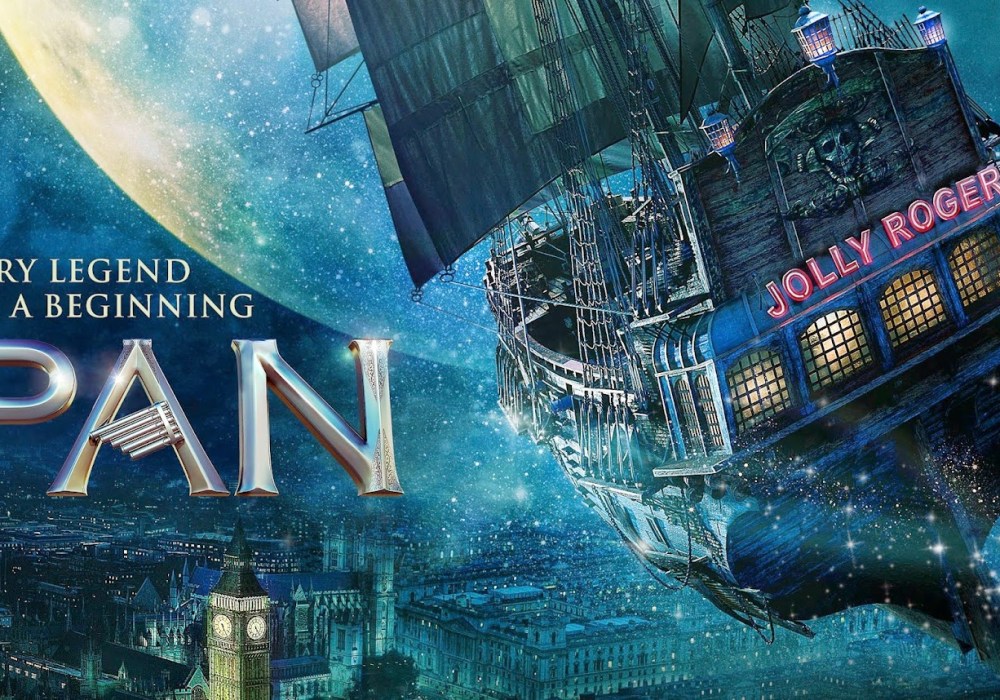
It’s the middle of World War Two. Peter (Levi Miller) was abandoned by his mother (Amanda Seyfried) when he was only a baby. Left on the door steps of an orphanage he has lived his entire life there.  It is all he knows. The orphanage is managed by a tyrannical nun (Kathy Burke) who Peter suspects is making and hoarding a profit, leaving the boys in her charge eating gruel and wearing rags. Peter and his sidekick decide to investigate, and find a hoard both of food and gold. He also finds his personal record, including a letter from his mother who promises they’ll meet again, ‘In this world or another.’ They are found and punished; with Mother Superior ripping the note into pieces. Later that night they find out where the gold has come from, when a pirate ship comes to forcibly collect the young boys. After a scuffle with some fighter aircrafts, the pirate ship crosses the barriers of time and space to arrive in Neverland. In Neverland he will find fun and friendships, in the form of James Hook (Garrett Hedlund) and Tiger Lily (Rooney Mara), and together they will have to rise against the monstrous regime of Blackbeard (Hugh Jackman). Peter will discover his destiny and begin to become the future legend that is Peter Pan.

That plot summary makes the film sound exciting, right? That is ultimately what makes the film so disappointing, on paper it sounds good and on screen it looks good yet it doesn’t quite land. The audience are left watching sequences of increasing splendour and yet will remain impassive and disengaged with the events. The film becomes a case study in a failed attempt at Magical Realism. Upon analysis, there are a plethora of reasons as to why this is the case, though I shall just focus on the main two.

Cast: The cast were truly ill-advised on how to portray their characters. Jackman, as Blackbeard, spends all of his screen time dialled up to 11.  He’s almost like a pantomime dame chewing at the scenery. In a way this makes sense, as the film attempts to pitch an overly theatrical approach, yet it does little favours for Jackman who we have seen far better in so much more. If only he had some quieter moments, allowing for development of beats and nuances, it would have made for a more interesting performance. If acting is all about finding a balance between lights and shades, Jackman’s acting here is so bright it’ll blind. Then we’ve got Hedlund as Hook, played as a Southern gent cowboy-type. The clear intent was to make him an endearing character, shown to care about his friends and loyalties and make the audience wonder how he and Peter became such great enemies later on. It would have been a nice enough take on the character if Hedlund did not spend 2/3 of his lines hunched over, squinting them and barking them at his fellow cast. We get it, you’re stereotypically Southern – just please stop shouting! Rooney Mara as Tiger Lily starts high then gradually disappoints. She’s set up to be a great warrior, but little of this is actually shown. When announced that she was starring in this many were surprised, as Mara’s roles utilise her maudlin persona to great effect. The result in Pan is that she spends the entire film looking as if she doesn’t really want to be there. Which is hardly surprising considering how much source material the sequences with her and her tribe will provide for critics and theorists of cultural appropriation will provide. The only good thing to say about the film is that 13-year-old Levi Miller is a promising new talent who does a great job of carrying the heavy burden of this film.

Script: The need for prequels is a matter of personal opinion. The need for a decent script in prequel is not. This review should serve as a warning to those who want to write a prequel – do not do as this film does. It’s all fine and dandy to include references to the pre-existing film, cheeky lines acknowledging past references for the audience which hint at future inevitable events for the characters. But please, for the love of God, do not write them like they are in the screenplay for Pan. There are so many here, which are shoehorned in so poorly and recited by the actors so stiffly that I genuinely suspect they were written in the actual script like this:

Tiger Lily: What? Are you scared of CROCODILES?

Hook: NO! Now excuse me while I stick my HAND in the CROCODILE-INFESTED WATER.

Peter: Great. Now we’re lost!

Hook: Yes. We’re LOST BOYS!

Peter: Well we better think HAPPY THOUGHTS.

Peter: We’ll always be FRIENDS won’t we Hook?

Hook: Of course! What could ever happen to CHANGE that?

Mother: You’re my Peter. My PETER PAN.

Now, I may not have used exact phrasing there (I think my brain has tried to delete some of the film in a type of self-protection manoeuvre) but those references are as subtle stated as they are above. In fact, the only way they could have been made less subtle is by having the cast recite them turning to the camera with a raised eyebrow and nudging with their elbow. The intention of including these lines (though perhaps not in a manner as poorly as done here) is to establish a clear link between this film and the far far far superior 1953 animation and the 1911 novel. However, this has a counteractive effect, reminding the audience of how much they love either of the original products. Save the money of a cinema ticket and dig out your copy of the book or film.

This leads us to an ultimate conclusion, was this film really necessary? I’ve written in past reviews (Ant-Man and Fantastic Four are the first two that spring to mind) about the difficulties of origin stories. Did we really need to know what made Peter Pan into the Peter Pan? If they really thought people would care about the backstory between Hook and Pan why not show it instead of ending the movie with a heavy-handed sequence that signposted for a sequel – which may not be so inevitable considering Pan has royally bombed at the box office. To be so over-dependent on continuing the story on, instead of giving a satisfying if albeit temporary conclusion, is lazy storytelling.

This film overestimates how good or necessary it is. It manages to make the magical mundane and dreary – an unforgivable crime of cinema.

Sicario

The Closest We’ll get to Cinematic Masterpiece this year?

This film is unlike any other. It’s intelligent, provocative and deeply haunting. Shot and told with expert precision whilst feeding on audience paranoia and helplessness – this is not a film for the faint of heart. There are few films that have been, or that will be, released this year that will end with you leaving the cinema drained and exhausted (in a good way at least…)

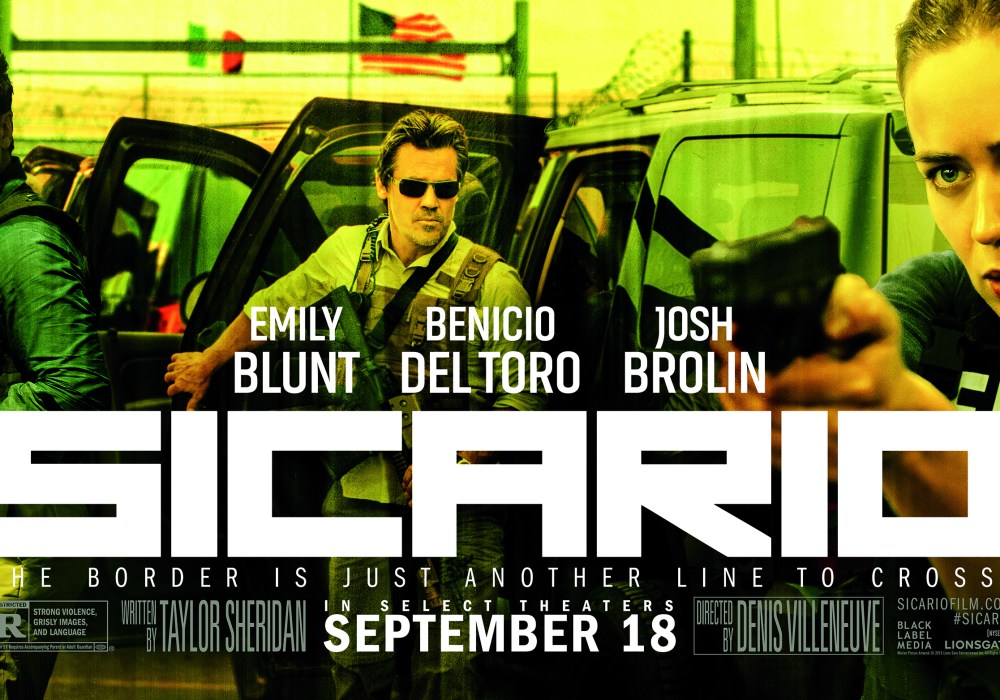
Idealistic FBI agent Kate Macer (Emily Blunt) leads a kidnapping raid in Chandler, Arizona that results in a discovery far bigger and much more gruesome than was expected. Her findings cause Kate’s boss (Victor Garber) to recommend her to an elected government task force which has a sole focus of the ever-escalating war against drugs on either side of the US – Mexico border. After a brief interview Matt Graver (Josh Brolin) offers her the position, using her emotional ties to her previous case as reasoning to join his team. His team promises results far greater than those she can achieve in her current position, plus a chance to find and punish those involved in the tragedy she unintentionally unearthed. She accepts immediately.  Kate’s FBI partner Reggie (Daniel Kaluuya) is instantly distrustful of Matt and fearful for his partner’s well-being. Kate squashes his concerns, but when she arrives for her first day of work she realises how little she know and how little Matt will actually want to tell her. The unexplained arrival of mysterious Alejandro (Benicio Del Toro) furthers these worries, as does their preceding to fly with her to a different destination than the one declared to her and concealing their purpose for being there. Was Reggie right to have been so worried for Kate? Will Kate get to make the difference she wanted to? Will she even make it out alive? 

What truly makes this film enter the threshold into ‘great’ is the components that make it so taut, tense and thrilling. The acting is masterful – Blunt is understatedly brilliant as the at-times frustrating but always sympathetic Kate, Brolin’s Matt oozes charm with dark undertones and Del Toro lurks on the outskirts so intriguingly that his gradually revealed character arc is utterly enthralling. The music, and the superbly well-chosen moments when it is absent, frame each sequences with an eerie sense of both danger and inevitability. Not a shot or piece of dialogue is wasted – everything either contributes to the plot or the power of it. Aerial shots revel not in the landscape, but instead reveal the depth of the poverty and crime and the sheer vastness of it.

Where the film builds and retains most of its power is in its message. Whilst easy from trailers and posters to misconstrue as just another social-issue drama or drug-related thriller, Sicario has much more to offer. Few films have tackled the ‘war on drugs’ with such informed perception of the grey area surrounding it. The primary question is of lawlessness – who are the good guys in this war and who can be trusted? Most importantly – when the do the ends stop justifying the means? This is reflected upon in such a spectacularly suspenseful manner; it is rare to find a film that can leave an audience so fantastically haunted.

If you’re looking to spend two-hours in a realm of dread, brutality and nerve-destroying darkness then commit to numb ruminating…you’d best go buy your ticket!

Macbeth (2015)

‘Be bold, bloody and resolute.’

The chances are you won’t be scheduling in this film for some light Friday night entertainment (if you are, well fair play. It takes many sorts to make a world.) You want to see Macbeth for its dark brooding plot (check), an examination of fatalism and master-level acting (double check). 2015’s version of Macbeth is quite like anything that has been seen before; becoming something both of our time and times past. Gone are the claustrophobic interior dialogues. They are instead, like the characters, exposed to the elements; then dwarfed and destroyed by them. This Macbeth belongs to the Scottish landscape, here which is cruel and brutal, again, like its characters.

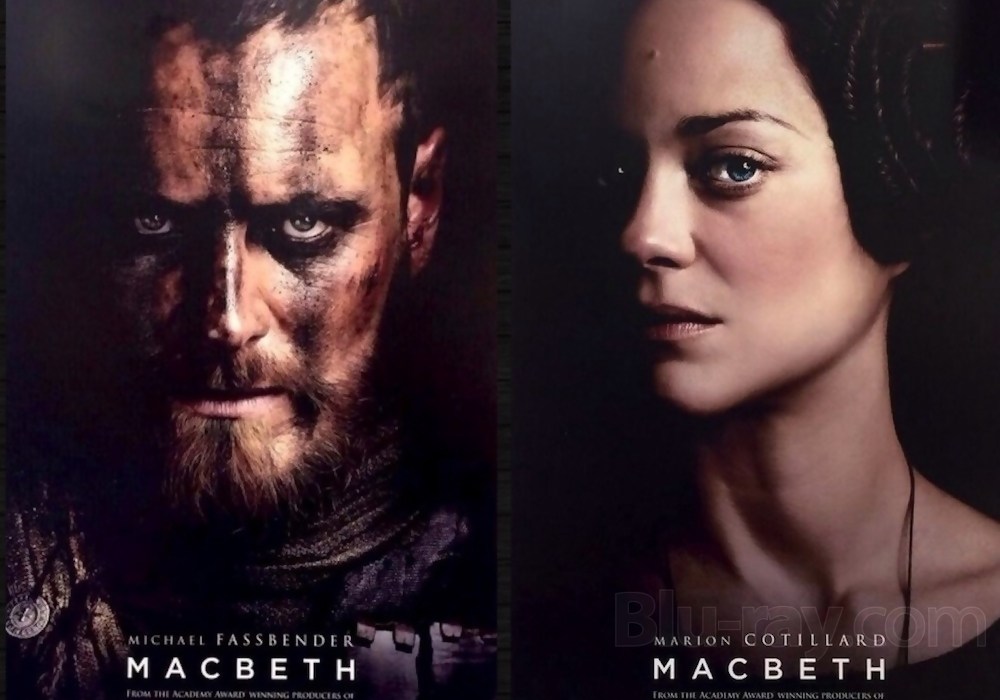
The story is still the same: a warrior-noble man is informed of a prophecy that indicates he will become King of Scotland, is then pushed into regicide by this merciless formidable wife before descending into a world of psychotic delusion and pre-emptive murders. For the most part the screenplay is unaltered, with most speeches retained word-for-word. The most fascinating aspect of this new version is the new emphasis it places onto smaller moments of the play. Small beats are given volume louder than any of its filmic predecessors, offered a refreshing take on both story and characters. Gone is what often becomes a pantomime act of the central-duo, leaving behind what often becomes shouting of dialogue and wild gesturing and replacing it with a quieter sharper intensity. Lady Macbeth (Marion Cotillard) is no femme fatale who squawks and savages her husband’s masculinity. Cotillard plays Lady Macbeth with a commanding vulnerability, a woman who utilises her insecurities for benefit instead of concealing them with rage and anger. Her famous ‘Unsex me here’ monologue, along with her rebuffing of Macbeth’s cowardice, is made all the more sinister by her demurity.  By opening the film with a funeral, that of her young son, (a death which is only referred to briefly in the play) a sympathy is generated for her character, an attempt at a reasoning for what is to come.

This is used to similar effect with Macbeth (Michael Fassbender), and adds a dimension to his friendship with Banquo (Paddy Considine). Banquo has a young son who he is absolutely besotted by and is inseparable from. Whenever Macbeth is shown to be looking at the pair, a degree of jealously is implied, a bitterness of what may have been. Considering the witches’ prophecy declared Banquo’s heirs would later become king, it’s easy to see how Macbeth’s resentment turns into murderous intent. In fact Fassbender’s portrayal of Macbeth is so effective that it makes the majority of his actions more comprehensible than others who have taken the role. His take on ‘Is This A Dagger…’ is indelible, as his ‘Tomorrow and tomorrow and tomorrow.’ How he carries the character is also intrinsic to his interpretation. The play refers to Macbeth’s status as a great warrior, but this if often under-played by adaptations. This version shows this and revels in his ferocity on the battlefield; his domination over his opponents successfully alludes to the malice underneath. His subsequent gradual submission into his own world of distraught instability has echoes of what would now diagnose as post-traumatic stress disorder. The childish ease at which he and his wife openly accept the prophecy of the witches seems almost explained by anguish twisted into an embittered for retribution.

The two central performances are cemented by the supreme skill and ability of the supporting cast; Sean Harris’ Macduff is an impassioned ball of rage, David Thewlis a benevolent Duncan and the witches combine to make an omniscient presence that haunts both screen and characters. The editing heightens the emotional tension generated by the cast; slo-mo is carefully and calculatedly integrated to great effect. The final dénouement is intensified with the mise-en-scene; the fire of the woods transplant the final battle into a world that is reminiscent of Hell, replicating the character’s diabolic emotional turmoil. The smoky reds and orange immerse Macbeth and create an unforgettable sequence that is intrinsic in its potency.

A delicate balance between subtlety and artifice results in a compellingly powerful piece of cinema. Fassbender and Cotillard where born to play these characters.