Absolutely Fabulous: The Movie

Alternative Title: Reasonably Fabulous

Ab Fab first aired on the BBC in 1992 (ha, I’m the same age as the show!) until 1995, then show the show aired sporadically as series or special until 2012. Four years on, our ever-glamourous and self-indulgent duo has made it onto the big screen. Has the film broken to the small to big screen curse? Sort of. Whilst it’s no Bad Education movie (click here for review) it still doesn’t shake off the feeling this is little more than a bloated and extended episode.

Edina Monsoon (Jennifer Saunders) and Patsy Stone (Joanna Lumley) are still living the life of luxury, though the money is beginning to run out. Edina’s PR company is failing and her rival, Claudia Bing (Celia Imrie), is taking all the glory. Edina is in need of a miracle and one does arrive – Kate Moss is just fired her PR and is need of a replacement. The wooing of Kate goes wrong however, when Edina manages to push Kate Moss into the Thames. Kate is presumed dead and Edina becomes Britain’s enemy no.1, deciding escape is her only option she flees to France ,in the hope of finding fortune, taking granddaughter Lola (Indeyarna Donaldson-Holness) and Patsy with her. The police are on the hunt, as are Edina’s daughter Saffron (Julia Sawalha) and new boyfriend Nick (Robert Webb).

For fans of the show this film will either fill the void or slightly disappoint. Everything you loved about the tv series is present and correct – the humour and the characters are just how you remembered them. For those who are not so keen or aware of the show this will disappoint or even frustrate. For one thing, if you’ve seen the trailer you’ve seen most of the main gags.

Then there’s the fact the film takes the approach of adding in celebrities, loads of them – everywhere and in every scene there’s a cameo. Some of these work – Gwendoline ChristieRebel Wilson & Jon Hamm to name but three- and some just flopped – Jerry Hall and  Jean-Paul Gaultier displayed beyond awful ‘acting’ ability. However, instead of enhancing the story, they make-up the story. When watching it feels as if the celebrities were called in, or called in themselves asking for a role, and the storyline was manufactured from there. A join-the-dots approach to create a story with little substance.

What little there is of a story is archetypal for an extended sitcom episode- taking the characters we love to another country. Gasp! Let’s watch them engage in the customs of the land. Chuckle! Although it is evident the film was made with love for the characters, who we get to observe in their unabashedly badly behaved glory, it isn’t as funny as it could have been. At times it feels lazy and far too celebrity obsessed. Yes, this may be an accurate reflection of our main characters, but it also feels tired and out-dated. Like a relic from a past era it relies on in-jokes and cliches. And yet this didn’t bother me so much as my surroundings when watching the film were perfect for the occasion – 7pm at Picturehouse Central. The 90% capacity screen was made up with middle-aged amazonian women and groups of immaculately made-up men, this was clearly their show; laughs and cheers were constant throughout.

Saunders and Lumley play their characters with perfection but the written material isn’t there to make this a swansong that is absolute or fabulous. It’s not vintage Bolly but it will be a respite for the sport-weary and a reunion with old friends for those who loved the show.

2 stars

Now You See Me: The Second Act

A sequel that will hopefully disappear into thin air

After being persuaded (read: forced!) by my friend Sam to watch ‘Now You See Me’ I was pleasantly surprised – the cast were charismatic enough,  the tricks they pulled off were entertaining and, aside from a plot twist that made no sense whatsoever, it was a nice slice of fantasy entertainment. 24 hours later, after coming out of its sequel, I felt no such positivity.  ‘Now You See Me: The Second Act’ is bland, boring and blithely bloated. You come out of the cinema not feeling fooled or tricked – but scammed for giving up 129 minutes of your life for such maddening rubbish.

One year on since they outwitted the FBI and the Four Horsemen have become Three – J. Daniel Atlas (Jesse Eisenberg), Merritt McKinney (Woody Harrelson) , Jack Wilder (Dave Franco) – as the ‘lady horseman’ grew tired of waiting around for further instructions from the Eye. Dylan Rhodes (Mark Ruffalo) is still working at the FBI, doing all he can to keep the Horsemen in hiding and under the radar. He sets the Horsemen a new mission to hijack the launch party of a new software, inviting Lula (Lizzy Caplan) to join them. The mission gets hijacked by Walter Mabry (Daniel Radcliffe) who kidnaps the Horseman and forces them to use their skills to go steal a data-mining device. Dylan has no idea where the Horseman are so breaks Thaddeus Bradley (Morgan Freeman) to help find them. What are the chances that vengeance-seeking Arthur Tressler (Michael Caine) may be involved somehow?

Writing the above paragraph was exceptionally difficult in the attempt to avoid being convoluted as that is what the film is – a far too convoluted series of ‘tricks’ that make no sense whatsoever. Whereas the first film was fun and flashy this one gets bogged down by attempts at pathos. Much of the plot is devoted to Ruffalo’s character mourning the death of his magician father 30 years on. This wouldn’t be so bad a plot point  were it not for the fact that Dylan is not a likeable enough character for the plot to hinge on and the fact it doesn’t go anywhere. There’s also an overwhelming sense when watching these sequences that the filmmakers are hoping for a third movie with a seemingly impossible reunion.

If magic is entertaining the masses with the impossible this film is the opposite – entertaining no one with the improbable. Very rarely does the story actually make sense – with the twists, trickery and questionable character motivations trying so hard to be clever they end up failing. That’s also true of some of the dialogue which regularly made no sense whatsoever. Ordinarily I’d then quote of one these lines as evidence but they must have been that ridiculous that my frontal lobe totally rejected storing them for future reference.

These crimes against cinema would be somewhat forgivable if the characters were likeable or the cast were enjoyable to watch. Sadly that is not a saving grace here. My disdain for characters played by Jesse Eisenberg continues, Dave Franco is unbearably vanilla and Radcliffe is supremely irritating. Harrelson would be the film’s saving grace  were it not for the fact he ends up playing a dual role as the evil twin brother of his character. He’s  so stereotypically camp that it’s offensive, his costume horrendously cheap and played so hammily you can’t quite believe what you’re seeing. Lizzy Caplan is a welcome addition – as she is to everything she stars in – yet is still stuck in a one-dimensional role as a manic pixie girl type chasing after Dave Franco’s character. Although she is given some rather meta dialogue – about being the ‘lady horseman’ and who will be playing the ‘floozy’ when they go undercover – these are not admirable additions by the script writer. More the least they could do by using such one dimensional characterisation.

Although there is one impressive set piece (the heist to steal the data chip) and it was more than thrilling to see my ‘ends on the big screen (hello Greenwich!) the rest of the film is lacking in warmth, wit and, well, magic. It’s short on logic and right now seems to represent this year’s very dull summer of blockbusters.

1 star


Mother’s Day

A smorgasbord of star-studded schmaltzy smug-ish sentiment.

Having not seen ‘Valentine’s Day’ (2010) nor ‘New Year’s Eve’ (2011) I knew of the infamy of director Garry Marshall‘s ensemble romantic comedies but I don’t think I was truly prepared for ‘Mother’s Day’. It took me about 1/4 of the film, roughly 30 mins, to realise that the only way I could endure (the only verb choice that really captures how I felt) the remaining 3/4 would be by turning off my settings for common-sense, logic and cynicism. As a result I found only the first section truly excruciating, the remainder only vaguely unpleasant. I don’t think I’ve ever seen a film so contrived or ridiculous. ‘Mother’s Day’ is essentially a feature film that is the personification of a money-free Hallmark card. Paper thin and totally empty.

Bradley (Jason Sudeikis) is a widow with two daughters; his wife was a marine who dies in combat. Sandy (Jennifer Aniston) is a divorcee with two sons. Her ex-husband Henry (Timothy Olyphant) has just married a twenty-something called Tina (Shay Mitchell). Sandy’s best friend is Jesse (Kate Hudson). Jesse is married to Russell (Aasif Mandvi), an Indian doctor; they have a young son together. They live next door to Jesse’s sister Gabi (Sarah Chalke) who is married to her lesbian partner Max (Cameron Esposito); Max has a son whom Gabi adopted. Jesse made a new friend at her mother & baby group, a young mum called  Kristin (Britt Robertson). Kristin is in a long-term relationship with Zach (Jack Whitehall) who is an amaterue comedian. Kristin won’t marry Zach until she meets the mother who gave her up for adoption, a legendary business-woman and workaholic called Miranda (Julia Roberts). 

That is genuinely the most contrived plot summary I have ever written in my 14 months of writing this blog. I intentionally included facts about race/sexuality/personality which often feel needless when I write about other films. The reasoning is simple – Mother’s Day makes such a big deal about being ‘inclusive’ and having a range of representation. But it doesn’t. Not really. Yes there is a lesbian couple, but we don’t actually get to know them. They merely serve as plot points for Jesse’s storyline about telling her seemingly racist mother that she married someone of another race. The majority of the film’s ‘jokes’ come from these exchanges, where her mother calls her new-found son-in-law a ‘towelhead’ amongst many others. It’s a huge misstep as the way it is treated and mined for laughs is in itself racist. The movie tries to be self-aware about racist and homophobic attitudes yet uses them in such a casually offensive manner.

Another recurring excruciating element of the film are Jack Whitehall’s stand-up sequences. They are painfully contrived, like most of ‘Mother’s Day’ in all fairness, but considering being a stand-up is Whitehall’s job it feels like an advanced skill that the film manages to get them so so wrong.

Then there’s Julia Roberts, rumoured to have been paid $4 million for three days worth of filming. The film uses an approach to show just how ‘big’ Miranda is by having her appear everywhere within the film, frequently using adverts and infomercials to showcase her omnipresence.  It’s a touch I quite like (sound the alarm!) if only the ads themselves had been infuriating. There are glimmers of Roberts’s talent here, certain looks she gives, that remind of just how talented she is. Unfortunately that is lost by her having to play a previously stereotyped ‘business-woman’. She has no personal life, only business. Therefore she is cold and treats practically everyone as if they are worthless. So glad to see we’ve progressed beyond that cliche!

It does hurt to say this, but I did quite like the performances and storylines involving both Aniston and Sudeikis. Whilst there was still a whole lot of ridiculousness, particularly with his female harem of friends which included seemingly the only black person in the whole of Atlanta (a larger lady who is loud and proud. Sigh.), it was during these storylines that showed the film had a tiny murmur of well-meaning intent.

Otherwise ‘Mother’s Day’ is devoid of charm and rather sickly. It’s an opportunity to see actors you have liked in other movies interact with each other in contrived scenes and only communicate with pseudo psycho-babble. It’s smug and begrudgingly acted. Avoid.

1 star

Alice Through The Looking Glass

Disney provides a sequel that no-one actually asked for

Alice Through The Looking Glass is, quite literally movie-making by numbers. The end-product is tick-boxing, almost as if it is following a guide called Pretending To Be Weird For Dummies, but it was only ever made due to the admittedly very large numbers of the first film. Six years ago Alice In Wonderland made a worldwide total of $1,025,467,110 at the box office. It currently ranks at number 23 of the highest grossing films worldwide. It’s therefore not unsurprising that this film was made, though the fact it took six years to get it done is and the fact its sequel film is equally mediocre is no excuse at all.  Interestingly Alice Through The Looking Glass was predicted to earn $55–60 million  from its opening weekend but instead earnt only $27 million. Alice In Wonderland earnt $116 million  in its opening, a difference with its sequel of 70%.  Considering it earnt so much money Alice In Wonderland had a frosty reception with critics and audiences alike. Clearly the people sat around the table who greenlit Alice Through The Looking Glass cared more about getting money out of its audience as opposed to actual enjoyment or satisfaction. Deciding to see ATTLG was due to curiosity and to quote the 1951 animated Alice In Wonderland, “Curiosity only leads to trouble.”

Alice (Mia Wasikowska) has spent the past three years sailing the high seas upon her father’s beloved ship ‘Wonder’. Alice returns home she finds that her family’s finances are so poor that they will have to either give up ‘Wonder’ or the family home. It’s at this point that Absolem (Alan Rickman) in the form of a butterfly calls her back to Wonderland. The Mad Hatter/ Tarrent Hightopp (Johnny Depp) believes that his family may actually still be alive. No-one else believes him which is causing him to fade away. Alice must use a time travelling device stolen from Time (Sacha Baron Cohen) to save Hatter. Old foe Red Queen (Helena Bonham Carter) wants the time travelling device for a different reason, to get revenge on her sister White Queen (Anne Hathaway). Will Alice succeed in her mission to save Hatter, will she be intercepted by Time or will Wonderland be destroyed forever through her trying to change time?

 SPOILER ZONE (SKIP THIS PARAGRAPH IF YOU WISH TO AVOID SPOILERS) The main problem with this film, its fatal flaw if you will, is that so much of it is so utterly pointless. Time tells Alice from the outset that she can’t change time. But she tries anyway, for an hour of the film’s running time, only to find out that she can’t and in the process may have destroyed Wonderland for ever. Not only does it lead to feelings towards Alice akin to my current view of Bran from Game Of Thrones ( I still can’t hear the phrase ‘Hold The Door’ without nursing an internal sob) but there’s also an ironic feeling of having had your time wasted. Time is established as a villain who accent-wise seems to be impersonating Arnold Schwarzenegger yet arguably (this may have come about due to my less than satisfied feelings towards this film) he was surely trying to do the right thing? Alice is the one who nearly destroyed everything, yet she is the one lauded and celebrated from stopping it happening..? 

Anyways…the big problem that Alice In Wonderland had was that it tried to be weird. The ridiculousness of Johnny Depp’s Mad Hatter personified this problem with a truly grating performance. Mercifully he has less screentime in this one but it is still enough to make you wince and feel slightly creeped out. It’s a combination of make-up, costume , performance and vocal choice that I just do not understand. Wasikowska is wonderful as Alice, an actual wonder to watch in a land filled of synthetic versions of it.In fact I’d argue the film’s best moments are when Alice is bringing that wonder into the real world – how society views her with such ill-regard and her brief stay in the ‘care’ of female hysteria speicliast Dr Bennett (an underused Andrew Scott) are moments when the film feels real fresh and lacking the self-consiousness that lingers of the rest of it.

A surprising appearance of Richard Armitage as King Oleren reminded me of Middle Earth and how Peter Jackson managed to create a fully fledged world that athough different from ours seemed equally real. That has not happened with AIW or ATTLG. Instead we’ve been given two films that try to be quirky and strange yet are truly not – neither film has heart to it – and are instead synthetic manifestations of it. The first film may have succeeded on trying to profiteer from the ‘strange’ but the huge defeat of its sequel suggests that people have learnt their lesson. On a grander scale it’s hard not to ponder what this huge loss means for future Disney films. Nearly all of Disney’s upcoming slate is of remakes or reimaginings as they seemed to be safe entities with a pre-sold audience. Just a few weeks ago with Jungle Book (click here to read my review)  Disney proved it could do it well. But after this, I’m not so sure now. Hollywood has taken an approach of putting all of its eggs (monies) into one safe basket (a film based on a book/previous film) yet the scale of ATTLG box office after numerous others may require a change in thinking.

A huge budget and elaborate sets yet no-one appears to have worried about the plot. It’s a mess.

1.5stars

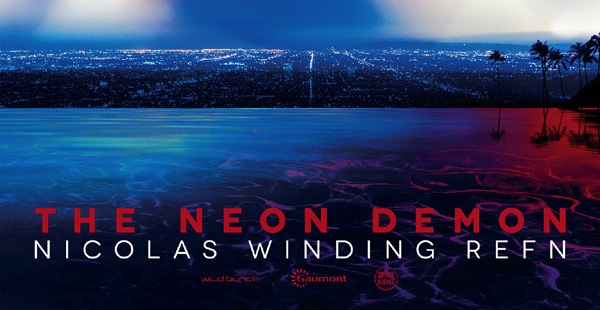
The Neon Demon

“Beauty isn’t everything. It’s the only thing.”

Where to start? Yesterday I had the privilege, courtesy of Little White Lies film magazine, to attend a preview screening of Nicolas Winding Refn‘s The Neon Demon, at the very schmancy Soho Hotel with my friend Galia. The film is not released until June 24th in the States and not until early July in the UK. However the film had its international premiere at Cannes last month which led to a substantial amount of reviews. As it stands on June 2nd the film has a rating of 6.8/10 on IMDB and 47% on Rotten Tomatoes. It’s looking like The Neon Demon is not going to be the new Drive (7.8/10 and 92% respectively) and there’s one really good reason for that. Refn’s return to LA is with a film that confuses depth with emptiness, mistakes meaning with vapidity and chooses style over substance. The result is an exploitation movie disguised as art, smothered with layers of pretension.

16 year-old Jessie (Elle Fanning) has just moved to Los Angeles. No-one appears to know or care that she is there. Jessie knows she is beautiful, She also knows that beauty is dangerous and that other women would kill for it. After her first photoshoot with amateur photographer and potential love interest Dean (Karl Glusman) Jessie is befriended by makeup artist Ruby (Jena Malone). Ruby offers to be the friend Jessie so desperately needs yet Ruby’s other two friends Gigi (Bella Heathcote) and Sarah (Abbey Lee), models only slightly older than Jessie, view Jessie instead as threat and competition rather than a new-found friend. It soon seems like everybody in LA wants a piece of Jessie, her beauty is admired and envied in equal measure – but what will it end up costing her?

What rather infuriates me reading back the plot summary I have just written is that I have made the film sound fun. It isn’t really. Moments of the film are, when the film casts a satirical eye on LA and the modeling industry, but when the film loses focus and Refn seems busy being self-congratulatory about his own brilliance – that’s when you see the film for what it really is. Vapid and empty. I’m sure it would be easy to argue that was intentional, a reflection of the 21st Century’s perception of models and beauty (blah blah yah yah)… but no.

13336104_10100855380438146_7474404562862228996_n (1)

Prior to the film’s screening its director and lead were invited to talk about the film and answer some questions (picture courtesy of Galia). Refn said, and not for the first time in the promo for this film, that ‘I wanted to make a film about the 16-year-old girl inside me’. This resulted in awkward stifled guffaws from an audience who hadn’t yet seen the film. For the first half of the film there are instances where you can see very loosely what he means by this. Jessie’s interactions with casting agents (Christina Hendricks), auteur photographers (Desmond Harrington) and wildly miscast ‘scary’ motel owners (Keanu Reeves) explore the vulnerability of the young in an industry that can be so parasitic and vampiric. It is during this period that the cast really shine. Fanning possessing an ethereality – an otherness that draws yet repels – Malone unnerving as a metaphorical wolf in friends clothing, Heathcote and Lee wonderfully cold as Jessie’s rivals.    

It is these more conventional moments that are some of the most engaging. They are intersected with moments that are more exploratory and ‘artistic’ (read: rather deluded and self-indulgent). These moments are overlong, assaulting the senses in a way that should be poetic but instead aggravate. However the soundtrack during the entire film is phenomenal – throbbing away and pumping tension into each scene. And, it must be said, the use of colour and lighting during these moments and the film in it entirety is truly extraordinary. Refn’s color blindness means that his use of colour must alway be in high contrast so he can see it (fact courtesy of Galia). The use of lighting and colour within each of these sequences establish then reflect the tone and ongoings in each sequence. It’s almost as if his use of colour reflects the dichotomy of the human experience…. (sorry I had to try at sounding like a proper film critic!)

It’s the film’s second half that gives into Refn’s epicureanism, resulting in the film becoming even less of a narrative (there wasn’t really one to start with) and more a spiral of ‘well that escalated quickly’. Things get weirder, even weirder, and then weirder yet. It is these moments that are the most problematic. I like weird. I am weird. But I need my weirdness in cinema to be purposeful. I don’t need to see a character deepthroating a knife without purpose nor a character performing necrophilia on a dead model again without purpose. Don’t even get me started on the shower sequence. I’m not the only one of the audience of about 50 of us who felt this way. The gasps and intensity of audience focus hugely shifted at this point, with the grosequeties accompanied by laughs of disbelief instead of the intended wonder.

These scenes have resulted in extreme horror from The Daily Mail (quelle surprise) with headlines such as “Coming soon to a cinema near you: Grim film featuring murder, cannibalism and lesbian NECROPHILIA that even shocked Cannes is now set for British screens” and “Has cinema ever been so depraved and the censors so amoral? CLARE FOGES on the extreme violence, cannibalism and lesbian necrophilia in new film The Neon Demon” These headlines are ridiculous for two reason. 1) I’m sure anyone who has seen a solid amount of film could name you films more graphic than this one. 2) Such headlines would give its pretentious twonk of a director an egotistical thrill and further fuel his perception of himself as some sort of revolutionary.  He’s not worth it.

The film favours an approach of Message over an actual storyline, choosing to drift between scenes as opposed to following a narrative and having loose outlines as opposed to actual characters. The more extreme moments are so needless they undercut everything that has occurred prior and throw any perception of The Message out of the window. If Refn wanted to criticise the modelling industry these scenes confuse The Message completely. Initially the film relies on the perverse pleasure of being voyeur of the voyeurs (we watch the watchers watching the watched) whilst pointing out the dark side of the industry. Yet once the aforementioned silliness occurs it is is almost like we see the film for what it really is – a mastabororty experiment where Refn gets to sadomasochistically annihilate his inner 16-year-old girl.

There are images and messages galore on offer within The Neon Demon, but the majority of these are like gaudy baubles. Beautiful to look at but totally empty.

2.5

Warcraft: The Beginning

123 minutes of beginnings and little take-off

I came out of Warcraft feeling confused. As a total noob when it comes to W.O.W I knew nothing about the material before seeing the film and the film has little provision for the uninitiated.  Whilst scowling the web for plot summaries and plot explanations to answer my questions I also came across the reviews. Two outcomes came out of this experience, 1) I still have unresolved questions that may just have been plot-holes 2) There are some really brutal reviews out there that make me feel very sorry indeed for Duncan Jones and his film. Read any of his PR for the film and it is clear this is a project of passion for him – an element that really shines through when watching. Warcraft is not horrendous nor particularly bad; just too convoluted to allow it to flow. Plus, considering the entire film focuses on introductions it still manages to leave too many gaps and lead to much head-scratching. 

Draenor, the homeworld of the orcs, is dying. A green-skinned orc called Gul’dan (Daniel Wu) controls a magical force called The Fel which allows him to open a doorway from their world to another, Azeroth the home of the humans. Gul’dan plans to send over the orcs in batches, the first being a group of the strongest warriors. Duratan (Toby Kebbell) the chieftain of the Frostwolf clan, his pregnant mate Draka (Anna Galvin) and his second in command Orgrim (Robert Kazinsky) are amongst the first to cross. Duratan has his doubts over the mysterious green magic, believing there to be a link between Gul’tan using it and  the destruction of their home. Fearing the same will happen again with this world me makes contact with Anduin Loather (Travis Fimmel), the military commander of the city of Stormwind who in turn contacts the king (Dominic Cooper), the Guardian (Ben Foster) and a young mage (Ben Schnetzer). United will they be able to stop the Fel from destroying yet another world?

That’s the plot as far as I understood it (apologies to any of the more informed if I have gotten anything majorly wrong there!) It’s not the plot itself that leads to confusing, but some of the main nuances. Character motivations often go unexplained, as are the links and relationships between them. Considering the film’s focus is to introduce it almost feels like a prior film that I had missed had already done so. When it comes to the storytelling process I’m still not sure if the film is really clever or really stupid, lumbering along from one set-piece to the next, frequently impenetrable to the viewers.

The world of Warcraft is a rather beautiful and detailed one, with lots of layers and depth. However although it has made the transition to the screen it has perhaps not been translated enough for it to draw in those new to franchise, and I suspect it it is too diluted for it’s loyal fanbase. I have no qualms in metaphorically using a glossary to understand a mythology for a Fandom, something I have regularly had to do whilst watching six seasons worth of Game Of Thrones or even the six Middle Earth films,  but this film has too quiet a soul and too dull to warrant such extracurricular research. There is also a prevailing sense, resulting from poor critical and commercial reviews along with poor box office takings, that this is a world that will not return to the screen again…

The characters that inhabit this world are fine, not particularly good nor particularly bad. Just. Fine. Kebbell is standout as the conflicted Orc, proving yet again at his great skill at using the technology to create such wondrous creatures. Fimmel is almost an Aragorn 2.0, a reminder of just how good Viggo Mortensen  was in the role of charmer with a heart of gold. A shoehorned-in romantic subplot with half-orc Garona (Paula Patton) is undercut in terms of believability both by underdevelopment and forced chemistry. The rest of the cast are criminally underused. 

Warcraft is a film that is fantastical, but far from fantastic. Although the story being told is adequately entertaining it is told in a manner that is rather butchered, dull and rushed. It’s enjoyable enough but there is a prevailing sense that this film is not as good as it could have/ should have been.

2 stars

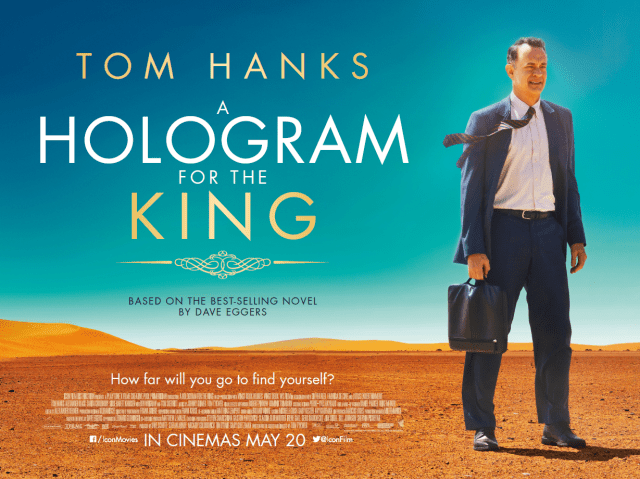
Hologram for the King

A film that seems as lost as its main character

It is a fact universally acknowledged, that Tom Hanks is watchable in anything. He’s one of the great stalwarts of Hollywood – an actor who the audience can rely on for a great movie. Aside from regular debates with my younger brother on Forest Gump (he’s pro and I’m anti – a debate which should hopefully finally be settled when we watch it together during the Summer) Hanks has had an incredible career littered with successes. His last release Bridge of Spies, directed by fellow great Steven Spielberg, led to a spectator experience equivalent to sitting in a really comfy leather armchair. Safe, secure and captivating. This film? He’s the best thing in it.

American Business man Alan Clay (Tom Hanks) was once on top of the world, CEO of Schwinn bikes – the bikes that every kid in America wanted to own. Now he’s a washed-up IT salesman who has been sent to Saudi Arabia to secure a contract with the King of Saudi Arabia for his massive new complex. Alan’s boss has made it clear that this is his last chance with the company, everyone is relying on the huge contract and if he doesn’t secure it then he’s out. Running late on day one due to jet lag he’s provided with a driver called Yousef (Alexander Black). Arriving on site it is clear that things are not as clear as they appeared back in America, with the complex nowhere near being completed.. Things begin to spiral for Alan and his health appears to be suffering, which is how he comes into contact with Dr Zahra (Sarita Choudhury). In a foreign country with a culture hugely different to his own how is Alan supposed to cope, let alone sell a contract to an absentee monarch? 

“And you may find yourself living in a shotgun shack /And you may find yourself in another part of the world/ And you may find yourself behind the wheel of a large automobile/ And you may find yourself in a beautiful house, with a beautiful wife/ And you may ask yourself/ Well…How did I get here?” The film starts of with Hanks reciting these lyrics to the epic Talking Heads ‘Once in a Lifetime‘ accompanied with a short montage which alludes to Alan’s current state of well being (read: not good). It successfully sets up the tone that will fellow, of quirk and occasionally surreal.  It’s one of the best bits of the movie, a high that it struggles to replicate. For a film that is essentially about a man having a mid-life crisis the film itself also lacks an identity. It’s not a comedy nor is it a drama.

There are too many allusions to some BIG topics – Saudi Arabia’s view on women’s rights, conflicts within the country and offshoring of industry – that prevent the film from being feelgood. Yet the film seems to desperate to provide a positive message that it tries to either ignore or forget about these features. The cast are all fantastic with the material they are provided with, all three main characters are memorable and well-rounded. Alan’s burgeoning friendship with Yousef and his budding romance with Zahra are joyful to watch. Both dynamics are sweet, endearing and rather believable considering the circumstances.

However Alan’s storyline about his business contract is less successful and his relationship with his daughter is also underdeveloped. The film also attempts then appears to shy away from making comments on the previously mentioned BIG topics. Instead of allowing them to provide a degree of darkness to the story they are treated as some sort of distraction. A sequence which in the space of less than 30 seconds sees Alan observe great poverty and then great wealth deserved to have been treated with more comment or reflection as opposed to metaphorically being pushed under the carpet. The best way to describe this film it that it’s like eating salted caramel – at times it’s sweet and at times it’s savoury – yet when you’re finished it doesn’t want to leave that as an aftertaste. It wants to wash it away with saccharin and a tacked-on ending. It’s as if the film-makers decided from the outset the ending they wanted – one about new beginnings, fresh starts and eternal hope –  and chose to  ignore anything that has gone on before that contradicts it.

The film itself is a fine enough watching experience. Hanks is typically cast as the American Everyman. It’s good to see him tackle something darker and with anxiety. Yet the film itself is rather bland, pleasant enough yet nowhere near his most memorable film.

2.5

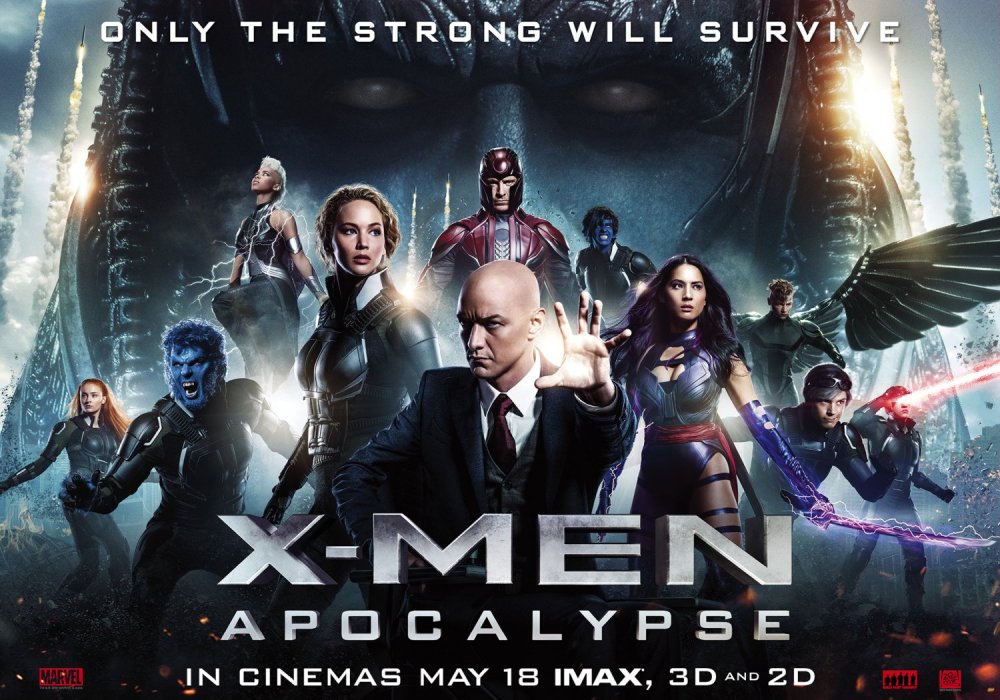
X-Men: Apocalypse

“At Least We Can All Agree The Third One Is Always The Worst”

The above line is uttered by Jean Grey (Sophie Turner) about halfway through the movie, when she and a few other character leave a cinema screening of Return of the Jedi. It’s one of numerous strange self-aware moments within the film. If this had come out a year after Deadpool it could easily be assumed to be a rip-off of the superior film’s meta sense of humour. Instead it comes across as strangely self-satisfied and almost arrogant. Considering her character is telepathic it almost feels like she was reading this viewer’s mind…

10 years after the stand-off with the Sentinel prototypes at White House the X-men have never been so far apart from each other yet have never been so strong individually. Charles Xavier’s School for Gifted Youngsters is full of mutants, with Professor Xavier himself (James McAvoy) and second is command Hank Mccoy (Nicholas Hoult)  keeping a close watch on telepathic protegee  Jean Grey (Sophie Turner) and new recruit  Scott Summers (Tye Sheridan) as both re struggling to control their powers. Raven (Jennifer Lawrence) has become a loner/nomad/mercenary helping other mutants.  Erik Lehnseer(Michael Fassbender) is now a married man with a young daughter. But when immortal physic mutant Apocalypse (Oscar Isaac) rises from a millennia -long sleep  his awakening will have consequences for the world’s population of humans and mutants alike. 

How do you like your squash? I personally like it strong and full of flavour. I don’t like it weak – diluted and lacking in flavour.  That’s my problem with this film. To use this clunky analogy for all it’s worth the cordial (the good stuff) is diluted by too much water (i.e characters, plot and action). Although the ‘too-many-characters-may-spoil-the-broth’ did cause Civil War a bit of a stumble, in the case of this film it forces the film to fall flat on its face. Repeatedly.

Fatal Flaw Time: Characterization is almost completely abandoned in favour of action and set pieces. For fans of the franchise, or any of its other incarnations, we witness one dimensional versions of the characters we know and love. Lawrence as Raven/Mystique spends the majority of the film either wearing a pinched expression of exasperated  discontentment. McAvoy’s dialogue is reduced to  platitudes and mawkish ponderings. Sheridan does little to win favour for Cyclops in the versus Wolverine debate. Turner is okay as Jean Grey but her American accent quickly steals audience focus for all the wrong reasons. And, alhough it was great to see a cool AF version of Jubilee (Lana Condor) hanging around I’d rather her not even have been there as she is bitterly unused. Talk about how to (metaphorically) prick-tease a Fan-Girl!

Then there’s the villains. Fassbender has some incredibly emotionally and engaging sequences but is then too frequently forced to fade into the background. Isaac is criminally wasted, hidden under rubbery prosthetics with a character whose character and abilities are far from defined. The three new characters who join Magneto as the Four Horsemen are completely overwhelmed – Ben Hardy as Angel is ill-served, Olivia Munn as Psylocke weirdly reminded me of this sketch by Mitchell and Webb in terms of OTT villain-face and Alexandra Shipp as Storm seems more than interesting enough but underused. The villainous plot they hatch is of such a scale that is almost becomes bland (think the final 30 minutes of Man Of Steel) and completes overwhelms its characters.

Though, in fairness it’s so overstuffed with characters  it’s almost unsurprising, although not forgivable. The motivation of the characters is devoid of reason and the plan itself lacking real purpose. The plot is also so full of holes (talking Swiss cheese territory here) that it becomes incoherent. There’s nothing new or interesting with the plot, it takes some irritatingly familiar paths, that this film feels tired and bloated in comparison to its counterparts. It’s also so unbearably serious, akin to SvS:DoJ in terms of getting ‘dark’ confused with ‘murky’. 

In fact, upon reflection, the only franchise contribution I enjoyed and I am truly thankful for is that of Kodi Smit-McPhee as Kurt Wagner/Nightcrawler. He is given some of the film’s funniest, sweetest and most moving moments. He’s a real joy to watch and probably the only reason I would risk the (inevitable) follow-up. What I can’t forgive the film for is a sequence that occurs just after the Jean Grey’s line about trilogies. After a rather wonderful and emotional sequence that has been delicately woven the tension is completely destroyed, totally sledgehammered, by a shift in tone that is so jarring it is unbearably stupid.  It’s a sequence involving Peter Maximoff/Quicksilver (Evan Peters – who totally stole the show in Days of Future Past  in the space of 10 minutes of screentime) that I would have undoubtedly loved at any other point in the film. But, straight after such a well-executed and pathos-filled sequence, it is utterly wasted and even made me resent his character. By the end of the film my faith in him was somewhat restored though my love for him has been somewhat tainted. Such an inconsistent moment reflects the very nature of the entire film.

As a teacher I’ve found the true power of saying the following phrase and it’s the only phrase I can find that fully articulates my feelings towards this film. It’s not that I’m angry X-Men:Apocalypse – I’m just disappointed.

2 stars


Louder Than Bombs

What happens to a bomb that doesn’t explode?

My response to this film is surprisingly (well it would be to my past self) problematic. If I had reviewed it soon after watching yesterday I would have been rather damning of the film. Now, with roughly 28 hours worth of distance from seeing it, I feel slightly warmer towards it. (Only a few degrees mind – let’s not go crazy). With a level of retrospect I can admire the ideas and ambition of the film, something which I wouldn’t have been able to do initially after watching. However, whilst I may feel softer towards it I am still not a fan and think the film is largely unsuccessful it what it wants to achieve.

Three years ago famous war photographer Isabelle Reed (Isabelle Huppert) died in what most believed was a car accident. Now, as a museum retrospective of her life and works is fast approaching, her close friend is about to write an article about her in the New York Times and as he advises her widower Gene (Gabriel Byrne) he will mention in the article the fact that her death was most likely suicide. Gene must now find a way of telling his youngest son Conrad (Devin Druid) the truth before he finds out through other means. An opportunity to do so arrives when eldest son Jonah (Jesse Eisenberg leaves his wife and newborn daughter to come home and help look through his mother’s work space to find photos for the retrospective. Whilst home Jonah must find a way of coming to terms with the past in the form of ex-girlfriend, his brother’s difficult present and how his future role as a father may be shaped by his relationship with his own. 

It’s interesting that through writing the above plot summary I found myself again warmly engaging with the key ideas of the film. All of us have been touched by some sense of loss and each of us will handle the grief in different ways – some may mentally stay in the past with that person whilst others may push such thoughts aside and stay primarily focused on the present and future.

All of the actors do a fine job in subtly portraying grief. Byrne’s father trying to do the right thing for his two boys whilst watching his relationships with both fade away truly pulls at the heartstrings and occasionally at the bone. Druid plays the difficult emotionally stunted teen finely and somewhat reflecting the universal horror of adolescence. As difficult as my audience-actor relationship is with Eisenberg (forgiveness for his version of Lex Luthor is still far far away) but at times I did appreciate his character Jonah. I can say quite honestly that in the film’s opening sequence I even enjoyed watching him.

But it’s Huppert’s grief that is perhaps the most visceral, even though it is she that is being grieved by the family she left behind. It is a roughly two minute sequence about halfway through the film that really demonstrates this. The camera just focuses on her face in close-up for two minutes. For those two minutes nothing else happens. But as we know her character and we know the emotional battles she suffered (between her art and being a mother/wife) we read the metaphorical scars on her face. We look into her eyes and see the utter despair. We look behind her mask in a way we either chose or are unable to do with each other in real life.

All of this being said I think these ideas are stunted by execution. Though the pontification and using on the nature of grief is extraordinary and truly applaudable, either through intention or accident we are unable to connect with any of the characters – all are pretty unlikeable on various levels and for various reasons. It’s this aspect of the film that will and has been truly dividing audiences. Perhaps it is intention – that grief cannot and should not be sugarcoated, sometimes it will bring out the worst in each of us. However I am in the camp that views this as a flaw and something that prevents me from truly connecting with the film.

Whilst I well and truly admire the film’s sentiments and ideas by borderline disdain for it’s characters stops me from truly appreciating its merits. The fact the film takes a rather poetic storytelling approach, of drifting between moments, of days being indefinable, of present day being interchangeable with memory, did was not cohesive enough for me. In some ways I write this paragraph with a degree of apology, as someone who lost a relative (my uncle) in June and will soon be facing the prospect of that first anniversary without him. Sometimes I reflect on whether I am grieving ‘properly’, if I am approaching my grief ‘healthily’ and if I am ‘normal’ in my response. The film carefully weaves these ideas into it’s narrative but somewhat abandons them in favour of artistic statement and style.

Whilst full of poignant moments the film is ultimately too cold and reserved to provide the cathartic intimacy it appears to wish to provide.

2 stars

Batman v Superman: Dawn Of Justice

Meh. Vanilla. It’s okay.

The three statements above are the three different ways I’ve answered the question, ‘What did you think of Batman V Superman?’ in the past 14 hours. Although there are aspects of the film that are good and entertaining that is just what they are, aspects. The film overall is a bloated disaster – 151 minutes of too many ideas fighting for screentime which end up being incoherent and underdeveloped. Instead of a typical review, in which my thoughts on the film would be as nonsensical as the film itself, I’m going to use a list to let my great ideas have an organisation and a flow (lesson to the film-makers there…)

The good

The visuals

Aside from Cineworld at the o2 Arena screwing up the calibration of the sky superscreen (having forced the audience to watch all the ads, trailers and 25 minutes of the film with only one eye open as the projection was out of focus, they then decided to stop the film and spend 15 minutes reformatting before restarting the film. Cineworld have done not anything to compensate for this screw up and literal headache) when watching this film you can see where the money went. In fact, I suspect that is what director Zack Snyder wants us to do. The fights are big and brash, the costumes and special effects are spectacular. The cityscapes are breath-taking (if of debatable geography). In terms of big screen spectacle, it’s all here. Some sequences appear straight out of a comic book in terms of iconography and style, such as when Superman arrives at a Dia de los Muertos (Day of the Dead) celebration and he is being aligned as a Messiah-eque figure.
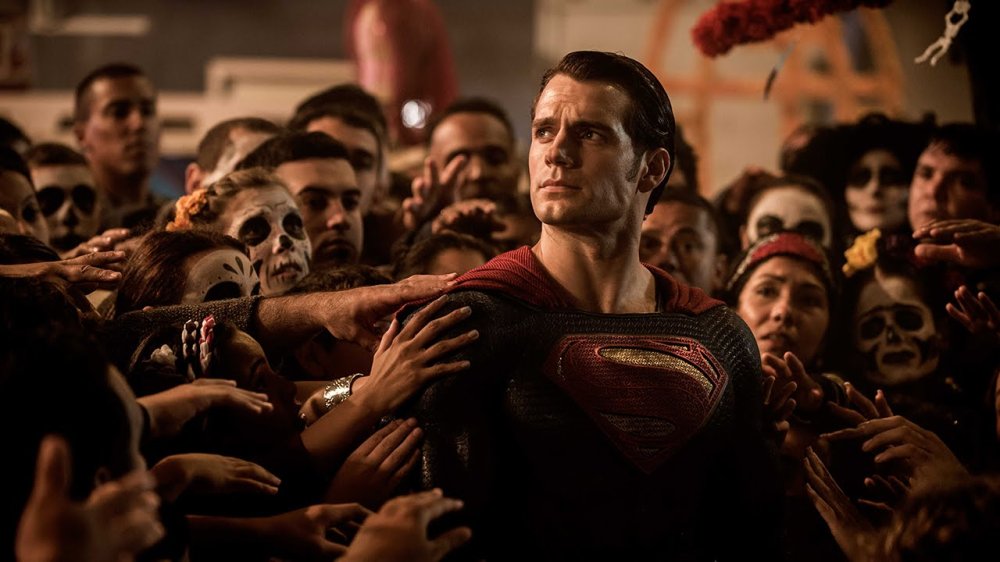
MESSIAH

 Batman

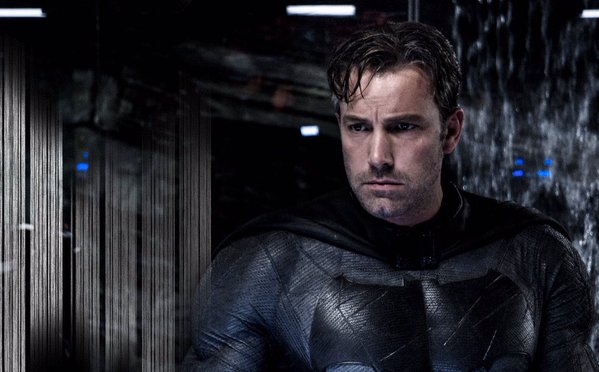
Whilst I was initially in the ‘Say No To Ben Affleck as Batman’ camp, I did begin to change my mind when the first trailers and posters arrived. As a lover of Frank Miller’s The Dark Knight Returns I could see how Affleck’s portrayal would be most similar to Miller’s Batman. A Batman who is aged, haggard and embittered by battle.(The image below shows the film’s main link to the 1986 seminal comic book.) For the most part in this movie it works. Affleck is charismatic enough as Bruce Wayne and imposing enough as Batman. It’s almost a shame that he didn’t get his own standalone movie prior to this one to fully establish his character, though perhaps the decision to open this movie with yet another retelling of the Wayne shooting/origin story indicates to us that a standalone Batman movie may have possessed little originality. 

ben-affleck-s-batman-may-be-the-darkest-knight-yet-in-batman-v-superman-dawn-of-justice-618327.jpg

Wonder Woman

I don’t think it is a spoiler to say that Gal Gadot plays Wonder Woman/Diana Price. The trailers gave that one away long ago, yet the film treats it as though it is a secretrading by hinting then having a big reveal that is slightly unnecessary. Though she may not look exactly like the Wonder Woman from the comics I used to read (she’s rather slim-line in comparison to the Golden age version) she does possess a lot of power and successfully shares the screen with her male counterparts (as opossed to having them steal the limelight). The moment when the three are first united did induce a real Fangirl moment for me, seeing the Trinity together. In fact I would happily argue that she steals the show from the broody boys…

download.jpg

Easter eggs

There are many moments in this film that are for the fans, moments that casual fans may get but not appreciate or may not even ‘get’ at all. I’m not going to state them fully here, just in case you’re reading this and want to avoid spoilers, so I’ll write them out but fill in the gaps. I liked seeing ………… in the ……….. I also loved the use of …… to show …………. Finally, the appearance of ……….. in the ……….. was an excellent yet subtle touch. These three aspects alone got me more involved in the next film than the film I was currently watching. By the way, there ARE NO AFTER CREDITS SEQUENCES. Don’t sit through all the credits it’s pointless (Hey Sam if you’re reading, yes I am referring to you here!)

Soundtrack

I don’t think you can go wrong with a Hans Zimmer soundtrack.His collaboration here with Junkie XL is immensely successful. The score for this film is beautiful and emotive, something I would actively choose to listen to outside of watching the film which I don’t often think/do. My personal favourite is the rather aptly-named ‘Is she with you?’ 

The bad/ugly

Superman/ Lois Lane

I know it’s cool to hate on Superman, but I am quite fond of him. To some he may represent archaic ideas of patriotism, but so does Captain America and that guy walks around wearing stars and stripes. Yet Dupes has never had the cinematic renaissance that Batman has had twice (1989 and 2005). The 1970s/80s films are enjoyable yet of their time, Lois and Clark was entertaining yet cheesy, and Smallville was ocassionally good if rather tween-y.In more recent years, Superman Returns was long and dreary whilst Man Of Steel was interesting yet lost its audience in the overlong battle-heavy final sequences.  Batman V Superman is not his movie either. Poor Henry Cavill spends most of the movie showing off his range of emo frowns. It’s that or rescuing Lois Lane THREE times. It’s all Amy Adams gets to do in the movie, which is a real shame as she is an incredible actress playing a character with incredible potential. 

superman-lois-lane-dawn-of-justice-after-credits.jpg

Dreams

Of all the time-wasting nonsensical moments in the film, it is the dream sequences which really stand out for all the wrong reasons. There’s no entry point into them, you’re suddenly immersed in them with no idea of what is going on in them. Then the character wakes up and the audience is even more confused abiut what is going on. If the plot was more coherent it would be less problematic, but as the plot is so stodgy and indecifrable the moments just confuse as opposed to enhance what is going on in the main event.

dream.jpg

The plot

Speaking of the plot, very little of it actually makes sense. Motivations are blurred from the outset with very few that are actually convincing or believable. It feels like this is a Batman movie forced in with a Superman movie, the story jumps between one then the other without any link. Moments drift, storylines are picked up then dropped and things happen without explanation. I’m going to stay intentionally vague on this one to avoid further spoilers. Let’s just leave this with saying that everything is miscalculated and heavy-handed. Ultimately it’s a very hollow 151 minutes of things happening for little reason or care.
sad.jpg

‘Hello darkness my old friend’

A schism has formed over this movie between critics and fans. As someone who considers themselves to be both, I think the main argument over the ‘darkness’ of this film is flawed. I’ve read a lot of reviews talking about how this film is ‘too dark’ and fans retaliating with ‘the comic books are dark, it’s how it should be’. My answer to this? No. Yes some of the comic books are dark. Alan Moore’s The Killing Joke, Jim Starlin’s Death in the Family and Jeph Loeb’s Hush (to name but three Batman story arcs) are dark, haunting and Gothic. Christopher Nolan‘s Batman trilogy is dark, haunting and Gothic. Batman V Superman is not dark, haunting and Gothic. It’s murky and shallow. Its darkness is artificial and synthetic. It’s a wannabe-emo in contrast to the aforementioned masterpieces. It pouts, moans and frowns. It tries to make important statements and points but these are empty and ill-informed. It’s like wearing a band t-shirt when you don’t really know the band (one of my biggest pet peeves). Having your actors grimace and setting most of the action at night, fighting for ‘what is right’ does not a maketh a ‘dark’ movie. A coherent plot, one with depth, does.

frown.jpg

Lex Luthor

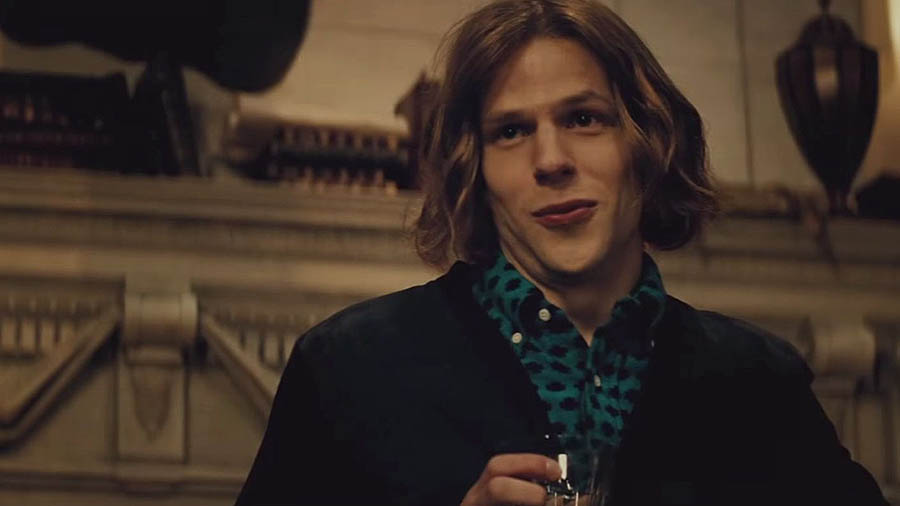
Jesse Eisenberg as Lex Luthor appeared like a strange choice since it was first announced. This was embraced by Zack Snyder who promised great things, new take on a classic archvillain. In the comic books Lex Luthor is a charismatic business magnate who is physically powerful and formidable. He is shown to be a true threat to Superman. Charismatic, powerful and formidable are not phrases one would associate with Eisenberg. So perhaps this would be a refreshing new take on the character? Nope. It’s Jesse Eisenberg playing  Heath Ledger playing the Joker as Lex Luthor. He is weedy, has daddy issues and rambles. Everything he says is either shouted or mumbled. His hand mannerisms are twitchy and strange,  dominating each frame. This man is no threat but a nuisance who gets in the way. To use his performance as an analogy for the entire film – it’s devoid of depth and is ultimately lacking. 
jesse-eisenberg-lex-luthor