The Big Short

Proof that reality itself provides the darkest of comedies

I was 16 on Monday the 15th of September 2008. I was watching the news while getting ready for my second week of college (yes, I was *that* kind of teen). The main headline, which kept being repeated at 15 minute intervals, was that a bank called Lehman Brothers had filed for bankruptcy.  I had no idea what this meant, but from the tone of the news reporter and from the footage of people in suits standing outside a fancy-looking building and crying, I could tell this was bad. ‘Bad’, as it turns out was an understatement. In the 8 years since the consequences have, and continue to be, devastating world-wide. But I can admit in full honesty, I had never understood how or why it happened. In fact I wasn’t quite sure what ‘it’ was. That’s where ‘The Big Short’ comes in. This film, set in the three years prior to the financial crisis, takes that serious and complicated sequence of events and turns into a scathing critique that can be understood by all. It forces you to confront the truth, whilst snorting at the true facts – the unfathomable stupidity caused by greed.

In 2005 hedge fund manager Michael Burry (Christian Bale) discovered that the American economy would be due to crash in late 2007. Why? Because the housing market was incredibly unstable, built on poor foundations of high risk subprime loans. Loans were being given out by banks to people who would never be able to pay them back, which would result in them having to default on their payments. For millions of the American public this would mean losing their homes and having to file for bankruptcy. By predicting this collapse Burry realised he could profit by betting against the banks who refused to believe it.

  Trader Jared Vennett (Ryan Gosling) hears of Burry’s actions and the prediction it is found upon and discovers it’s all true. A misplaced phone call to a wrong number leads him to hedge fund manager Mark Baum (Steve Carell). Baum invited Venett to a meeting, also attending by Baum’s three cynical partners. It is then that Venett reveals the level of greed that has occurred, and the inevitable dire consequences the level of fraudulence will have for the general public. 

Charlie Geller (John Magaro) and Jamie Shipley (Finn Wittrock) are two young friends and business partners, who have their own independent investment company. Having had some good fortune they have move to New York to play with the big leagues in New York. They are refused meetings with most of the big companies, and laughed at by those who agree to meet them. That’s when they hear of Vennett’s findings and ask for their help of old friend and retired banker Ben Rickert (Brad Pitt) to profit from the impending economic collapse. 

It’s incredible really that this domino effect (from Burry finding out the truth, Vennett hearing of it and pushing Baum to invest, with Geller and Shipley hearing of this and making their own investments) lead to his small group making an insane amount of money. What turns this incredibility into incredulity (or impassioned rage at the injustice and insanity) is that these few men saw something thousands of others in simillar jobs/positions couldn’t see or refused to see. That blind ignorance led to millions, maybe even billions, losing their jobs, homes and any possible chance of ever achieving financial stability. Four trillion dollars just disappeared – with no consequences for those whose actions led to it.

The film explores these dark crevices with a whip-smart script that provides a degree understanding that is almost a public service. It’s sardonic and full of wit, yet exposes the true woe of an ultimately depressing story. Somehow the film is wildly entertaining yet immensely informative. It’s perfect Friday night movie entertainment, yet allows for immense reflection. The editing is superb – using breaking of the fourth wall for great effect. Using stars like Margot Robbie and Selena Gomez  in cut-aways to explain key concepts is an incredible use of cultural commentary –  the banks wanted us to be distracted, ignorant of what was going on, so allowed us to focus on trivialities. Voice Over narration analyse the warped  ‘logic’ of a system that was not even understood by the bankers who used it.

The film doesn’t focuses on the suffering of the millions, but instead of the ‘outsiders’ at the centre of the storm. Each actor provides an incredible character performance – from Bale’s eccentric and tortured loner, to Carell’s pessimistic and embittered moral crusader. It’s these characters and those they interact with that make the film so entertaining. The interactions they have are farcical and beyond belief, based on incompetence and corruption – the kicker is that they are all true.

‘The Big Short’ is a contemporaneous disaster movie. We want our ‘heroes’ to succeed, knowing their success spells devastation for the entire nation. The punch-line? We watch it in hindsight, knowing what happens next. That’s the saddest’ joke’ of it all.
The 5th Wave

The worst film of 2016 (well, 23 days in at least…)

Did you know that discount retailer Poundland (for those outside the UK it’s a shop where everything costs £1, which is roughly 1.32 euro or 1.43 dollars) stocks its own brand of Lego Star Wars? It’s called Battle of the Galactic. It’s an incredibly cheap and tacky-looking rip off of the original. That is what ‘The 5th Wave’ is to franchises like ‘The Hunger Games’ or even ‘Maze Runner’ and ‘Divergent’. It’s cheapily made, poorly constructed and steals the best bits from other films/books then regurgitates them into a mediocre mess. What makes this film even more ‘impressive’ is that it is not even ‘so bad it’s good’. It’s just really really bad and remarkably boring.

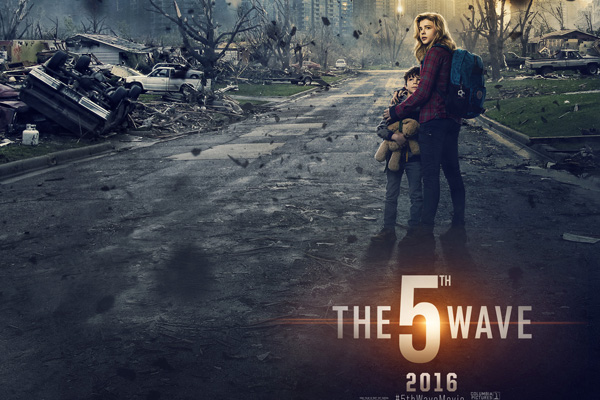
Cassie Sullivan (Chloë Grace Moretz) was a ‘super normal teenage girl’. She had friends, went to parties, had a 2.2 family and had a crush called Ben Parish (Nick Robinson) who she spent most of her time day-dreaming about. But then… ‘it’ appeared. Some sort of alien space ship came from nowhere and started hovering above America. For ten days nothing happened. On the tenth day the first attack happened (the 1st wave) and destroyed all electric currents, followed shortly after by waves 2, 3 and 4. Most of the Earth’s population has been killed, with Cassie going with her family to a refugee camp. It’s at the camp that she is separated from her young brother Sammy (Zackary Arthur).  Nobody knows when the Fifth Wave will strike, or in what from it will strike, but it will happen. Against a backdrop of mistrust and fear Cassie makes a desperate journey to find her little brother, on the way meeting mysterious stranger Evan (Alex Roe) who may just be her only hope.

I would like to apologise in advance if, when you read that plot summary above you thought ‘Hey! This doesn’t sound quite so bad!’ Upon rereading it I have made the film sound far more interesting than it actually is. Between each of those events there is so much talking, needless and endless mundane talking, and dire reflecting. Whenever the action picks up it’s then forced to slow again by some pitifully-lacking, poorly-scripted, cliche-ridden sentiments.  For a film that is supposedly the end of the world, the world it features is so dreary and mind-numbingly boring that you do end up wishing for armageddon to happen so the film will end and you can go home.

Considering this film is a 15 (Hunger Games interestingly is a 12A) there is little to warrant it. The action here is so minimal, so bland and lacking in emotion compared to the superior franchise. The set pieces the film possess are so ineffective, clunky and predictable that there is little chance for escapism. The film becomes more and more absurd with each mind-numbingly boring sequence, yet remains utterly lacking in enjoyment. There is an occasional some-what amusing joke that gets shoe-horned into the narrative, but these moments are few and far between.

However, there was one factor about this film that was really reassuring – that will allow me to sleep a little lighter at night. The one thing I did learn from this film was that no matter how bad the alien apocalypse gets, I can still get my beauty products. There’s Moretz’s survivalist with the perfect hair, the sergeant (Maria Bello) with the perfect lipstick/foundation combo, and the smoky kohl-rimmed eyes (a pretty bad-ass Maika Monroe). It’s immensely reassuring to know that no-matter how desperate my battle for survival may get, my look will still be on-point. 

This film is not entertaining enough to hate-watch, or to watch ironically. There’s not even enough to make a drinking game out of it. I can’t even be bothered to turn this into a film rant. It’s just bad. It’s cheapily made, lazily shot with adequate-enough acting. The obvious intention is for this to be the start of a new franchise, one which nobody will want. In a week where I got to see ‘The Revenant’, a film which proved the potential power that film can have, I endured this film which shows that not everyone can handle the responsibility that the great power of cinema can have.

Watch it. Or don’t. Either way – it’s bad.


The Revenant

12 Oscar nominations – but just how good is it?

Leading the pack with 12 nominations from the 88th Academy Awards  is ‘The Revenant’. Often that information is not necessarily an indicator on how much the general public will like it, but how much a small committee (who may not have actually watched all the films) liked it or think it deserves mention. Happily, in this case, ‘The Revenant’ is worthy of most of the acclaim it is receiving. The film is starkly beautiful yet bitterly bleak. It’s uncompromising and devastating, leaving the audience in a state of emotional destruction. However, it’s not perfect. It’s overlong, losing much of the audience about two thirds in, more of an endurance test than entertainment and certain aspects are not as good as the film (or the awards committee) seem to think it is. To break this down further, whilst remaining spoiler free, I will divide this review into 5 sections- each guided by one of the nomination categories.

Performance by an actor in a leading role: Leonardo DiCaprio in “The Revenant”

Poor Leo. It is a truth universally acknowledged,  then laughed at, that DiCaprio is the bridesmaid of the wedding ceremony that is the Oscar’s. Always the bridesmaid, nominated six times, yet never the bride. It’s fair to say, after watching ‘The Revenant’, that he really deserves this one. There’s not only what he clearly must have gone through behind the scenes, the below freezing weather conditions, and what was required from him, a man on the edge of death crawling back in the name of vengeance, but what he manages to achieve with the performance that surely must put his name inside that envelope.  His rage at what has been done to him and his family pours out through every pore, exposing it with every look, gesture and expression. He truly makes everything that happens to him, not matter how seemingly unbelievable it is, seem real and dragging us along with him for the bitter journey.

Performance by an actor in a supporting role: Tom Hardy in “The Revenant”

Now this is a bit of a strange one. Having known that he had been nominated I spent all of Hardy’s screen time analyzing his performance – looking for that moment or reason  that explained it. But neither moment nor reason came. He’s good, yes, but it’s Hardy in weird, strange and rambling mode. The performance is pretty one-dimensional and rather one-note, supplying little reason for the audience to care for what happens to him. Also at times his speech enters into Bane-levels of incomprehensibility. Compared to the other four candidates in this category (Christian Bale in “The Big Short”, Mark Ruffalo in “Spotlight”, Mark Rylance in “Bridge of Spies”, Sylvester Stallone in “Creed”) Hardy seems almost shoe-horned in. If the academy really wanted to acknowledge supporting performances in “The Revenant” it would be far better acknowledging either Domhnall Gleeson or Will Poulter, both of whom provide performances far deeper than Hardy’s.

Achievement in cinematography: “The Revenant,” Emmanuel Lubezki

Yes. What makes this film so successful, every event so brutal, is that all occurs in a manner that is oxymoronic. The camera dances across the landscape, panning, tracking and weaving across the wondrous yet terrifying unknown that is capable of much beauty and brutality. You’re lulled into a false sense, admiring the scenery, then you’re shocked back to realising just how dangerous this world is. Without this, the film would be far less memorable or emotive.

Achievement in costume design:  “The Revenant,” Jacqueline West

Whilst costume is great in this film, this award needs to go to “Carol,” Sandy Powell, for which the costume really captured the era and the mood.Through costume alone it made every character, from speaking roles to walk-ons,  feel real with an enriched back not matter how seemingly unnecessary they were . With “The Revenant”it was the cinematography over costume that created the overarching tone.

Achievement in directing: “The Revenant,” Alejandro G. Iñárritu

To bring such emotion out of a cast, as with this film, a director must be extraordinary. The power Iñárritu’s cast generate tells just how magnificent he is. My only criticism would be that the implied power and complexity of the final act is not as powerful or complex as he may have intended.

 All in all, “The Revenant” is more than worth watching. It’s an experience that needs to be experienced on the big screen. However, it’s not light-hearted entertainment or those who are easily shaken.  An impassive musing on man’s plight which does not shy away from harsh realities.

Room

Astonishing And Devastating In Equal Measure

To begin with, an analogy. Have you ever wrung a towel, a facecloth or even just a piece of fabric in general? You put all your strength into the movement, creating enough tension to drain the cloth of the water it possesses. Are you with me? Now let’s replace a few words of that scenario – the face cloth is the viewer of ‘Room’, the water is either literal tears or just emotion in general and the source of the wringing is the film. Everything, from the cinematography, the mise-en-scene, the dialogue to the extraordinary performances , works in conjunction to drain you so brutafully (see, I made it work there too!) drain you. Never has such a thing been done so willingly, nor with such reward. ‘Room’ is otherworldly in its brilliance and ability to shatter your heart.

Jack (Jacob Tremblay) lives in Room. As far as Jack knows that is all there is to life as he has never left Room. As Ma (Brie Larson) has explained to Jack outside is ‘Space’ and filled with aliens. The only other person knows of is Old Nick who brings them food, necessities  and a ‘luxury item’ referred to as a ‘Sunday Treat’. When Old Nick comes to spend time with Ma, Jack must sleep in the wardrobe. Jack has just turned five and Ma has started to release that he may be old enough to know the truth. That there is a whole world outside of Room, but a world that has been closed off to Ma since Old Nick kidnapped and locked her away seven years ago. Ma was once Joy, a seventeen-year-old girl on her way home from school. Now no-one knows where Joy is. Joy comes up with a plan that involves tricking Old Nick into taking Jack outside of Room, allowing for Jack to escape and get help to rescue Ma. But will Jack be able to accept he could have a life outside of Room?

‘Room’ is a blend of true-crime and fairy-tale. It tells a story that is so abhorrent and seemingly hopeless in a way that is grippingly real, intimate yet somehow beautiful. Jack’s view of Room is fairy tale-like, where what are ordinary objects to us are the only one of their kind, have a personality and are therefore addressed with capitalisation (Table, Lamp, Bed etc.). The television is not a link to the outside world, there is no outside world, but instead images of things that do not exist. It is Joy’s view that is the true-crime, through her eyes the surroundings are depicted in their true horror. Joy is a prisoner, her child was born into captivity, and she has created this world to help them both survive. It is the blending of these two worlds that generates the film’s astonishing power.

But it’s the performances of its two leads that allow this power to land – to convince and cherish. Brie Larson presents an anguish that is so severe that at times becomes unbearable to watch.  Her raw and honest performance is miles, lightyears even, away from the many mawkish performances of exploitative ‘true movies’. Jacob Tremblay provides the kind of child performance you see once in a decade, his abundant glee at the rose-tinted life in Room through to his difficult transition at learning everything believed was a lie. Joy tells Jack these stories to keep him sane in confinement, and Jack’s job unbeknownst to him is to keep Joy sane.  The bond shown between mother-and-son is otherworldly in its believability and its depth.

‘Room’ is gut-wrenching, heart-wringing and brain-haunting. It’s not typical night-out to the movie fayre. At times it’s impossible to watch, and will haunt far longer than its two hours running time. Yet it’s a narrative journey well worth making, proving the power of cinema and the power of extraordinary performances.

‘When I was small, I only knew small things. But now I’m five, I know everything!’ – Jack

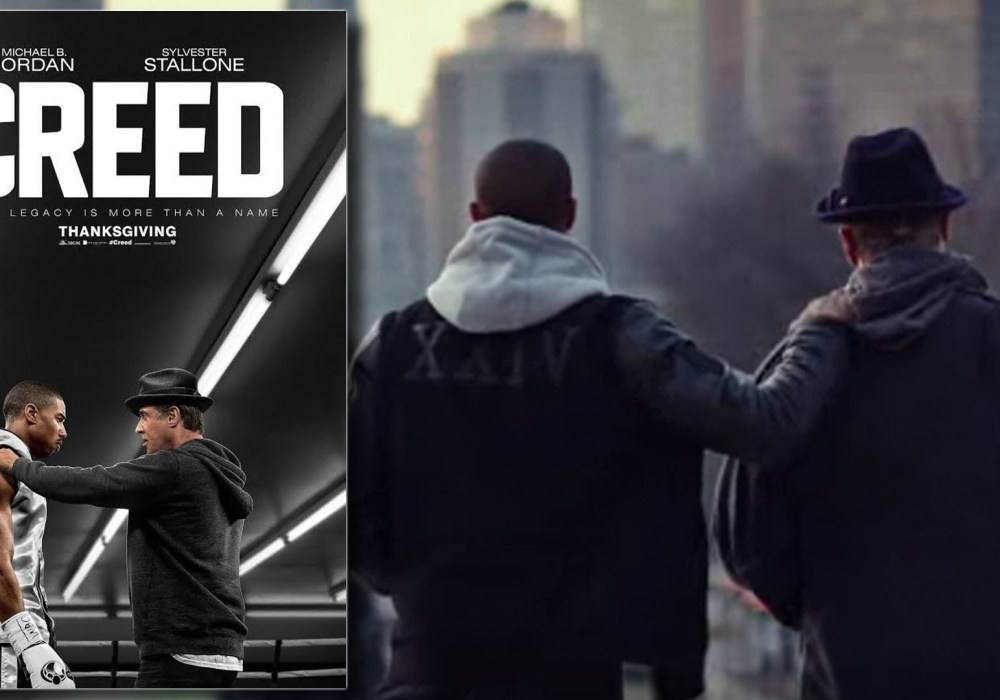
Creed

A new era. A new generation. A new legacy has begun.

First, to address the elephant in the room. I didn’t really want to see this movie. I had no real intentions of seeing it and was more than happy to let it pass me by. But when Cineworld announced a a preview screening for Unlimited card holders I booked a ticket, yet remained uncertain. Then Cineworld had to throw its toys out the pram and refuse to show ‘Hateful 8’. To maintain this weekly cinema-going challenge I almost had to attend.

Now that may be slight information overload, but hopefully it has served a narrative purpose – in establishing the disinterest, bordering on disdain, I felt upon entering Screen 7 at the CIneworld at the O2 arena (have I painted a clear enough picture yet?) Now you should be able to understand the surprise I felt, and admittedly still feel,for how I much I loved this movie. I expected a run-of-the-mill hero’s journey story arc, a mundane blend of drama and people getting punched in the face. But ‘Creed’ truly and utterly defied my expectations – instead being an incredibly emotive feel-good movie will some brutal and realistic fight sequences.

1998. Adonis Johnson has been caught in the middle of a fight in the Los Angeles youth facility and been put in isolation. Again. However this time the young boy has a visitor – Mary Anne Creed (Phylicia Rashad), the wife of deceased former heavyweight champion Apollo Creed. Adonis was conceived during an extramarital affair that Apollo had. Mary Anne offers to take in Adonis as he has no-one else. Seventeen years later and Adonis( Michael B. Jordan) still feels conflicted in his love of his father and his love of boxing. Deciding to pursue his instincts Adonis travels to Philadelphia and gets in touch with his father’s old friend and rival Rocky Balboa (Sylvester Stallone) in the hopes of persuading him to be his coach. In Philadelphia he also meets Bianca (Tessa Thompson), a woman who also has a passion that drives her. Philadelphia may provide Adonis with a new start but it is also haunted by his father’s legacy.

Rather disarmingly, ‘Creed’ shares much with ‘Star Wars: The Force Awakens’. Both are the seventh films in the franchise. Both belong to franchises which possess recent additions that were of poor-to-awful quality. Most importantly – both of the new releases are successful post-modern sequels that reinvigorate the stalemate series. ‘Creed’, in a joyfully unironic manner, shows a human being with a passion that consumes him. Adonis has an innate need to box, yet remains constantly aware and is frustrated by the fact he must remain in his father’s shadow. A man he never got the chance to meet. What makes the film so marvellous is is that this conflict is not overly reliant on the dialogue to convey this conflict. Yes the dialogue itself is crisp and realistic, but it’s not the only provider of exposition.

It’s built upon with fantastic performances from all the cast. It’s brilliant to finally see Sylvester Stallone is a good movie after years in the cinematic wilderness. Then there’s, rather unexpectedly perhaps, the cinematography. The camera-work on this film is astounding. The choices that have been made are so clever and convey so much. For instance, very early on, we observe Adonis watching a projection of his father in the ring. Adonis then gets up next to the screen and imitates the punches of his father’s opponent. Not only does the camera-work in this sequence make the scene intensive, but the lighting reinforces the notion that Adonis constantly lives metaphorically in the shadow of his father. The scene that is truly stand-out is one of the fight sequences: an entire fight sequence that is one shot – no cuts, no breaks and no respite from the action. The camera places us at the heart of the action, the fighting itself is brutafully (new word I’ve made up for this purpose) choreographed, but it’s the decision to let it play out in one-shot that is remarkable.

The story itself isn’t particularly complicated, often following expected beats and rhythms.Yet somehow, with the aforementioned blend of cinemagic, it’ll manage to capture your heart. You may even find yourself cheering at the end.


The Danish Girl

A heartbreaking story about Lili, a transgender pioneer.

‘The Danish Girl’ and ‘Joy’ were both released on January 1st 2016 in  the U.K. Though the films have relatively little in common otherwise they do share one primary similarity- both are a blending of fact and fiction. Both stories are about real life people, with a degree of dramatic license for supposed cinematic development. However it is in this area that ‘Joy’ somewhat stumbles whereas ‘The Danish Girl’ soars. A brief bit of post-film research will identify these aspects of fiction, yet it is an act that is perhaps unnecessary as any and all fabrications in ‘The Danish Girl’ add to moving story that unfolds.

Portrait artist Gerda Wegenger (Alicia Vikander) and popular landscape artist Einar (Eddie Redmayne) have been married for six years. They have a comfortable life in the cultural bourgeois heart of Copenhagen. Their friends in the arts note with a degree of envy about how happy they are, how well suited they are together and how lucky they were to find each other. It’s true, they balance each other out perfectly. When their dancer friend Ulla (Amber Heard) cancels a sitting for Gerda at the last minute, Gerda asks her husband to pose instead. The act of posing as a female figure appears to cement something, an awareness that Einar has had for sometime, and  marks his progression of leaving behind the identity of Einar.  Tentatively at first, yet soon quite rapidly, Einar begins to progress in his lifelong identification of being a woman, becoming Lili Elbe. 

Lili Elbe was one of the first identifiable recipients of gender reassignment surgery, with her first operation in the process have taken place in Germany in 1930. Her personal letters and diary entries which record her journey, were published under the title “Man Into Woman” (1933) which was one of the first texts to draw a distinction between homosexuality and transexuality. Though ‘The Danish Girl’ is being billed as a ‘true story’, some of its primary details are proven to not be, yet arguably can it be viewed as a ‘true story’ as it accesses an inner-truth?

Redmayne’s portrayal as Einar is heartbreaking, as we watch a conflicted person finally accept themselves whilst all too-aware of the devastation it could cause the love of their life..His portrayal as Lili is just as emotive, as we observe a person joyous at finally being comfortable in their own skin yet restrained by an era that is not ready and cannot provide provision nor understanding. Vikander’s Gerda is sublime, conveying so much with a subtle yet equally devastating performance.Her want for her love to be happy clashes with her want with him to stay her love, a turmoil that emits from every expression and  mannerism. The third star of the film has to be the cinematographer Danny Cohen, whose use of the camera makes the beautiful sets look lush and the beautiful leads look vibrant.

Overall the story itself seems rather familiar, offering little that is perhaps surprising. But this is not a criticism, in fact rather something of a compliment as a more ambitious narrative may have taken away from the film’s central core in its observing of Einar’s journey. Though perhaps the story could have gotten under the character’s skin slightly more and not have seemingly polished some of the darker edges of the character’s stories. However, if you’re looking for a poignant and caricature-free look at one person’s struggle for acceptance within themselves and their community, this is a great place to start.

The two compelling lead performances deserve to be watched.

Joy

What is ‘Joy’?

The question above does not refer to eternal philosophical ideas, but is a question posed to director David. O. Russell. What is ‘Joy’? Is it a comedy, a tramedy, a somewhat biopic or an ironic look at the American Dream? In theory is shouldn’t be a bad thing that a film defies generic classification, that it is something new, fresh and different. However in this case this question is raised by how irregular in tone and pace the film is. The film is remarkably uneven, drifting from one genre to another. However, an incredible performance from Jennifer Lawrence anchors a film that overall doesn’t quite gel.

Joy (Jennifer Lawrence) is a divorced mother of two young children. Her ex-husband and failed musician Toni (Édgar Ramírez) lives in the basement. Her seemingly-agoraphobic divorcee mother (Virginia Madsen) doesn’t leave her bedroom and whiles away the days watching soap operas. Her lothario father Rudy (Robert De Niro) briefs comes to stay before finding love with rich but uptight Trudy (Isabella Rossellini). Her half-sister Peggy (Elisabeth Röhm) works with their father and constantly passively aggressively attacks Joy on a daily basis. All this is overseen by her loving Grandmother Mimi (Diane Ladd). Joy’s days are spent dealing with all of her family’s dramas, with life not having handed her a very even deck. Having spent the first half of childhood being incredibly creative, designing multiple inventions, her enthusiasm was crushed the day her parents split up.  17 years later Joy is not particularly happy, stuck with being her family’s errand girl. It is during one of these errands that Joy makes a new invention that she is sure will make a fortune. But persuading the world of the value of her idea, let alone even her family, will not be so easy. Yet a chance encounter with Neil Walker (Bradley Cooper) could be one step closer to the success she has always deserved. 

A great cast does not always make a great film, as some may view is true of ‘Joy.’ Though it does have some extraordinarily powerful scenes, some emotional hold-your-breath moments, that’s all they are – moments. For the film itself is rather meandering – moving in unexpected and somewhat underprepared ways. It muddles through the key events in Joy’s life in a rather lacklustre fashion – never quite achieving its potential. This could be for multiple reasons. One could be the source material, as this is not a biopic of real-life inventor Joy Mangano, but a blended narrative of multiple women O. Russell admired. Another could be the fact the film used four different screen editors, a decision that without true collaboration can result in four differently edited films being shoehorned together. Tonally the film aims for a quirkiness that seems remarkably forced, from the rather unrealistic quirks of the characters to the voiceover narration from Grandma Mimi, to the various time hops to some oddly-placed soap opera themed dreams.

Obviously once Joy has come up with her fantastic new idea it will not be easy to make it a reality, but the disequilibrium – Joy does something badass to fix it – temporary equilibrium – another bout of disequilibrium – does become rather repetitive after a while.  However is is that phrase ‘Joy does something badass to fix it’ that feels like the real point of this film. This is Lawrence’s third time at working with O. Russell and most of this ensemble cast and the benefits of that really shine through. The director knows how to help his lead achieve a star turn. And also her legacy in badass GIFS. Her performance is remarkable. Considering that she is potentially too young for this role Lawrence is incredible in how she interacts with the other characters, uses her voice to convey all manner of emotions and portray a world weariness that is beyond her years.

Overall ‘Joy’ in a enjoyable enough romp of a movie.  Though the film itself is rather direction-less Lawrence herself is a ‘Joy’ to watch.

2015: The Top Ten

8 months of the year in review

Seeing as everyone is doing this kind of list I thought I should do my own. However as I only started this blog in April my top ten will be from April – December 2015. For each choice I will give one reason for my decision and a link to my original review.  Hopefully happy reading and happy new year! – Charlotte Sometimes

10) Ant-Man 

After the relative disappointment of ‘Avengers: Age of Ultron’ this film was a surprise and joy to watch. Paul Rudd is hilarious in the title role as are the majority of the supporting cast, with Michael Pena often stealing the show.

9) Phoenix

 This film is undeservedly little-known. It’s tensw,  complex, atmospheric and utterly heartbreaking – a character study which shows that much of the devastation of war occurs during the aftermath.

8) Mad Max: Fury Road

Little needs to be said about why this film is so good. My two main reasons are Charlize Theron’s Imperator Furosa and the flamethrower guitarist (which is a must in a post-apocalyptic society). My main reluctance for not placing it higher is that I have only seen it once at the cinema, I fear that a rewatch on a smaller screen would provide less spectacle and resulting glee that the initial viewing provided.

7) The Diary of a Teenage Girl

Based on a graphic novel this film offers something very few films that feature teenage girls actually provides – a real insight into the turmoil that one endures

when not a girl but not yet a woman. Bel Powley is so emphatic in the lead role that she marks herself out as one to watch in the future.

6)  The Gift

If an award was given to unsung contribution to cinema of 2015 it would have to go to Joel Egerton. This film, which he directed, starred in and wrote, is both tense and engaging . It is also sharp and full of twists and turns implying that the much-maligned Thriller genre has more bite in it yet.

5) Man Up

Few genres offer as much loathing and love in equal measure as the Romanic Comedy. Tess Morris’ screenwriting debut is wicked smart and laden with multiple layers of emotion. Simon Pegg and Lake Bell are wonderful leads who are fantastically supported with a brilliant supporting cast. London rarely looks this good!

4) Star Wars 

The Force Awakens, as does my fandom…

3) Grandma

Lily Tomlin is extraordinary in this small yet superb movie. A road movie about getting an abortion may not sound that interesting or even appealing, yet this film is unexpectedly gripping and hilarious.

2) Inside Out

In a world in which awards ceremonies were just, and didn’t just go to oscar bait or oscar baiting performances, this film would sweep the awards. It truly deserves to. It manages to portray such an emotive and important issue as mental health with humour and love.

1) Brooklyn 

Of all the above ranking, this was the easiest to choose. Brooklyn is a timeless romantic epic. Saoirse Ronan is wonderfully endearing, giving a subtle performance (again something which rarely receives the awards it deserves) which deftly tugs at the heartstrings. With so many extraordinary character performances she manages to retain our focus. Few, if any other actresses of her age, have the ability to reveal so much with a look.

Star Wars: The Force Awakens

AKA. Seven reasons for why I loved the seventh Star Wars movie.

I realised quickly on when planning this review that it would turn into a list of why I liked it so much so I thought, for what will probably be my last review of the year, to write that list. I acknowledge that it is not the perfect film, and I’m sure there are enough valid (the narrative near enough a replication of ‘A New Hope’) or invalid (*ahem that Rey is Mary Sue bollocks*) reasons to dislike it or be disappointed by it. But I liked it and this is my blog so…deal with it! WARNING: There will be spoilers. Ready? Now let’s head off to a long time ago in a galaxy far far away…

1) Rey

The character of Rey (Daisy Ridley) is a natural progression from Princess Leia. Though Carrie Fisher’s character was way ahead of the times upon her first introduction in 1977’s ‘A New Hope’, with her fierce wit and her fearlessness, she is frequently away from the main action. Rey is for the most part where the action actually is within ‘The Force Awakens’. Established as having been abandoned by her family and left to fend for herself on the harsh landscape of Jakku, Rey is clearly independent and able to handle herself. When attacked by scavengers who are after BB-8 she fights two off successfully on her own. Finn comes to her rescue but is not needed or wanted – his then insistence on grabbing her hand when running away is instantly rebuffed. She sees no reason for it. With that small gesture JJ. Abrams sets Rey up as a female character we rarely see in Science Fiction – one who can handle herself and fight her own battles. From thereon Rey’s characterisation further develops her awesomeness and potential power which is a total joy to watch.

rey

2) Kylo Ren

Since first appearing in the trailer with *that* lightsaber the possible/probable villain of the new trilogy has been the focus of much speculation.  Adam Driver gives the man behind the mask the right balance of vulnerability and power. The revelations of his origins add not reduce this capacity, leading to pondering about how much he will take after his grandfather. His fiery temper along with his unconventional charisma make him everything that Anakin Skywalker should have been. He has also led to one of the 2015 funniest twitter accounts, with a teenage Emo Kylo Ren sharing his frustrations with the world…

kylo ren

3) Chewbacca

Of all of the seven (and counting) Star Wars films, this might be Chewbacca’s best outing yet. The source of many of the (unexpectedly) funny film’s gags he is given more to do than just be Han Solo’s sidekick. And if your heart did not break at his reaction to a certain someone’s demise then you have a heart of stone!

chewbacca

4) Finn and Poe

Along with Rey, Finn and Poe are excellent additions to the franchise. Individually they are great characters – a pilot so legendary he makes it into *those* opening credits and a stormtrooper whose PTSD leads him away from the darkside – but it their bromance which is currently breaking the internet. Their bromance will be undoubtedly be shipped by many worldwide and provide a focus for much fan-fiction. There is an instant rapport between the pair, their introduction, separation and eventual reunion are glorious to watch. Though they shared relatively little screen-time we are provided with more than  enough to hint their pairing will provide much joy in forthcoming movies.

kylo and finn.jpg

5) Leia and Han Solo

J.J Abrams is hugely successful in achieving a balance between old Star Wars and new Star Wars. The roles Leia and Han Solo play in the events of ‘The Force Awakens’ is no exception. Han’s ‘Chewie, we’re home now’ is air-punch worthy, as is his roguish arrogant charm when handling the mercenaries.  But it’s his brief reunion then parting with Leia that really tugs at the heart strings. Who knows what fate awaits this coupling considering the jaw-dropping fate of one of the pair..?

leia han

6) BB-8

Going into ‘The Force Awakens’ it is unlikely you were looking for a new droid to love but if you were, this would be the droid you were looking for. Just like R2-D2 BB-8 communicates with a series of beeps which are then translated by on-screen characters, but those beeps along with his manerisums communicate so much with so little. Favourite moment has to be when John Boyega’s Finn gives BB-8 a thumbs up, to which our spherical droid responds with a flame that resembles a less than polite gesture.

bb-8

7) Maz Kanta

Maz is a worthy wise and wizened successor to Yoda. The hints to her wide and varied knowledge will undoubtedly be furthered in future films, but for now there is more than enough to mark her out as a character to watch out for. Her bespeckled gaze in terms of ability to induce inner truth is only equalled by ‘Harry Potter’s Professor Trelawney.maz

What truly worked about this film, along with the seven points above, are the amount of questions carefully raised and left unanswered.  J.J Abrams used the familiar narrative of ‘A New Hope’ to both introduce the new and pay tribute to the old. But to truly succeed with this franchise it will have to step out of the mould and not rehash ‘Empire Strikes Back’.

Though next year brings another Star Wars movie, ‘Rogue One’ starring Felicity Jones, it’ll be two years till we return these characters. I for one cannot wait!


In The Heart Of The Sea

The mostly true story behind Herman Merville’s Moby Dick

For the next couple of weeks Star Wars: The Force Awakens will be dominating the cinemas. As a consequence the box office of many other films will take a hit, particularly those who have an audience that will overlap with it. This film is unlikely to be an exception. Though it is entertaining enough it is also remarkably old-fashioned, solid yet ultimately uninspiring.

Herman Merville (Ben Whishaw), having travelled a long distance, knocks on the door of Innkeeper Thomas Nickerson (Brendan Gleeson). Thomas is renowned as being the last survivor of the the last voyage of the Whaleship’ Essex’. Herman offers Thomas a large amount of money for the story, having heard rumours that it involves a monstrous whale. Thomas takes much persuading, by both Herman and his own wife (Michelle Fairley). The story goes back thirty years, to when a then 14-year-old Thomas signed on as a cabin boy for the ‘Essex’, a  ship owned by a greedy whaling company who had refitted the ship to participate in the lucrative whaling trade. Experienced whaler Owen Chase (Chris Hemsworth), who worked his way up in the industry, had been promised a promotion on the ‘Essex’ is informed that if he does this one last job as first mate he will finally get that promotion. Instead the role of captain goes to George Pollard (Benjamin Walker). Though his family have much experience in whaling, he does not. He has much theory but this is his first time of putting it into practice. Owen and George immediately clash as soon as the ‘Essex’ sets sail, with Matthew Joy (Cillian Murphy) playing intermediary. Months drag on and with little sign of whales they decide to go further out, to a place renowned for it’s countless whale occupants. It is also infamous as being dangerous, a land haunted by a monster whale. But plagued by greed and a desperate want to return home and end this horrific voyage. It’s the first time that Owen and George agree on something. It could also be their last as they soon discover, with deadly consequences, the monster whale is real. 

Sometimes the phrase ‘they don’t make them like they used to’ has positive connotations, indicating a degree of regret at how few films are as good as the one just seen. Otherwise the phrase is uttered with a degree of relief or surprise, that films like this don’t get made very often any more. The later interpretation is the one that is most accurate here. When watching it was hard not to bite back a smile at just how old-fashioned and almost dated certain elements were. We have the greedy corporation which happens to be led by Donald Sumpter, who is recognisable for playing characters with questionable ethics. The young boy being mentored by a heroic older figure, the fact he is an orphan means the older man becomes a surrogate father. George Pollard, whose family is historic and renowned for their role in the establishment of a whaling industry, is portrayed as a man born with a silver spoon in his mouth and a stick up his bum. Obviously because he is a foil to our hero, and was born into wealth and the role means he had to be portrayed with minimal sympathy and maximum arrogance… The examples are endless.

Primarily it is the characterisation of Owen Chase, played by Chris Hemsworth, that really stood out in this regard. (The fact he was played by a Hemsworth would have meant that he snared my interest no matter what…) Hemsworth’s portrayal of Owen is in that grey area of admiral attempt at convention into pastiche. Through lighting, framing, costume and positioning alone he is established as a Byronic hero. In fact it is almost surprising that each time the camera focuses upon him angelic music and a halo of light does not appear. Owen Chase is liked by all, known to be a ‘good man’. He is loyal to his friends, adored and admired by all, yet quick to anger and driven by personal gain. Though Hemsworth is a fine actor, his character he has so much effort placed into being admirable that Owen Chase ends up being rather hackneyed.

Aside from this, the narrative is engaging enough. The appearances of the whale are filled with enough tension to entertain. The effects, camerawork and performances are relatively impressive; as is the irony that surrounds the whole affair. The message of In The Heart Of The Sea and of Moby Dick is of greed and obsession.This film was due to be released nine months earlier, in March of this year, but was delayed as it was wanted to be released during Oscar-season and therefore be entered into the awards race. Instead of releasing it  during a down-time of cinema, when it would probably had a solid audience and box office takings, it will be released little over a week after the juggernaut that is Star Wars. Not only will The Heart of the Sea lose out on possible turnover, but it’s just not good enough for awards season. Perhaps it will win some for cinematography, sound or special effects, but there is little here that deserves anything more than that. Deciding to chase the metaphoric monstrous whale could prove fatal for this film.

Though mostly entertaining it strays too often to predictability. It’s also too vanilla to decide what genre it wants to be, if it had stuck to horror and developed the tone in that way then it would have been far more memorable that the bland romp that is presented instead.