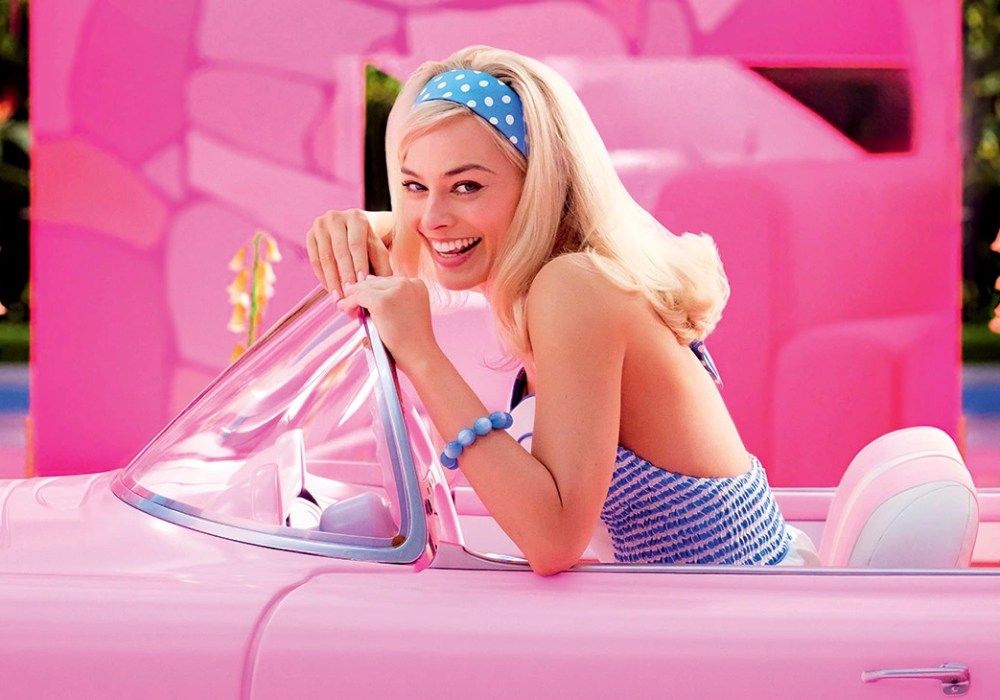
Barbie (2023)

‘It is the best day ever. So was yesterday, and so is tomorrow, and every day from now until forever.’

Few films have nailed their marketing deals and branding collabs as well as Barbie. Despite celebrating her 64th birthday this year, Barbie is, quite possibly, more popular and more visible than ever. And yet, that only added pressure to the expectation and hype surrounding Greta Gerwig’s third run at director. There’d always have been scepticism over how to follow-up after Lady Bird (2017) and Little Women (2019) – why on Earth would Gerwig pick a little blonde doll that is the figure of both such divided scorn and admiration?

It’s within mere moments of it’s opening, barely out of the credits, when it really clicks and all doubt fades away. Of course, this choice makes total sense for a writer-filmmaker who reflects upon the bittersweet joys of the female experience. In Lady Bird, the titular role (Saoirse Ronan) collides with near-enough everyone – mother (Laurie Metcalf), best friend (Beanie Feldstein), love interests (Lucas Hedges & Timothée Chalamet) as she navigates the complicated battlefield of womanhood and the contradictory expectations for a teenage girl in noughties America. In Little Woman, all four of the sisters and their mother navigate the complicated battlefield of womanhood and the contradictory expectations for little/grown women in 19th century America. Who could forget this incredible monologue from Jo (Saoirse Ronan) expressing the yearning created by the confliction between what is expected, wanted and needed.

And so, once more into the breach dear friends, we return to the complicated battlefield of womanhood and expectations for women, but this time we’re seemingly in the present day – although not in the world as we know it. Our story starts in Barbieland, where everything is near enough perfect. There’s a Barbie in every occupation, at every professional level, achieving extraordinary things – day in and day out, then choregraphed dance sequences into the night. There’s even the added bonus, not sole focus, of Kens’ knocking around who are keen to stay over and do ‘boyfriendgirlfriend stuff’ – but who’s sure what that is.

This life seems to suit Barbie (Margot Robbie), until it starts not to, when she inexplicably starts to suffer a crisis that leads her to question her world and her existence. Under the guidance of Barbie (Kate McKinnon) she travels to the Real World to seek answers to her questions. Ken (Ryan Gosling) is there too.

To say more beyond that would deprive you of the utter joy of watching this film unfurl. No matter how ready you think you are, you aren’t. No matter what you think it’s going to be like, you’re wrong. What I can say, though, is that Gerwig has created one of the finest comedies in years – with an impeccable gag rate which address all manners of humour, some feeling especially targeted towards this writer…

Robbie is the perfect Barbie, quite literally as she’s Stereotypical Barbie, with a performance that is totally committed and utterly believable. Her peeling back her layers on her journey of discovery is so wholesome and wonderfully earnest, believable and somehow astoundingly relatable. Gosling provides a comedy powerhouse masterclass. It’s been far too long since 2019’s The Nice Guys, where his slapstick skills got the showcase they deserved. But this, what he gives us here, this is something to behold. He is Ken in every way possible, and some that seem almost impossible. Every single line delivery and every single reaction shot warrants memorisation, tribute and recreation. To describe him as immensely watchable is an understatement. In a film packed full of comedy genii (Will Ferrell, Kate McKinnon, Michael Cera, Jamie Demetriou, Simu Liu, Kingsley Ben-Adir, Nicola Coughlan – to name those you’ve seen in the trailer already, there’s more to be discovered) he nails every single possible moment and then some.

The cinematography is sumptuous, the choreography (just you wait!) is impeccable, the costumes are to-die-fore and are as gorgeously enviable as the cast wearing them. But it is the message, those articulations and frustrations about 21st Century life for women, and men, it’s there that this film deserves GOAT status. Especially about motherhood and mother-daughter relationships. Again, the spoiler territory feels fraught, so much so that I can see myself returning for a spoiler-ific essay on why I think this film is so damn important. Suffice to say, there’s a speech here that is equal to Jo’s literal battle cry in Little Women.

By the end of Barbie’s 114 minute runtime, which flies by, your face will ache from the laughing and smiling but your heart will hurt from the hurting and raging. Sublime! [5 stars]

Barbie is in UK cinemas from Friday 21st July.
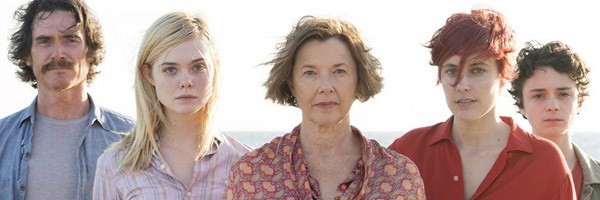
Maggie’s Plan

A film well worth planning to see

You have a choice this weekend. You could see cold and divisive Neon Demon (click here for my review) or you could see this proper gem of a movie. It’s so warm and smart, meandering about with utterly superb dialogue. It’s immensely well observed and occasionally practically profound – just how much can we plan and how much do we leave to the hands of destiny?

Maggie (Greta Gerwig) wants a baby. Needs one even. Except she hasn’t got a partner so she’s going to go it alone and use a sperm donor. A friend from college, Guy (Travis Fimmel), is more than happy to help. Best friend Tony (Bill Hader) and his wife Felicia (Maya Rudolph) think she should wait a bit longer, just in case she meets someone. She does, and her plan is interupted by a meet-cute with married John (Ethan Hawke). An affair follows and he leaves his wife, Georgette (Julianne Moore), for Maggie. Three years later and Maggie has the child she was desperate for, but she’s starting to have serious doubts about her relationship with John. Maybe she can give him back to his first wife..?

Several reviews are referring to this film as a screwball comedy. Personally I think the pace is slightly too slow to categorise it as screwball – not a criticism as I love the pace but screwball comedies are noted for their break-neck speed of story and delivery. However, this has many other elements of screwball. Think Woody Allen meets Jane Austen in terms of the characters and their dialogue.Greta Gerwig provides another knitwear-atired delight (I really wish I was friends with her!) who is utterly sympathetic in a role that could easily not be. Maggie is simillar to Emma (title character of Austen’s 1815 novel) as she is a matchmaker who loves to be in control, who is unable to let other forces control hers or others lives.

Hawke is fantastic as John, both glorifying and sending up the figure of intellectual. He also delivers what will most likely be my favourite line of 2016 cinema – “Like is a language condom.” It’s obvious that he is having the time of his life playing this character, which hugely pays off as it’s delightful to watch. The interactions he has with Maggie both convert then subvert the expectations of the romantic comedy, resulting in the film being both old-fashioned yet astutely modern.

The scenes when Gerwig and Moore share screen time are truly electric. All too rarely do we get such well-rounded female figures on the screen at the same time, they bounce off each other and the result is electric. What’s fantastic is how layered Moore’s character is. It would have been all too easy to have her as a woman scorned, who pushed her incredible man away with the glacial and disinterested temperament. We quickly learn there is more to her character than her ex-husband revealed, and that John is far from a perfect husband.

A quick note has to be made of just how fantastic the supporting cast are. Bill Hader, yet again, is superb (I want to be his friend too!), Maya Rudolph has little screen time but contributes massively, Travis Fimmel is really likeable as Guy (far more interesting here than he was in Warcraft) and Wallace Shawn has a lovely little cameo.

It’s funny and quirky, may not be for everyone, but for many it will be a winning comedy-drama. An utter delight to watch!

4.5

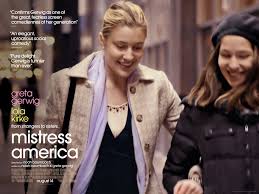
Mistress America

A witty and endearing sister comedy

A ‘Manic Pixie Dream Girl’ was a term coined (and since abandoned) by film critic Nathan Rabin in 2007. It refers to a stock character type; a female character who is bubbly and quirky, who enters the life of a brooding, serious male to help him embrace the joys and wonderment of life. (See Kristen Dunst in Elizabethtown, Marilyn Monroe in Some Like It Hot, Belle in Beauty and the Beast and Zooey Deschanel in practically every movie.) Typically, though not in every case, the MPDG  is shown through the eyes of the male character (known as the Male Gaze) who idealises her, lusting after her and placing her on a pedestal. What’s interesting, and truly refreshing about Mistress America is that some of the MPDG and her narrative ways are on display whilst also being subverted and questioned. This film is the story of a hipster-sect but told with old-fashioned sophistication; an honest look at the complexities between worship and reality. But instead of a traditional romance the focus is on friendship.

Tracy Fishcoe (Lola Kirke) is an 18-year-old college freshman undertaking her first semester in New York. She’s not enjoying it. It’s not what she had expected, feeling like she doesn’t fit in. In fact her life feels like she’s at a party where she ‘doesn’t no anyone.’ She gets rejected by a  boy, then rejected for an elite writing society and every attempt she makes to try and fit in becomes just another knock-back. Her soon-to-be-remarried mother suggests Tracy call her Brooke (Greta Gerwig) as this marriage will make the pair step-sisters. Brooke also lives in New York, but Tracy is too intimated to make the phonecall, believing this woman 14-year her senior would not want anything to do with her. However one lonely dinner -time she takes the chance to call Brooke, who instantly agrees to meet her. They enjoy a crazy night-out together, and continue to meet-up. When Brooke’s restaurant dreams start to fall through, Tracy endeavours to help the woman she now views as a sister.

In many ways Brooke meets a lot of the criteria of a MPDG, she’s the life and soul of every party. She knows everyone, appears able to do anything, and is keen to immerse Tracy in her world. Brooke even has a ‘quirky’ habit, appearing to not listen to other people so conservations with her sound disjointed.Even after meeting Brooke just the once Tracy is inspired to writer new short story, about thinly veiled version of Brooke. If this film wanted to be conventional or typical, it could have stayed this way. Brooke could have just stayed as Tracy’s muse, whose pure function is to inspire and guide her (an aspect that is mentioned within the latter half of the film). What’s so clever and makes the film so heart-warming is it isn’t just about that. It’s about friendship and sisterhood. It’s about how life doesn’t always meet up to it’s expectations and isn’t always as easy as it appears to other people. It’s the act of putting on a smile whilst inside you’re terrified.

When you’re 18 you’re certain that by the time you’re 30 everything will be sorted. That you’ll know everything, have everything and life will be sorted. Mistress America shows that really doesn’t happen, but that’s not a bad thing.