Eye in the Sky

A powerful and reflective examination of the cost of warfare. 

Very few films are this good. It’s well-acted by a truly terrific cast, impeccably shot with a thrillingly taut script. It also poses such incredibly cerebral and difficult questions without copping out and providing easy answers. Then again, war itself doesn’t provide any easy answers.

Colonel Katherine Powell (Helen Mirren) arrives at a military base in Sussex to oversee a high-level mission, to capture Al-Shabaab extremists who are meeting at a safe-house in Nairobi. Jama Farah (Barkhad Abdi) is one of numerous undercover Kenyan field agents on the scene using covert surveillance. In Nevada USAF pilot Steve Watts (Aaron Paul) takes his seat alongside rookie Carrie Gershon (Phoebe Fox) to provide aerial surveillance (the Eye in the Sky). Lt. General Frank Benson (Alan Rickman) arrives at his work, an office in London, taking the seat at the head of a table with members of the government to oversee the operation. What starts of as a seemingly routine capture mission soon becomes deeply complicated when it’s discovered the extremists are preparing to send two suicide bombers into the busy city streets. The only option appears to be to drop a hellfire missile on the safe house, but a little girl is out on the street nearby who would be fatally injured in the process. Those involved are deeply conflicted about what to do, and time is quickly running out.

I do not say this words lightly, but I firmly believe that everyone should see this film. Far beyond the fact that it is superbly acted and written, things I will discuss shortly, few films about war are this suspenseful and affecting.. The very term ‘collateral damage’ is a term complicated enough when you reflect on the fact it is a label used for human beings  caught in the crossfire but having the film truly immersing the audience debate generates a new level of soul searching. This is a genuine nail-biting thriller, with moments of true edge-of-your-seat-ness and wringing your hands in despair.

The cast for this film is awe-worthy and all of their performances justify completely justify that awe. This is one of two posthumous roles for Alan Rickman and serves as a reminder of what a genuine talent we lost this year. His iconic tone and manner are both fully in display here, truly serving his character and the film itself very well indeed. Helen Mirren is wonderful and fully believable as the stoic Colonel who watches her mission escalate from out of her control yet never losing her calm or nerve in the process. Aaron Paul is extraordinary as a man with two years experience in the job who is finally being told to pull the trigger, torn between duty and morality. Barkhad Abdi is one of the characters we know least about yet the strength and depth of his performance allows the audience to truly understand his role in events.

The script, cinematography, sound and performances of Eye in the Sky align to make this easily one of the best movies of the year so far. A riveting, fully entertaining yet equally chilling study of the morality of warfare. The questions it raises are not and cannot be truly answered yet will continue to haunt long after the credits roll.

This needs to be seen by all.

five star

Victoria

A true feat of film-making. Truly extraordinary.

To put it simply, a ‘take’ refers to the period between a director saying ‘action’ and ‘cut’. It’s up to them or the cinematographer how long this period is. Typically the longer the take the more difficult the film-making process is as it requires actors to be in the right place, saying the right lines, nothing else interrupting the shot etc. Alfred Hitchcock experimented with this in 1948 making Rope which clocked in at 80 minutes and comprised of only 10 takes, the majority of which were shot in such a way to make the cuts seem seamless. It was an ambitious project which paid of in most regards, the murder and the main characters fear of being caught out in only heightened by the prolonged takes. The character cannot escape and neither can the audience. 68 years later we have Victoria which was filmed two years ago and rejected by many of Europe’s film festivals as they believed the filmmakers were lying on the submission sheet. What lie did they think the filmmakers were proclaiming? Well the film-makers claimed that Victoria, which is 2 hours and 18 minutes long, was shoot using only one take. The most unbelievable thing about this? It’s the truth.

Victoria (Laia Costa) moved from her hometown of Madrid to Berlin three months ago. She works in a coffee shop for less than minimum wage and doesn’t really know anyone in her new city. In the hours before her early morning shift she decides to go clubbing and dances alone quite happily. On her way out of the club she bumps into a group of four men – informal group leader Sonne (Frederick Lau) who Victoria feels an instant spark with, Boxer (Franz Rogowski), Blinker (Burak Yigit) and Fuß (Max Mauff) – who promise to show her ‘real Berlin’. Victoria agrees and what first follows is a fun night for Victoria, seeing parts of Berlin she had never seen before and connecting quickly with Sonne. When Boxer receives a phone call and claims that the group need Victoria’s help.  It is her connection with Sonne that prompts her to make the first in a series of bad decisions and things take a dark turn before spiralling out of control.

I repeat. The entire film is only one take long. It cannot be overemphasised how incredible this is, what a triumph of filmmaking it is and what an astounding experience of film-watching it creates as a result. It’s breath-taking, wondrous, exhilarating and utterly compelling. As it is shot though one-take it is shot in real-time. This is important to note as it adds to the authenticity, we watched events play out and escalate. We cannot question how we got from the first frame to the last as we witnessed very moment and decision which lead the characters there. And these moments don’t just take place in one room – the characters travel all over the city, up ladders, jammed into cars and lifts, dancing across the street and running across it too – and the camera is always there watching and following. Incredibly this also manages to feel gimmick-free. Instead we feel like we’ve tagged along for a night out, been immersed in the spontaneity and intensity of this world, then kicked out of the club  and ditched at the end of the film. There is a reason that the cinematographer Sturla Brandth Grøvlen receives first credit ahead of director and writer Sebastian Schipper as Victoria is an example of true technical mastery. The camerawork is dazzling ambitious, pulsating and gripping.

The performances are mostly improvised, which only adds to the feeling of authenticity and believability. This is next level realism as we get to experience this world as it happens. It’s a huge credit to the relatively inexperienced cast that they only had to shoot the film three times, this being version two. It’s only after seeing the film, when you see what they had to achieve and endure, that you can truly appreciate the level of skill being utilised here.

It’s divine. A sensational watch. It needs to be seen.


10 Cloverfield Lane

The low budget “spiritual successor” to Cloverfield

Cloverfield was a serviceable found footage horror film that did well at the box office predominately due to its marketing strategy which featured things that took the burgeoning viral marketing to a whole new level. MySpace accounts were created for each of the characters, websites for the fictional companies that featured in the film could be trawled through for clues and the film itself was announced only as a series of numbers which formed clues that were eventually revealed to the release date. Cloverfield appeared in a few films of the year lists and that was about it. Producer J.J. Abrams would regularly be hounded for details of a possible sequel but appeared not to be able to give a definitive answer. When the upcoming release of 10 Cloverfield Lane was announced early this year there was real surprise as no-one had known that it was even filming let alone finished. This was due to the fact 10 Cloverfield Lane had not been filmed – originally based on a script called ‘The Cellar‘ it was adapted and linked to Cloverfield it was filmed under the codename ‘Valencia’. Here we are in March 2016 and 10 Cloverfield Lane has been released and it bares little resemblance either in tone or story to its predecessor. And it’s good. Very good indeed. So good that it’s definitely in the running for my end of the year top ten list.

Fleeing New Orleans and her fiance, intentionally leaving her engagement ring behind in the process, Michelle (Mary Elizabeth Winstead) drives far away from the city. In the process she ends up in a nasty car accident. Next thing she knows she wakes up in a basement, her injured leg is handcuffed to the wall. She desperately does all she can to escape but all attempts are futile. The locked door opens and she is greeted by Howard (John Goodman) who explains that he saved her life and yes he is keeping her trapped down in the basement but it’s for her own good. His rather menacing nature and pointing out of how much Michelle owes him hugely unsettle Michelle who is desperate to leave. She also meets the other resident of the bunker, Emmett (John Gallagher Jr.), who has known Howard for most of his life and is certain that Howard is a conspiracy nut but fundamentally a good guy. Time passes before the pair admit to Michelle why she cannot leave the bunker, a chemical attack has taken place in the outside world contaminating  the air and killing the world’s population in the process. The unknown assailants have made the outside world unlivable and the trio’s only hope to stay alive is to remain in the bunker. All of life’s comforts are there, as Howard has spent most of life preparing for such a situation, but Howard’s increasingly controlling and menacing behaviour makes Michelle desperate to leave. Taking matters into her own hands Michelle soon realises the truth of what has happened.

What is truly impressive about this film is how cleverly it terrifies the audience. Considering it is a 12a (something I have an issue with concerning the themes and some of the moments of the film) it manages to do so much with so few of the big violent scares of other horror films. Two of the film’s tensest moments are when Michelle crawls through the ventilation shaft, twice. Through a brilliant combination of editing, camera work, sound and acting they were both sequences I had to watch through my fingers whilst desperately hoping for the best possible outcome. There are a few moments of big and jumpy scares, many of them coming from loud noises that have never sounded so scary, but most of the moments are slow-building subtle fears that build to genuine terror. This is through the fantastic storytelling and narrative. Information is so carefully withheld then slowly realised to the audience. Every new revelation requires a reassessment of what we know and what we expect will happen next.

We know little about what has actually happened outside and we have little reason to trust our primary source for that information. John Goodman is truly terrifying as mysterious Howard whose character gains murkier and murkier added depths with each conversation. He’s a dangerous blend of menace and deluded altruism with every sequence in which he appears forcing us to eye him dubiously, wondering how much he says is actually the truth and how big a threat he plays towards Michelle. The slow revelations that follow only complicate our distrust and unease of his character. Gallagher Jr.’s Emmett is a much-needed comic foil into the tense mix, when tension hits sky-high level it is masterfully lowered with  a dose black humour. Winstead’s performance as Michelle is the best of her career, making a character who is truly sympathetic and one which we are desperate to succeed. I’d even argue that, in a year which saw Brie Larson win an Oscar from Room in which she played a woman held in captivity, that Winstead’s performance rivals Larson’s. Winstead’s blend of determination to leave and her struggling to accept the awareness of its possible futility may have resulted in one of the finest acting performances of the year.

If you’re looking for a film that clocks in at one hour and a half, that will drain you of every emotion possible, make you jump out of your seat and shield your eyes in concern, then you’ve come to the right place. Well worth seeing, if you dare…

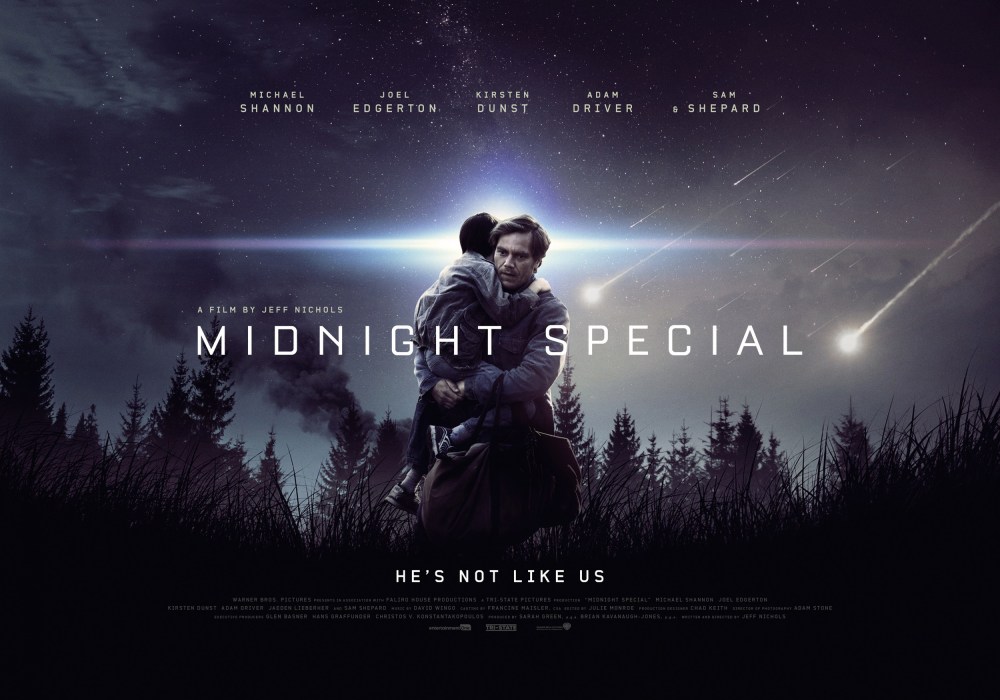
Midnight Special

Messiah or weapon? Or something else entirely?

Imagine a science fiction movie that focuses less on the fictional powers and more on the human emotions, the cost behind the power. Imagine a science fiction movie that allows you to marvel at the mystery rather than hand-feed you the plot. Imagine a science fiction movie that is a road trip/chase movie that challenges the value of belief. Now stop imagining as Midnight Special is all three of those things and much more. It is a wonderfully strange blend of genres, full of complexity and sentiment. A parable about love and extraordinary ability.

Roy (Michael Shannon) and his eight-year-old son Alton (Jaeden Lieberher) are on the run from both the government and religious extremists. Alton appears to possess special abilities, from being able to effortlessly infiltrate classified government signals  to bringing down a satellite from outer-space. A religious cult formed around Alton who, as National Safety Agent Paul Sevier (Adam Driver) discovers,  turned his encoded words into gospel. His supernatural powers so badly altered by daylight that all of the cult  became nocturnal. Upon making eye contact with people Alton’s eyes glows and show visions of unknown lands. Having fled the cult, and with the help of childhood friend Lucas (Joel Edgerton) and Alton’s mother (Kirsten Dunst),  Roy must get Alton to specific location for a specific time. Will, as everyone fears and some hope, a celestial and world-changing event take place? 

This is not your typical science fiction film. Compared to typical box office fairings Midnight Special is slow, with far more questions than answers, and a narrative that is impossible to stay ahead of. Those are not criticisms, just an acknowledgment that this film is not for everyone. In the preview screening I attended yesterday many of the audience members seemed frustrated or unfulfilled by the film. I was not in agreement with them for the film I had just witnessed was so riveting and magical. Rarely is science fiction this personal and emotive. Yes, a beginners guide to film criticism will show  you that Steven Spielberg’s films are about father-son relationships,  but what we see here is a different realm. What director and writer Jeff Nichols manages to achieve is a film which places greater emphasis of the consequences of supernatural power rather than the benefits of it, prompting the reflection that more is lost than gained in such extraordinary circumstances. Few storytellers are this damn magical.

The acting by the entire cast is wondrous, each cast member providing a wondrous blend of awe, fear and honesty. Roy’s love for his son is so deep and unconditional, a level of paternal concern rivalling that of great Epics. Lieberher’s performance here suggests that Room child star Jacob Tremblay may have a rival for Hollywood’s current greatest child actor. Egerton’s performance allows us to give loyalty to a character we know little about, believability to a man who has only known Alton for three days but is willing to give everything to the boy’s journey. Dunst is subtle yet heartbreaking as a mother who fears she will have to give up her son once more.

The cinematography is marvellous, as is the soundtrack and the storytelling. Of particular favourite is the Easter Egg of the Superman-starring comic book that Alton is reading in the back of the car. Any in depth analysis of the parallels between Superman and Alton would be spoilerific, but the very fact both are outsiders with great power is a wonderfully subtle touch. Just like the entire film it’s an allusion to other sci-fi works, but something that is so uniquely individual and riveting.

Some may say slow. I say spellbinding, sincere and utterly superb.

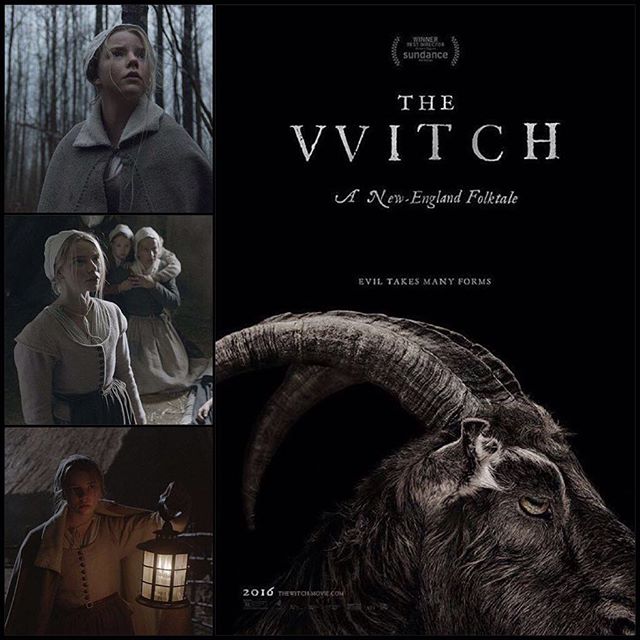
The Witch

Moral of my story: Don’t go see this on your own in an empty cinema.

What makes a horror film a horror film? In the past week or so I’ve heard both praise for this film and a good degree of backlash. Many felt that it wasn’t a horror film, that it wasn’t scary enough and that it was too slow. As a dedicated Wittertainee I’d heard Mark Kermode champion the film stating that ‘the greatest strength of The Witch –that the audience will see in what they want to see, or believe’  So, when a bit of free time opened up in my schedule I thought ‘why not?’ Even after three nights where by sleep has been haunted by a goat called Black Phillip I do not regret my decision, as The Witch is an immensely rich watch and an outstanding debut from its director and writer Robert Eggers.

In 1630 a farmer called William (Ralph Ineson) and his family are excommunicated from their New England community due to the crime of “prideful conceit”. He and wife Katherine (Kate Dickie) must raise their children away from the community they came with when they left England and now live in exile in a forest. They have five children – teenage daughter Thomasin (Anya Taylor-Joy), on the cusp of adolescence Caleb (Harvey Scrimshaw), fraternal twins Mercy (Ellie Grainger) and Jonas (Lucas Dawson) and new-born Samuel.  One day, when Thomasin is looking after ber youngest sibling and playing a round of peek-a-boo, Samuel disappears. The family is utterly devastated and grief takes its toll, bringing tensions to the surface and testing both the love and loyalty of each of the family members. Is a supernatural force of evil haunting them or is it all imagined?

The greatest choice, of many, that this film makes is to show Samuel’s disappearance to the audience. The audience gets to see a witch, possibly the witch of the title or possibly not, drag poor little baby Samuel into the forest with her. The characters, however, do not get to see this. It’s a classic case of dramatic tension that is oh so effective – this comparatively small piece of information alters how we view the characters and makes us assess then repeatedly reassess what we are seeing. The knowing what actually happened to Samuel lets us watch the consequences with a layer of cynicism, as the family falls apart at the seams. How the dynamics of the family shift and tear creates a deeper level of both atmosphere and tension as we know something they do not. When the blame shifts to teenager Thomasin we automatically defend her. For her family she is the obvious target of blame, after all she was watching him when he disappeared, yet we know that she isn’t. Or is she? As the film plays out the audience is forced to question what they actually know, or if what they actually know is not the whole story.

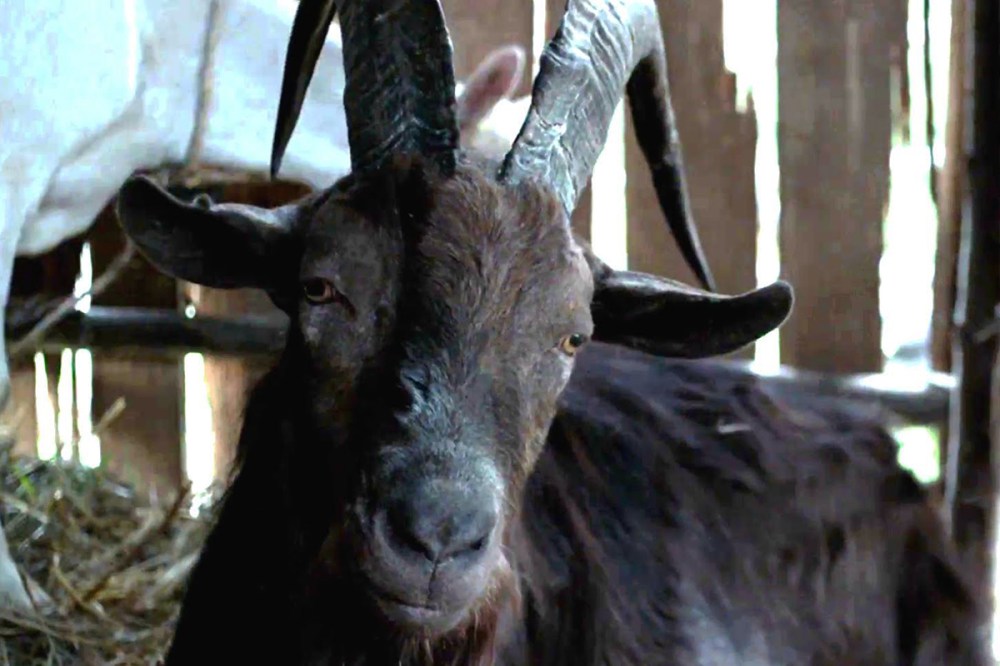
All of the cast are fantastic, not a single weak link. Ineson is solid as the righteous father who may have let his ego take his family onto a path of destruction. Dickie is wonderful as the grieving mother who doesn’t know where to turn. Taylor-Joy is an extraordinary presence as a girl who has come of age, and how this very fact will change her life. The Witch is rich for cinematic analysis, most obviously the treatment young women which is seemingly reflective of how life would have been for someone of her age in 1630. Scrimshaw possess the kind of face and aura of someone who has lived a thousand lives, a real one-to-watch. The twins are as creepy as you would expect from a film of this sort. That just leaves us with the aforementioned Black Phillip. I’m even going to add a picture here of the beast, just to prove my point.

BlackPhillip

Look at him. Just look at him! I genuinely believe there should be a category added to the award ceremonies next year for, ‘scariest performance by an animal’ as Black Phillip would be a solid contender. At this point I’m not even going to tell you what he does, nor will I hint. I don’t think I could even describe it in a manner that would reflect in a  succinct enough manner the terror this beast is capable of. Just like the rest of the film, he gets under-your-skin and into-your-brain.

The Witch is a spooky, slow-release terror that is well worth seeing. Few newcomers could create a film with this depth of atmosphere and tension. I already look forward to what Robert Eggers has to offer us next.

Anomalisa


‘What is it to be human?’

Anomalisa is a masterpiece of cinema – a tale about the human condition told by puppets that is the most real movie in years.  We’ve all had awkward encounters – be that with ex-partners, conversations with strangers in a lift or the force-fed wisdom of a brusque taxi driver. We’ve all (hopefully) had a moment where you meet someone who, somehow and somewhere deep inside of yourself, you innately know that ‘this person is important to my future’. Now imagine a film that has the later as its main storyline but is layered with lots and lots of the former. That’s Anomalisa. It’s hilarious and sad at the same time, just like life, whilst reflecting on how bitterly lonely existence can be. Artistic greatness channelled through stop-motion puppetry.

It’s 2005. Michael Stone (David Thewlis), customer service consultant extraordinaire, is travelling to Cincinnati for a convention at which he is due to speak. To Michael everyone else on the planet appears to have the identical voices and faces. He is just spending one night at the hotel before travelling back home to his wife (Tom Noonan) and child (Tom Noonan. He decides that, as he’s in the area and plagued by self-hate, he’ll call up his old flame Bella (Tom Noonan) in the hope that Bella will help him find out what is wrong with him. Things do not go well, but upon retreating to his hotel room he hears a voice that is different from everyone else. He searches desperately and finds Lisa Hesselman (Jennifer Jason Leigh. Michael is instantly enraptured by her different voice and face, desperately hoping that she will cure his crippling loneliness.

This film, written and co-directed by Charlie Kaufman, does not have to try hard to be strange. Everything about it is strange, but that’s not criticism when you really reflect on how strange life often is. The most obvious ‘strange’ aspect is the fact the entire world is only voiced by three people – Thewlis as our lead, Jason Leigh supporting and Noonan as everyone else. Have one actor voicing 98% of this world has the most wondrously bleak effect, allowing for everyone else to blur in the background. They are unimportant therefore there characters are not defined, which is how our protagonist Michael Stone views the world. Few central characters are this self-hating, haunted by guilt and bad memories. Did the voices always sound the same, or has life for Michael etched away its beautiful nuances?

The interactions with both strangers and those who are supposedly the closed to him are all so affecting in there believability – many of them of the concealing-your-eyes-as-you-watch variety. But it is Michael’s interactions with Lisa that are the most beautiful and the most heart-breaking. Lisa is the exact opposite of Michael, Lisa is insecure and desperately lacking in confidence, yet is just as lonely as he is. Lisa is a great admirer or Michael’s and an obsessive reader of his book which helped her increase work ‘productivity by 90%’!  The beginning of their courtship is so tenderly handled, and perhaps the most human we’ll see on the big screen this year. Lisa’s serenading Michael with a cover of ‘Girls Just Wanna Have Fun’ will fill your eyes with tears. The film’s title stems from this point of the movie, when Lisa reveals she has always felt like an ‘anomaly’ which Michael then teams with ‘Lisa’ to form her self-appointed nickname ‘Anomalisa’. This conversation alone personifies their relationship, Michael and the film itself. Is he laughing at her by giving her this name, or showing just how much he understands?

Watching Anomalisa is almost like watching an autopsy or listening to a psychiatrist’s evaluation –   cutting apart our very psychology, our brains and being, then showing us how they work. Like The Matrix it’s up to you whether you take the blue or red pill.

Breathtakingly beautiful and bitter in equal measure; dare you see it?

High-Rise

‘Where are those happy days, they seem so hard to find.”

41 years after its publication, J. G. Ballad’s High-Rise proves itself to be scarily accurate in its predictions of the then-future and our now-present. The film adaptation is equally brutal and dark, tinted with the blackest of humours. Deciding to set it in the time period in which it was written, director Ben Wheatley succeeds in using Ballad’s bleak hypothesises of societal hierarchy to transform the big screen into a mirror reflecting our darkest innermost fears. This review comes from the preview screening and Q&A session I attended at the British Library (Hello to Galia, Alison and Alex…)

London. 1975. Dr Robert Laing (Tom Hiddleston), a psychologist, movies into a high-rise building having been seduced by the lifestyle it would bring with it. The building itself is isolated from the rest of London and is so self-contained with a supermarket, gym and swimming pool that, aside from work, there is little reason for the residents to leave. They are cut off from the rest of society in their luxury tower block. The higher your floor the higher your status – Laing takes up residence on floor 25, his new friend Charlotte Melville (Sienna Miller) is on floor 26 and the architect of the building, Anthony Royal (Jeremy Irons) and his wife Ann (Keeley Hawes), take up the entire top floor. Laing also comes into contact with a family relegated to the second floor, BBC documentary-maker Richard Wilder (Luke Evans), his heavily pregnant wife Helen (Elisabeth Moss) and their two children. When Wilder becomes so embittered by the social hierarchy he decides it will be the focus of his next project. A dangerous situation develops causing a domino effect which leads to the fragmentation of the residents and formulation of violent tribes.

Where to start when reviewing this film? It’s excellent, terrific and truly haunting in equal measures. Like many of Ben Wheatley’s films High-Rise is of the ‘well-that-escalated-quickly’ genre. However, this film does not require a suspension of belief for the dissention into madness. Whilst accelerated the resulting horrors stems from social resentment that has been apparent since time immemorial. History showcases time and time again society’s that form then self-destruct that little exposition is required in High-Rise to explain why things get so bad so quickly (not that I can really imagine Wheatley wanting to spoon-feed us in this way). The script is bitterly funny, laden with comments that are iceberg-en in terms of depth. Social commentary is rarely this sharp-tongued, appalling yet absurdly funny.

Wheatley doesn’t waste a shot in the telling of this story; countless viewings would be required to access even half of the detail and imagery it possesses. And practically every shot could be printed out as a still and put on a wall, for the cinematography and mise-en-scene is otherworldly in its beauty. There’s the generic, unbranded supermarket made of quadrilaterals in primary colours, the kaleidoscopic parties of the various factions, the riding of a white house across the luminescent greenery of the rooftop garden and the seemingly innocent shades of grey of a certain floor 25.The blend of lighting and framing makes for sequences that are fraught, depraved and agitating. This is only exasperated by the incredible soundtrack, with two appearances of ABBA’s ‘S.O.S’ (hence the subheading of this review) that bring chills in way that one would never have though possible. At one point the BAFTA award makes a cameo, which Wheatley later explained he chose to include as it ‘would be the closest he’d ever get to an actual BAFTA’. It would be an utter travesty if for visuals and soundtrack alone High-Rise is not recognised and justifiably awarded.

Speaking of awards, there’s then the performances of the cast. Hiddelston as Dr.Laing, a self-contained possessor of wide-eyed optimism and underlying volcanic rage, is a match made in heaven. Wheatley spoke of his having Hiddelston’s ‘photo on the fridge’ during pre-production and casting as they (they being Wheatley and wife Amy Jump who wrote the script) viewed him as the perfect candidate. But, whilst Moss, Miller, Hawes and Irons are all good in equal measure it is Luke Evans performance that is stand-out to that of Hiddelston’s. If Laing is untapped rage cloaked in a suit, then Evans as Wilder is the untamed man. Evans must have come close to the edge in making this film, for his character is a powerhouse of bitterness and injustice whose raging against the machine is awash with inevitable destruction.

With so many reasons to see High-Rise; the performances, the script, the visuals are just three broad reasons which should justify you’re purchasing a ticket upon the film’s release next week.

Go see it and be haunted for days afterwards.

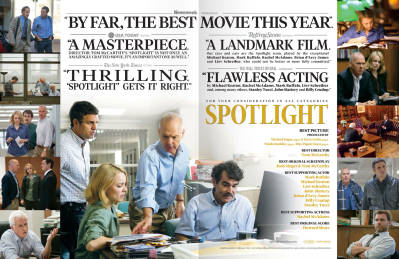
Spotlight

A subtle masterpiece of an exposé cinema

This film is proof, were it truly needed, that to invoke emotion from a viewer you do not needed to forcibly bulldoze them emotionally. You do not need people screaming at each other about how they really care about something and think it’s important; you do not need violence to prove someone’s inner rage; you don’t need monologues that reflect on social injustice. This film will grab you and drain you entirely. You will experience burning anger for those who used their positions for powers for unimaginable crimes; hopelessness at how dire at how things have and continue to still be; and cheeks so sodden with tears even when you hadn’t realised you were crying. All of these responses were generated without needless melodrama. Instead the absence of overwrought sentimentality  puts the events of the movie and the subsequent emotional response in bold, underlined and italics. A truly crucial and powerful movie. The fact that these are true events is the ultimate sucker punch.

In 2001 Marty Baron (Liev Schreiber) joined the Boston Globe as its new editor. The fact he is Jewish was viewed as something of a notable scandal, considering the influence of the Catholic church. In his early introductory meetings with his new staff he meets Walter ‘Roddy’ Robinson (Michael Keaton) who is head of  the Spotlight team, a small group of journalists who undertake investigative projects that take months to research and publish.  The rest of the team is made up of Mike Rezendes (Mark Ruffalo), Matt Carroll (Brian d’Arcy James) and Sacha Pfeiffer (Rachel McAdams).  In his new editorial role Baron urges the Spotlight team to follow a lead, a lead which suggests that the Archbishop of Boston knew of a priest who was sexually abusing children and doing nothing about it. A small-time lawyer called Micheal Garabedian (Stanley Tucciis seemingly the only person doing something about it. However Garabedian is on his own against the entire Catholic church, so after his initial reluctance and a lot of persuading he agrees to work along with Spotlight. A terrifying prospect soon becomes clear, this is not just about one priest but is instead about a huge cover-up of far more and dating back longer than can be imagined. But these secrets have been hidden for so long,  and with so many desperate to keep them,  it will be far from an easy journey.

Within all of that, and the remaining 3/4 of the movie, there is only one scene of loud, embittered shouting. Only one scene where one character, haunted by the true horror of what has gone on, lets rip at the hoops he will have to continue to jump and dive through. That one scene is made all the more climatic and devastating as a consequence, packing more potency than the entirety of Joy. The storytelling here is superb, the way each revelation unfolds is shown not told. The information is not forcible spoon-fed, instead delivered with little fanfare or fabrication, and is all the more absorbing for it. The suspense created is unlike much of recent cinema, with an awful sense of inevitability and foreboding that doesn’t take away any viscerality from watching the character’s gradual comprehension of their story’s terrible breadth.

However, the emotional impact of the script would be nowhere near as traumatising were it not for the performances of the cast. ‘Ensemble cast’ is a phrase too easily banded-about, but the cast of Spotlight is a true ensemble. Every actor gives the role their all. ‘All’ does not mean flapping your arms about and saying how angry you are. ‘All’ is, and perhaps should be, a simple look at another person that reveals unobjectionable horror. A gaze into the distance with eyes that expose a haunting that will never be forgotten. The ‘heroes’ of this story are not embellished, nor martyred or hero-worshipped. They are real human beings, forced to comprehend and expose systematic abuse from an institution that had such an intrinsic role in all of their lives.

Though it may have only been released in the first month of the year, this will be one of the greatest films of 2016. A fact-based thriller with a beating heart.

The Big Short

Proof that reality itself provides the darkest of comedies

I was 16 on Monday the 15th of September 2008. I was watching the news while getting ready for my second week of college (yes, I was *that* kind of teen). The main headline, which kept being repeated at 15 minute intervals, was that a bank called Lehman Brothers had filed for bankruptcy.  I had no idea what this meant, but from the tone of the news reporter and from the footage of people in suits standing outside a fancy-looking building and crying, I could tell this was bad. ‘Bad’, as it turns out was an understatement. In the 8 years since the consequences have, and continue to be, devastating world-wide. But I can admit in full honesty, I had never understood how or why it happened. In fact I wasn’t quite sure what ‘it’ was. That’s where ‘The Big Short’ comes in. This film, set in the three years prior to the financial crisis, takes that serious and complicated sequence of events and turns into a scathing critique that can be understood by all. It forces you to confront the truth, whilst snorting at the true facts – the unfathomable stupidity caused by greed.

In 2005 hedge fund manager Michael Burry (Christian Bale) discovered that the American economy would be due to crash in late 2007. Why? Because the housing market was incredibly unstable, built on poor foundations of high risk subprime loans. Loans were being given out by banks to people who would never be able to pay them back, which would result in them having to default on their payments. For millions of the American public this would mean losing their homes and having to file for bankruptcy. By predicting this collapse Burry realised he could profit by betting against the banks who refused to believe it.

  Trader Jared Vennett (Ryan Gosling) hears of Burry’s actions and the prediction it is found upon and discovers it’s all true. A misplaced phone call to a wrong number leads him to hedge fund manager Mark Baum (Steve Carell). Baum invited Venett to a meeting, also attending by Baum’s three cynical partners. It is then that Venett reveals the level of greed that has occurred, and the inevitable dire consequences the level of fraudulence will have for the general public. 

Charlie Geller (John Magaro) and Jamie Shipley (Finn Wittrock) are two young friends and business partners, who have their own independent investment company. Having had some good fortune they have move to New York to play with the big leagues in New York. They are refused meetings with most of the big companies, and laughed at by those who agree to meet them. That’s when they hear of Vennett’s findings and ask for their help of old friend and retired banker Ben Rickert (Brad Pitt) to profit from the impending economic collapse. 

It’s incredible really that this domino effect (from Burry finding out the truth, Vennett hearing of it and pushing Baum to invest, with Geller and Shipley hearing of this and making their own investments) lead to his small group making an insane amount of money. What turns this incredibility into incredulity (or impassioned rage at the injustice and insanity) is that these few men saw something thousands of others in simillar jobs/positions couldn’t see or refused to see. That blind ignorance led to millions, maybe even billions, losing their jobs, homes and any possible chance of ever achieving financial stability. Four trillion dollars just disappeared – with no consequences for those whose actions led to it.

The film explores these dark crevices with a whip-smart script that provides a degree understanding that is almost a public service. It’s sardonic and full of wit, yet exposes the true woe of an ultimately depressing story. Somehow the film is wildly entertaining yet immensely informative. It’s perfect Friday night movie entertainment, yet allows for immense reflection. The editing is superb – using breaking of the fourth wall for great effect. Using stars like Margot Robbie and Selena Gomez  in cut-aways to explain key concepts is an incredible use of cultural commentary –  the banks wanted us to be distracted, ignorant of what was going on, so allowed us to focus on trivialities. Voice Over narration analyse the warped  ‘logic’ of a system that was not even understood by the bankers who used it.

The film doesn’t focuses on the suffering of the millions, but instead of the ‘outsiders’ at the centre of the storm. Each actor provides an incredible character performance – from Bale’s eccentric and tortured loner, to Carell’s pessimistic and embittered moral crusader. It’s these characters and those they interact with that make the film so entertaining. The interactions they have are farcical and beyond belief, based on incompetence and corruption – the kicker is that they are all true.

‘The Big Short’ is a contemporaneous disaster movie. We want our ‘heroes’ to succeed, knowing their success spells devastation for the entire nation. The punch-line? We watch it in hindsight, knowing what happens next. That’s the saddest’ joke’ of it all.

The Revenant

12 Oscar nominations – but just how good is it?

Leading the pack with 12 nominations from the 88th Academy Awards  is ‘The Revenant’. Often that information is not necessarily an indicator on how much the general public will like it, but how much a small committee (who may not have actually watched all the films) liked it or think it deserves mention. Happily, in this case, ‘The Revenant’ is worthy of most of the acclaim it is receiving. The film is starkly beautiful yet bitterly bleak. It’s uncompromising and devastating, leaving the audience in a state of emotional destruction. However, it’s not perfect. It’s overlong, losing much of the audience about two thirds in, more of an endurance test than entertainment and certain aspects are not as good as the film (or the awards committee) seem to think it is. To break this down further, whilst remaining spoiler free, I will divide this review into 5 sections- each guided by one of the nomination categories.

Performance by an actor in a leading role: Leonardo DiCaprio in “The Revenant”

Poor Leo. It is a truth universally acknowledged,  then laughed at, that DiCaprio is the bridesmaid of the wedding ceremony that is the Oscar’s. Always the bridesmaid, nominated six times, yet never the bride. It’s fair to say, after watching ‘The Revenant’, that he really deserves this one. There’s not only what he clearly must have gone through behind the scenes, the below freezing weather conditions, and what was required from him, a man on the edge of death crawling back in the name of vengeance, but what he manages to achieve with the performance that surely must put his name inside that envelope.  His rage at what has been done to him and his family pours out through every pore, exposing it with every look, gesture and expression. He truly makes everything that happens to him, not matter how seemingly unbelievable it is, seem real and dragging us along with him for the bitter journey.

Performance by an actor in a supporting role: Tom Hardy in “The Revenant”

Now this is a bit of a strange one. Having known that he had been nominated I spent all of Hardy’s screen time analyzing his performance – looking for that moment or reason  that explained it. But neither moment nor reason came. He’s good, yes, but it’s Hardy in weird, strange and rambling mode. The performance is pretty one-dimensional and rather one-note, supplying little reason for the audience to care for what happens to him. Also at times his speech enters into Bane-levels of incomprehensibility. Compared to the other four candidates in this category (Christian Bale in “The Big Short”, Mark Ruffalo in “Spotlight”, Mark Rylance in “Bridge of Spies”, Sylvester Stallone in “Creed”) Hardy seems almost shoe-horned in. If the academy really wanted to acknowledge supporting performances in “The Revenant” it would be far better acknowledging either Domhnall Gleeson or Will Poulter, both of whom provide performances far deeper than Hardy’s.

Achievement in cinematography: “The Revenant,” Emmanuel Lubezki

Yes. What makes this film so successful, every event so brutal, is that all occurs in a manner that is oxymoronic. The camera dances across the landscape, panning, tracking and weaving across the wondrous yet terrifying unknown that is capable of much beauty and brutality. You’re lulled into a false sense, admiring the scenery, then you’re shocked back to realising just how dangerous this world is. Without this, the film would be far less memorable or emotive.

Achievement in costume design:  “The Revenant,” Jacqueline West

Whilst costume is great in this film, this award needs to go to “Carol,” Sandy Powell, for which the costume really captured the era and the mood.Through costume alone it made every character, from speaking roles to walk-ons,  feel real with an enriched back not matter how seemingly unnecessary they were . With “The Revenant”it was the cinematography over costume that created the overarching tone.

Achievement in directing: “The Revenant,” Alejandro G. Iñárritu

To bring such emotion out of a cast, as with this film, a director must be extraordinary. The power Iñárritu’s cast generate tells just how magnificent he is. My only criticism would be that the implied power and complexity of the final act is not as powerful or complex as he may have intended.

 All in all, “The Revenant” is more than worth watching. It’s an experience that needs to be experienced on the big screen. However, it’s not light-hearted entertainment or those who are easily shaken.  An impassive musing on man’s plight which does not shy away from harsh realities.