Grandma

A cinematic gem

This film is a total and utter joy to watch. So few films manage to have a plot that is so well-rounded and immersive with characters with such real depth. The fact this film is only (!) 78 minutes makes it even more magnificent – it’s not bloated nor is it lean. In fact, to an extent, the film feels far long in a good way. It feels as if you actually know these characters. They almost feel like friends.

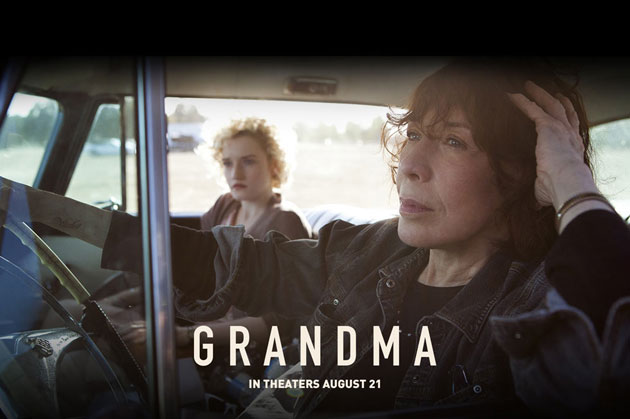
Elle Reid (Lily Tomlin) is a sometime poet and sometime academic. 18 months ago her partner of 38 years died after a long illness. Three months into a new relationship she breaks up with girlfriend Olivia (Judy Greer).  In front of Olivia she appears to not care about her soon-to-be ex-lover, even proclaiming her to be a ‘footnote’ in comparison to her dead love. Soon after Elle’s granddaughter Sage (Julia Garner) arrives and needs her grandmothers help. Sage is pregnant and has an abortion booked for 5pm that day, but she doesn’t have the $630 to pay for it.  Elle doesn’t have that money to spare, all she has is $48 after paying of medical costs and other debts. She even cut-up all her credits cards as a symbol of a new start. Both Sage is too scared to ask her mother for help, a fear Elle shares. So the two go on a road trip to get both the money they need and to come to terms with their recent troubles.

There are not enough films like this being made at the moment. It’s witty and intelligent, heart-warming and emotional, compelling and laugh-out-loud funny. As we are in the middle of Oscar season it’s not surprising this film has had a degree of Oscar-buzz, but it’s been quiet compared to that surrounding other films that could be regarded as Oscar bait.  The prospect of a Grandma and her Granddaughter road movie may not sound massively appealing but there is so much more to it. The relationship between the pair is so well portrayed by both actresses.

Tomlin creates a character who does not have all the answers but will still insist on answering back, who is quick to get angry and can be bitter with her words. But her performance as Elle is also feisty, funny and full of vitality. She swears, she’s got tattoos, she attacks a dead-beat boyfriend but with her performance and a finely-written script she creates a truly appealing character.  We laugh with her not at her. The love she has for her granddaughter is unquestionable and fully justifies her actions.

Garner’s Sage is so carefully handled. A pregnant teen nowadays is a regular focus for reality tv, but Sage is very different from the ‘stars’ of those shows. Instead she is a girl who is looking for love, who is grieving for her dead Grandma and watching the alive one struggle with grief. Sage is immensely endearing and her narrative never strays into sappy.

Though the film’s driving force is obtaining the money for Sage’s abortion her decision is never questioned, somewhat surprising for an American film. In fact the film overall is about liberalism but never preachy. Elle clearly lived through a progressive period of time, her poetry and art-centric background were once part of the counter-culture which is slowly being forgotten and disappearing. Sage represents the new, with access to the internet and other resources she is ignorant to the world around her. She knows little of the time her Grandmother lived through, and knows nothing of women’s history. When visiting her Grandmother’s acquaintances, a transgender tattoo artist (played by Orange Is The New Black’s Laverne Cox), a rather intimidating butch cafe owner and listening to Elle’s views on society it is made clear just how little Sage really knows about the world around her. But this progressiveness is not dominant, not shoe-horned in nor heavily-handedly forced upon us. Instead these culture contrasts are treated carefully and tenderly like its characters. 

The film has an episodic narrative, with five chapter marked with title cards. Each chapter focuses on one of their visits to try and collect the $630. All of the chapters are exceptionally good but #4 titled ‘The Ogre’ is my personal standout. Elle brings Sage to visit Karl (Sam Elliott) who she has not seen in 39 years. The emotion generated by this scene is lump-in-your-throat-inducing. The pair bounce of each other as years of resentment come rising to the surface. Equally good is the emergence of the mother (Marcia Gay Harden) is manages to be worthy of the terror Elle and Sage feel towards her but still able to grab our sympathies. 

A study in character and emotion unlike many of this year’s releases. A little film worthy of much acclaim.


The Good Dinosaur

‘Mummy, why is that lady sat over there crying so much?’

2015. The year Pixar granted us with two movies. After years and years of development hell The Good Dinosaur emerged in cinemas almost 4 months after Inside Out. The close to cinematic perfection that is Inside Out. With those two pressures alone the bar was set high – whilst The Good Dinosaur doesn’t get a place on the podium for best movies of 2015 it certainly deserves a rosette for good effort.  The main idea is so Pixar in its originality, the central characters so endearing that it’s truly unfortunate how ill-served it is by the underdeveloped storyline. Yet, even with such a shallow storyline, the pathos is still being created. Which is why I was the ‘lady’ in the question above that was uttered by a small child sat near me in the cinema on Sunday. The question is, will children really understand how truly depressing much of the film is?

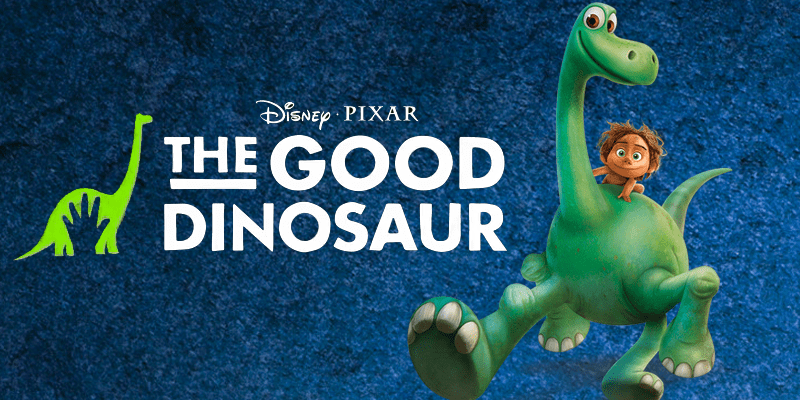
65 million years ago a meteor did not hit Earth. The dinosaurs were not made extinct. Two Apatosaurus farmers are watching in awe as their three eggs hatch. Their children are about to be born. There’s Libby, Buck and finally Arlo. As the three children grow up the differences between them quickly become apparent to their parents, specifically how different Arlo is two his older siblings. Libby and Buck swiftly adjust to life on the farm and perfect their chores, so much so that they are rewarded with a muddy foot-print on the family tree. Arlo does not. Arlo is shy and timid, terrified by most things including the  chickens he has to feed everyday. Arlo’s father gives him some extra attention and finds him a purpose, to get rid off the pest that has been eating their food supply. They set a trap and Arlo waits in excited nervousness for the pest to be caught. When Arlo next checks the trap he find a feral cave-child. When Arlo finds himself unable to kill the pest his father rebukes him, and forces him to chase the pest through a ravine. On the way tragedy strikes and Arlo soon awakens to find himself far away from home and desperate to get back. 

The majority of the film is of Arlo’s journey home. After slowly befriending the pest, even naming him Spot, the pair work together to get Arlo home. Their friendship is portrayed in such a beautiful way, so heart-warming and joyus. Both Arlo and Spot are really lovely characters who you find yourself truly rooting for and willing for their survival. This is the main success of the film and the main reason to stay engaged with it through its rather facile storyline. Arlo and Spot drift from one misadventure to next, meeting some ‘interesting’ characters and frequently running into danger. It’s at this point in the film when it becomes…strange. There’s a sequence which proceeds Arlo and Spot’s ingesting hallucinogenic berries that rivals that sequence in Dumbo. Other strange, occasionally wonderful, set pieces occur. Their joining up with a family of T-rex’s is wonderful. Thunderclap and the pterodactyls are not.

Overall, however, there is enough here to make it worthy of watching. It has the best of intentions, some gorgeous landscapes and two truly lovely leads. Their friendship is one of the studio’s best.

It’s not Pixar’s worst (Cars) or its best (Inside Out or Toy Story) but comfortably in-between.

Sanjays Super Team Pixar Post

Sanjay’s Super Team

The 7 minute short which precedes The Good Dinosaur is absolutely delightful and hopefully ground-breaking in terms of representation. Without dialogue, as most of the Pixar shorts are, we watch a young boy called Sanjay be torn between wanting to watch his cartoon (representing the modern world) and his father’s want for his son to pray with him (representing tradition). The film starts with a card stating ‘This is a (mostly) true story’ and it really comes across throughout. For Sanjay realises that the superhero’s adventures that he watches on tv share a lot with the stories of the Hindu gods. His mini-journey of discovery, attempting to align the two parts of his life, is fantastically done.  The fact Pixar have made a film which diverts from their usual representation is crucial. Long may it continue!

The Lady In The Van

British Cinema at its finest

This film is so warm, kind-hearted and endearing. Whilst on the surface it looks to be a meek and mild comedy about a nutty old lady it is so much more than that. It’s full of witty observations about society – the  lens is pointed firmly at liberals who have earned enough to become middle class yet feel a degree of guilt about their new-found  wealth – and how we do/don’t look after each other. Maggie Smith as the eponymous ‘Lady’ is magnificent,  bringing a richness and poignancy to a fiercely opinionated powerhouse of a figure. Should this be 80-year old Smith’s last leading role, it is one to be proud of. Her performance in this ‘Mostly True Story’ both perverse and profound in equal measure.

In the 1970s playwright Alan Bennett (Alex Jennings) moved into an affluent street in Camden. He swiftly became acquainted with his neighbours and the nomadic interloper Ms Shephard (Maggie Smith) known by many as the infamous ‘Ms Camden’. Ms Shepard, as Alan insists on calling her, lives in a van. The neighbours do not know why she lives in the van, or even who she is. Is she called Mary or Margret. What they do know is that she is homeless and prone to dictatorial ravings. Due to a mixture of guilt and territorial conviction they protest little (at least to her face)  as she drives around and parks up where ever she fancies. However, after council and double yellow line interference, she can no longer continuing temporarily pitching up where she choses. Loathe to offer too much help to the cantankerous old woman Alan lets her use his drive temporarily to park her Van. 15 years pass, with an often-reluctant Alan slowly-forming a bond with Ms Shepard. As time passes and takes its toll on Ms Shepard Alan begins to learn of the past that continues to consume her. 

This is the type of story that could only be true, it would be nigh-on impossible to create a character like Ms Shepard. The majority of her views were left in the dark ages and the way she treats those who try to help her is often despicable. And yet, when personified by Dame Maggie Smith, she is made almost loveable. Her hidden pain and turmoil often explaining some of her brusque character traits. Jennings is superb as her friend and foil, presenting the conflicted feelings Bennett himself had towards helping the formidable Shepard. The supporting cast are also extraordinary: Frances De La Tour, Jim Broadbent and Claire Foy to name just three, all bring various degrees of support to the grande dame of squalor that is Ms Shepard. The slow and tragic realization that Ms Shepard was more sinned against than a sinner is heart-breaking yet handled with such caution and care.

Considering the topic matter this film is ultimately uplifting, almost joyful in its exploration of what draws people to care and look out for one another.

Miss You Already

An unsentimental yet sincere depiction of illness and friendship

It may not have a particularly original plot and may be presented in a way that is ultimately wildly manipulative (read as: you will cry) the film itself is admirable in what it, mostly, achieves. It presents a relatively honest depiction of breast cancer; the impact it places upon relationships both platonic and romantic along with the physical toll it takes. Whilst that alone is immensely refreshing, this is furthered by the presentation of a friendship that will resonate with audiences’.

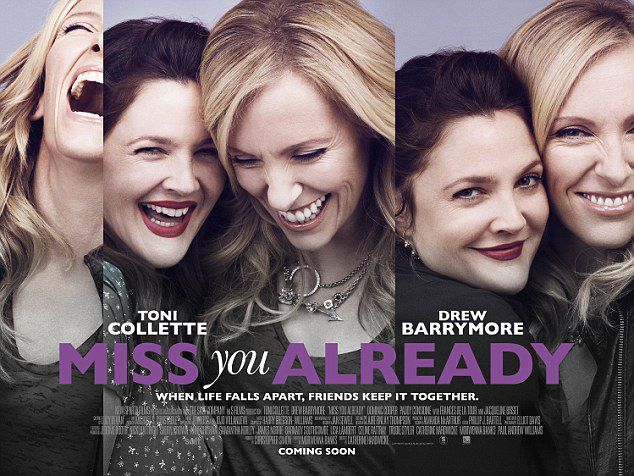
Millie (Toni Collette) and Jess (Drew Barrymore) have been best friends since childhood. They have experienced every first together, everything from first kiss to first child, with their polar opposite personalities allowing them to bring out the best in each other. Whilst Jess is more conservative and stable, Millie is the overconfident and glamourous wild-child yet they are totally and completely inseparable. Both are happily married, yet rather than this separating them their respective husbands (Millie is married to Dominic Cooper’s Kit with Jess married to Paddy Considine’s Jago) and Millie’s two children instead make up one big family. But the family is rocked by Millie’s life-altering diagnosis of breast cancer, just as Jess finds out that she is pregnant with her much-longed for first child, which will put their friendship and their makeshift family to the ultimate test.

Collette does any amazing job (as is to be expected) playing Millie. Her acting, along with the screenplay and the film’s direction avoid what many similar films have done in the past, of making the person suffering from cancer into some sort of saint or martyr. Instead Millie stays the same as it is implied she always was – a mostly well-meaning but often not very nice person. This feature is really the film’s only comparatively unique feature. This, along with the portrayal of her treatment, make the film feel more honest and in a sense more brutal than others of this kind. Millie starts the film loud and vulgar, and although she spends the majority of the film in an oncology unit, she still stays the same person. Cancer doesn’t ‘fix’ her personalities ‘faults’, at times it only exacerbates them, consequently making her more relatable than many other presentations of the disease. It’s a reminder that cancer can, and with the current odds will, affect all of us whether we are good, bad or, like Millie, the grey area in-between.

However, it would be wrong to say this film is truly great or fully lives up to its potential. As we only see Jess and Millie’s friendship through flashback or montage, we are unable to fully latch onto their story. Aside from their respective health concerns, and a few references to a shared love of Wuthering Heights and R.E.M’s Losing My Religion, we aren’t really given enough about what makes them such good friends. The film constantly tells us this, but never shows us quite enough to engage us fully with their bond and ultimately does not earn the empathy it had the potential to do so.

Nevertheless, the ensemble cast, with Collette at the forefront, are all reliable and supply solid performances. Jacqueline Bisset is fantastic as Millie’s actress mother, Frances de la Tour momentarily steals the show in her short appearance as a wig-maker and Tyson Ritter (lead singer of All American Rejects) pops up as a swaggering barman.

From the opening of the film the inevitable outcome is presented, yet it will withhold interest and induce multiple bursts of tears throughout.

Gemma Bovery

As charming and bittersweet as it’s kindred text

This is not a modern-retelling of Gustave Flaubert’s Madame Bovery,or at least not a conventional update. With similar events and characters the film is instead a winsome, endearing if slightly flawed echo of the 19th Century novel.

Martin Joubert (Fabrice Luchini) moved from Paris to a small village in Normandy seven years previously to takeover his father’s bakery. Martin mostly enjoys village-life; the simple routines of making and selling bread, being a husband and a father. However his ‘years of sexual tranquility’ end upon the arrival of Gemma Bovery (Gemma Arterton) and her husband Charlie Jason Flemyng. Martin cannot believe the coincidence of this British couple with THAT surname taking up residence in his village which has links to Flaubert and his novel. Not only do their names link to the book, but their lives appear to be following the text also. Martin quickly engrains himself into their lives, taking it upon himself to mentor Gemma and guide her away from the tragic end of the eponymous Madame Bovery.

It would make sense to briefly talk about the main, and only, real flaw of this film before really getting into the good stuff. The film doesn’t really have a main focus, instead drifting from scenario to scenario through irregular pacing or, occasionally, irregular links. In fact between a promising first act and a surprising (and rather entertaining) third act, the middle does meander therefore reducing the tautness of the narrative.

But this is compensated by the film itself being utterly endearing. The village and it’s surrounding areas is beautifully shot, with the camera finding beauty in every shot. The main beauty is Gemma herself, who is adored by many men and the clearly the cinematographer. Happily the script and Arterton’s performance combined make this adoration understandable to be audience, creating a bewitching character who is both beguiling yet frustrating in behaviour.

With this film you are forced into a fantasy world, which you are immersed in quickly and readily. The film is fun and engaging but with a melancholic heart at the centre.  Gemma Bovery is pleasant and ambling depiction of how love can be fraught and frantic, full of yearning and seduction, adultery and scandal.