High-Rise

‘Where are those happy days, they seem so hard to find.”

41 years after its publication, J. G. Ballad’s High-Rise proves itself to be scarily accurate in its predictions of the then-future and our now-present. The film adaptation is equally brutal and dark, tinted with the blackest of humours. Deciding to set it in the time period in which it was written, director Ben Wheatley succeeds in using Ballad’s bleak hypothesises of societal hierarchy to transform the big screen into a mirror reflecting our darkest innermost fears. This review comes from the preview screening and Q&A session I attended at the British Library (Hello to Galia, Alison and Alex…)

London. 1975. Dr Robert Laing (Tom Hiddleston), a psychologist, movies into a high-rise building having been seduced by the lifestyle it would bring with it. The building itself is isolated from the rest of London and is so self-contained with a supermarket, gym and swimming pool that, aside from work, there is little reason for the residents to leave. They are cut off from the rest of society in their luxury tower block. The higher your floor the higher your status – Laing takes up residence on floor 25, his new friend Charlotte Melville (Sienna Miller) is on floor 26 and the architect of the building, Anthony Royal (Jeremy Irons) and his wife Ann (Keeley Hawes), take up the entire top floor. Laing also comes into contact with a family relegated to the second floor, BBC documentary-maker Richard Wilder (Luke Evans), his heavily pregnant wife Helen (Elisabeth Moss) and their two children. When Wilder becomes so embittered by the social hierarchy he decides it will be the focus of his next project. A dangerous situation develops causing a domino effect which leads to the fragmentation of the residents and formulation of violent tribes.

Where to start when reviewing this film? It’s excellent, terrific and truly haunting in equal measures. Like many of Ben Wheatley’s films High-Rise is of the ‘well-that-escalated-quickly’ genre. However, this film does not require a suspension of belief for the dissention into madness. Whilst accelerated the resulting horrors stems from social resentment that has been apparent since time immemorial. History showcases time and time again society’s that form then self-destruct that little exposition is required in High-Rise to explain why things get so bad so quickly (not that I can really imagine Wheatley wanting to spoon-feed us in this way). The script is bitterly funny, laden with comments that are iceberg-en in terms of depth. Social commentary is rarely this sharp-tongued, appalling yet absurdly funny.

Wheatley doesn’t waste a shot in the telling of this story; countless viewings would be required to access even half of the detail and imagery it possesses. And practically every shot could be printed out as a still and put on a wall, for the cinematography and mise-en-scene is otherworldly in its beauty. There’s the generic, unbranded supermarket made of quadrilaterals in primary colours, the kaleidoscopic parties of the various factions, the riding of a white house across the luminescent greenery of the rooftop garden and the seemingly innocent shades of grey of a certain floor 25.The blend of lighting and framing makes for sequences that are fraught, depraved and agitating. This is only exasperated by the incredible soundtrack, with two appearances of ABBA’s ‘S.O.S’ (hence the subheading of this review) that bring chills in way that one would never have though possible. At one point the BAFTA award makes a cameo, which Wheatley later explained he chose to include as it ‘would be the closest he’d ever get to an actual BAFTA’. It would be an utter travesty if for visuals and soundtrack alone High-Rise is not recognised and justifiably awarded.

Speaking of awards, there’s then the performances of the cast. Hiddelston as Dr.Laing, a self-contained possessor of wide-eyed optimism and underlying volcanic rage, is a match made in heaven. Wheatley spoke of his having Hiddelston’s ‘photo on the fridge’ during pre-production and casting as they (they being Wheatley and wife Amy Jump who wrote the script) viewed him as the perfect candidate. But, whilst Moss, Miller, Hawes and Irons are all good in equal measure it is Luke Evans performance that is stand-out to that of Hiddelston’s. If Laing is untapped rage cloaked in a suit, then Evans as Wilder is the untamed man. Evans must have come close to the edge in making this film, for his character is a powerhouse of bitterness and injustice whose raging against the machine is awash with inevitable destruction.

With so many reasons to see High-Rise; the performances, the script, the visuals are just three broad reasons which should justify you’re purchasing a ticket upon the film’s release next week.

Go see it and be haunted for days afterwards.

Room

Astonishing And Devastating In Equal Measure

To begin with, an analogy. Have you ever wrung a towel, a facecloth or even just a piece of fabric in general? You put all your strength into the movement, creating enough tension to drain the cloth of the water it possesses. Are you with me? Now let’s replace a few words of that scenario – the face cloth is the viewer of ‘Room’, the water is either literal tears or just emotion in general and the source of the wringing is the film. Everything, from the cinematography, the mise-en-scene, the dialogue to the extraordinary performances , works in conjunction to drain you so brutafully (see, I made it work there too!) drain you. Never has such a thing been done so willingly, nor with such reward. ‘Room’ is otherworldly in its brilliance and ability to shatter your heart.

Jack (Jacob Tremblay) lives in Room. As far as Jack knows that is all there is to life as he has never left Room. As Ma (Brie Larson) has explained to Jack outside is ‘Space’ and filled with aliens. The only other person knows of is Old Nick who brings them food, necessities  and a ‘luxury item’ referred to as a ‘Sunday Treat’. When Old Nick comes to spend time with Ma, Jack must sleep in the wardrobe. Jack has just turned five and Ma has started to release that he may be old enough to know the truth. That there is a whole world outside of Room, but a world that has been closed off to Ma since Old Nick kidnapped and locked her away seven years ago. Ma was once Joy, a seventeen-year-old girl on her way home from school. Now no-one knows where Joy is. Joy comes up with a plan that involves tricking Old Nick into taking Jack outside of Room, allowing for Jack to escape and get help to rescue Ma. But will Jack be able to accept he could have a life outside of Room?

‘Room’ is a blend of true-crime and fairy-tale. It tells a story that is so abhorrent and seemingly hopeless in a way that is grippingly real, intimate yet somehow beautiful. Jack’s view of Room is fairy tale-like, where what are ordinary objects to us are the only one of their kind, have a personality and are therefore addressed with capitalisation (Table, Lamp, Bed etc.). The television is not a link to the outside world, there is no outside world, but instead images of things that do not exist. It is Joy’s view that is the true-crime, through her eyes the surroundings are depicted in their true horror. Joy is a prisoner, her child was born into captivity, and she has created this world to help them both survive. It is the blending of these two worlds that generates the film’s astonishing power.

But it’s the performances of its two leads that allow this power to land – to convince and cherish. Brie Larson presents an anguish that is so severe that at times becomes unbearable to watch.  Her raw and honest performance is miles, lightyears even, away from the many mawkish performances of exploitative ‘true movies’. Jacob Tremblay provides the kind of child performance you see once in a decade, his abundant glee at the rose-tinted life in Room through to his difficult transition at learning everything believed was a lie. Joy tells Jack these stories to keep him sane in confinement, and Jack’s job unbeknownst to him is to keep Joy sane.  The bond shown between mother-and-son is otherworldly in its believability and its depth.

‘Room’ is gut-wrenching, heart-wringing and brain-haunting. It’s not typical night-out to the movie fayre. At times it’s impossible to watch, and will haunt far longer than its two hours running time. Yet it’s a narrative journey well worth making, proving the power of cinema and the power of extraordinary performances.

‘When I was small, I only knew small things. But now I’m five, I know everything!’ – Jack

Creed

A new era. A new generation. A new legacy has begun.

First, to address the elephant in the room. I didn’t really want to see this movie. I had no real intentions of seeing it and was more than happy to let it pass me by. But when Cineworld announced a a preview screening for Unlimited card holders I booked a ticket, yet remained uncertain. Then Cineworld had to throw its toys out the pram and refuse to show ‘Hateful 8’. To maintain this weekly cinema-going challenge I almost had to attend.

Now that may be slight information overload, but hopefully it has served a narrative purpose – in establishing the disinterest, bordering on disdain, I felt upon entering Screen 7 at the CIneworld at the O2 arena (have I painted a clear enough picture yet?) Now you should be able to understand the surprise I felt, and admittedly still feel,for how I much I loved this movie. I expected a run-of-the-mill hero’s journey story arc, a mundane blend of drama and people getting punched in the face. But ‘Creed’ truly and utterly defied my expectations – instead being an incredibly emotive feel-good movie will some brutal and realistic fight sequences.

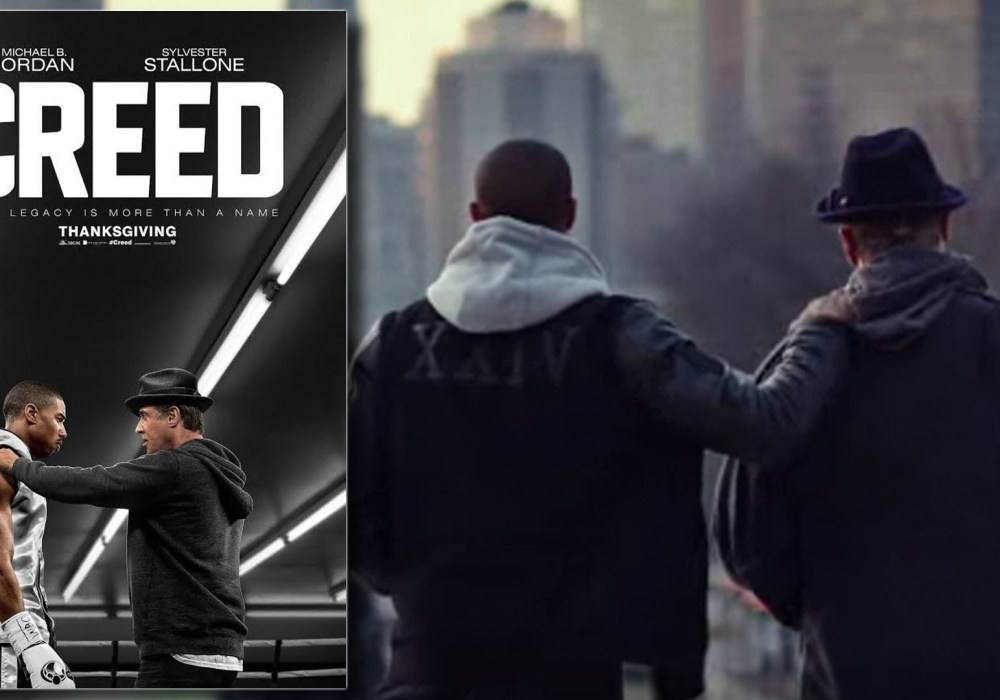
1998. Adonis Johnson has been caught in the middle of a fight in the Los Angeles youth facility and been put in isolation. Again. However this time the young boy has a visitor – Mary Anne Creed (Phylicia Rashad), the wife of deceased former heavyweight champion Apollo Creed. Adonis was conceived during an extramarital affair that Apollo had. Mary Anne offers to take in Adonis as he has no-one else. Seventeen years later and Adonis( Michael B. Jordan) still feels conflicted in his love of his father and his love of boxing. Deciding to pursue his instincts Adonis travels to Philadelphia and gets in touch with his father’s old friend and rival Rocky Balboa (Sylvester Stallone) in the hopes of persuading him to be his coach. In Philadelphia he also meets Bianca (Tessa Thompson), a woman who also has a passion that drives her. Philadelphia may provide Adonis with a new start but it is also haunted by his father’s legacy.

Rather disarmingly, ‘Creed’ shares much with ‘Star Wars: The Force Awakens’. Both are the seventh films in the franchise. Both belong to franchises which possess recent additions that were of poor-to-awful quality. Most importantly – both of the new releases are successful post-modern sequels that reinvigorate the stalemate series. ‘Creed’, in a joyfully unironic manner, shows a human being with a passion that consumes him. Adonis has an innate need to box, yet remains constantly aware and is frustrated by the fact he must remain in his father’s shadow. A man he never got the chance to meet. What makes the film so marvellous is is that this conflict is not overly reliant on the dialogue to convey this conflict. Yes the dialogue itself is crisp and realistic, but it’s not the only provider of exposition.

It’s built upon with fantastic performances from all the cast. It’s brilliant to finally see Sylvester Stallone is a good movie after years in the cinematic wilderness. Then there’s, rather unexpectedly perhaps, the cinematography. The camera-work on this film is astounding. The choices that have been made are so clever and convey so much. For instance, very early on, we observe Adonis watching a projection of his father in the ring. Adonis then gets up next to the screen and imitates the punches of his father’s opponent. Not only does the camera-work in this sequence make the scene intensive, but the lighting reinforces the notion that Adonis constantly lives metaphorically in the shadow of his father. The scene that is truly stand-out is one of the fight sequences: an entire fight sequence that is one shot – no cuts, no breaks and no respite from the action. The camera places us at the heart of the action, the fighting itself is brutafully (new word I’ve made up for this purpose) choreographed, but it’s the decision to let it play out in one-shot that is remarkable.

The story itself isn’t particularly complicated, often following expected beats and rhythms.Yet somehow, with the aforementioned blend of cinemagic, it’ll manage to capture your heart. You may even find yourself cheering at the end.


Krampus

The gift that keeps on creeping…

Christmas is a time of festive cheer,

for singing loud for all to hear.

But what if good ol’ Saint Nick was nowhere near?

Instead Krampus came to fill you with terror and fear…

Max used to love Christmas. He used to love wrapping presents with his sister and parents whilst watching ‘A Charlie Brown Christmas’. He used to somewhat enjoy when his extended family of aunt, uncle and four cousins made their annual visit from December 22nd to just after Christmas. But every year it’s gotten worse. His parents are growing apart, his sister spends all her time with her boyfriend and his cousins use him as a play toy to amuse themselves. Only his paternal grandmother Omi can see how his Christmas spirit is fading. When his extended family arrive once more the four adults, and surprise guest Aunt Dorothy, clash over the dinner table whilst his cousins brutally tease him for still believing in, then writing a letter to, Santa Claus. It’s the final straw for Max. He rips up the letter in anger and throws it out of the window. That’s when the storm starts, a snow storm like no other. Under the cloak of the blizzard Krampus and his villainous cronies start to arrive…No-one is safe. 

What a pleasant surpise this film was! It’s far from perfect and the pacing of both the first and third act is slightly off, but overall this film is a superb antidote to the kind of movies that some of the little-known Sky channels have been showing since mid-September.  It’s properly funny, has some jump-worthy moments and holds your attention for most of the 98 minute running time.

The story itself is deceptively clever. Though the myth of Krampus is centuries old it feels incredibly immediate and relevant.  The film opens with a sequence that has become unsettling familiar in recent years – a supermarket opening it’s doors for pre-Christmas sales. The crowds rush in, rioting, pushing, shoving and shrieking in their quest for unnesscessay discounted purchases. The fact this is soundtracked with Perry Como’s ‘It’s being to look a lot like Christmas’ successfully exemplifies the increasing commercialism of Christmas. It sets a great tone for the upcoming penance that will have to be paid.

The characters who will soon endure Krampus’ house invasion are well pot rated.  They are the right amount of unlikeable, each given just enough reason to warrant the inevitable onslaught but redeemable enough that you start to care what happens to them. The film doesn’t treat the adults any differently from the children – they have been just as naughty as their parents so need to be punished. As a secondary school teacher I can’t actaully say that Max’s two tween female cousins deserve to be punished,  but I can say that I hope they learn from their mistakes.

Krampus’ and his squad, made up of evil-looking reindeer, scary elves, oh so creepy toys and hilariously horrific gingerbread men own this film. The portryal of the homicidal gingerbread men would be my standout favourite, their evilish giggles haunting the house and they haunt it’s residents.  In fact they did somewhat remind me of Christmas horror-comedy classic ‘Gremlins’ which would make an excellent double movie feature with ‘Krampus’.

If you’re looking to briefly escape the festive season , or see and Old Testament-style backlash against it, or you just want a movie for laughs and a few scares, then this is well worth a watch.

The Gift (2015)

Dare you look inside?

This film is good. Really good. It’s wicked, smart and tense. So tense, you’ll be on the edge of your sheet for most of the film’s 1hr 50min running time. Few contemporary Hollywood films are able to hook in an audience so quickly, so subtly, and keep them gripped to the end credits. Belonging to the ‘thriller’ genre this film (written directed and starring Joel Edgerton) it manages to avoid all the perils of a bad thriller movie. Typically films of this genre are set up with a chunk of exposition, a boring and obvious way of introducing character and story. With ‘The Gift’ Egerton totally avoids this hurdle, instead he sprinkles exposition into dialogue. Twists and turns are set up in a way that it is only once they happen that you realise they were even set up in the first place. Not once does the film dip in tension or give any hints on what will happen next. If you’ve seen the trailer and thought you’d seen it all, you really haven’t!

Robin (Rebecca Hall) and Simon (Jason Batman) move from Chicago to California, to an area not far from Simon’s hometown. When shopping for new home supplies the pair are approached by ‘Gordo’ (Joel Edgerton) who identifies himself as being an old school friend of Simon’s. Gordo quickly establishes himself in their lives, dropping off gifts and making surprise visits at their home. Although Robin seems happy enough to maintain contact with the ‘socially awkward’ Gordo, Simon grows uneasy with Gordo’s behaviour and decides to ‘break-up’ with him and ends their friendship. Gordo does not let this go easily and continues to have a hold over the pair. Secrets from the past swiftly and menacingly threaten to ruin their seemingly idealistic life.

This film is both modern yet welcomingly old-fashioned. Its plot and pacing align it with Hitchcockian storytelling. The fact that much of the film focuses on Robin’s perspective is a throwback to the Gothics of the 1940s. Her doubts over Gordo, and as a result doubts about her husband, are never overblown or ‘too’ melodramatic but rooted in a degree of realism and with complete sympathy. What could be a one dimensional role is instead fully rounded with Hall’s nuances, her subtle discomfort apparent yet carefully and gradually revealed. Bateman is equally as good, barely recognizable in a role that goes far beyond type. All too often taking the role of fraught and downtrodden father figure, he places the role of Simon with ease as he carefully navigates the fine lien between charming and douchebaggery. Whilst we are swift to become uncertain of Gordo’s intent, we soon realise that we know just as little about Simon. His interactions with both Robin and Gordo remain intriguing and frequently unsettling from start to finish.

 But it is Edgerton who remains the star here, portraying the oddest and most secretive of the three leads. Often films like this will signpost, practically with flashing neon lights, what will happen next and who we can trust. Within his script, cinematography and characterisation Edgerton doesn’t do this. All of these dimensions are far too complex for that, refusing to let the viewer rest on their laurels or take a breather. Nothing is certain in this cinematic universe; no-one can be trusted.

A surprise of a movie, engrossing and unpredictable in equal measure. This is a fantastic directorial debut, a tense psycho-thriller and well worth seeing.