Victoria

A true feat of film-making. Truly extraordinary.

To put it simply, a ‘take’ refers to the period between a director saying ‘action’ and ‘cut’. It’s up to them or the cinematographer how long this period is. Typically the longer the take the more difficult the film-making process is as it requires actors to be in the right place, saying the right lines, nothing else interrupting the shot etc. Alfred Hitchcock experimented with this in 1948 making Rope which clocked in at 80 minutes and comprised of only 10 takes, the majority of which were shot in such a way to make the cuts seem seamless. It was an ambitious project which paid of in most regards, the murder and the main characters fear of being caught out in only heightened by the prolonged takes. The character cannot escape and neither can the audience. 68 years later we have Victoria which was filmed two years ago and rejected by many of Europe’s film festivals as they believed the filmmakers were lying on the submission sheet. What lie did they think the filmmakers were proclaiming? Well the film-makers claimed that Victoria, which is 2 hours and 18 minutes long, was shoot using only one take. The most unbelievable thing about this? It’s the truth.

Victoria (Laia Costa) moved from her hometown of Madrid to Berlin three months ago. She works in a coffee shop for less than minimum wage and doesn’t really know anyone in her new city. In the hours before her early morning shift she decides to go clubbing and dances alone quite happily. On her way out of the club she bumps into a group of four men – informal group leader Sonne (Frederick Lau) who Victoria feels an instant spark with, Boxer (Franz Rogowski), Blinker (Burak Yigit) and Fuß (Max Mauff) – who promise to show her ‘real Berlin’. Victoria agrees and what first follows is a fun night for Victoria, seeing parts of Berlin she had never seen before and connecting quickly with Sonne. When Boxer receives a phone call and claims that the group need Victoria’s help.  It is her connection with Sonne that prompts her to make the first in a series of bad decisions and things take a dark turn before spiralling out of control.

I repeat. The entire film is only one take long. It cannot be overemphasised how incredible this is, what a triumph of filmmaking it is and what an astounding experience of film-watching it creates as a result. It’s breath-taking, wondrous, exhilarating and utterly compelling. As it is shot though one-take it is shot in real-time. This is important to note as it adds to the authenticity, we watched events play out and escalate. We cannot question how we got from the first frame to the last as we witnessed very moment and decision which lead the characters there. And these moments don’t just take place in one room – the characters travel all over the city, up ladders, jammed into cars and lifts, dancing across the street and running across it too – and the camera is always there watching and following. Incredibly this also manages to feel gimmick-free. Instead we feel like we’ve tagged along for a night out, been immersed in the spontaneity and intensity of this world, then kicked out of the club  and ditched at the end of the film. There is a reason that the cinematographer Sturla Brandth Grøvlen receives first credit ahead of director and writer Sebastian Schipper as Victoria is an example of true technical mastery. The camerawork is dazzling ambitious, pulsating and gripping.

The performances are mostly improvised, which only adds to the feeling of authenticity and believability. This is next level realism as we get to experience this world as it happens. It’s a huge credit to the relatively inexperienced cast that they only had to shoot the film three times, this being version two. It’s only after seeing the film, when you see what they had to achieve and endure, that you can truly appreciate the level of skill being utilised here.

It’s divine. A sensational watch. It needs to be seen.


10 Cloverfield Lane

The low budget “spiritual successor” to Cloverfield

Cloverfield was a serviceable found footage horror film that did well at the box office predominately due to its marketing strategy which featured things that took the burgeoning viral marketing to a whole new level. MySpace accounts were created for each of the characters, websites for the fictional companies that featured in the film could be trawled through for clues and the film itself was announced only as a series of numbers which formed clues that were eventually revealed to the release date. Cloverfield appeared in a few films of the year lists and that was about it. Producer J.J. Abrams would regularly be hounded for details of a possible sequel but appeared not to be able to give a definitive answer. When the upcoming release of 10 Cloverfield Lane was announced early this year there was real surprise as no-one had known that it was even filming let alone finished. This was due to the fact 10 Cloverfield Lane had not been filmed – originally based on a script called ‘The Cellar‘ it was adapted and linked to Cloverfield it was filmed under the codename ‘Valencia’. Here we are in March 2016 and 10 Cloverfield Lane has been released and it bares little resemblance either in tone or story to its predecessor. And it’s good. Very good indeed. So good that it’s definitely in the running for my end of the year top ten list.

Fleeing New Orleans and her fiance, intentionally leaving her engagement ring behind in the process, Michelle (Mary Elizabeth Winstead) drives far away from the city. In the process she ends up in a nasty car accident. Next thing she knows she wakes up in a basement, her injured leg is handcuffed to the wall. She desperately does all she can to escape but all attempts are futile. The locked door opens and she is greeted by Howard (John Goodman) who explains that he saved her life and yes he is keeping her trapped down in the basement but it’s for her own good. His rather menacing nature and pointing out of how much Michelle owes him hugely unsettle Michelle who is desperate to leave. She also meets the other resident of the bunker, Emmett (John Gallagher Jr.), who has known Howard for most of his life and is certain that Howard is a conspiracy nut but fundamentally a good guy. Time passes before the pair admit to Michelle why she cannot leave the bunker, a chemical attack has taken place in the outside world contaminating  the air and killing the world’s population in the process. The unknown assailants have made the outside world unlivable and the trio’s only hope to stay alive is to remain in the bunker. All of life’s comforts are there, as Howard has spent most of life preparing for such a situation, but Howard’s increasingly controlling and menacing behaviour makes Michelle desperate to leave. Taking matters into her own hands Michelle soon realises the truth of what has happened.

What is truly impressive about this film is how cleverly it terrifies the audience. Considering it is a 12a (something I have an issue with concerning the themes and some of the moments of the film) it manages to do so much with so few of the big violent scares of other horror films. Two of the film’s tensest moments are when Michelle crawls through the ventilation shaft, twice. Through a brilliant combination of editing, camera work, sound and acting they were both sequences I had to watch through my fingers whilst desperately hoping for the best possible outcome. There are a few moments of big and jumpy scares, many of them coming from loud noises that have never sounded so scary, but most of the moments are slow-building subtle fears that build to genuine terror. This is through the fantastic storytelling and narrative. Information is so carefully withheld then slowly realised to the audience. Every new revelation requires a reassessment of what we know and what we expect will happen next.

We know little about what has actually happened outside and we have little reason to trust our primary source for that information. John Goodman is truly terrifying as mysterious Howard whose character gains murkier and murkier added depths with each conversation. He’s a dangerous blend of menace and deluded altruism with every sequence in which he appears forcing us to eye him dubiously, wondering how much he says is actually the truth and how big a threat he plays towards Michelle. The slow revelations that follow only complicate our distrust and unease of his character. Gallagher Jr.’s Emmett is a much-needed comic foil into the tense mix, when tension hits sky-high level it is masterfully lowered with  a dose black humour. Winstead’s performance as Michelle is the best of her career, making a character who is truly sympathetic and one which we are desperate to succeed. I’d even argue that, in a year which saw Brie Larson win an Oscar from Room in which she played a woman held in captivity, that Winstead’s performance rivals Larson’s. Winstead’s blend of determination to leave and her struggling to accept the awareness of its possible futility may have resulted in one of the finest acting performances of the year.

If you’re looking for a film that clocks in at one hour and a half, that will drain you of every emotion possible, make you jump out of your seat and shield your eyes in concern, then you’ve come to the right place. Well worth seeing, if you dare…

Marguerite

A tragicomedy filled with laughs and tears

Strangely, and I hate to be one of those people, but I’m going to start of by drawing comparison with this film and Eddie the Eagle . Though this may not initially be an obvious comparison, Eddie is English and obsessed with skiing whilst Marguerite is French and obsessed with opera singing, the overriding link is the very obsession which drives them. Both characters NEED that one activity that makes them feel alive, makes them feel free and makes them feel joy unlike any other. Both are based on true stories, with Marguerite being loosely based on  the life of Florence Foster Jenkins (a Meryl Streep-staring biography is out later this year). The crucial difference, however, is that Eddie could ski and had only practised ski jumping a year prior to entering the 1988 Winter Olympics in Calgary. Marguerite has apparently been singing all of her life and cannot sing. It’s not just that she cannot sing, every single note she produces is so off-key and categorically awful, and she doesn’t even know it. All Margurite knows is the joy she feels when releasing the notes, not the fact they are atonal and truly, utterly dreadful. Her husband and friends, either out of loyalty, shame or amusement have kept the truth from her. This tension leads to the aforementioned tragedy and comedy.

Lucien Beaumont (Sylvain Dieuaide), an infamous newspaper critic, has gatecrashed a party escorted by his Dadaist artist friend Kyrill Von Priest (Aubert Fenoy). His attention is immediately taken by aspiring singer Hazel (Christa Théret) who performs as warm-up to the host. Baroness Marguerite (Catherine Frot) sweeps into the reception room in her large manor home, her room filled with guests for her charity recital. France’s finest and mightest, who all belong to the exclusive Amadeus club which she is a part of, are all there to see her. Marguerite breezes through the room, practically gliding through her audience, escorted by her loyal manservant Madelbos (Denis Mpunga) whilst desperately searching for her husband Georgeos (André Marcon) in the audience. Upon reaching the stage which is filled with her orchestra she turns to face them, her eyes sparkling with sheer and utter joy, her face is set and ready for that first note. Her mouth widens, forming that first note. What comes out of her mouth is unlike anything Lucien has heard before – it’s awful. Marguerite is not singing, she’s screeching, her voice is the embodiment of  nails on a chalkboard or a cat screaming. Unbeknownst to Marguerite children run under tables away from her noise, many of the man sneak into a private room away from the horror. Lucien must restrain himself from laughing, Kyrill believes he has found modernist art  and Hazel tries to hide her embarrassment from the poor woman. Finally Marguerite stops and her audience erupt into applause and admiration, flowers are thrust upon her and her talent is heralded. Lucien is bemused – she clearly does not know as her small aristocratic society has not told her – and feels compelled to write a review which is ladden in euphemism and  backhanded sentiment. Marguerite does not read into it and is filled with joy at having her talent recognised. Events start to spiral, with a public concert planned. How will Marguerite cope when she discovers the truth? 

I should point out that the above paragraph covers roughly the first 15 minutes of the film, leaving a solid 1 and 3/4 for you to discover on your own. I’ve not even discussed the role of the clown and the bearded lady! Marguerite is not always easy to watch, at times her singing or the events that it leads to are utterly mortifying. However it must be acknowledging that the mortification we feel on her behalf  is due to how well the story is told to allow us to connect with Marguerite and possible even empathise with her. It would be so much easier to have a film about a bad singer and laugh at her bad singing. Instead what we have here is so much more complex, layered and pleasurable to watch. We root for Marguerite, we hope for her and we fear for her – whether that be about a performance or comments that are about to be made about her.

Marguerite devoids herself to her craft, she spends everything on collecting props, music sheets, attending performances and supporting new talent. She has an all-consuming need to perform, which leads to unspoken clashes with her seemingly-cold and adulterous husband. Never has a film character been so in need of a hug. There’s something so child-like about Marguerite, something so amusing yet bitterly sad. It’s a true tribute to the talent of the filmmakers and the actress herself that we connect with her the way we do, encouraging her even though we easily recognise how talented she is in her chosen field.  Then somehow, throughout all this, we ultimately feel uplifted watching her journey. We all have something we pursue or like to believe we are really good at, even when we’re not At this point I’m really hoping you’re not thinking, ‘Ha! Yeah you are your film reviews”, but then Marguerite suggests that the opinion that others have about your talent should not be the one that is heralded, it should be your own and how it makes you that counts. And if how I feel about writing these reviews, and you out there hopefully reading them, is only a fraction of how singing makes Marguerite feel then I fully understand her.

It feels too overly simplistic to say this film is painful yet funny or that it is hilarious yet heartbreaking. It’s soul-baring exploration of passion. Exquisite.

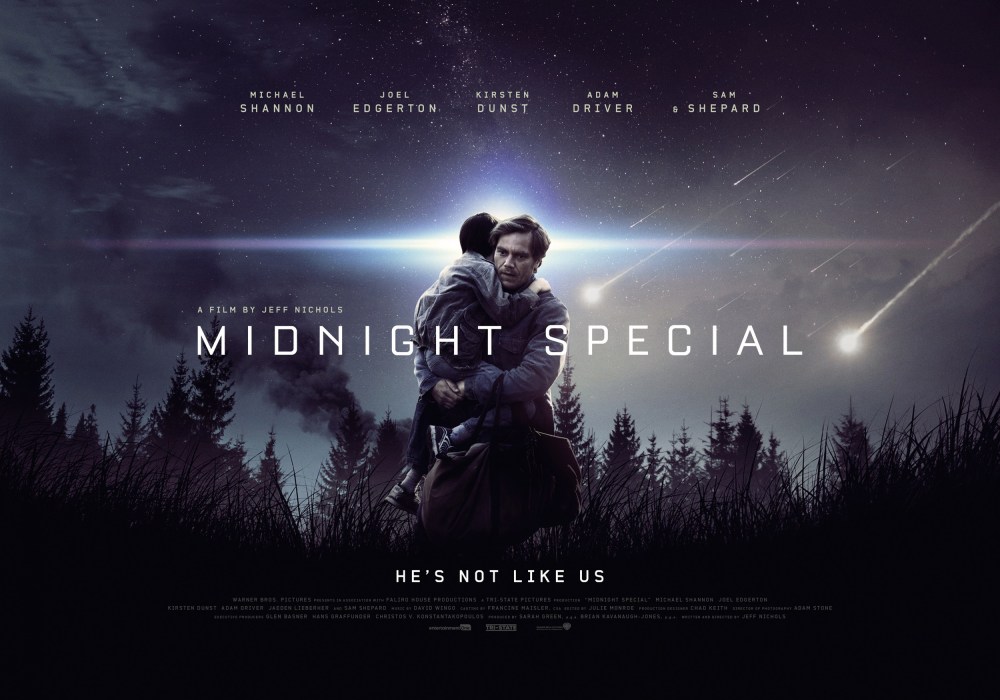
Midnight Special

Messiah or weapon? Or something else entirely?

Imagine a science fiction movie that focuses less on the fictional powers and more on the human emotions, the cost behind the power. Imagine a science fiction movie that allows you to marvel at the mystery rather than hand-feed you the plot. Imagine a science fiction movie that is a road trip/chase movie that challenges the value of belief. Now stop imagining as Midnight Special is all three of those things and much more. It is a wonderfully strange blend of genres, full of complexity and sentiment. A parable about love and extraordinary ability.

Roy (Michael Shannon) and his eight-year-old son Alton (Jaeden Lieberher) are on the run from both the government and religious extremists. Alton appears to possess special abilities, from being able to effortlessly infiltrate classified government signals  to bringing down a satellite from outer-space. A religious cult formed around Alton who, as National Safety Agent Paul Sevier (Adam Driver) discovers,  turned his encoded words into gospel. His supernatural powers so badly altered by daylight that all of the cult  became nocturnal. Upon making eye contact with people Alton’s eyes glows and show visions of unknown lands. Having fled the cult, and with the help of childhood friend Lucas (Joel Edgerton) and Alton’s mother (Kirsten Dunst),  Roy must get Alton to specific location for a specific time. Will, as everyone fears and some hope, a celestial and world-changing event take place? 

This is not your typical science fiction film. Compared to typical box office fairings Midnight Special is slow, with far more questions than answers, and a narrative that is impossible to stay ahead of. Those are not criticisms, just an acknowledgment that this film is not for everyone. In the preview screening I attended yesterday many of the audience members seemed frustrated or unfulfilled by the film. I was not in agreement with them for the film I had just witnessed was so riveting and magical. Rarely is science fiction this personal and emotive. Yes, a beginners guide to film criticism will show  you that Steven Spielberg’s films are about father-son relationships,  but what we see here is a different realm. What director and writer Jeff Nichols manages to achieve is a film which places greater emphasis of the consequences of supernatural power rather than the benefits of it, prompting the reflection that more is lost than gained in such extraordinary circumstances. Few storytellers are this damn magical.

The acting by the entire cast is wondrous, each cast member providing a wondrous blend of awe, fear and honesty. Roy’s love for his son is so deep and unconditional, a level of paternal concern rivalling that of great Epics. Lieberher’s performance here suggests that Room child star Jacob Tremblay may have a rival for Hollywood’s current greatest child actor. Egerton’s performance allows us to give loyalty to a character we know little about, believability to a man who has only known Alton for three days but is willing to give everything to the boy’s journey. Dunst is subtle yet heartbreaking as a mother who fears she will have to give up her son once more.

The cinematography is marvellous, as is the soundtrack and the storytelling. Of particular favourite is the Easter Egg of the Superman-starring comic book that Alton is reading in the back of the car. Any in depth analysis of the parallels between Superman and Alton would be spoilerific, but the very fact both are outsiders with great power is a wonderfully subtle touch. Just like the entire film it’s an allusion to other sci-fi works, but something that is so uniquely individual and riveting.

Some may say slow. I say spellbinding, sincere and utterly superb.

Batman v Superman: Dawn Of Justice

Meh. Vanilla. It’s okay.

The three statements above are the three different ways I’ve answered the question, ‘What did you think of Batman V Superman?’ in the past 14 hours. Although there are aspects of the film that are good and entertaining that is just what they are, aspects. The film overall is a bloated disaster – 151 minutes of too many ideas fighting for screentime which end up being incoherent and underdeveloped. Instead of a typical review, in which my thoughts on the film would be as nonsensical as the film itself, I’m going to use a list to let my great ideas have an organisation and a flow (lesson to the film-makers there…)

The good

The visuals

Aside from Cineworld at the o2 Arena screwing up the calibration of the sky superscreen (having forced the audience to watch all the ads, trailers and 25 minutes of the film with only one eye open as the projection was out of focus, they then decided to stop the film and spend 15 minutes reformatting before restarting the film. Cineworld have done not anything to compensate for this screw up and literal headache) when watching this film you can see where the money went. In fact, I suspect that is what director Zack Snyder wants us to do. The fights are big and brash, the costumes and special effects are spectacular. The cityscapes are breath-taking (if of debatable geography). In terms of big screen spectacle, it’s all here. Some sequences appear straight out of a comic book in terms of iconography and style, such as when Superman arrives at a Dia de los Muertos (Day of the Dead) celebration and he is being aligned as a Messiah-eque figure.
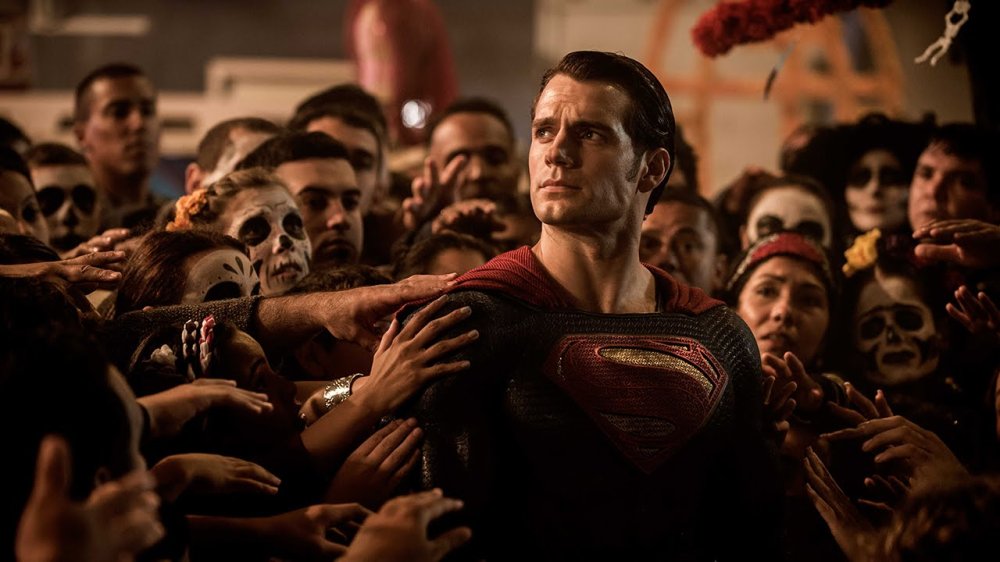
MESSIAH

 Batman

Whilst I was initially in the ‘Say No To Ben Affleck as Batman’ camp, I did begin to change my mind when the first trailers and posters arrived. As a lover of Frank Miller’s The Dark Knight Returns I could see how Affleck’s portrayal would be most similar to Miller’s Batman. A Batman who is aged, haggard and embittered by battle.(The image below shows the film’s main link to the 1986 seminal comic book.) For the most part in this movie it works. Affleck is charismatic enough as Bruce Wayne and imposing enough as Batman. It’s almost a shame that he didn’t get his own standalone movie prior to this one to fully establish his character, though perhaps the decision to open this movie with yet another retelling of the Wayne shooting/origin story indicates to us that a standalone Batman movie may have possessed little originality. 

ben-affleck-s-batman-may-be-the-darkest-knight-yet-in-batman-v-superman-dawn-of-justice-618327.jpg

Wonder Woman

I don’t think it is a spoiler to say that Gal Gadot plays Wonder Woman/Diana Price. The trailers gave that one away long ago, yet the film treats it as though it is a secretrading by hinting then having a big reveal that is slightly unnecessary. Though she may not look exactly like the Wonder Woman from the comics I used to read (she’s rather slim-line in comparison to the Golden age version) she does possess a lot of power and successfully shares the screen with her male counterparts (as opossed to having them steal the limelight). The moment when the three are first united did induce a real Fangirl moment for me, seeing the Trinity together. In fact I would happily argue that she steals the show from the broody boys…

download.jpg

Easter eggs

There are many moments in this film that are for the fans, moments that casual fans may get but not appreciate or may not even ‘get’ at all. I’m not going to state them fully here, just in case you’re reading this and want to avoid spoilers, so I’ll write them out but fill in the gaps. I liked seeing ………… in the ……….. I also loved the use of …… to show …………. Finally, the appearance of ……….. in the ……….. was an excellent yet subtle touch. These three aspects alone got me more involved in the next film than the film I was currently watching. By the way, there ARE NO AFTER CREDITS SEQUENCES. Don’t sit through all the credits it’s pointless (Hey Sam if you’re reading, yes I am referring to you here!)

Soundtrack

I don’t think you can go wrong with a Hans Zimmer soundtrack.His collaboration here with Junkie XL is immensely successful. The score for this film is beautiful and emotive, something I would actively choose to listen to outside of watching the film which I don’t often think/do. My personal favourite is the rather aptly-named ‘Is she with you?’ 

The bad/ugly

Superman/ Lois Lane

I know it’s cool to hate on Superman, but I am quite fond of him. To some he may represent archaic ideas of patriotism, but so does Captain America and that guy walks around wearing stars and stripes. Yet Dupes has never had the cinematic renaissance that Batman has had twice (1989 and 2005). The 1970s/80s films are enjoyable yet of their time, Lois and Clark was entertaining yet cheesy, and Smallville was ocassionally good if rather tween-y.In more recent years, Superman Returns was long and dreary whilst Man Of Steel was interesting yet lost its audience in the overlong battle-heavy final sequences.  Batman V Superman is not his movie either. Poor Henry Cavill spends most of the movie showing off his range of emo frowns. It’s that or rescuing Lois Lane THREE times. It’s all Amy Adams gets to do in the movie, which is a real shame as she is an incredible actress playing a character with incredible potential. 

superman-lois-lane-dawn-of-justice-after-credits.jpg

Dreams

Of all the time-wasting nonsensical moments in the film, it is the dream sequences which really stand out for all the wrong reasons. There’s no entry point into them, you’re suddenly immersed in them with no idea of what is going on in them. Then the character wakes up and the audience is even more confused abiut what is going on. If the plot was more coherent it would be less problematic, but as the plot is so stodgy and indecifrable the moments just confuse as opposed to enhance what is going on in the main event.

dream.jpg

The plot

Speaking of the plot, very little of it actually makes sense. Motivations are blurred from the outset with very few that are actually convincing or believable. It feels like this is a Batman movie forced in with a Superman movie, the story jumps between one then the other without any link. Moments drift, storylines are picked up then dropped and things happen without explanation. I’m going to stay intentionally vague on this one to avoid further spoilers. Let’s just leave this with saying that everything is miscalculated and heavy-handed. Ultimately it’s a very hollow 151 minutes of things happening for little reason or care.
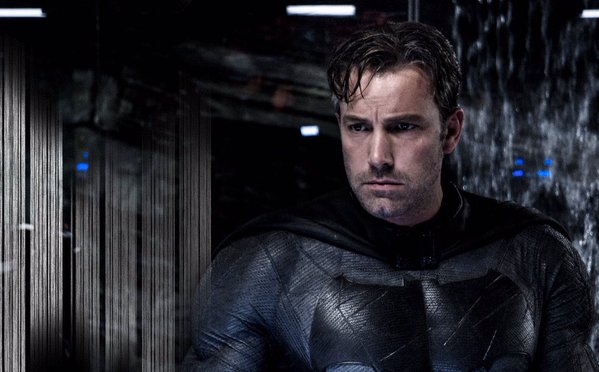
sad.jpg

‘Hello darkness my old friend’

A schism has formed over this movie between critics and fans. As someone who considers themselves to be both, I think the main argument over the ‘darkness’ of this film is flawed. I’ve read a lot of reviews talking about how this film is ‘too dark’ and fans retaliating with ‘the comic books are dark, it’s how it should be’. My answer to this? No. Yes some of the comic books are dark. Alan Moore’s The Killing Joke, Jim Starlin’s Death in the Family and Jeph Loeb’s Hush (to name but three Batman story arcs) are dark, haunting and Gothic. Christopher Nolan‘s Batman trilogy is dark, haunting and Gothic. Batman V Superman is not dark, haunting and Gothic. It’s murky and shallow. Its darkness is artificial and synthetic. It’s a wannabe-emo in contrast to the aforementioned masterpieces. It pouts, moans and frowns. It tries to make important statements and points but these are empty and ill-informed. It’s like wearing a band t-shirt when you don’t really know the band (one of my biggest pet peeves). Having your actors grimace and setting most of the action at night, fighting for ‘what is right’ does not a maketh a ‘dark’ movie. A coherent plot, one with depth, does.

frown.jpg

Lex Luthor

Jesse Eisenberg as Lex Luthor appeared like a strange choice since it was first announced. This was embraced by Zack Snyder who promised great things, new take on a classic archvillain. In the comic books Lex Luthor is a charismatic business magnate who is physically powerful and formidable. He is shown to be a true threat to Superman. Charismatic, powerful and formidable are not phrases one would associate with Eisenberg. So perhaps this would be a refreshing new take on the character? Nope. It’s Jesse Eisenberg playing  Heath Ledger playing the Joker as Lex Luthor. He is weedy, has daddy issues and rambles. Everything he says is either shouted or mumbled. His hand mannerisms are twitchy and strange,  dominating each frame. This man is no threat but a nuisance who gets in the way. To use his performance as an analogy for the entire film – it’s devoid of depth and is ultimately lacking. 
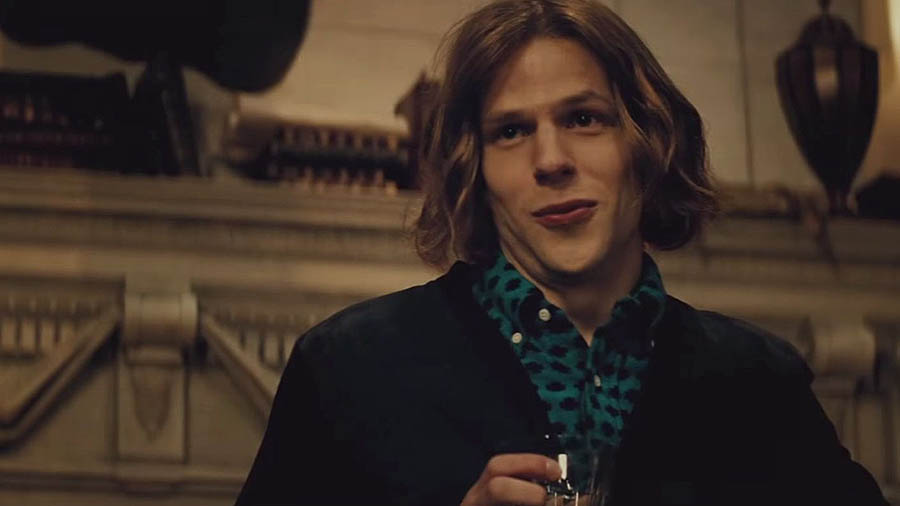
jesse-eisenberg-lex-luthor

Disorder

An intense and intimate voyeuristic thriller

How many films are there that feature a character with PTSD (post-traumatic-stress-disorder)? Then, let’s narrow it down, how many of the those films are about PTSD sufferers who fought in Afghanistan?  Finally, how many of those films use the PTSD to shape the storytelling process, making the story as unreliable as it’s narrator? I suspect that Disorder may be alone in this regard which makes for a mostly refreshing if at times nerve-splintering film-watching experience.

Vincent (Matthias Schoenaerts ) is a French Special Forces soldier who is currently back from a tour of Afghanistan. His latest health check-up indicates that it will be his last as due to his various  health problems his doctor will not be recommending him for service, something that he appears to be in denial about. He and a group of his friends are hired by Jessie (Diane Kruger), the wife of a rich Lebanese  businessman, to provide security at a party they are holding at her villa. Vincent starts to develop a strange fascination with Jessie, whilst at the same time starting to suspect a dangerous threat is going to target her and her young son, and he begins to be consumed by paranoia. Is there really a threat, or is it a result of his disorder?

A month ago, in my review for A Bigger Splash I talked about Matthias Schoenaerts and said “He is currently one of the most interesting and underappreciated supporting actors in cinema at the moment, and I greatly look forward to seeing more of his (admittedly rather beautiful) self.” After seeing Disorder, I stand by what I said. Schoenaerts carries this movie, his scowl/brooding combination is utilized to excellent effect. His mannerisms subtly display his inner turmoil, he never needs to clearly state ‘I am suffering from PTSD’ (in fact that is something his character who never admit) but it’s clear from every single scene that this is a man who is suffering. Vincent’s innate paranoia served with a side of voyeurism makes for an unnerving central character who is haunted but hunky. In fact whilst watching his performance I remembered some of the minor backlash that James Norton received for Happy Valley with a (thankfully small  minority) saying that he was ‘too good-looking to be a murderer’. It’s a stupendously flawed logic to have, implying that attractiveness and committing crime share a correlation. Yes Schoenaerts is attractive, but that does not enhance nor detract from his performance here. His performance is wonderful, if that adjective can be used to describe something so unsettling, and the best thing about the film.

A close-tied second place would be the soundtrack and the cinematography. The former is throbbing, jarring and frequently atonal (like Vincent’s mental state) whilst the latter is ambiguous, swamped by shadows and at times unhinged (again like Vincent’s mental state). Aside from these aspects, the film itself is rather slow with a rather porous plot that fizzles out. Worth seeing for Schoenaerts latest in an uninterrupted run of solid and charismatic performances, but rather forgettable.

An outstanding central performance in a good/mediocre film. Don’t put it too high on your ‘must-see list’ but worth a try.


The Witch

Moral of my story: Don’t go see this on your own in an empty cinema.

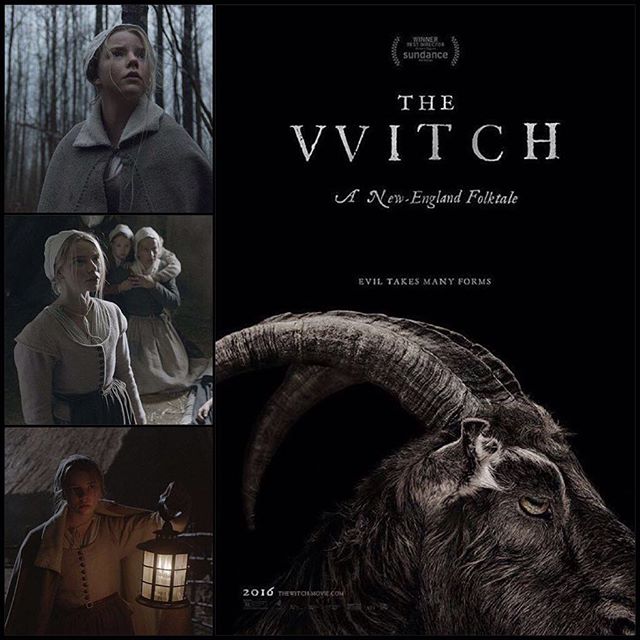
What makes a horror film a horror film? In the past week or so I’ve heard both praise for this film and a good degree of backlash. Many felt that it wasn’t a horror film, that it wasn’t scary enough and that it was too slow. As a dedicated Wittertainee I’d heard Mark Kermode champion the film stating that ‘the greatest strength of The Witch –that the audience will see in what they want to see, or believe’  So, when a bit of free time opened up in my schedule I thought ‘why not?’ Even after three nights where by sleep has been haunted by a goat called Black Phillip I do not regret my decision, as The Witch is an immensely rich watch and an outstanding debut from its director and writer Robert Eggers.

In 1630 a farmer called William (Ralph Ineson) and his family are excommunicated from their New England community due to the crime of “prideful conceit”. He and wife Katherine (Kate Dickie) must raise their children away from the community they came with when they left England and now live in exile in a forest. They have five children – teenage daughter Thomasin (Anya Taylor-Joy), on the cusp of adolescence Caleb (Harvey Scrimshaw), fraternal twins Mercy (Ellie Grainger) and Jonas (Lucas Dawson) and new-born Samuel.  One day, when Thomasin is looking after ber youngest sibling and playing a round of peek-a-boo, Samuel disappears. The family is utterly devastated and grief takes its toll, bringing tensions to the surface and testing both the love and loyalty of each of the family members. Is a supernatural force of evil haunting them or is it all imagined?

The greatest choice, of many, that this film makes is to show Samuel’s disappearance to the audience. The audience gets to see a witch, possibly the witch of the title or possibly not, drag poor little baby Samuel into the forest with her. The characters, however, do not get to see this. It’s a classic case of dramatic tension that is oh so effective – this comparatively small piece of information alters how we view the characters and makes us assess then repeatedly reassess what we are seeing. The knowing what actually happened to Samuel lets us watch the consequences with a layer of cynicism, as the family falls apart at the seams. How the dynamics of the family shift and tear creates a deeper level of both atmosphere and tension as we know something they do not. When the blame shifts to teenager Thomasin we automatically defend her. For her family she is the obvious target of blame, after all she was watching him when he disappeared, yet we know that she isn’t. Or is she? As the film plays out the audience is forced to question what they actually know, or if what they actually know is not the whole story.

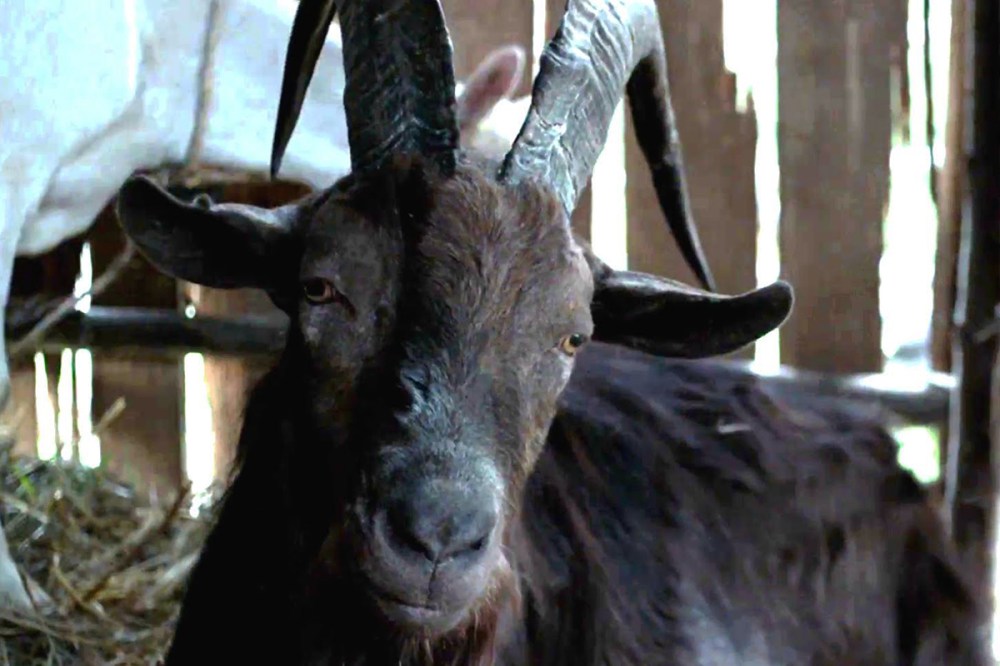
All of the cast are fantastic, not a single weak link. Ineson is solid as the righteous father who may have let his ego take his family onto a path of destruction. Dickie is wonderful as the grieving mother who doesn’t know where to turn. Taylor-Joy is an extraordinary presence as a girl who has come of age, and how this very fact will change her life. The Witch is rich for cinematic analysis, most obviously the treatment young women which is seemingly reflective of how life would have been for someone of her age in 1630. Scrimshaw possess the kind of face and aura of someone who has lived a thousand lives, a real one-to-watch. The twins are as creepy as you would expect from a film of this sort. That just leaves us with the aforementioned Black Phillip. I’m even going to add a picture here of the beast, just to prove my point.

BlackPhillip

Look at him. Just look at him! I genuinely believe there should be a category added to the award ceremonies next year for, ‘scariest performance by an animal’ as Black Phillip would be a solid contender. At this point I’m not even going to tell you what he does, nor will I hint. I don’t think I could even describe it in a manner that would reflect in a  succinct enough manner the terror this beast is capable of. Just like the rest of the film, he gets under-your-skin and into-your-brain.

The Witch is a spooky, slow-release terror that is well worth seeing. Few newcomers could create a film with this depth of atmosphere and tension. I already look forward to what Robert Eggers has to offer us next.

Zootropolis/Zootopia

We may be evolved, but deep down we are still animals.”

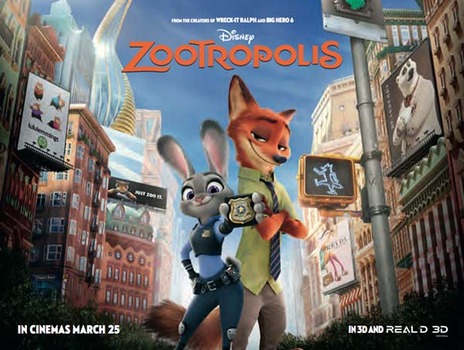
Anthropomorphism, Disney and animation have a long history. As early as Walt Disney’s first feature film Snow White (1937), in which all the woodland creatures appeared to have various personality quirks, attributing human characteristics to cartoon animals has been a way of enhancing a story. Then, with numerous Disney classics, it became the way to tell a story. In 1995, with Toy Story, Pixar began to add to the Disney magic by giving characteristics along with pathos to the inanimate objects and animals. Now, in 2016, with Zootropolis (released nearly everywhere else as Zootopia) we see this enhanced to the max with an animated film that features anthropomorphism whilst also serving multiple layers about diversity and racism, all told by Disney with just a smidge of Pixar wit. It’s funny, sweet and far deeper than it first appears.

During a school play in front of her parents, her peers and their parents, a young bunny called Judy Hopps (Ginnifer Goodwin) declares that when she grows up she wants to be a police officer. Many people laugh at her, one person even beats her up for the audacity of saying it and both her parents are a blend of supportive-but-unsure. But Judy proves them all wrong.  She’s the first bunny first to enter the police academy and the first bunny to actually join the police force. Her first posting is Zootropolis, a nearby metropolitan city. Her parents can’t believe it and neither can her new boss, an African buffalo by the name of Chief Bogo (Idris Elba), who assigns her the role of parking duty. Day one on the job seems to be going well, until she is tricked by con artist fox Nick Wilde (Jason Bateman). However the two are soon forced to work together by Mayor Lionheart (J.K. Simmons) and assistant-mayor Bellwether (Jenny Slate) to help solve a case involving a series of missing animals. Can what were once predator and prey ever work together, possibly even become friends, or is nature stronger that nurture?

It may be slightly too early to say, but Zootropolis has all the potential to be as-well regarded both critically and commercially as last year’s Inside Out. The jokes are really really funny and the drama is really really emotional. My personal favourite joke from the film has to be when fellow police officer Clawhauser (Nate Torrence) first meets Judy Hopps and calls her ‘cute’. Judy winces then carefully explains that “only a bunny can call another bunny cute”. Cue many belly laughs from the cinema screen. That gag is also an example of the kind of humour that has become prevalent in animation since Shrek (2001). The humour of these animations is almost two-layered. To explain on a very basic level, there’s the slapstick jokes for kids and the jokes for their parents that go way over their heads. It makes taking a child to the cinema a far more enjoyable experience for their parents, as opposed to having to endure some brain-dead-only-aimed-at-children romp.

The animals are very well characterised, both matching their animal types whilst also being well-rounded. Judy is fierce, dedicated and ambitious – a solid role model. Nick the fox is sly and alarmingly charming for a fox, though that may just be my personal feelings for Jason Batemen having an effect here… Idris Elba is hilarious as the imposing yet ultimately caring chief who just happens to be a buffalo. Shakira even appears as Zootropolis’ biggest star, Gazelle.

Then there’s the story itself, well-told with a solid twist. There are some fantastically inventive set pieces, be that the sloths working at the DMV or the practically word-for-word Godfather tribute. The story also has a lot you can sink your teeth into (sorry, pardon the pun!) Though the two groups of predator and prey may appear united in the metropolitan city of Zootropolis, it is a delicate union. One which is weighed down by tension and borderline-hostility. Although prey and predator may be neighbours very few are actually friends and few would choose even to be nice to each other. Some restaurants even refuse to serve certain types of customers. When it becomes clear that all the missing animals in the case are in fact predators it looks set to force the bubbling undercurrent of tension to the surface. The film is far from subtle in reflecting our own society’s tensions and forcing a degree of reassessment, yet that is no criticism. Considering the current global climate, with regards to refugees and a certain toupee-wearing president wanna-be whose delusions of grandeur reveal the current state of institutional racism, Zootropolis is perfectly-timed and well in need of watching.

This is ‘proper’ Disney with the beating heart and talking mouth of Pixar. Witty, warm and well worth seeing. A fable for 2016.

Eddie the Eagle

May Eddie the Eagle fly at the box office

One thing that really grinds my gears is when people my age say to justify a gap in their knowledge is, ‘Huh! Well that’s from before my time I guess.’ That is then proceeded with a slightly awkward shoulder shrug. For someone who often reckons that music peaked around 1985 I think it’s often used as a silly filler line. However, in a rather hypocritical move, I am going to say that the rise and soar then laughing stock of British skier Eddie “the Eagle” Edwards is ‘from before my time I guess.’ Occasionally he would pop up on various panel shows and people would poke fun, and I’d be vaguely confused and envious that a man with such an awesome nickname was being used for laughs (what can I say, I was a thoughtful child…) Anyway, I’ll save the rest of that for my therapist.

My slightly convoluted point here is that I had no idea what the man had done to achieve such levels of infamy and mockery. Then, when I heard of the film, I thought ‘Yeah…good luck with that one!’ Time passed by and the trailer was released which made me realise that the film was my kind of film. Then I got invited by Den of Geek to attend a preview screening and Q&A with the director, Dexter Fletcher, at The Courthouse Hotel (a 5* hotel with unbelievably fancy toilets) and that takes us right up to now. Three days on from seeing the film and it still makes me smile. It’s a truly wonderful movie and I beg you to go and see it. Now (and if you’re still with me after that preamble I declare) to you my utter love and gratitude for sticking with me) let me tell you why it’s so damn good.

Eddie Edwards (Taron Egerton) has wanted to be an Olympian for as long as he can remember. He was always the last to get picked for teams, spent a year in hospital due to the poor state of his knees and never quite seemed good enough for anything. He almost gave in and followed in his dad’s (Keith Allen) footsteps of becoming a plasterer until he found skiing, a hobby for which he had his mother’s (Jo Hartley) total support. He even made it to try-outs for the Olympic team before being told by the panel (lead by Mark Benton and Tim McInnerny) that he wasn’t Olympic material. That’s when Eddie decided that not only would he try on his own to make  Team GB for the 1988 Winter Olympics, he’d teach himself how to Ski Jump by decamping to a training camp in Germany. Either being ignorant or in denial about the fact that most Ski Jumpers start aged 5/6 (Eddie being 22) he proceeds to train solo with great resilience both from injury and belittlement from the experienced jumpers. That’s when alcoholic ex-ski jumper Bronson Perry (Hugh Jackman) steps in to help Eddie from death by training. A friendship/brotherhood quickly forms between the pair, under the shadow of Perry’s ex-mentor Warren Sharp (Christopher Walken). Will Eddie become skilled enough to join Team GB or will his dreams die again once more?

This film is totally and utterly brilliant; an utter joy to watch. Though it’s not a state I often occupy, I felt so patriotic after seeing this movie. Partly because it’s a British movie, and it’s the kind of movie we do so, but mainly because Eddie’s journey and how it’s told is so unique to British cinema. Yes, other countries do underdog movies, but so few do them in this way. Eddie’s journey is so lacking in glory, so real (grey-area term as some of the movie is fictionalised) that he reflects each and every one of us. It’s an important reminder not to give up on your dreams, and the power of self-belief. It’s also bloody hilarious, that blend of slapstick and deadpan and sarcasm that makes British cinema so comparatively unique. I giggled, I laughed and I even snort-laughed. It was glorious.

Taron Egerton is already on the up-and-coming, cusp-of-greatness list of actors and this film cements it. Firstly, a post-viewing google showed how similar Egerton looks to 1988-era Eddie along with how scarily accurate the expressions and mannerisms are. He’s also such a great actor to watch, his handling of the pathos and comedy of the character is extraordinary. You do well and truly root for Eddie. Hugh Jackman is great in his mentor role, forming a great rapport with Edgerton. Allen and Hartley are little seen but add much to the impact of the film. Then, with a brief cameo, Christopher Walken sasses the hell out of two lines of dialogue.

There’s also a wonderful 80s soundtrack, as uplifting and smile-inducing as the film itself, brilliant use of sets on such a small budget and some hilarious character actors in supporting roles. Eddie the Eagle is being released into the wild on March 28th, the same weekend as Batman Vs Superman. So why not give some home-grown talent some love and go see it. I promise you it’s worth the money.

We may only be a quarter of the way into the year, but this may just be THE feel-good movie of the year. Go see it.

Anomalisa


‘What is it to be human?’

Anomalisa is a masterpiece of cinema – a tale about the human condition told by puppets that is the most real movie in years.  We’ve all had awkward encounters – be that with ex-partners, conversations with strangers in a lift or the force-fed wisdom of a brusque taxi driver. We’ve all (hopefully) had a moment where you meet someone who, somehow and somewhere deep inside of yourself, you innately know that ‘this person is important to my future’. Now imagine a film that has the later as its main storyline but is layered with lots and lots of the former. That’s Anomalisa. It’s hilarious and sad at the same time, just like life, whilst reflecting on how bitterly lonely existence can be. Artistic greatness channelled through stop-motion puppetry.

It’s 2005. Michael Stone (David Thewlis), customer service consultant extraordinaire, is travelling to Cincinnati for a convention at which he is due to speak. To Michael everyone else on the planet appears to have the identical voices and faces. He is just spending one night at the hotel before travelling back home to his wife (Tom Noonan) and child (Tom Noonan. He decides that, as he’s in the area and plagued by self-hate, he’ll call up his old flame Bella (Tom Noonan) in the hope that Bella will help him find out what is wrong with him. Things do not go well, but upon retreating to his hotel room he hears a voice that is different from everyone else. He searches desperately and finds Lisa Hesselman (Jennifer Jason Leigh. Michael is instantly enraptured by her different voice and face, desperately hoping that she will cure his crippling loneliness.

This film, written and co-directed by Charlie Kaufman, does not have to try hard to be strange. Everything about it is strange, but that’s not criticism when you really reflect on how strange life often is. The most obvious ‘strange’ aspect is the fact the entire world is only voiced by three people – Thewlis as our lead, Jason Leigh supporting and Noonan as everyone else. Have one actor voicing 98% of this world has the most wondrously bleak effect, allowing for everyone else to blur in the background. They are unimportant therefore there characters are not defined, which is how our protagonist Michael Stone views the world. Few central characters are this self-hating, haunted by guilt and bad memories. Did the voices always sound the same, or has life for Michael etched away its beautiful nuances?

The interactions with both strangers and those who are supposedly the closed to him are all so affecting in there believability – many of them of the concealing-your-eyes-as-you-watch variety. But it is Michael’s interactions with Lisa that are the most beautiful and the most heart-breaking. Lisa is the exact opposite of Michael, Lisa is insecure and desperately lacking in confidence, yet is just as lonely as he is. Lisa is a great admirer or Michael’s and an obsessive reader of his book which helped her increase work ‘productivity by 90%’!  The beginning of their courtship is so tenderly handled, and perhaps the most human we’ll see on the big screen this year. Lisa’s serenading Michael with a cover of ‘Girls Just Wanna Have Fun’ will fill your eyes with tears. The film’s title stems from this point of the movie, when Lisa reveals she has always felt like an ‘anomaly’ which Michael then teams with ‘Lisa’ to form her self-appointed nickname ‘Anomalisa’. This conversation alone personifies their relationship, Michael and the film itself. Is he laughing at her by giving her this name, or showing just how much he understands?

Watching Anomalisa is almost like watching an autopsy or listening to a psychiatrist’s evaluation –   cutting apart our very psychology, our brains and being, then showing us how they work. Like The Matrix it’s up to you whether you take the blue or red pill.

Breathtakingly beautiful and bitter in equal measure; dare you see it?