Eileen

‘You’re very different these days. You’re almost interesting.’

Based on Ottessa Moshfegh’s 2015 novel of the same name, the eponymous Eileen (Thomasin McKenzie) lives something of a lonely half-life in 1960s New England, USA. She wakes, she goes to work at the local prison, buys alcohol for her ex-cop father (Shea Whigham) and lives vicariously through her daydreams – until the glamorous and captivating Rebecca (Anne Hathaway) arrives, changing everything. Eileen quickly falls under her spell, but is the new-found freedom Eileen is experiencing also fraught with the possibility of danger?

This is William Oldroyd‘s follow up to his 2016 directorial debut Lady Macbeth, which introduced the world to Florence Pugh and there’s definitely parallels between the two films. Both films have women at the centre who are trapped and confined by the expectations of their respective time period. They yearn to feel something that they ‘should’ consider wrong, contemplating illicit means to finally fulfil that innate desire they crave. Their sense of despair may as well be an additional character. Whereas Lady Macbeth is set in 19th century rural England, many of the same constraints present themselves in Eileen’s existence in 1960s New England. Although she in her early 20s, she has simultaneously been forced into being older, near enough a carer to her no-longer working alcoholic father, yet has also been infantilised by the rigid and intrusive attitudes of her small-town life.

McKenzie plays these contradictory depths with aplomb, a wonderous mix of unknowable and inscrutable yet ultimately transparent. Eileen’s motivations are clear, but her actions to achieve them are unpredictable, as if she herself is uncertain of the extents she will go to just to feel something. Having spent a life being unperceived, Rebecca’s gaze is both hypnotic and euphoric. Moshfegh named the character after the unseen yet powerful eponymous figure in Daphne du Maurier novel and Alfred Hitchcock’s 1940 adaptation. In Rebecca she has died prior to the story starting, yet she her hold and power over the household remains – they continue to be shackled to her wants and ways. It’s true of her namesake, Hathaway’s Rebecca is in less of the film as you may expect – but she lingers beyond the frame, just as she lingers within Eileen’s mind, upending all she has known before.

Oldroyd and writer Luke Goebel, who adapted the story with Moshfegh, are successful at establishing the inner life of Eileen and making the viewer unwittingly complicit in her twisty tale of obsession. Together they navigate both tonal shifts and irregular pacing that would otherwise induce whiplash and a blurring of reality & fantasy they make every next step uncertain. Where the film struggles is in maintaining this throughout, what starts out initially as intriguing ultimately becomes frustrating in it’s noncommittal unknowability. The consistent use of dream sequences reduce the impact of an outrageous final act, as we wait to discover if it too really happened.

The result is an unsettling feel-bad almost-psychological thriller with gothic undertones, driven by two stunningly sensuous performances by actresses at the height of their powers.

[3.5/5 stars]

Eileen is in UK cinemas from Friday 1st December.
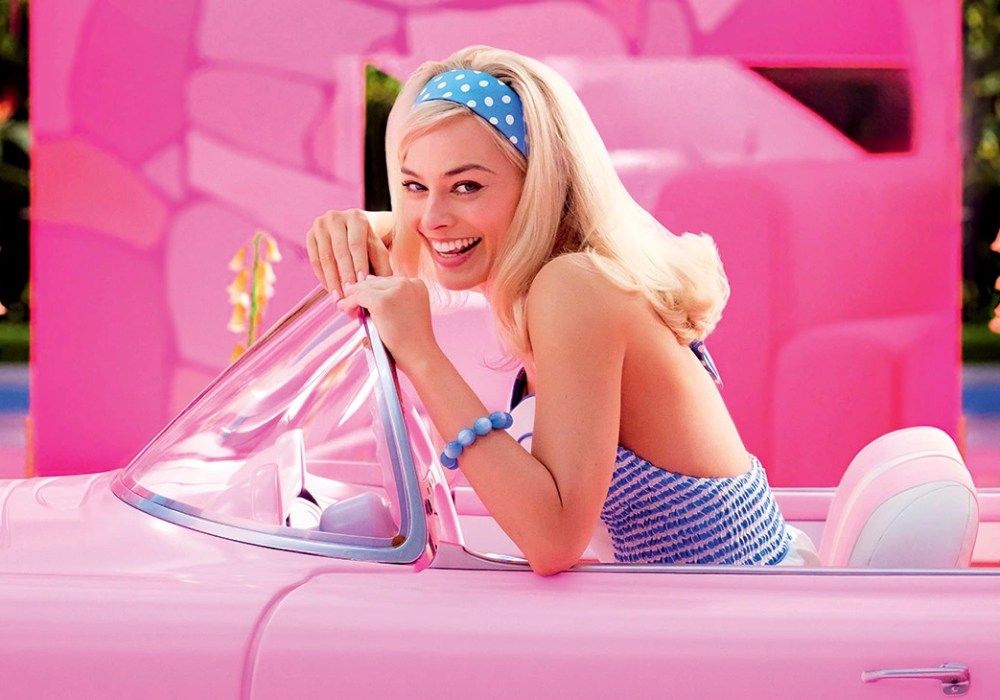
Barbie (2023)

‘It is the best day ever. So was yesterday, and so is tomorrow, and every day from now until forever.’

Few films have nailed their marketing deals and branding collabs as well as Barbie. Despite celebrating her 64th birthday this year, Barbie is, quite possibly, more popular and more visible than ever. And yet, that only added pressure to the expectation and hype surrounding Greta Gerwig’s third run at director. There’d always have been scepticism over how to follow-up after Lady Bird (2017) and Little Women (2019) – why on Earth would Gerwig pick a little blonde doll that is the figure of both such divided scorn and admiration?

It’s within mere moments of it’s opening, barely out of the credits, when it really clicks and all doubt fades away. Of course, this choice makes total sense for a writer-filmmaker who reflects upon the bittersweet joys of the female experience. In Lady Bird, the titular role (Saoirse Ronan) collides with near-enough everyone – mother (Laurie Metcalf), best friend (Beanie Feldstein), love interests (Lucas Hedges & Timothée Chalamet) as she navigates the complicated battlefield of womanhood and the contradictory expectations for a teenage girl in noughties America. In Little Woman, all four of the sisters and their mother navigate the complicated battlefield of womanhood and the contradictory expectations for little/grown women in 19th century America. Who could forget this incredible monologue from Jo (Saoirse Ronan) expressing the yearning created by the confliction between what is expected, wanted and needed.

And so, once more into the breach dear friends, we return to the complicated battlefield of womanhood and expectations for women, but this time we’re seemingly in the present day – although not in the world as we know it. Our story starts in Barbieland, where everything is near enough perfect. There’s a Barbie in every occupation, at every professional level, achieving extraordinary things – day in and day out, then choregraphed dance sequences into the night. There’s even the added bonus, not sole focus, of Kens’ knocking around who are keen to stay over and do ‘boyfriendgirlfriend stuff’ – but who’s sure what that is.

This life seems to suit Barbie (Margot Robbie), until it starts not to, when she inexplicably starts to suffer a crisis that leads her to question her world and her existence. Under the guidance of Barbie (Kate McKinnon) she travels to the Real World to seek answers to her questions. Ken (Ryan Gosling) is there too.

To say more beyond that would deprive you of the utter joy of watching this film unfurl. No matter how ready you think you are, you aren’t. No matter what you think it’s going to be like, you’re wrong. What I can say, though, is that Gerwig has created one of the finest comedies in years – with an impeccable gag rate which address all manners of humour, some feeling especially targeted towards this writer…

Robbie is the perfect Barbie, quite literally as she’s Stereotypical Barbie, with a performance that is totally committed and utterly believable. Her peeling back her layers on her journey of discovery is so wholesome and wonderfully earnest, believable and somehow astoundingly relatable. Gosling provides a comedy powerhouse masterclass. It’s been far too long since 2019’s The Nice Guys, where his slapstick skills got the showcase they deserved. But this, what he gives us here, this is something to behold. He is Ken in every way possible, and some that seem almost impossible. Every single line delivery and every single reaction shot warrants memorisation, tribute and recreation. To describe him as immensely watchable is an understatement. In a film packed full of comedy genii (Will Ferrell, Kate McKinnon, Michael Cera, Jamie Demetriou, Simu Liu, Kingsley Ben-Adir, Nicola Coughlan – to name those you’ve seen in the trailer already, there’s more to be discovered) he nails every single possible moment and then some.

The cinematography is sumptuous, the choreography (just you wait!) is impeccable, the costumes are to-die-fore and are as gorgeously enviable as the cast wearing them. But it is the message, those articulations and frustrations about 21st Century life for women, and men, it’s there that this film deserves GOAT status. Especially about motherhood and mother-daughter relationships. Again, the spoiler territory feels fraught, so much so that I can see myself returning for a spoiler-ific essay on why I think this film is so damn important. Suffice to say, there’s a speech here that is equal to Jo’s literal battle cry in Little Women.

By the end of Barbie’s 114 minute runtime, which flies by, your face will ache from the laughing and smiling but your heart will hurt from the hurting and raging. Sublime! [5 stars]

Barbie is in UK cinemas from Friday 21st July.