Room

Astonishing And Devastating In Equal Measure

To begin with, an analogy. Have you ever wrung a towel, a facecloth or even just a piece of fabric in general? You put all your strength into the movement, creating enough tension to drain the cloth of the water it possesses. Are you with me? Now let’s replace a few words of that scenario – the face cloth is the viewer of ‘Room’, the water is either literal tears or just emotion in general and the source of the wringing is the film. Everything, from the cinematography, the mise-en-scene, the dialogue to the extraordinary performances , works in conjunction to drain you so brutafully (see, I made it work there too!) drain you. Never has such a thing been done so willingly, nor with such reward. ‘Room’ is otherworldly in its brilliance and ability to shatter your heart.

Jack (Jacob Tremblay) lives in Room. As far as Jack knows that is all there is to life as he has never left Room. As Ma (Brie Larson) has explained to Jack outside is ‘Space’ and filled with aliens. The only other person knows of is Old Nick who brings them food, necessities  and a ‘luxury item’ referred to as a ‘Sunday Treat’. When Old Nick comes to spend time with Ma, Jack must sleep in the wardrobe. Jack has just turned five and Ma has started to release that he may be old enough to know the truth. That there is a whole world outside of Room, but a world that has been closed off to Ma since Old Nick kidnapped and locked her away seven years ago. Ma was once Joy, a seventeen-year-old girl on her way home from school. Now no-one knows where Joy is. Joy comes up with a plan that involves tricking Old Nick into taking Jack outside of Room, allowing for Jack to escape and get help to rescue Ma. But will Jack be able to accept he could have a life outside of Room?

‘Room’ is a blend of true-crime and fairy-tale. It tells a story that is so abhorrent and seemingly hopeless in a way that is grippingly real, intimate yet somehow beautiful. Jack’s view of Room is fairy tale-like, where what are ordinary objects to us are the only one of their kind, have a personality and are therefore addressed with capitalisation (Table, Lamp, Bed etc.). The television is not a link to the outside world, there is no outside world, but instead images of things that do not exist. It is Joy’s view that is the true-crime, through her eyes the surroundings are depicted in their true horror. Joy is a prisoner, her child was born into captivity, and she has created this world to help them both survive. It is the blending of these two worlds that generates the film’s astonishing power.

But it’s the performances of its two leads that allow this power to land – to convince and cherish. Brie Larson presents an anguish that is so severe that at times becomes unbearable to watch.  Her raw and honest performance is miles, lightyears even, away from the many mawkish performances of exploitative ‘true movies’. Jacob Tremblay provides the kind of child performance you see once in a decade, his abundant glee at the rose-tinted life in Room through to his difficult transition at learning everything believed was a lie. Joy tells Jack these stories to keep him sane in confinement, and Jack’s job unbeknownst to him is to keep Joy sane.  The bond shown between mother-and-son is otherworldly in its believability and its depth.

‘Room’ is gut-wrenching, heart-wringing and brain-haunting. It’s not typical night-out to the movie fayre. At times it’s impossible to watch, and will haunt far longer than its two hours running time. Yet it’s a narrative journey well worth making, proving the power of cinema and the power of extraordinary performances.

‘When I was small, I only knew small things. But now I’m five, I know everything!’ – Jack
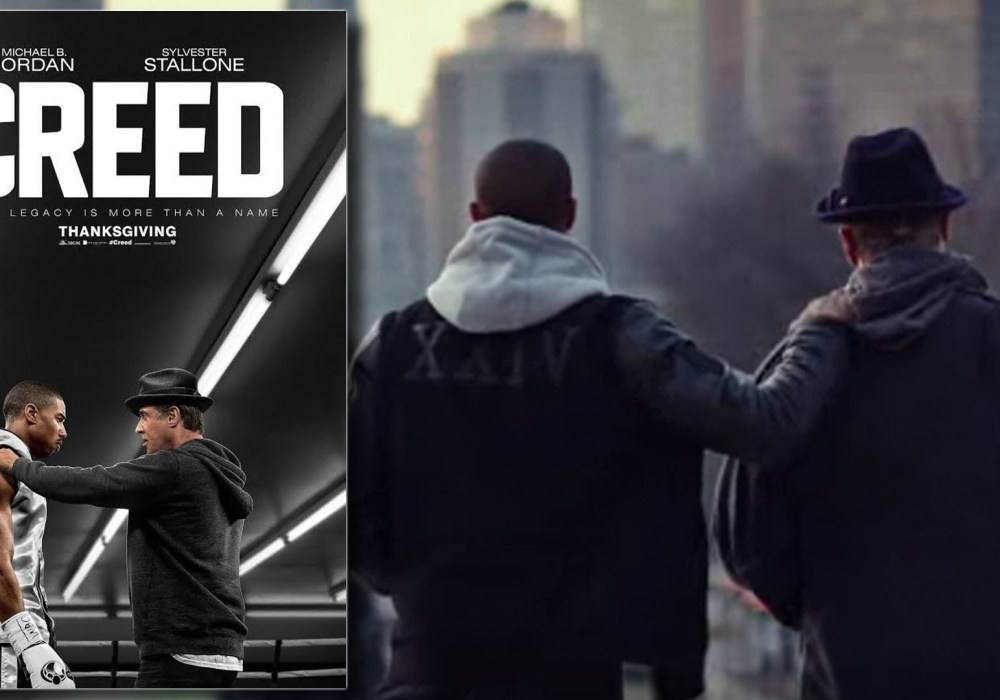
Creed

A new era. A new generation. A new legacy has begun.

First, to address the elephant in the room. I didn’t really want to see this movie. I had no real intentions of seeing it and was more than happy to let it pass me by. But when Cineworld announced a a preview screening for Unlimited card holders I booked a ticket, yet remained uncertain. Then Cineworld had to throw its toys out the pram and refuse to show ‘Hateful 8’. To maintain this weekly cinema-going challenge I almost had to attend.

Now that may be slight information overload, but hopefully it has served a narrative purpose – in establishing the disinterest, bordering on disdain, I felt upon entering Screen 7 at the CIneworld at the O2 arena (have I painted a clear enough picture yet?) Now you should be able to understand the surprise I felt, and admittedly still feel,for how I much I loved this movie. I expected a run-of-the-mill hero’s journey story arc, a mundane blend of drama and people getting punched in the face. But ‘Creed’ truly and utterly defied my expectations – instead being an incredibly emotive feel-good movie will some brutal and realistic fight sequences.

1998. Adonis Johnson has been caught in the middle of a fight in the Los Angeles youth facility and been put in isolation. Again. However this time the young boy has a visitor – Mary Anne Creed (Phylicia Rashad), the wife of deceased former heavyweight champion Apollo Creed. Adonis was conceived during an extramarital affair that Apollo had. Mary Anne offers to take in Adonis as he has no-one else. Seventeen years later and Adonis( Michael B. Jordan) still feels conflicted in his love of his father and his love of boxing. Deciding to pursue his instincts Adonis travels to Philadelphia and gets in touch with his father’s old friend and rival Rocky Balboa (Sylvester Stallone) in the hopes of persuading him to be his coach. In Philadelphia he also meets Bianca (Tessa Thompson), a woman who also has a passion that drives her. Philadelphia may provide Adonis with a new start but it is also haunted by his father’s legacy.

Rather disarmingly, ‘Creed’ shares much with ‘Star Wars: The Force Awakens’. Both are the seventh films in the franchise. Both belong to franchises which possess recent additions that were of poor-to-awful quality. Most importantly – both of the new releases are successful post-modern sequels that reinvigorate the stalemate series. ‘Creed’, in a joyfully unironic manner, shows a human being with a passion that consumes him. Adonis has an innate need to box, yet remains constantly aware and is frustrated by the fact he must remain in his father’s shadow. A man he never got the chance to meet. What makes the film so marvellous is is that this conflict is not overly reliant on the dialogue to convey this conflict. Yes the dialogue itself is crisp and realistic, but it’s not the only provider of exposition.

It’s built upon with fantastic performances from all the cast. It’s brilliant to finally see Sylvester Stallone is a good movie after years in the cinematic wilderness. Then there’s, rather unexpectedly perhaps, the cinematography. The camera-work on this film is astounding. The choices that have been made are so clever and convey so much. For instance, very early on, we observe Adonis watching a projection of his father in the ring. Adonis then gets up next to the screen and imitates the punches of his father’s opponent. Not only does the camera-work in this sequence make the scene intensive, but the lighting reinforces the notion that Adonis constantly lives metaphorically in the shadow of his father. The scene that is truly stand-out is one of the fight sequences: an entire fight sequence that is one shot – no cuts, no breaks and no respite from the action. The camera places us at the heart of the action, the fighting itself is brutafully (new word I’ve made up for this purpose) choreographed, but it’s the decision to let it play out in one-shot that is remarkable.

The story itself isn’t particularly complicated, often following expected beats and rhythms.Yet somehow, with the aforementioned blend of cinemagic, it’ll manage to capture your heart. You may even find yourself cheering at the end.


The Danish Girl

A heartbreaking story about Lili, a transgender pioneer.

‘The Danish Girl’ and ‘Joy’ were both released on January 1st 2016 in  the U.K. Though the films have relatively little in common otherwise they do share one primary similarity- both are a blending of fact and fiction. Both stories are about real life people, with a degree of dramatic license for supposed cinematic development. However it is in this area that ‘Joy’ somewhat stumbles whereas ‘The Danish Girl’ soars. A brief bit of post-film research will identify these aspects of fiction, yet it is an act that is perhaps unnecessary as any and all fabrications in ‘The Danish Girl’ add to moving story that unfolds.

Portrait artist Gerda Wegenger (Alicia Vikander) and popular landscape artist Einar (Eddie Redmayne) have been married for six years. They have a comfortable life in the cultural bourgeois heart of Copenhagen. Their friends in the arts note with a degree of envy about how happy they are, how well suited they are together and how lucky they were to find each other. It’s true, they balance each other out perfectly. When their dancer friend Ulla (Amber Heard) cancels a sitting for Gerda at the last minute, Gerda asks her husband to pose instead. The act of posing as a female figure appears to cement something, an awareness that Einar has had for sometime, and  marks his progression of leaving behind the identity of Einar.  Tentatively at first, yet soon quite rapidly, Einar begins to progress in his lifelong identification of being a woman, becoming Lili Elbe. 

Lili Elbe was one of the first identifiable recipients of gender reassignment surgery, with her first operation in the process have taken place in Germany in 1930. Her personal letters and diary entries which record her journey, were published under the title “Man Into Woman” (1933) which was one of the first texts to draw a distinction between homosexuality and transexuality. Though ‘The Danish Girl’ is being billed as a ‘true story’, some of its primary details are proven to not be, yet arguably can it be viewed as a ‘true story’ as it accesses an inner-truth?

Redmayne’s portrayal as Einar is heartbreaking, as we watch a conflicted person finally accept themselves whilst all too-aware of the devastation it could cause the love of their life..His portrayal as Lili is just as emotive, as we observe a person joyous at finally being comfortable in their own skin yet restrained by an era that is not ready and cannot provide provision nor understanding. Vikander’s Gerda is sublime, conveying so much with a subtle yet equally devastating performance.Her want for her love to be happy clashes with her want with him to stay her love, a turmoil that emits from every expression and  mannerism. The third star of the film has to be the cinematographer Danny Cohen, whose use of the camera makes the beautiful sets look lush and the beautiful leads look vibrant.

Overall the story itself seems rather familiar, offering little that is perhaps surprising. But this is not a criticism, in fact rather something of a compliment as a more ambitious narrative may have taken away from the film’s central core in its observing of Einar’s journey. Though perhaps the story could have gotten under the character’s skin slightly more and not have seemingly polished some of the darker edges of the character’s stories. However, if you’re looking for a poignant and caricature-free look at one person’s struggle for acceptance within themselves and their community, this is a great place to start.

The two compelling lead performances deserve to be watched.

Joy

What is ‘Joy’?

The question above does not refer to eternal philosophical ideas, but is a question posed to director David. O. Russell. What is ‘Joy’? Is it a comedy, a tramedy, a somewhat biopic or an ironic look at the American Dream? In theory is shouldn’t be a bad thing that a film defies generic classification, that it is something new, fresh and different. However in this case this question is raised by how irregular in tone and pace the film is. The film is remarkably uneven, drifting from one genre to another. However, an incredible performance from Jennifer Lawrence anchors a film that overall doesn’t quite gel.

Joy (Jennifer Lawrence) is a divorced mother of two young children. Her ex-husband and failed musician Toni (Édgar Ramírez) lives in the basement. Her seemingly-agoraphobic divorcee mother (Virginia Madsen) doesn’t leave her bedroom and whiles away the days watching soap operas. Her lothario father Rudy (Robert De Niro) briefs comes to stay before finding love with rich but uptight Trudy (Isabella Rossellini). Her half-sister Peggy (Elisabeth Röhm) works with their father and constantly passively aggressively attacks Joy on a daily basis. All this is overseen by her loving Grandmother Mimi (Diane Ladd). Joy’s days are spent dealing with all of her family’s dramas, with life not having handed her a very even deck. Having spent the first half of childhood being incredibly creative, designing multiple inventions, her enthusiasm was crushed the day her parents split up.  17 years later Joy is not particularly happy, stuck with being her family’s errand girl. It is during one of these errands that Joy makes a new invention that she is sure will make a fortune. But persuading the world of the value of her idea, let alone even her family, will not be so easy. Yet a chance encounter with Neil Walker (Bradley Cooper) could be one step closer to the success she has always deserved. 

A great cast does not always make a great film, as some may view is true of ‘Joy.’ Though it does have some extraordinarily powerful scenes, some emotional hold-your-breath moments, that’s all they are – moments. For the film itself is rather meandering – moving in unexpected and somewhat underprepared ways. It muddles through the key events in Joy’s life in a rather lacklustre fashion – never quite achieving its potential. This could be for multiple reasons. One could be the source material, as this is not a biopic of real-life inventor Joy Mangano, but a blended narrative of multiple women O. Russell admired. Another could be the fact the film used four different screen editors, a decision that without true collaboration can result in four differently edited films being shoehorned together. Tonally the film aims for a quirkiness that seems remarkably forced, from the rather unrealistic quirks of the characters to the voiceover narration from Grandma Mimi, to the various time hops to some oddly-placed soap opera themed dreams.

Obviously once Joy has come up with her fantastic new idea it will not be easy to make it a reality, but the disequilibrium – Joy does something badass to fix it – temporary equilibrium – another bout of disequilibrium – does become rather repetitive after a while.  However is is that phrase ‘Joy does something badass to fix it’ that feels like the real point of this film. This is Lawrence’s third time at working with O. Russell and most of this ensemble cast and the benefits of that really shine through. The director knows how to help his lead achieve a star turn. And also her legacy in badass GIFS. Her performance is remarkable. Considering that she is potentially too young for this role Lawrence is incredible in how she interacts with the other characters, uses her voice to convey all manner of emotions and portray a world weariness that is beyond her years.

Overall ‘Joy’ in a enjoyable enough romp of a movie.  Though the film itself is rather direction-less Lawrence herself is a ‘Joy’ to watch.

Star Wars: The Force Awakens

AKA. Seven reasons for why I loved the seventh Star Wars movie.

I realised quickly on when planning this review that it would turn into a list of why I liked it so much so I thought, for what will probably be my last review of the year, to write that list. I acknowledge that it is not the perfect film, and I’m sure there are enough valid (the narrative near enough a replication of ‘A New Hope’) or invalid (*ahem that Rey is Mary Sue bollocks*) reasons to dislike it or be disappointed by it. But I liked it and this is my blog so…deal with it! WARNING: There will be spoilers. Ready? Now let’s head off to a long time ago in a galaxy far far away…

1) Rey

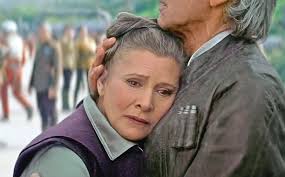
The character of Rey (Daisy Ridley) is a natural progression from Princess Leia. Though Carrie Fisher’s character was way ahead of the times upon her first introduction in 1977’s ‘A New Hope’, with her fierce wit and her fearlessness, she is frequently away from the main action. Rey is for the most part where the action actually is within ‘The Force Awakens’. Established as having been abandoned by her family and left to fend for herself on the harsh landscape of Jakku, Rey is clearly independent and able to handle herself. When attacked by scavengers who are after BB-8 she fights two off successfully on her own. Finn comes to her rescue but is not needed or wanted – his then insistence on grabbing her hand when running away is instantly rebuffed. She sees no reason for it. With that small gesture JJ. Abrams sets Rey up as a female character we rarely see in Science Fiction – one who can handle herself and fight her own battles. From thereon Rey’s characterisation further develops her awesomeness and potential power which is a total joy to watch.

rey

2) Kylo Ren

Since first appearing in the trailer with *that* lightsaber the possible/probable villain of the new trilogy has been the focus of much speculation.  Adam Driver gives the man behind the mask the right balance of vulnerability and power. The revelations of his origins add not reduce this capacity, leading to pondering about how much he will take after his grandfather. His fiery temper along with his unconventional charisma make him everything that Anakin Skywalker should have been. He has also led to one of the 2015 funniest twitter accounts, with a teenage Emo Kylo Ren sharing his frustrations with the world…

kylo ren

3) Chewbacca

Of all of the seven (and counting) Star Wars films, this might be Chewbacca’s best outing yet. The source of many of the (unexpectedly) funny film’s gags he is given more to do than just be Han Solo’s sidekick. And if your heart did not break at his reaction to a certain someone’s demise then you have a heart of stone!

chewbacca

4) Finn and Poe

Along with Rey, Finn and Poe are excellent additions to the franchise. Individually they are great characters – a pilot so legendary he makes it into *those* opening credits and a stormtrooper whose PTSD leads him away from the darkside – but it their bromance which is currently breaking the internet. Their bromance will be undoubtedly be shipped by many worldwide and provide a focus for much fan-fiction. There is an instant rapport between the pair, their introduction, separation and eventual reunion are glorious to watch. Though they shared relatively little screen-time we are provided with more than  enough to hint their pairing will provide much joy in forthcoming movies.

kylo and finn.jpg

5) Leia and Han Solo

J.J Abrams is hugely successful in achieving a balance between old Star Wars and new Star Wars. The roles Leia and Han Solo play in the events of ‘The Force Awakens’ is no exception. Han’s ‘Chewie, we’re home now’ is air-punch worthy, as is his roguish arrogant charm when handling the mercenaries.  But it’s his brief reunion then parting with Leia that really tugs at the heart strings. Who knows what fate awaits this coupling considering the jaw-dropping fate of one of the pair..?

leia han

6) BB-8

Going into ‘The Force Awakens’ it is unlikely you were looking for a new droid to love but if you were, this would be the droid you were looking for. Just like R2-D2 BB-8 communicates with a series of beeps which are then translated by on-screen characters, but those beeps along with his manerisums communicate so much with so little. Favourite moment has to be when John Boyega’s Finn gives BB-8 a thumbs up, to which our spherical droid responds with a flame that resembles a less than polite gesture.

bb-8

7) Maz Kanta

Maz is a worthy wise and wizened successor to Yoda. The hints to her wide and varied knowledge will undoubtedly be furthered in future films, but for now there is more than enough to mark her out as a character to watch out for. Her bespeckled gaze in terms of ability to induce inner truth is only equalled by ‘Harry Potter’s Professor Trelawney.maz

What truly worked about this film, along with the seven points above, are the amount of questions carefully raised and left unanswered.  J.J Abrams used the familiar narrative of ‘A New Hope’ to both introduce the new and pay tribute to the old. But to truly succeed with this franchise it will have to step out of the mould and not rehash ‘Empire Strikes Back’.

Though next year brings another Star Wars movie, ‘Rogue One’ starring Felicity Jones, it’ll be two years till we return these characters. I for one cannot wait!


In The Heart Of The Sea

The mostly true story behind Herman Merville’s Moby Dick

For the next couple of weeks Star Wars: The Force Awakens will be dominating the cinemas. As a consequence the box office of many other films will take a hit, particularly those who have an audience that will overlap with it. This film is unlikely to be an exception. Though it is entertaining enough it is also remarkably old-fashioned, solid yet ultimately uninspiring.

Herman Merville (Ben Whishaw), having travelled a long distance, knocks on the door of Innkeeper Thomas Nickerson (Brendan Gleeson). Thomas is renowned as being the last survivor of the the last voyage of the Whaleship’ Essex’. Herman offers Thomas a large amount of money for the story, having heard rumours that it involves a monstrous whale. Thomas takes much persuading, by both Herman and his own wife (Michelle Fairley). The story goes back thirty years, to when a then 14-year-old Thomas signed on as a cabin boy for the ‘Essex’, a  ship owned by a greedy whaling company who had refitted the ship to participate in the lucrative whaling trade. Experienced whaler Owen Chase (Chris Hemsworth), who worked his way up in the industry, had been promised a promotion on the ‘Essex’ is informed that if he does this one last job as first mate he will finally get that promotion. Instead the role of captain goes to George Pollard (Benjamin Walker). Though his family have much experience in whaling, he does not. He has much theory but this is his first time of putting it into practice. Owen and George immediately clash as soon as the ‘Essex’ sets sail, with Matthew Joy (Cillian Murphy) playing intermediary. Months drag on and with little sign of whales they decide to go further out, to a place renowned for it’s countless whale occupants. It is also infamous as being dangerous, a land haunted by a monster whale. But plagued by greed and a desperate want to return home and end this horrific voyage. It’s the first time that Owen and George agree on something. It could also be their last as they soon discover, with deadly consequences, the monster whale is real. 

Sometimes the phrase ‘they don’t make them like they used to’ has positive connotations, indicating a degree of regret at how few films are as good as the one just seen. Otherwise the phrase is uttered with a degree of relief or surprise, that films like this don’t get made very often any more. The later interpretation is the one that is most accurate here. When watching it was hard not to bite back a smile at just how old-fashioned and almost dated certain elements were. We have the greedy corporation which happens to be led by Donald Sumpter, who is recognisable for playing characters with questionable ethics. The young boy being mentored by a heroic older figure, the fact he is an orphan means the older man becomes a surrogate father. George Pollard, whose family is historic and renowned for their role in the establishment of a whaling industry, is portrayed as a man born with a silver spoon in his mouth and a stick up his bum. Obviously because he is a foil to our hero, and was born into wealth and the role means he had to be portrayed with minimal sympathy and maximum arrogance… The examples are endless.

Primarily it is the characterisation of Owen Chase, played by Chris Hemsworth, that really stood out in this regard. (The fact he was played by a Hemsworth would have meant that he snared my interest no matter what…) Hemsworth’s portrayal of Owen is in that grey area of admiral attempt at convention into pastiche. Through lighting, framing, costume and positioning alone he is established as a Byronic hero. In fact it is almost surprising that each time the camera focuses upon him angelic music and a halo of light does not appear. Owen Chase is liked by all, known to be a ‘good man’. He is loyal to his friends, adored and admired by all, yet quick to anger and driven by personal gain. Though Hemsworth is a fine actor, his character he has so much effort placed into being admirable that Owen Chase ends up being rather hackneyed.

Aside from this, the narrative is engaging enough. The appearances of the whale are filled with enough tension to entertain. The effects, camerawork and performances are relatively impressive; as is the irony that surrounds the whole affair. The message of In The Heart Of The Sea and of Moby Dick is of greed and obsession.This film was due to be released nine months earlier, in March of this year, but was delayed as it was wanted to be released during Oscar-season and therefore be entered into the awards race. Instead of releasing it  during a down-time of cinema, when it would probably had a solid audience and box office takings, it will be released little over a week after the juggernaut that is Star Wars. Not only will The Heart of the Sea lose out on possible turnover, but it’s just not good enough for awards season. Perhaps it will win some for cinematography, sound or special effects, but there is little here that deserves anything more than that. Deciding to chase the metaphoric monstrous whale could prove fatal for this film.

Though mostly entertaining it strays too often to predictability. It’s also too vanilla to decide what genre it wants to be, if it had stuck to horror and developed the tone in that way then it would have been far more memorable that the bland romp that is presented instead.

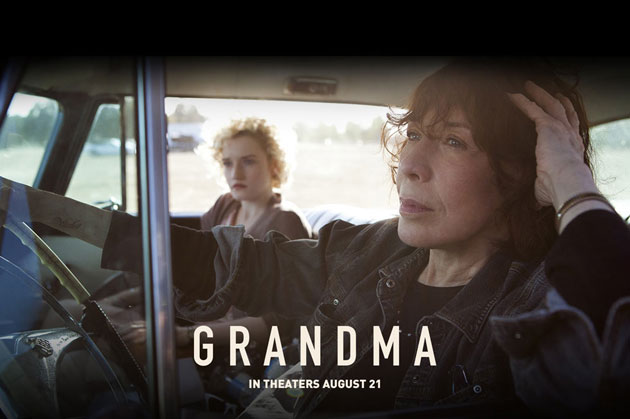
Grandma

A cinematic gem

This film is a total and utter joy to watch. So few films manage to have a plot that is so well-rounded and immersive with characters with such real depth. The fact this film is only (!) 78 minutes makes it even more magnificent – it’s not bloated nor is it lean. In fact, to an extent, the film feels far long in a good way. It feels as if you actually know these characters. They almost feel like friends.

Elle Reid (Lily Tomlin) is a sometime poet and sometime academic. 18 months ago her partner of 38 years died after a long illness. Three months into a new relationship she breaks up with girlfriend Olivia (Judy Greer).  In front of Olivia she appears to not care about her soon-to-be ex-lover, even proclaiming her to be a ‘footnote’ in comparison to her dead love. Soon after Elle’s granddaughter Sage (Julia Garner) arrives and needs her grandmothers help. Sage is pregnant and has an abortion booked for 5pm that day, but she doesn’t have the $630 to pay for it.  Elle doesn’t have that money to spare, all she has is $48 after paying of medical costs and other debts. She even cut-up all her credits cards as a symbol of a new start. Both Sage is too scared to ask her mother for help, a fear Elle shares. So the two go on a road trip to get both the money they need and to come to terms with their recent troubles.

There are not enough films like this being made at the moment. It’s witty and intelligent, heart-warming and emotional, compelling and laugh-out-loud funny. As we are in the middle of Oscar season it’s not surprising this film has had a degree of Oscar-buzz, but it’s been quiet compared to that surrounding other films that could be regarded as Oscar bait.  The prospect of a Grandma and her Granddaughter road movie may not sound massively appealing but there is so much more to it. The relationship between the pair is so well portrayed by both actresses.

Tomlin creates a character who does not have all the answers but will still insist on answering back, who is quick to get angry and can be bitter with her words. But her performance as Elle is also feisty, funny and full of vitality. She swears, she’s got tattoos, she attacks a dead-beat boyfriend but with her performance and a finely-written script she creates a truly appealing character.  We laugh with her not at her. The love she has for her granddaughter is unquestionable and fully justifies her actions.

Garner’s Sage is so carefully handled. A pregnant teen nowadays is a regular focus for reality tv, but Sage is very different from the ‘stars’ of those shows. Instead she is a girl who is looking for love, who is grieving for her dead Grandma and watching the alive one struggle with grief. Sage is immensely endearing and her narrative never strays into sappy.

Though the film’s driving force is obtaining the money for Sage’s abortion her decision is never questioned, somewhat surprising for an American film. In fact the film overall is about liberalism but never preachy. Elle clearly lived through a progressive period of time, her poetry and art-centric background were once part of the counter-culture which is slowly being forgotten and disappearing. Sage represents the new, with access to the internet and other resources she is ignorant to the world around her. She knows little of the time her Grandmother lived through, and knows nothing of women’s history. When visiting her Grandmother’s acquaintances, a transgender tattoo artist (played by Orange Is The New Black’s Laverne Cox), a rather intimidating butch cafe owner and listening to Elle’s views on society it is made clear just how little Sage really knows about the world around her. But this progressiveness is not dominant, not shoe-horned in nor heavily-handedly forced upon us. Instead these culture contrasts are treated carefully and tenderly like its characters. 

The film has an episodic narrative, with five chapter marked with title cards. Each chapter focuses on one of their visits to try and collect the $630. All of the chapters are exceptionally good but #4 titled ‘The Ogre’ is my personal standout. Elle brings Sage to visit Karl (Sam Elliott) who she has not seen in 39 years. The emotion generated by this scene is lump-in-your-throat-inducing. The pair bounce of each other as years of resentment come rising to the surface. Equally good is the emergence of the mother (Marcia Gay Harden) is manages to be worthy of the terror Elle and Sage feel towards her but still able to grab our sympathies. 

A study in character and emotion unlike many of this year’s releases. A little film worthy of much acclaim.


Krampus

The gift that keeps on creeping…

Christmas is a time of festive cheer,

for singing loud for all to hear.

But what if good ol’ Saint Nick was nowhere near?

Instead Krampus came to fill you with terror and fear…

Max used to love Christmas. He used to love wrapping presents with his sister and parents whilst watching ‘A Charlie Brown Christmas’. He used to somewhat enjoy when his extended family of aunt, uncle and four cousins made their annual visit from December 22nd to just after Christmas. But every year it’s gotten worse. His parents are growing apart, his sister spends all her time with her boyfriend and his cousins use him as a play toy to amuse themselves. Only his paternal grandmother Omi can see how his Christmas spirit is fading. When his extended family arrive once more the four adults, and surprise guest Aunt Dorothy, clash over the dinner table whilst his cousins brutally tease him for still believing in, then writing a letter to, Santa Claus. It’s the final straw for Max. He rips up the letter in anger and throws it out of the window. That’s when the storm starts, a snow storm like no other. Under the cloak of the blizzard Krampus and his villainous cronies start to arrive…No-one is safe. 

What a pleasant surpise this film was! It’s far from perfect and the pacing of both the first and third act is slightly off, but overall this film is a superb antidote to the kind of movies that some of the little-known Sky channels have been showing since mid-September.  It’s properly funny, has some jump-worthy moments and holds your attention for most of the 98 minute running time.

The story itself is deceptively clever. Though the myth of Krampus is centuries old it feels incredibly immediate and relevant.  The film opens with a sequence that has become unsettling familiar in recent years – a supermarket opening it’s doors for pre-Christmas sales. The crowds rush in, rioting, pushing, shoving and shrieking in their quest for unnesscessay discounted purchases. The fact this is soundtracked with Perry Como’s ‘It’s being to look a lot like Christmas’ successfully exemplifies the increasing commercialism of Christmas. It sets a great tone for the upcoming penance that will have to be paid.

The characters who will soon endure Krampus’ house invasion are well pot rated.  They are the right amount of unlikeable, each given just enough reason to warrant the inevitable onslaught but redeemable enough that you start to care what happens to them. The film doesn’t treat the adults any differently from the children – they have been just as naughty as their parents so need to be punished. As a secondary school teacher I can’t actaully say that Max’s two tween female cousins deserve to be punished,  but I can say that I hope they learn from their mistakes.

Krampus’ and his squad, made up of evil-looking reindeer, scary elves, oh so creepy toys and hilariously horrific gingerbread men own this film. The portryal of the homicidal gingerbread men would be my standout favourite, their evilish giggles haunting the house and they haunt it’s residents.  In fact they did somewhat remind me of Christmas horror-comedy classic ‘Gremlins’ which would make an excellent double movie feature with ‘Krampus’.

If you’re looking to briefly escape the festive season , or see and Old Testament-style backlash against it, or you just want a movie for laughs and a few scares, then this is well worth a watch.

Sunset Song

A sure-fire contender for top ten films of 2015 lists.

There are lots of sunsets. There are lots of songs. There is a huge amount of turmoil, heartbreak and devastation. There are also bitterly-short periods of joy, bookended by tragedy. This film is exquisite and truly haunting. An adaptation of of a 1932 Scottish novel of the same name, this is director Terence Davies project of passion after years passed struggling to get funding, struggling to get his film made. The passion truly shines through.

Aberdeenshire farm girl Chris Guthrie (Agyness Deyn) is the daughter of a housewife and a tyrannical father (Peter Mullan), and younger sister to a brother who is constantly beaten by their father. Her mother’s life is comprised of being raped and giving birth – she does not want the same for her daughter. Chris also does not want to be fated to live a life like her mother’s. Luckily Chris is exceptionally bright, the smartest girl at her school, and is one track to move away and train to be a teacher. When her mother falls pregnant, again, and gives birth to twins, again, the family move away to a bigger house. Once they arrive in their new home, a series of events occur which cause the family to crumble and fall away. Chris must endure so aching hardship but appears to find happiness with Ewan (Kevin Guthrie). This period of her life is shattered when war (World War One) is declared. Life for Chris and her fellow residents of Kinraddie will never be the same. 

 Considering the series of devastating events that is the life of Chris Guthrie Sunset Song never crosses the boundary into melodrama. Admirably, to great success, the film and its storytelling retain a muted stoicism. It’s bitterly sad and this effect is sharpened by its refraining to rely on exaggerated displays. Deyn in particular is extraordinary. Her Chris has a captivating innocence, an innate need to endure and stand firm when all around her are losing their heads (metaphorically speaking!) Tears roll and glide down her face, even at her most bereft she has no need for frantic or guttural moaning at the continuous losses she suffers. The film opens on a sweeping pan of the farm-land, from which Chris emerges. She is a child of the land, the love she feels for it is her only constant. Peter Mullan is excellent as her father who himself is torn between his apparent religious compass and his vices. His conflicted nature never used as an excuse for his behaviour but a reason as to why.

The cinematography is breathtakingly exquisite, treated with an almost religious adulation.  The camera tracks and pans across the land almost as if it is character not setting. In many ways it is a character, playing a part in events and meaning so much to so many. The editing is crucial is creating this tone of melodic heartbreak. Those previously aware of Davies work will notice his fades, cross-dissolves and panning to mark the passing of time. Those who were not will marvel at how they are used for sublime effect. The brief intermittent use of song furthers the sense of haunting and trauma. Never is a full song uttered, merely snippets which the film and its characters cling onto, just as they are clinging on desperately to this way of life. For the sunset being referred to is the sunset of this particular time, this particular way of life, which is fated to end. For the war did not just kill people, but communities. The brutalising effect of war has repercussions both seen and concealed. It also does not discriminate in its path of destruction

A beautifully crafted film comprise of visual grace and emotional density. Truly remarkable.

The Good Dinosaur

‘Mummy, why is that lady sat over there crying so much?’

2015. The year Pixar granted us with two movies. After years and years of development hell The Good Dinosaur emerged in cinemas almost 4 months after Inside Out. The close to cinematic perfection that is Inside Out. With those two pressures alone the bar was set high – whilst The Good Dinosaur doesn’t get a place on the podium for best movies of 2015 it certainly deserves a rosette for good effort.  The main idea is so Pixar in its originality, the central characters so endearing that it’s truly unfortunate how ill-served it is by the underdeveloped storyline. Yet, even with such a shallow storyline, the pathos is still being created. Which is why I was the ‘lady’ in the question above that was uttered by a small child sat near me in the cinema on Sunday. The question is, will children really understand how truly depressing much of the film is?

65 million years ago a meteor did not hit Earth. The dinosaurs were not made extinct. Two Apatosaurus farmers are watching in awe as their three eggs hatch. Their children are about to be born. There’s Libby, Buck and finally Arlo. As the three children grow up the differences between them quickly become apparent to their parents, specifically how different Arlo is two his older siblings. Libby and Buck swiftly adjust to life on the farm and perfect their chores, so much so that they are rewarded with a muddy foot-print on the family tree. Arlo does not. Arlo is shy and timid, terrified by most things including the  chickens he has to feed everyday. Arlo’s father gives him some extra attention and finds him a purpose, to get rid off the pest that has been eating their food supply. They set a trap and Arlo waits in excited nervousness for the pest to be caught. When Arlo next checks the trap he find a feral cave-child. When Arlo finds himself unable to kill the pest his father rebukes him, and forces him to chase the pest through a ravine. On the way tragedy strikes and Arlo soon awakens to find himself far away from home and desperate to get back. 

The majority of the film is of Arlo’s journey home. After slowly befriending the pest, even naming him Spot, the pair work together to get Arlo home. Their friendship is portrayed in such a beautiful way, so heart-warming and joyus. Both Arlo and Spot are really lovely characters who you find yourself truly rooting for and willing for their survival. This is the main success of the film and the main reason to stay engaged with it through its rather facile storyline. Arlo and Spot drift from one misadventure to next, meeting some ‘interesting’ characters and frequently running into danger. It’s at this point in the film when it becomes…strange. There’s a sequence which proceeds Arlo and Spot’s ingesting hallucinogenic berries that rivals that sequence in Dumbo. Other strange, occasionally wonderful, set pieces occur. Their joining up with a family of T-rex’s is wonderful. Thunderclap and the pterodactyls are not.

Overall, however, there is enough here to make it worthy of watching. It has the best of intentions, some gorgeous landscapes and two truly lovely leads. Their friendship is one of the studio’s best.

It’s not Pixar’s worst (Cars) or its best (Inside Out or Toy Story) but comfortably in-between.

Sanjays Super Team Pixar Post

Sanjay’s Super Team

The 7 minute short which precedes The Good Dinosaur is absolutely delightful and hopefully ground-breaking in terms of representation. Without dialogue, as most of the Pixar shorts are, we watch a young boy called Sanjay be torn between wanting to watch his cartoon (representing the modern world) and his father’s want for his son to pray with him (representing tradition). The film starts with a card stating ‘This is a (mostly) true story’ and it really comes across throughout. For Sanjay realises that the superhero’s adventures that he watches on tv share a lot with the stories of the Hindu gods. His mini-journey of discovery, attempting to align the two parts of his life, is fantastically done.  The fact Pixar have made a film which diverts from their usual representation is crucial. Long may it continue!