Adult Life Skills

British indie at its finest

This film sums up what we Brits do well – a somewhat melancholic story told with warmth and humour. An unsentimental tale told with compassion. Also, puns. There is so much to love about this film that I suspect I’ll be championing it a long while yet.

Anna (Jodie Whittaker) is one week away from her thirtieth birthday. She works at a nature resort in a middle-of-nowhere part of Northern England, lives in the shed at the end of her mum’s garden and enjoys making films featuring her thumbs with smiley faces on them talking about nihilism. Due to the relatively recent death of her twin brother (Edward Hogg) she can’t face talking about her birthday, yet it seems everyone from mum Marion (Lorraine Ashbourne) and Grandma Jean (Eileen Davies) to her best friend Fiona (Rachael Deering) and Fiona’s sister Alice (Alice Lowe) to the boy who used to annoy her at school Brendan (Brett Goldstein) want to talk about both her Birthday and where her life is going. 

Although the setting, the majority of the characters and their circumstances may not initially appear universal they really are. The film acts as a reflection on loss, self-isolation and the struggle to find who you are. Yes, as a 23 year old female that may appear more relevant to me than many others it’s relevant to us all. We all have experienced – be that aged 3, 23, 33,53 or 83 – a loss that derailed us, that either out of choice or not, took us on a course we never intended. Grief lasts far longer than the funeral and for some we wake up years later and look at metaphorically derelict path we ended up on. Anna’s self-loathing may be a concept I am all too aware of through personal experience, yet the battle to regain self-confidence is a ubiquitous challenge many of us have/will face. The fact we see such likeable and familiar-seeming characters facing this in ‘Adult Life Skills’ makes for a deep and visceral experience.

I apologise if the above paragraph made the film sound boring and serious. It really isn’t boring but it is somewhat serious, in terms of its themes not how it is told. It is properly funny quite often and whilst I did cry (I think it was at least three times) I did guffaw at least double that and left the screen grinning.

I loved every single one of the characters. I really felt like Anna became a friend whilst watching the film, she’s so well-rounded both in characterisation and performance. I’ve loved watching Whittaker in everything I’ve seen her in (Good Vibrations is my personal favourite) and her performance her is no exception. Fiona is brilliant as the best friend desperately trying to help her lost friend. Brett Goldstein, who was wonderful in  last year’s little known indie flick SuperBob, is just as good here. He is great at playing a logical figure to Anna’s less-than-logical thought processes, providing a truly earnest performance. Pus the man is an expert at eyebrow acting.

‘Adult Life Skills’ is now easily in my top five films of the year so far.  Whilst Mother’s Day (click here to read my review) may be filling cinema screens with a national release, profiting on cheap and disingenuous sentiment,  it is films like this we should be rooting for.  When the film ended it felt like I was saying goodbye to newfound friends. Yesterday’s preview was the first of my many watches of it.

4.5

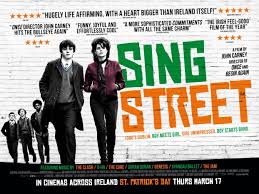
Sing Street

1980s. Dublin. New Romantics.

If the prospect of those three words being combined into a film does not fill you with glee I’m not sure how well we’re going to get on or how well you’re going to get on with this film. If you haven’t jumped ship  and are still reading – then this film may just be for you! From John Carney, the writer-director-producer of  Once and Begin Again, comes another musical tale about love and friendship. But this time our main characters are teenagers and they are forming a band The Commitments-style. The result is one of the most rewarding, enjoyable and grin-inducing films of the year so far.

It’s 1985. Like all epic stories it started with money problems and a girl. Connor (Ferdia Walsh-Peelo) is forced to leave his expensive fee-paying school and attend the local state school Synge Street CBS. The family has little money coming in as patriarch Robert (Aidan Gillen) is finding his architecture practice is not really required during a financial crisis. It’s at his new school, well on the school’s doorstep, that Connor first meets Raphina (Lucy Boynton). Raphina is an older lady, one year older, and is the most glamorous/gorgeous/extraordinary woman Cosmo has ever seen. New-found friend and wanna-be entrepreneur Darren (Ben Carolan) explains the school gossip that Raphina is a model who will soon be moving to England to make her fortune. Connor bravely introduces himself to Raphina and offers her a job that weekend to star in his band’s music video. After a bit of charming she agrees to take the job. Except Connor doesn’t actually have a band – yet. With audiophile elder brother Brendan (Jack Reynor) to guide him surely it’ll all be easy, won’t it..?

There are so many reasons to love this film – many of which I don’t want to discuss in too much detail or give away as it’s discovering them for yourself that only add to the brilliance. However I will briefly give the headlines of the reasons for my adoration. For favourite character I am torn between Brendan and bespeckled multi-instrumentalist Eamon (Mark McKenna). The soundtrack will undoubtedly be one of the best of the year – the classics are superbly chosen and the original songs (such Riddle of the Model) are wonderful tributes with some infectiously catchy riffs. The storyline is told with great empathy and sympathy. This is a film that truly cares about its characters. The music videos the band makes are both hilarious and nostalgia-inducing (even for those of us who were not alive in 1985!) I full enjoyed the references to The Cure, Duran Duran and Spandau Ballet to name just three – I can only imagine the depth of the enjoyment for those who leaved and breathed this music scene. The friendship between the newly-formed band is heart-warming and believable thanks to some fantastic chemistry between them. The film also manages to cover lots of ‘big’ topics – mental health, adultery, abuse – sensitively and appropriately. There’s a great balance here between pathos and humour. 

My main criticism would be the treatment of Raphina. Boynton does an excellent job with the material she is given but the presentation/treatment of her character is far too Maniac Pixie Dream Girl. For the most part we only learn about Raphina through what Connor (whom Raphina later renames Cosmo) sees and hears. She doesn’t transcend being his figure of worship and far too much screen time is dedicated to his male-gaze watching her. Whilst the dialogue of most of the characters is rooted in a degree of realism or believability Raphina’s craic is over-rehearsed. Arguably this could be a reflection of her personality as a character but for the most part her dialogue rarely lands as effectively like the other characters. Any film that focuses on a romantic crush, be that of a man or woman, must deal with the universality of the story arc as a duel-edged sword.  Whilst it makes for an accessible storyline, as the majority of the world’s population would have had a romantic crush at some point or another,  it means we then have to believe in the crush and that all the turmoil it brings our lead character is worth it. Is Raphina worth it?

Aside from my ponderings on potentially dubious representation, I truly loved Sing Street. So much so I think a rewatch in the new few weeks will be in order. It tickles the funny bone whilst tugging at the heart strings. It’s an old-fashioned story told with great warmth and will great skill. And, for New Romantics at heart like me, it’s chance to feel immersed in and nostalgic for a lifetime I never lived.

4.5


The Jungle Book

It’s really a Bare Necessity that you see it!

For reasons somewhat unknown and potentially puzzling for many fans, Disney has decided to make a series of live-action versions of their animated classics. Apparently there are even 15 currently being planned. If they are all even half as good as this one then it’s not something to worry over. The Jungle Book (2016) is a marvelously wonderful adaptation that is both true to the original 1968 film yet with enough of its own nuances for a fresh-feel.

Mowgli was only a baby when he was found alone in the jungle by Bagheera the black panther (Ben Kingsley). Bagheera took Mowgli to the group of animals in the jungle who would best be able to care for him and protect him – the wolf pack. Raised by surrogate mother Raksha (Lupita Nyong’o) and pack leader Akela (Giancarlo Esposito) and bought up alongside their wolf cubs Mowgli learns the ways of the wolves, but as he is getting older Mowgli’s (Neel Sethi) progress is starting to lag behind his wolf siblings. One day, during the dry season, all the animals of the jungle are gathered to drink what remains of The Water Truce when Bengal tiger Shere Khan (Idris Elba) makes a reappearance after years away. Shere Khan smells Mowgli’s scent and warns the wolfpack to get rid of him or face the consequences. Bagheera offers to escort Mowgli back to the land of the man but the pair get separated on the journey. A close encounter with an enormous Indian python called Kaa (Scarlett Johansson) leads to Mowgli meeting Baloo the bear (Bill Murray). A true friendship begins to form between them but how long can it last with Shere Khan still desperate to hunt and kill Mowgli?

There are three key things that have been perfected to make this film as good as it is. Hopefully one of the things you noticed as you read the above plot summary is the cast. Firstly, how good is that cast!?! Look at the incredible group of actors that were brought together. Then look individually at each actor and the character they play. It’s not often you get to say that every casting choice is perfect within a movie and it’s something that you can say applies to this film. Kingsley provides the necessary paternal warmth hidden under layers of no-nonsense concern. Nyong’o as Raksha is a wolf fiercely protective and not afraid to speak out when it’s needed. Elba is fantastic, a properly scary villain, who growls around the land. Johansson’s Kaa is suitably seductive and hypnotic. But the award for most outstanding vocal contribution has to go to Bill Murray providing a performance that is un-bear-ably endearing and amusing in equal measure. How young newcomer Neel Sethi manages to hold his own is an incredible feat which he appears to do with ease. Let alone the fact he spends the film acting alongside CGI animals…

Leading to the second area in which this film excels – the visuals. I’m on the fence about 3D usually. After seeing too many films which claim 3d status yet do little to warrant it I tend not to be overly excited when having to choose between 2d and 3d showings.The Jungle Book is the first film in an age where I’ve been so glad I booked that 3d ticket. The depth of the frame, the landscape, the animals fur, the movement of the water and the curse of the red flower. All of these aspects are superbly enhanced by the 3d. Whilst aware of the cost it can add to a cinema visit I would firmly recommend seeing this film in 3d to access the added textures and wondrous depths it provides. The animals themselves are beautiful and almost life-like in how they look and move.I now desperately want to cuddle a baby wolf and sit upon a giant bears stomach as we float through the river.

Thirdly there’s the direction.Director Jon Favreau ensure first and foremost that this is a children’s movie whilst avoiding any pandering or talking down to the children. The film has enough darkness to give it bite – mildly frightening as opposed to truly scary. There’s even a lesson or two to be learned along the way. Unlike the original animation this film is not a musical but two of the classic songs are included – ‘The Bare Necessities’ is sung by Mowgli and Baloo during the aforementioned river floating sequences and Christopher Walken talk-sings his way through ‘Wanna Be Like You’ in such a wonderfully charming yet ultimately threatening manner – that feel like a natural fit as opposed to being shoe-horned in.

This may just be the most enchanting film of the year so far. It’s a marvellous visual spectacle told with wit and warmth. A treat for the eyes, ears and heart.

4 stars


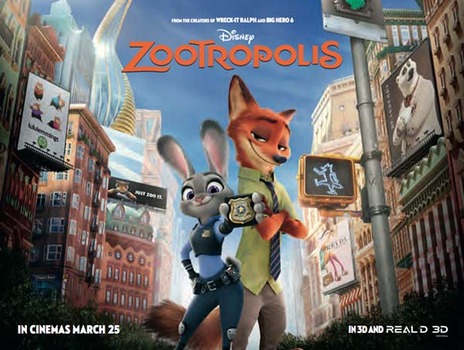
Zootropolis/Zootopia

We may be evolved, but deep down we are still animals.”

Anthropomorphism, Disney and animation have a long history. As early as Walt Disney’s first feature film Snow White (1937), in which all the woodland creatures appeared to have various personality quirks, attributing human characteristics to cartoon animals has been a way of enhancing a story. Then, with numerous Disney classics, it became the way to tell a story. In 1995, with Toy Story, Pixar began to add to the Disney magic by giving characteristics along with pathos to the inanimate objects and animals. Now, in 2016, with Zootropolis (released nearly everywhere else as Zootopia) we see this enhanced to the max with an animated film that features anthropomorphism whilst also serving multiple layers about diversity and racism, all told by Disney with just a smidge of Pixar wit. It’s funny, sweet and far deeper than it first appears.

During a school play in front of her parents, her peers and their parents, a young bunny called Judy Hopps (Ginnifer Goodwin) declares that when she grows up she wants to be a police officer. Many people laugh at her, one person even beats her up for the audacity of saying it and both her parents are a blend of supportive-but-unsure. But Judy proves them all wrong.  She’s the first bunny first to enter the police academy and the first bunny to actually join the police force. Her first posting is Zootropolis, a nearby metropolitan city. Her parents can’t believe it and neither can her new boss, an African buffalo by the name of Chief Bogo (Idris Elba), who assigns her the role of parking duty. Day one on the job seems to be going well, until she is tricked by con artist fox Nick Wilde (Jason Bateman). However the two are soon forced to work together by Mayor Lionheart (J.K. Simmons) and assistant-mayor Bellwether (Jenny Slate) to help solve a case involving a series of missing animals. Can what were once predator and prey ever work together, possibly even become friends, or is nature stronger that nurture?

It may be slightly too early to say, but Zootropolis has all the potential to be as-well regarded both critically and commercially as last year’s Inside Out. The jokes are really really funny and the drama is really really emotional. My personal favourite joke from the film has to be when fellow police officer Clawhauser (Nate Torrence) first meets Judy Hopps and calls her ‘cute’. Judy winces then carefully explains that “only a bunny can call another bunny cute”. Cue many belly laughs from the cinema screen. That gag is also an example of the kind of humour that has become prevalent in animation since Shrek (2001). The humour of these animations is almost two-layered. To explain on a very basic level, there’s the slapstick jokes for kids and the jokes for their parents that go way over their heads. It makes taking a child to the cinema a far more enjoyable experience for their parents, as opposed to having to endure some brain-dead-only-aimed-at-children romp.

The animals are very well characterised, both matching their animal types whilst also being well-rounded. Judy is fierce, dedicated and ambitious – a solid role model. Nick the fox is sly and alarmingly charming for a fox, though that may just be my personal feelings for Jason Batemen having an effect here… Idris Elba is hilarious as the imposing yet ultimately caring chief who just happens to be a buffalo. Shakira even appears as Zootropolis’ biggest star, Gazelle.

Then there’s the story itself, well-told with a solid twist. There are some fantastically inventive set pieces, be that the sloths working at the DMV or the practically word-for-word Godfather tribute. The story also has a lot you can sink your teeth into (sorry, pardon the pun!) Though the two groups of predator and prey may appear united in the metropolitan city of Zootropolis, it is a delicate union. One which is weighed down by tension and borderline-hostility. Although prey and predator may be neighbours very few are actually friends and few would choose even to be nice to each other. Some restaurants even refuse to serve certain types of customers. When it becomes clear that all the missing animals in the case are in fact predators it looks set to force the bubbling undercurrent of tension to the surface. The film is far from subtle in reflecting our own society’s tensions and forcing a degree of reassessment, yet that is no criticism. Considering the current global climate, with regards to refugees and a certain toupee-wearing president wanna-be whose delusions of grandeur reveal the current state of institutional racism, Zootropolis is perfectly-timed and well in need of watching.

This is ‘proper’ Disney with the beating heart and talking mouth of Pixar. Witty, warm and well worth seeing. A fable for 2016.

Eddie the Eagle

May Eddie the Eagle fly at the box office

One thing that really grinds my gears is when people my age say to justify a gap in their knowledge is, ‘Huh! Well that’s from before my time I guess.’ That is then proceeded with a slightly awkward shoulder shrug. For someone who often reckons that music peaked around 1985 I think it’s often used as a silly filler line. However, in a rather hypocritical move, I am going to say that the rise and soar then laughing stock of British skier Eddie “the Eagle” Edwards is ‘from before my time I guess.’ Occasionally he would pop up on various panel shows and people would poke fun, and I’d be vaguely confused and envious that a man with such an awesome nickname was being used for laughs (what can I say, I was a thoughtful child…) Anyway, I’ll save the rest of that for my therapist.

My slightly convoluted point here is that I had no idea what the man had done to achieve such levels of infamy and mockery. Then, when I heard of the film, I thought ‘Yeah…good luck with that one!’ Time passed by and the trailer was released which made me realise that the film was my kind of film. Then I got invited by Den of Geek to attend a preview screening and Q&A with the director, Dexter Fletcher, at The Courthouse Hotel (a 5* hotel with unbelievably fancy toilets) and that takes us right up to now. Three days on from seeing the film and it still makes me smile. It’s a truly wonderful movie and I beg you to go and see it. Now (and if you’re still with me after that preamble I declare) to you my utter love and gratitude for sticking with me) let me tell you why it’s so damn good.

Eddie Edwards (Taron Egerton) has wanted to be an Olympian for as long as he can remember. He was always the last to get picked for teams, spent a year in hospital due to the poor state of his knees and never quite seemed good enough for anything. He almost gave in and followed in his dad’s (Keith Allen) footsteps of becoming a plasterer until he found skiing, a hobby for which he had his mother’s (Jo Hartley) total support. He even made it to try-outs for the Olympic team before being told by the panel (lead by Mark Benton and Tim McInnerny) that he wasn’t Olympic material. That’s when Eddie decided that not only would he try on his own to make  Team GB for the 1988 Winter Olympics, he’d teach himself how to Ski Jump by decamping to a training camp in Germany. Either being ignorant or in denial about the fact that most Ski Jumpers start aged 5/6 (Eddie being 22) he proceeds to train solo with great resilience both from injury and belittlement from the experienced jumpers. That’s when alcoholic ex-ski jumper Bronson Perry (Hugh Jackman) steps in to help Eddie from death by training. A friendship/brotherhood quickly forms between the pair, under the shadow of Perry’s ex-mentor Warren Sharp (Christopher Walken). Will Eddie become skilled enough to join Team GB or will his dreams die again once more?

This film is totally and utterly brilliant; an utter joy to watch. Though it’s not a state I often occupy, I felt so patriotic after seeing this movie. Partly because it’s a British movie, and it’s the kind of movie we do so, but mainly because Eddie’s journey and how it’s told is so unique to British cinema. Yes, other countries do underdog movies, but so few do them in this way. Eddie’s journey is so lacking in glory, so real (grey-area term as some of the movie is fictionalised) that he reflects each and every one of us. It’s an important reminder not to give up on your dreams, and the power of self-belief. It’s also bloody hilarious, that blend of slapstick and deadpan and sarcasm that makes British cinema so comparatively unique. I giggled, I laughed and I even snort-laughed. It was glorious.

Taron Egerton is already on the up-and-coming, cusp-of-greatness list of actors and this film cements it. Firstly, a post-viewing google showed how similar Egerton looks to 1988-era Eddie along with how scarily accurate the expressions and mannerisms are. He’s also such a great actor to watch, his handling of the pathos and comedy of the character is extraordinary. You do well and truly root for Eddie. Hugh Jackman is great in his mentor role, forming a great rapport with Edgerton. Allen and Hartley are little seen but add much to the impact of the film. Then, with a brief cameo, Christopher Walken sasses the hell out of two lines of dialogue.

There’s also a wonderful 80s soundtrack, as uplifting and smile-inducing as the film itself, brilliant use of sets on such a small budget and some hilarious character actors in supporting roles. Eddie the Eagle is being released into the wild on March 28th, the same weekend as Batman Vs Superman. So why not give some home-grown talent some love and go see it. I promise you it’s worth the money.

We may only be a quarter of the way into the year, but this may just be THE feel-good movie of the year. Go see it.

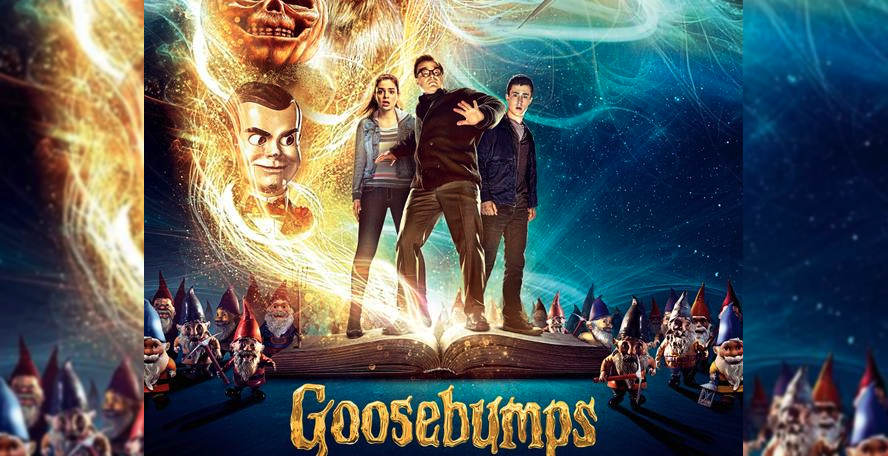
Goosebumps

“Viewer beware, you’re in for a scare!”

It’s easy to be a book snob. It’s easy to tell children which books are good to read and which books are bad to read. What constitutes a bad book for children? If it inspires just one child’s imagination,  gives them fears and feels in equal measure,  then surely a book can’t be bad? I’ve read Wilde, Dickens and both Poe. But I’ve also read Rowling, Wilson and Stein. Those six authors, along with countless authors, formulated my literary past and thus set the foundations for books to be read in the present and the future. J.K.Rowling may have figuratively taken me to Hogwarts and made me lament not receiving my letter when I was 11 (obviously during that period the ministry of magic was busy with other matters…), but it was R.L Stein that gave me a taste for ghouls, goblins and gore. Watching ‘Goosebumps’ felt like a risk, either prompting rage from my inner adolescent or transformative nostalgia. I’m very happy to report it’s the latter. Through a blend of live-action and animation the film manages to capture the goosebump-inducing fear of the books whilst also being rather light-hearted and funny.

A year after his dad has died, Zach Cooper (Dylan Minnette) and his vice-principal mother (Amy Ryan) move from New York to Madison, Delware. Though frustrated at his new small-town surroundings he knows that his mother’s new job will good for her, and the change in scenery may be good for both of them. When moving in, and having a box fall apart on him, he meets his new home-schooled neighbour (Odeya Rush). But their brief introduction is halted by Hannah’s grumpy and rather scary father, a man who may or may not be R.L. Stein (Jack Black). Hannah manages to sneak out and spend a day with Zach, but upon getting caught by her father she is punished. When Zach goes to rescue her, bringing along loveable loser sidekick (Ryan Lee), he stumbles across a bookshelf filled with what appear to be manuscripts for every Goosebumps story every written. However, after opening the manuscript of ‘The Abominable Snowman of Pasadena’ [side note: it is in my top ten Goosebumps] the Abominable Snowman itself comes out of the book. After a series of exciting events, manufactured by the Dummy of ‘Night of the Living Dummy [side note: definite top five contender] all of the manuscripts are opened, bringing all the monsters that Stein has ever written to live and bringing havoc among their town. Stein, Zach, Hannah and Champ must get all of them back in their books, where they belong. But things won’t be easy, and not everything is as it appears…

I really like this movie for numerous reasons, and in fact have a rather big soft spot for it. First of all, it brings all the monsters that once haunted my imagination to life. During the big crowd sequences I desperately searched the crowd for the familiar faces of the guests who overstayed their welcome in my nightmares. Going back to my opening point, I think it’s important that child can read books that scare them, and then show them how to defeat these fears. For children, and adults of a nervous disposition, this film does have rather spooky moments. There are one or two jumpy moments, and few monsters that are rather unsettling, but these are well contained moments and are more fun than fearful.

This leads me onto my second point, how surprisingly funny the film is. There are jokes for the children, and then there are jokes that will go over their heads and will crack up the adults in the audience. My three personal favourite jokes, which led to the emittance of loud laughter from many at the screening I attended, were a gag about the suffix –phile, a discussion about Stein verses Stephen King and a joke about domestic sales of books. Those three jokes (which I have intentionally poorly paraphrased) were well written, as are many others within the film.

The characterisation is good, with each character being more than likeable. In quite a nice shift, Hannah is the braver one whereas Zach and Champ are both rather jumpy in comparison. The animation is well-placed, never jarring with how it fits into the live-action, which is rather laudable. The music is never interfering, subtlety and successfully building the tension and fear. The pacing is also good, the 1hr 40mins never dragging and filled with more than enough twists and turns. This film is what family cinema should be. It shouldn’t patronise the younger members of the audience, or pander the humour towards them. It should engage them, spook them a little and excite them, just as Stein’s books did for me all those years ago.

If you’re looking for a light-hearted movie with a bit of bite, or something to entertain your children that won’t melt your brain, this is it. A very pleasant surprise.

The Danish Girl

A heartbreaking story about Lili, a transgender pioneer.

‘The Danish Girl’ and ‘Joy’ were both released on January 1st 2016 in  the U.K. Though the films have relatively little in common otherwise they do share one primary similarity- both are a blending of fact and fiction. Both stories are about real life people, with a degree of dramatic license for supposed cinematic development. However it is in this area that ‘Joy’ somewhat stumbles whereas ‘The Danish Girl’ soars. A brief bit of post-film research will identify these aspects of fiction, yet it is an act that is perhaps unnecessary as any and all fabrications in ‘The Danish Girl’ add to moving story that unfolds.

Portrait artist Gerda Wegenger (Alicia Vikander) and popular landscape artist Einar (Eddie Redmayne) have been married for six years. They have a comfortable life in the cultural bourgeois heart of Copenhagen. Their friends in the arts note with a degree of envy about how happy they are, how well suited they are together and how lucky they were to find each other. It’s true, they balance each other out perfectly. When their dancer friend Ulla (Amber Heard) cancels a sitting for Gerda at the last minute, Gerda asks her husband to pose instead. The act of posing as a female figure appears to cement something, an awareness that Einar has had for sometime, and  marks his progression of leaving behind the identity of Einar.  Tentatively at first, yet soon quite rapidly, Einar begins to progress in his lifelong identification of being a woman, becoming Lili Elbe. 

Lili Elbe was one of the first identifiable recipients of gender reassignment surgery, with her first operation in the process have taken place in Germany in 1930. Her personal letters and diary entries which record her journey, were published under the title “Man Into Woman” (1933) which was one of the first texts to draw a distinction between homosexuality and transexuality. Though ‘The Danish Girl’ is being billed as a ‘true story’, some of its primary details are proven to not be, yet arguably can it be viewed as a ‘true story’ as it accesses an inner-truth?

Redmayne’s portrayal as Einar is heartbreaking, as we watch a conflicted person finally accept themselves whilst all too-aware of the devastation it could cause the love of their life..His portrayal as Lili is just as emotive, as we observe a person joyous at finally being comfortable in their own skin yet restrained by an era that is not ready and cannot provide provision nor understanding. Vikander’s Gerda is sublime, conveying so much with a subtle yet equally devastating performance.Her want for her love to be happy clashes with her want with him to stay her love, a turmoil that emits from every expression and  mannerism. The third star of the film has to be the cinematographer Danny Cohen, whose use of the camera makes the beautiful sets look lush and the beautiful leads look vibrant.

Overall the story itself seems rather familiar, offering little that is perhaps surprising. But this is not a criticism, in fact rather something of a compliment as a more ambitious narrative may have taken away from the film’s central core in its observing of Einar’s journey. Though perhaps the story could have gotten under the character’s skin slightly more and not have seemingly polished some of the darker edges of the character’s stories. However, if you’re looking for a poignant and caricature-free look at one person’s struggle for acceptance within themselves and their community, this is a great place to start.

The two compelling lead performances deserve to be watched.

Star Wars: The Force Awakens

AKA. Seven reasons for why I loved the seventh Star Wars movie.

I realised quickly on when planning this review that it would turn into a list of why I liked it so much so I thought, for what will probably be my last review of the year, to write that list. I acknowledge that it is not the perfect film, and I’m sure there are enough valid (the narrative near enough a replication of ‘A New Hope’) or invalid (*ahem that Rey is Mary Sue bollocks*) reasons to dislike it or be disappointed by it. But I liked it and this is my blog so…deal with it! WARNING: There will be spoilers. Ready? Now let’s head off to a long time ago in a galaxy far far away…

1) Rey

The character of Rey (Daisy Ridley) is a natural progression from Princess Leia. Though Carrie Fisher’s character was way ahead of the times upon her first introduction in 1977’s ‘A New Hope’, with her fierce wit and her fearlessness, she is frequently away from the main action. Rey is for the most part where the action actually is within ‘The Force Awakens’. Established as having been abandoned by her family and left to fend for herself on the harsh landscape of Jakku, Rey is clearly independent and able to handle herself. When attacked by scavengers who are after BB-8 she fights two off successfully on her own. Finn comes to her rescue but is not needed or wanted – his then insistence on grabbing her hand when running away is instantly rebuffed. She sees no reason for it. With that small gesture JJ. Abrams sets Rey up as a female character we rarely see in Science Fiction – one who can handle herself and fight her own battles. From thereon Rey’s characterisation further develops her awesomeness and potential power which is a total joy to watch.

rey

2) Kylo Ren

Since first appearing in the trailer with *that* lightsaber the possible/probable villain of the new trilogy has been the focus of much speculation.  Adam Driver gives the man behind the mask the right balance of vulnerability and power. The revelations of his origins add not reduce this capacity, leading to pondering about how much he will take after his grandfather. His fiery temper along with his unconventional charisma make him everything that Anakin Skywalker should have been. He has also led to one of the 2015 funniest twitter accounts, with a teenage Emo Kylo Ren sharing his frustrations with the world…

kylo ren

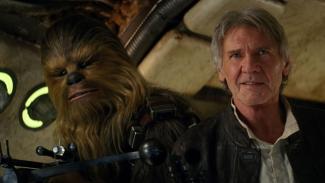
3) Chewbacca

Of all of the seven (and counting) Star Wars films, this might be Chewbacca’s best outing yet. The source of many of the (unexpectedly) funny film’s gags he is given more to do than just be Han Solo’s sidekick. And if your heart did not break at his reaction to a certain someone’s demise then you have a heart of stone!

chewbacca

4) Finn and Poe

Along with Rey, Finn and Poe are excellent additions to the franchise. Individually they are great characters – a pilot so legendary he makes it into *those* opening credits and a stormtrooper whose PTSD leads him away from the darkside – but it their bromance which is currently breaking the internet. Their bromance will be undoubtedly be shipped by many worldwide and provide a focus for much fan-fiction. There is an instant rapport between the pair, their introduction, separation and eventual reunion are glorious to watch. Though they shared relatively little screen-time we are provided with more than  enough to hint their pairing will provide much joy in forthcoming movies.

kylo and finn.jpg

5) Leia and Han Solo

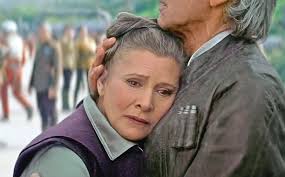
J.J Abrams is hugely successful in achieving a balance between old Star Wars and new Star Wars. The roles Leia and Han Solo play in the events of ‘The Force Awakens’ is no exception. Han’s ‘Chewie, we’re home now’ is air-punch worthy, as is his roguish arrogant charm when handling the mercenaries.  But it’s his brief reunion then parting with Leia that really tugs at the heart strings. Who knows what fate awaits this coupling considering the jaw-dropping fate of one of the pair..?

leia han

6) BB-8

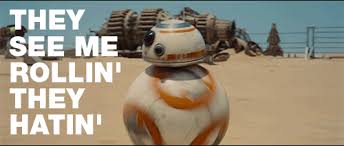
Going into ‘The Force Awakens’ it is unlikely you were looking for a new droid to love but if you were, this would be the droid you were looking for. Just like R2-D2 BB-8 communicates with a series of beeps which are then translated by on-screen characters, but those beeps along with his manerisums communicate so much with so little. Favourite moment has to be when John Boyega’s Finn gives BB-8 a thumbs up, to which our spherical droid responds with a flame that resembles a less than polite gesture.

bb-8

7) Maz Kanta

Maz is a worthy wise and wizened successor to Yoda. The hints to her wide and varied knowledge will undoubtedly be furthered in future films, but for now there is more than enough to mark her out as a character to watch out for. Her bespeckled gaze in terms of ability to induce inner truth is only equalled by ‘Harry Potter’s Professor Trelawney.maz

What truly worked about this film, along with the seven points above, are the amount of questions carefully raised and left unanswered.  J.J Abrams used the familiar narrative of ‘A New Hope’ to both introduce the new and pay tribute to the old. But to truly succeed with this franchise it will have to step out of the mould and not rehash ‘Empire Strikes Back’.

Though next year brings another Star Wars movie, ‘Rogue One’ starring Felicity Jones, it’ll be two years till we return these characters. I for one cannot wait!


In The Heart Of The Sea

The mostly true story behind Herman Merville’s Moby Dick

For the next couple of weeks Star Wars: The Force Awakens will be dominating the cinemas. As a consequence the box office of many other films will take a hit, particularly those who have an audience that will overlap with it. This film is unlikely to be an exception. Though it is entertaining enough it is also remarkably old-fashioned, solid yet ultimately uninspiring.

Herman Merville (Ben Whishaw), having travelled a long distance, knocks on the door of Innkeeper Thomas Nickerson (Brendan Gleeson). Thomas is renowned as being the last survivor of the the last voyage of the Whaleship’ Essex’. Herman offers Thomas a large amount of money for the story, having heard rumours that it involves a monstrous whale. Thomas takes much persuading, by both Herman and his own wife (Michelle Fairley). The story goes back thirty years, to when a then 14-year-old Thomas signed on as a cabin boy for the ‘Essex’, a  ship owned by a greedy whaling company who had refitted the ship to participate in the lucrative whaling trade. Experienced whaler Owen Chase (Chris Hemsworth), who worked his way up in the industry, had been promised a promotion on the ‘Essex’ is informed that if he does this one last job as first mate he will finally get that promotion. Instead the role of captain goes to George Pollard (Benjamin Walker). Though his family have much experience in whaling, he does not. He has much theory but this is his first time of putting it into practice. Owen and George immediately clash as soon as the ‘Essex’ sets sail, with Matthew Joy (Cillian Murphy) playing intermediary. Months drag on and with little sign of whales they decide to go further out, to a place renowned for it’s countless whale occupants. It is also infamous as being dangerous, a land haunted by a monster whale. But plagued by greed and a desperate want to return home and end this horrific voyage. It’s the first time that Owen and George agree on something. It could also be their last as they soon discover, with deadly consequences, the monster whale is real. 

Sometimes the phrase ‘they don’t make them like they used to’ has positive connotations, indicating a degree of regret at how few films are as good as the one just seen. Otherwise the phrase is uttered with a degree of relief or surprise, that films like this don’t get made very often any more. The later interpretation is the one that is most accurate here. When watching it was hard not to bite back a smile at just how old-fashioned and almost dated certain elements were. We have the greedy corporation which happens to be led by Donald Sumpter, who is recognisable for playing characters with questionable ethics. The young boy being mentored by a heroic older figure, the fact he is an orphan means the older man becomes a surrogate father. George Pollard, whose family is historic and renowned for their role in the establishment of a whaling industry, is portrayed as a man born with a silver spoon in his mouth and a stick up his bum. Obviously because he is a foil to our hero, and was born into wealth and the role means he had to be portrayed with minimal sympathy and maximum arrogance… The examples are endless.

Primarily it is the characterisation of Owen Chase, played by Chris Hemsworth, that really stood out in this regard. (The fact he was played by a Hemsworth would have meant that he snared my interest no matter what…) Hemsworth’s portrayal of Owen is in that grey area of admiral attempt at convention into pastiche. Through lighting, framing, costume and positioning alone he is established as a Byronic hero. In fact it is almost surprising that each time the camera focuses upon him angelic music and a halo of light does not appear. Owen Chase is liked by all, known to be a ‘good man’. He is loyal to his friends, adored and admired by all, yet quick to anger and driven by personal gain. Though Hemsworth is a fine actor, his character he has so much effort placed into being admirable that Owen Chase ends up being rather hackneyed.

Aside from this, the narrative is engaging enough. The appearances of the whale are filled with enough tension to entertain. The effects, camerawork and performances are relatively impressive; as is the irony that surrounds the whole affair. The message of In The Heart Of The Sea and of Moby Dick is of greed and obsession.This film was due to be released nine months earlier, in March of this year, but was delayed as it was wanted to be released during Oscar-season and therefore be entered into the awards race. Instead of releasing it  during a down-time of cinema, when it would probably had a solid audience and box office takings, it will be released little over a week after the juggernaut that is Star Wars. Not only will The Heart of the Sea lose out on possible turnover, but it’s just not good enough for awards season. Perhaps it will win some for cinematography, sound or special effects, but there is little here that deserves anything more than that. Deciding to chase the metaphoric monstrous whale could prove fatal for this film.

Though mostly entertaining it strays too often to predictability. It’s also too vanilla to decide what genre it wants to be, if it had stuck to horror and developed the tone in that way then it would have been far more memorable that the bland romp that is presented instead.

The Good Dinosaur

‘Mummy, why is that lady sat over there crying so much?’

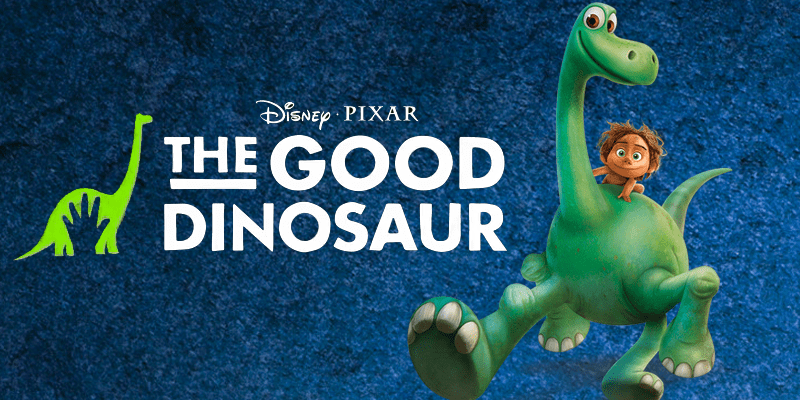
2015. The year Pixar granted us with two movies. After years and years of development hell The Good Dinosaur emerged in cinemas almost 4 months after Inside Out. The close to cinematic perfection that is Inside Out. With those two pressures alone the bar was set high – whilst The Good Dinosaur doesn’t get a place on the podium for best movies of 2015 it certainly deserves a rosette for good effort.  The main idea is so Pixar in its originality, the central characters so endearing that it’s truly unfortunate how ill-served it is by the underdeveloped storyline. Yet, even with such a shallow storyline, the pathos is still being created. Which is why I was the ‘lady’ in the question above that was uttered by a small child sat near me in the cinema on Sunday. The question is, will children really understand how truly depressing much of the film is?

65 million years ago a meteor did not hit Earth. The dinosaurs were not made extinct. Two Apatosaurus farmers are watching in awe as their three eggs hatch. Their children are about to be born. There’s Libby, Buck and finally Arlo. As the three children grow up the differences between them quickly become apparent to their parents, specifically how different Arlo is two his older siblings. Libby and Buck swiftly adjust to life on the farm and perfect their chores, so much so that they are rewarded with a muddy foot-print on the family tree. Arlo does not. Arlo is shy and timid, terrified by most things including the  chickens he has to feed everyday. Arlo’s father gives him some extra attention and finds him a purpose, to get rid off the pest that has been eating their food supply. They set a trap and Arlo waits in excited nervousness for the pest to be caught. When Arlo next checks the trap he find a feral cave-child. When Arlo finds himself unable to kill the pest his father rebukes him, and forces him to chase the pest through a ravine. On the way tragedy strikes and Arlo soon awakens to find himself far away from home and desperate to get back. 

The majority of the film is of Arlo’s journey home. After slowly befriending the pest, even naming him Spot, the pair work together to get Arlo home. Their friendship is portrayed in such a beautiful way, so heart-warming and joyus. Both Arlo and Spot are really lovely characters who you find yourself truly rooting for and willing for their survival. This is the main success of the film and the main reason to stay engaged with it through its rather facile storyline. Arlo and Spot drift from one misadventure to next, meeting some ‘interesting’ characters and frequently running into danger. It’s at this point in the film when it becomes…strange. There’s a sequence which proceeds Arlo and Spot’s ingesting hallucinogenic berries that rivals that sequence in Dumbo. Other strange, occasionally wonderful, set pieces occur. Their joining up with a family of T-rex’s is wonderful. Thunderclap and the pterodactyls are not.

Overall, however, there is enough here to make it worthy of watching. It has the best of intentions, some gorgeous landscapes and two truly lovely leads. Their friendship is one of the studio’s best.

It’s not Pixar’s worst (Cars) or its best (Inside Out or Toy Story) but comfortably in-between.

Sanjays Super Team Pixar Post

Sanjay’s Super Team

The 7 minute short which precedes The Good Dinosaur is absolutely delightful and hopefully ground-breaking in terms of representation. Without dialogue, as most of the Pixar shorts are, we watch a young boy called Sanjay be torn between wanting to watch his cartoon (representing the modern world) and his father’s want for his son to pray with him (representing tradition). The film starts with a card stating ‘This is a (mostly) true story’ and it really comes across throughout. For Sanjay realises that the superhero’s adventures that he watches on tv share a lot with the stories of the Hindu gods. His mini-journey of discovery, attempting to align the two parts of his life, is fantastically done.  The fact Pixar have made a film which diverts from their usual representation is crucial. Long may it continue!