Money Monster

A solid and enjoyable suspense-thriller

There is a tiny, nasty part of me that wants to use the Valley Girl-esque phrase of ‘Hello, Money Monster? 2002 called and it wants its movie back!” as there is something rather dated about this film. However, after seeing Neon Demon at a preview screening last night (click here for my review) there was actually something rather comforting about seeing a good old-fashioned topical thriller that clocks in at the good ol’ standard 90 minutes. And it’s actually pretty good.

Lee Gates (George Clooney) is the host of cable network show ‘Money Monster’ , providing gives the nation stock market tips and tricks. To him the programme is the chance to talk about his favourite thing, money, and have fun – this includes props, sound effects, visual aids and dancers. He seems blissfully unaware of just how important his guidance is to some people, that he is dealing with the livelihoods of millions of people – at least he was unaware until Kyle Budwell (Jack O’Connell) entered the studio during a live broadcast, brandishing a gun and forcing Lee to wear a vest laden with explosives. It’s up to the show’s executive producer Patty Fenn (Julia Roberts) to help Lee get out alive, and that means locating business CEO Walt Camby (Dominic West) . His company lost $880 million due to a ‘Glitch’, $60,000 of which was Kyle’s. But is there more truth to this ‘Glitch’ than Walt is letting on? 

Money Monster is a bit of a superlative-free zone. It’s not the world’s greatest film relating to the economy, nor is it the worst. Director Jodie Foster does a great job in articulating what is universal anger borne out of confusion over the nature of banking and financial crashes. Whilst the film is not developed enough to serve as a deep socio-economic or political statement is does allow for reflection on how little we know about what men in suits are doing with our money. Unlike the equally enjoyable The Big Short  (click here for my review) it doesn’t focus on an entire recession, but on how the crash of just one company can have devastating consequences.

O’Connell is superb channeling power and rage into his performance, one which has thematic similarities to Daniel Kaluuya in an episode of Black Mirror entitled ‘Fifteen Million Merits‘.  Clooney offers a solid performance as an arrogant arsehole with a heart of gold (pretty much his standard M.O). Roberts is fine as a desperate producer keeping her head when all around her are losing there’s. West is the required level of swarmy to create a villainous figure. Caitriona Balfe (playing Diane Lester) is an actress I had not come across before but was a pleasant surprise with a crucial yet understated performance.

Money Monster provides just what the trailer offers. No need to read the small print here: it’s solid entertainment that will engage for the entirety of its running time and may even make you think.

stars


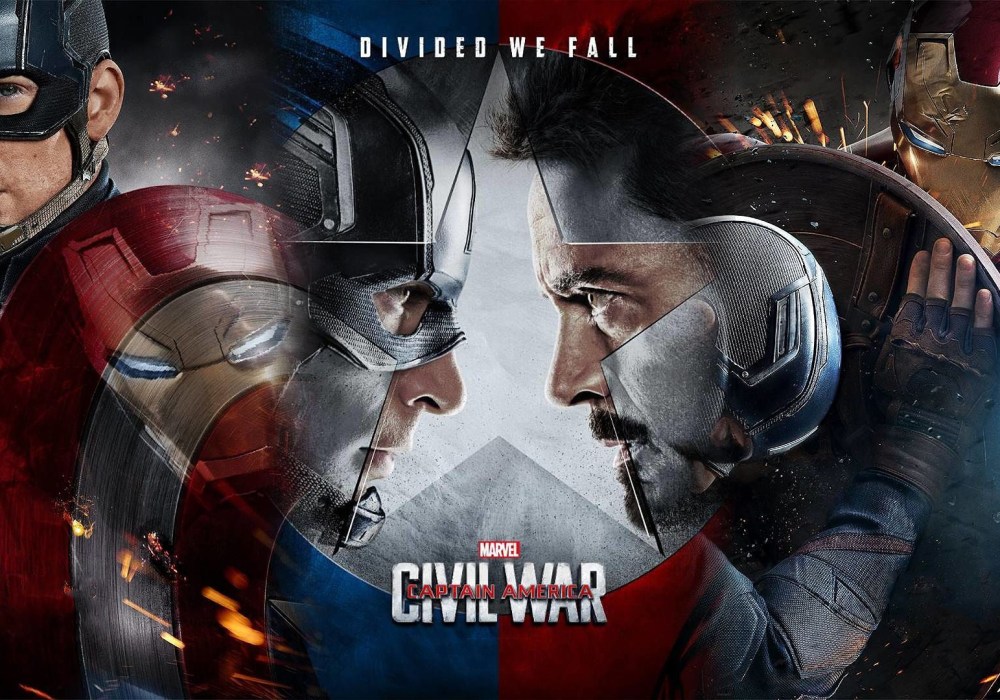
Captain America: Civil War

Is this Marvel’s greatest hour?

To start, let’s kick off with a bit of a retrospective. In 2008 Iron Man surprised the world – a superhero film packed with action, warmth and wit was a relatively new concept. The fact this one had a brilliant storyline along with making a hero most people outside of comic book fandom did not know/care about into someone they wanted to see even more of – that was the truly incredible thing. Skipping ahead several movies we then arrive at Avengers in 2012 which managed to bring the Earth’s mightest heroes together in a way that gave the entire ensemble space to shine. Captain America: Winter Soldier shook things up in 2014, showing that comic book movies could be more than just punch ups. They could come a espionage thriller editions too. Last year’s Age Of Ultron was ultimately a disappointment (though not in terms of box office) as it was too po-face and side piece-y. Now, one week ahead of the USA, we have Civil War. Civil War fixes the problems of Age Of Ultron, takes the smarts of Winter Soldier, the high-stakes suspense of Avengers and the character driven focus of Iron Man. In many ways it is one of the best Marvel movies yet, but is it really the five star perfection the majority of reviews are touting?

One year after the events in Sokovia – Steve Rodgers/Captain America (Chris Evans), Natasha Romanoff/Black Widow (Scarlett Johansson), Wanda Maximoff/Scarlet Witch (Elizabeth Olsen) and Sam WIlson/Falcon (Anthony Mackie) are in Nigeria trying to prevent the theft of a biological weapon. In the process Wanda  loses control of her powers and a building is destroyed, killing several people. It’s the final straw and the governments of nation’s from around the world demand that the Avengers be held accountable for their actions. The United Nations puts forward the Sokovia Act which would put a governing body in charge of monitoring and policing the world’s growing inhuman population. Tony Stark/Iron Man (Robert Downey Jr.) is in favour of signing that act as he has become all too aware of the consequences of their past actions. Steve, having become distrustful of government after the fall of S.H.I.E.LD, firmly disagrees. When Bucky Barnes/Winter Soldier (Sebastian Stan), Steve’s childhood friend who was tortured by H.Y.D.R.A and forced to become an assassin, becomes involved what was once a a fracture becomes a break – forcing the Avengers to take sides. United they stood tall but when divided who will be left standing?

This film is pretty superb. It balances humour with action, characterisation with big set pieces, superpowers with humanity. The end product is pure cinematic escapism, with some big questions being posed along with some laugh-out-loud gags. For instance that age old mantra from Spiderman’s Uncle Ben ‘With great power comes great responsibility’ – if you are the one in possession of great power and you do not use it (however unintentionally) responsibly, who should you be accountable to? If you are capable of destroying cities, constantly having to make life or death decisions, should you have permission? All of Marvel’s past films have led to this point, where tough unanswerable questions slot in with huge/gigantic/speculator action sequences.

However, going somewhat against the tide here, I don’t think it’s perfect. Though its ambition is admirable and mostly successful it is a watching experience akin to going to your favourite restaurant, having your favourite meals but for some reason there is a delay between courses. There are some wonderful/brilliant/extraordinary moments, but then there is a bit of waiting around before the next wonderful/brilliant/extraordinary moment. In many ways this just goes to show just how could the wonderful/brilliant/extraordinary moments are, that they are of such a high caliber that the momentum cannot be maintained. It could also be a by-product of the film’s running time, which clocks in at 147 minutes. Going back to my eating-out analogy perhaps the portion size is overly large, the chef’s eyes were bigger than my belly, and that skimming a bit off the plate may have made for a more satisfying experience.

Saying that does not ignore or take the shine away from the incredible fest that this film offers. It may just be Marvel’s most mature film yet, displaying its spectacle and smarts with great confidence. The central debate is hugely topical – so much so that Batman V Superman featured simillar just a few weeks back. But this film is the antithesis of the fatally flawed BVS:DOJ (which confused dark with murky). Civil War has an edge to it – the Airport fight-out sequence between the two newly-split allegiances easily earns a place in top five scenes in a Marvel movies. Then there’s the new depths added to RDJ’s Tony Stark, a man who seems to be enjoying the continuing evolution of his character. His authority plays a role in his relationships with his fellow Avengers, in his fraternal alliance with Steve Rodgers and most excitingly hints at what looks to be a legendary rapport with the latest incarnation of Spiderman (Tom Holland). Holland is a breath of fresh air to the franchise – he’s cheeky and full of energy, a blend of nerd and cool which neither of the previous film versions seemed to capture. The brewing mentor/mentee relationship between he and Tony Stark is one to truly get excited about. 

Without question this is the best Avengers movie yet – even if the name itself doesn’t lend itself to that. By having the pre-colon say Captain America it almost implies it is a stand-alone movie. It’s not. Although it is Cap’s conflicted conscience which drives the majority of the plot the film is made by the ensemble. Is it the best Marvel movie yet? Instinctively, after great internal battle, I have to say no. In terms of viewing experience I rank Guardians of the Galaxy  far higher and in terms of cerebrality Winter Soldier wins. However, this does not take away from what a spectacular is for the most part. It never feels overstuffed, joyfully introduces new heroes and pays great tribute to our existing heroes.

4.5


Eye in the Sky

A powerful and reflective examination of the cost of warfare. 

Very few films are this good. It’s well-acted by a truly terrific cast, impeccably shot with a thrillingly taut script. It also poses such incredibly cerebral and difficult questions without copping out and providing easy answers. Then again, war itself doesn’t provide any easy answers.

Colonel Katherine Powell (Helen Mirren) arrives at a military base in Sussex to oversee a high-level mission, to capture Al-Shabaab extremists who are meeting at a safe-house in Nairobi. Jama Farah (Barkhad Abdi) is one of numerous undercover Kenyan field agents on the scene using covert surveillance. In Nevada USAF pilot Steve Watts (Aaron Paul) takes his seat alongside rookie Carrie Gershon (Phoebe Fox) to provide aerial surveillance (the Eye in the Sky). Lt. General Frank Benson (Alan Rickman) arrives at his work, an office in London, taking the seat at the head of a table with members of the government to oversee the operation. What starts of as a seemingly routine capture mission soon becomes deeply complicated when it’s discovered the extremists are preparing to send two suicide bombers into the busy city streets. The only option appears to be to drop a hellfire missile on the safe house, but a little girl is out on the street nearby who would be fatally injured in the process. Those involved are deeply conflicted about what to do, and time is quickly running out.

I do not say this words lightly, but I firmly believe that everyone should see this film. Far beyond the fact that it is superbly acted and written, things I will discuss shortly, few films about war are this suspenseful and affecting.. The very term ‘collateral damage’ is a term complicated enough when you reflect on the fact it is a label used for human beings  caught in the crossfire but having the film truly immersing the audience debate generates a new level of soul searching. This is a genuine nail-biting thriller, with moments of true edge-of-your-seat-ness and wringing your hands in despair.

The cast for this film is awe-worthy and all of their performances justify completely justify that awe. This is one of two posthumous roles for Alan Rickman and serves as a reminder of what a genuine talent we lost this year. His iconic tone and manner are both fully in display here, truly serving his character and the film itself very well indeed. Helen Mirren is wonderful and fully believable as the stoic Colonel who watches her mission escalate from out of her control yet never losing her calm or nerve in the process. Aaron Paul is extraordinary as a man with two years experience in the job who is finally being told to pull the trigger, torn between duty and morality. Barkhad Abdi is one of the characters we know least about yet the strength and depth of his performance allows the audience to truly understand his role in events.

The script, cinematography, sound and performances of Eye in the Sky align to make this easily one of the best movies of the year so far. A riveting, fully entertaining yet equally chilling study of the morality of warfare. The questions it raises are not and cannot be truly answered yet will continue to haunt long after the credits roll.

This needs to be seen by all.

five star

Victoria

A true feat of film-making. Truly extraordinary.

To put it simply, a ‘take’ refers to the period between a director saying ‘action’ and ‘cut’. It’s up to them or the cinematographer how long this period is. Typically the longer the take the more difficult the film-making process is as it requires actors to be in the right place, saying the right lines, nothing else interrupting the shot etc. Alfred Hitchcock experimented with this in 1948 making Rope which clocked in at 80 minutes and comprised of only 10 takes, the majority of which were shot in such a way to make the cuts seem seamless. It was an ambitious project which paid of in most regards, the murder and the main characters fear of being caught out in only heightened by the prolonged takes. The character cannot escape and neither can the audience. 68 years later we have Victoria which was filmed two years ago and rejected by many of Europe’s film festivals as they believed the filmmakers were lying on the submission sheet. What lie did they think the filmmakers were proclaiming? Well the film-makers claimed that Victoria, which is 2 hours and 18 minutes long, was shoot using only one take. The most unbelievable thing about this? It’s the truth.

Victoria (Laia Costa) moved from her hometown of Madrid to Berlin three months ago. She works in a coffee shop for less than minimum wage and doesn’t really know anyone in her new city. In the hours before her early morning shift she decides to go clubbing and dances alone quite happily. On her way out of the club she bumps into a group of four men – informal group leader Sonne (Frederick Lau) who Victoria feels an instant spark with, Boxer (Franz Rogowski), Blinker (Burak Yigit) and Fuß (Max Mauff) – who promise to show her ‘real Berlin’. Victoria agrees and what first follows is a fun night for Victoria, seeing parts of Berlin she had never seen before and connecting quickly with Sonne. When Boxer receives a phone call and claims that the group need Victoria’s help.  It is her connection with Sonne that prompts her to make the first in a series of bad decisions and things take a dark turn before spiralling out of control.

I repeat. The entire film is only one take long. It cannot be overemphasised how incredible this is, what a triumph of filmmaking it is and what an astounding experience of film-watching it creates as a result. It’s breath-taking, wondrous, exhilarating and utterly compelling. As it is shot though one-take it is shot in real-time. This is important to note as it adds to the authenticity, we watched events play out and escalate. We cannot question how we got from the first frame to the last as we witnessed very moment and decision which lead the characters there. And these moments don’t just take place in one room – the characters travel all over the city, up ladders, jammed into cars and lifts, dancing across the street and running across it too – and the camera is always there watching and following. Incredibly this also manages to feel gimmick-free. Instead we feel like we’ve tagged along for a night out, been immersed in the spontaneity and intensity of this world, then kicked out of the club  and ditched at the end of the film. There is a reason that the cinematographer Sturla Brandth Grøvlen receives first credit ahead of director and writer Sebastian Schipper as Victoria is an example of true technical mastery. The camerawork is dazzling ambitious, pulsating and gripping.

The performances are mostly improvised, which only adds to the feeling of authenticity and believability. This is next level realism as we get to experience this world as it happens. It’s a huge credit to the relatively inexperienced cast that they only had to shoot the film three times, this being version two. It’s only after seeing the film, when you see what they had to achieve and endure, that you can truly appreciate the level of skill being utilised here.

It’s divine. A sensational watch. It needs to be seen.


Disorder

An intense and intimate voyeuristic thriller

How many films are there that feature a character with PTSD (post-traumatic-stress-disorder)? Then, let’s narrow it down, how many of the those films are about PTSD sufferers who fought in Afghanistan?  Finally, how many of those films use the PTSD to shape the storytelling process, making the story as unreliable as it’s narrator? I suspect that Disorder may be alone in this regard which makes for a mostly refreshing if at times nerve-splintering film-watching experience.

Vincent (Matthias Schoenaerts ) is a French Special Forces soldier who is currently back from a tour of Afghanistan. His latest health check-up indicates that it will be his last as due to his various  health problems his doctor will not be recommending him for service, something that he appears to be in denial about. He and a group of his friends are hired by Jessie (Diane Kruger), the wife of a rich Lebanese  businessman, to provide security at a party they are holding at her villa. Vincent starts to develop a strange fascination with Jessie, whilst at the same time starting to suspect a dangerous threat is going to target her and her young son, and he begins to be consumed by paranoia. Is there really a threat, or is it a result of his disorder?

A month ago, in my review for A Bigger Splash I talked about Matthias Schoenaerts and said “He is currently one of the most interesting and underappreciated supporting actors in cinema at the moment, and I greatly look forward to seeing more of his (admittedly rather beautiful) self.” After seeing Disorder, I stand by what I said. Schoenaerts carries this movie, his scowl/brooding combination is utilized to excellent effect. His mannerisms subtly display his inner turmoil, he never needs to clearly state ‘I am suffering from PTSD’ (in fact that is something his character who never admit) but it’s clear from every single scene that this is a man who is suffering. Vincent’s innate paranoia served with a side of voyeurism makes for an unnerving central character who is haunted but hunky. In fact whilst watching his performance I remembered some of the minor backlash that James Norton received for Happy Valley with a (thankfully small  minority) saying that he was ‘too good-looking to be a murderer’. It’s a stupendously flawed logic to have, implying that attractiveness and committing crime share a correlation. Yes Schoenaerts is attractive, but that does not enhance nor detract from his performance here. His performance is wonderful, if that adjective can be used to describe something so unsettling, and the best thing about the film.

A close-tied second place would be the soundtrack and the cinematography. The former is throbbing, jarring and frequently atonal (like Vincent’s mental state) whilst the latter is ambiguous, swamped by shadows and at times unhinged (again like Vincent’s mental state). Aside from these aspects, the film itself is rather slow with a rather porous plot that fizzles out. Worth seeing for Schoenaerts latest in an uninterrupted run of solid and charismatic performances, but rather forgettable.

An outstanding central performance in a good/mediocre film. Don’t put it too high on your ‘must-see list’ but worth a try.


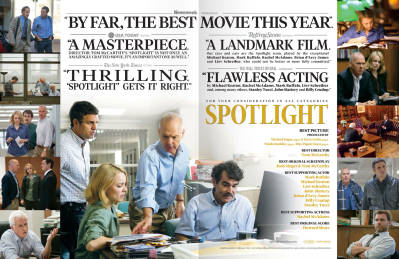
Spotlight

A subtle masterpiece of an exposé cinema

This film is proof, were it truly needed, that to invoke emotion from a viewer you do not needed to forcibly bulldoze them emotionally. You do not need people screaming at each other about how they really care about something and think it’s important; you do not need violence to prove someone’s inner rage; you don’t need monologues that reflect on social injustice. This film will grab you and drain you entirely. You will experience burning anger for those who used their positions for powers for unimaginable crimes; hopelessness at how dire at how things have and continue to still be; and cheeks so sodden with tears even when you hadn’t realised you were crying. All of these responses were generated without needless melodrama. Instead the absence of overwrought sentimentality  puts the events of the movie and the subsequent emotional response in bold, underlined and italics. A truly crucial and powerful movie. The fact that these are true events is the ultimate sucker punch.

In 2001 Marty Baron (Liev Schreiber) joined the Boston Globe as its new editor. The fact he is Jewish was viewed as something of a notable scandal, considering the influence of the Catholic church. In his early introductory meetings with his new staff he meets Walter ‘Roddy’ Robinson (Michael Keaton) who is head of  the Spotlight team, a small group of journalists who undertake investigative projects that take months to research and publish.  The rest of the team is made up of Mike Rezendes (Mark Ruffalo), Matt Carroll (Brian d’Arcy James) and Sacha Pfeiffer (Rachel McAdams).  In his new editorial role Baron urges the Spotlight team to follow a lead, a lead which suggests that the Archbishop of Boston knew of a priest who was sexually abusing children and doing nothing about it. A small-time lawyer called Micheal Garabedian (Stanley Tucciis seemingly the only person doing something about it. However Garabedian is on his own against the entire Catholic church, so after his initial reluctance and a lot of persuading he agrees to work along with Spotlight. A terrifying prospect soon becomes clear, this is not just about one priest but is instead about a huge cover-up of far more and dating back longer than can be imagined. But these secrets have been hidden for so long,  and with so many desperate to keep them,  it will be far from an easy journey.

Within all of that, and the remaining 3/4 of the movie, there is only one scene of loud, embittered shouting. Only one scene where one character, haunted by the true horror of what has gone on, lets rip at the hoops he will have to continue to jump and dive through. That one scene is made all the more climatic and devastating as a consequence, packing more potency than the entirety of Joy. The storytelling here is superb, the way each revelation unfolds is shown not told. The information is not forcible spoon-fed, instead delivered with little fanfare or fabrication, and is all the more absorbing for it. The suspense created is unlike much of recent cinema, with an awful sense of inevitability and foreboding that doesn’t take away any viscerality from watching the character’s gradual comprehension of their story’s terrible breadth.

However, the emotional impact of the script would be nowhere near as traumatising were it not for the performances of the cast. ‘Ensemble cast’ is a phrase too easily banded-about, but the cast of Spotlight is a true ensemble. Every actor gives the role their all. ‘All’ does not mean flapping your arms about and saying how angry you are. ‘All’ is, and perhaps should be, a simple look at another person that reveals unobjectionable horror. A gaze into the distance with eyes that expose a haunting that will never be forgotten. The ‘heroes’ of this story are not embellished, nor martyred or hero-worshipped. They are real human beings, forced to comprehend and expose systematic abuse from an institution that had such an intrinsic role in all of their lives.

Though it may have only been released in the first month of the year, this will be one of the greatest films of 2016. A fact-based thriller with a beating heart.

Spectre

Is it Spectre-ular..?

This will probably read as a rather unique review of the latest James Bond release, as I have to make the admission that I have never actually seen a James Bond movie at the cinema. In fact, I have never seen the entirety of a James Bond movie. From bits I’d seen and tropes that have entered cultural infamy (cars, women, booze, guns and repeat) I had somewhat written them off. But – if you have forgiven this near-heresy and are still reading this – you may be pleased to hear that I may be willing to admit I was wrong. Well, a tiny bit. All of the factors that put me off are present by are portrayed in a way that is almost self-referential, lovingly poking fun at the Bond mythology without crossing into the boundary of satire. The tone is almost playful, with nods and winks instead of revelling in history. Yet, whilst reliant on what I can ascertain to be the well-established 007 formula, Spectre is a compelling and exhilarating movie. The fact it manages to maintain viewer interest when clocking in at 2.5 hours is no mean feat…

James Bond (Daniel Craig) is in Mexico during Día de Muertos (Day of the Dead). Bond’s order is to kill an assassin who was previously unknown to him. Upon returning to London, as a result of his actions in Mexico, Bond is placed on leave by the current M (Ralph Fiennes). But, believing there to be more to his mission than he initially realised, he must rely on the help of Moneypenny (Naomie Harris) and Q (Ben Whishaw) uncover threats both personal and that could destroy the 00 programme forever.

Bond and his helpers are incredibly well-played. Craig is a balance of head-strong and charming, playing his Bond as rather self-aware. His rapport with Q, Moneypenny, M and the Bond girls is whip-crack smart and believable. The main threat to his current way of existence is C (Andrew Scott), who believes the 00 programme to be out-dated – that the only way countries can monitor national threats is through constant surveillance and sharing of information between countries. Scott uses his experience as Moriarty in the BBC series Sherlock to great effect – creating a seemingly sinister and smarmy character. Mr. Hinx (Dave Bautista) is a fantastically malicious force, though with little dialogue he manages to have truly terrifying screen presence. Franz Oberhauser (Christoph Waltz) is a rather great Bond villain – essentially presented with less obvious malice than Bautista’s Hinx, he is swiftly revealed to be a true threat.

The opening sequence of the film, set in Mexico during Día de Muertos, is a stand-out sequence. Well-paced and action-packed it hooks the viewer in. The amount of extras is extraordinary, literally thousands all dressed in astonishingly beautiful costumes. It is then followed by a truly weird titled sequence, with a use of octopuses that seemed akin to a certain genre of Hentai. Perhaps an attempt to ensure the Japanese box office..? In this – admittedly rather bizarre context – the song works. Sam Smith’s Writings on the Wall sets up the films bittersweet tinge. The film that then proceeds has enough twists to entertain, big set pieces set all across the world and is solidly good. Perhaps on the overlong side, Spectre is a solid packed with enough punches to ensure that you’re paying attention, and filled with some excellent cast performances.

It’s good. As good as you’d exSpectre…

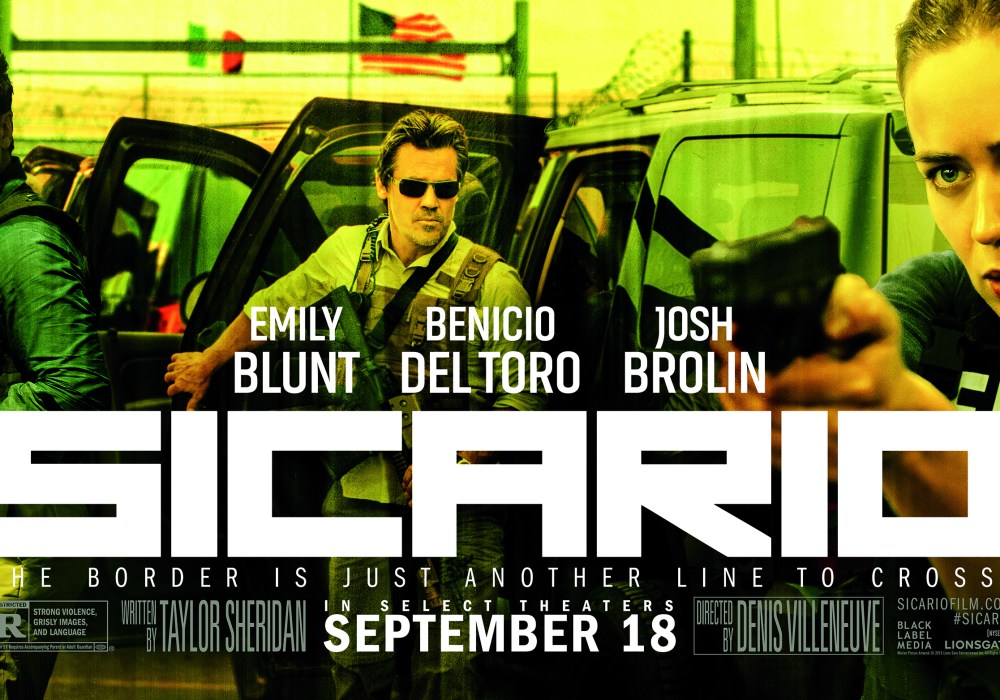
Sicario

The Closest We’ll get to Cinematic Masterpiece this year?

This film is unlike any other. It’s intelligent, provocative and deeply haunting. Shot and told with expert precision whilst feeding on audience paranoia and helplessness – this is not a film for the faint of heart. There are few films that have been, or that will be, released this year that will end with you leaving the cinema drained and exhausted (in a good way at least…)

Idealistic FBI agent Kate Macer (Emily Blunt) leads a kidnapping raid in Chandler, Arizona that results in a discovery far bigger and much more gruesome than was expected. Her findings cause Kate’s boss (Victor Garber) to recommend her to an elected government task force which has a sole focus of the ever-escalating war against drugs on either side of the US – Mexico border. After a brief interview Matt Graver (Josh Brolin) offers her the position, using her emotional ties to her previous case as reasoning to join his team. His team promises results far greater than those she can achieve in her current position, plus a chance to find and punish those involved in the tragedy she unintentionally unearthed. She accepts immediately.  Kate’s FBI partner Reggie (Daniel Kaluuya) is instantly distrustful of Matt and fearful for his partner’s well-being. Kate squashes his concerns, but when she arrives for her first day of work she realises how little she know and how little Matt will actually want to tell her. The unexplained arrival of mysterious Alejandro (Benicio Del Toro) furthers these worries, as does their preceding to fly with her to a different destination than the one declared to her and concealing their purpose for being there. Was Reggie right to have been so worried for Kate? Will Kate get to make the difference she wanted to? Will she even make it out alive? 

What truly makes this film enter the threshold into ‘great’ is the components that make it so taut, tense and thrilling. The acting is masterful – Blunt is understatedly brilliant as the at-times frustrating but always sympathetic Kate, Brolin’s Matt oozes charm with dark undertones and Del Toro lurks on the outskirts so intriguingly that his gradually revealed character arc is utterly enthralling. The music, and the superbly well-chosen moments when it is absent, frame each sequences with an eerie sense of both danger and inevitability. Not a shot or piece of dialogue is wasted – everything either contributes to the plot or the power of it. Aerial shots revel not in the landscape, but instead reveal the depth of the poverty and crime and the sheer vastness of it.

Where the film builds and retains most of its power is in its message. Whilst easy from trailers and posters to misconstrue as just another social-issue drama or drug-related thriller, Sicario has much more to offer. Few films have tackled the ‘war on drugs’ with such informed perception of the grey area surrounding it. The primary question is of lawlessness – who are the good guys in this war and who can be trusted? Most importantly – when the do the ends stop justifying the means? This is reflected upon in such a spectacularly suspenseful manner; it is rare to find a film that can leave an audience so fantastically haunted.

If you’re looking to spend two-hours in a realm of dread, brutality and nerve-destroying darkness then commit to numb ruminating…you’d best go buy your ticket!

The Gift (2015)

Dare you look inside?

This film is good. Really good. It’s wicked, smart and tense. So tense, you’ll be on the edge of your sheet for most of the film’s 1hr 50min running time. Few contemporary Hollywood films are able to hook in an audience so quickly, so subtly, and keep them gripped to the end credits. Belonging to the ‘thriller’ genre this film (written directed and starring Joel Edgerton) it manages to avoid all the perils of a bad thriller movie. Typically films of this genre are set up with a chunk of exposition, a boring and obvious way of introducing character and story. With ‘The Gift’ Egerton totally avoids this hurdle, instead he sprinkles exposition into dialogue. Twists and turns are set up in a way that it is only once they happen that you realise they were even set up in the first place. Not once does the film dip in tension or give any hints on what will happen next. If you’ve seen the trailer and thought you’d seen it all, you really haven’t!

Robin (Rebecca Hall) and Simon (Jason Batman) move from Chicago to California, to an area not far from Simon’s hometown. When shopping for new home supplies the pair are approached by ‘Gordo’ (Joel Edgerton) who identifies himself as being an old school friend of Simon’s. Gordo quickly establishes himself in their lives, dropping off gifts and making surprise visits at their home. Although Robin seems happy enough to maintain contact with the ‘socially awkward’ Gordo, Simon grows uneasy with Gordo’s behaviour and decides to ‘break-up’ with him and ends their friendship. Gordo does not let this go easily and continues to have a hold over the pair. Secrets from the past swiftly and menacingly threaten to ruin their seemingly idealistic life.

This film is both modern yet welcomingly old-fashioned. Its plot and pacing align it with Hitchcockian storytelling. The fact that much of the film focuses on Robin’s perspective is a throwback to the Gothics of the 1940s. Her doubts over Gordo, and as a result doubts about her husband, are never overblown or ‘too’ melodramatic but rooted in a degree of realism and with complete sympathy. What could be a one dimensional role is instead fully rounded with Hall’s nuances, her subtle discomfort apparent yet carefully and gradually revealed. Bateman is equally as good, barely recognizable in a role that goes far beyond type. All too often taking the role of fraught and downtrodden father figure, he places the role of Simon with ease as he carefully navigates the fine lien between charming and douchebaggery. Whilst we are swift to become uncertain of Gordo’s intent, we soon realise that we know just as little about Simon. His interactions with both Robin and Gordo remain intriguing and frequently unsettling from start to finish.

 But it is Edgerton who remains the star here, portraying the oddest and most secretive of the three leads. Often films like this will signpost, practically with flashing neon lights, what will happen next and who we can trust. Within his script, cinematography and characterisation Edgerton doesn’t do this. All of these dimensions are far too complex for that, refusing to let the viewer rest on their laurels or take a breather. Nothing is certain in this cinematic universe; no-one can be trusted.

A surprise of a movie, engrossing and unpredictable in equal measure. This is a fantastic directorial debut, a tense psycho-thriller and well worth seeing.