Zoolander No.2

Another example of a sequel that is a poor imitation of the original.

In 2001 (15 years ago!) the world was posed a question, a question for the ages, “Have you ever wondered if there was more to life, other than being really, really, ridiculously good looking?” Derek Zoolander found the answer by the end of the film (spoiler alert!) with family, friends and a charity project running “The Derek Zoolander Center For Kids Who Can’t Read Good And Wanna Learn To Do Other Stuff Good Too.” Within the first three minutes of the sequel all of that resolution is turned on it head, then burned to the ground and thrown away. If the intent was to then set up the sequel as being completely different, and ‘fresh’ compared to the original, then the fatal flaw in that plan is writing a film that’s funniest (and only) laugh-inducing moments are references to the original…

Justin Bieber is dead. After running away from assassins on motorbikes (having displayed some serious parkour moves) he is shot countless times. In his dying moments he manipulates his face into Blue Steel and takes a selfie, then gives into his fatal injuries. He is the latest in a long line of celebrities to be assassinated, taking a Derek Zoolander-themed selfie before dying. The fashion division of Interpol need his help but no-one knows where he is. Seven years ago, after the death of his wife and losing custody of his child, he decided to become a ‘Hermit Crab’ and go into hiding. Only one man can bring him out of his slump…

From the opening sequence alone you can tell how the rest of the ‘humour’ of the film will play out. An opening sequence is so key to a film, so crucial for setting the tone and level of the rest of the film. In this case? Well, it’s such a pandering sequence – ‘Hey! You average Joe, you hate Justin Bieber right? So we’re going to kill him off to make you laugh. We can make your dreams a reality. Love us!’ It’s a problematic choice for multiple reasons.

1) Hating Justin Bieber seems so last year/s. He’s had a bit of a renaissance in the past 18 months so the hate has become, for most, either ambivalence or embarrassed adoration. Therefore the slightly dated nature of the script becomes apparent. He’s also an easy target, one of many that are used to minimal effect, within a script seemingly tailored from social media circa 2013/4.

2) It’s an overlong sequence. Stretching out the humour becomes a motif of the film. Pacing of jokes never really seemed an issue with the first film (queue my rewatching it ASAP) but it is a real issue here. The ratio between gag build-up and punchline is definitely off.

3) Having Bieber appearing to do parkour, then being shot at least 30 times before taking a selfie before dying demonstrates how overblown and tacky the film will be. Zoolander No.2 presumably has a bigger budget, gladly and gawdly shows this fact off.

4) He is one of the countless celebrities to be shoehorned into an overwrought and clunky script. Though his role in the events of the story is clear (if rather ineffective) many others are not. A few stand out in terms of strange but also strangely funny (I’m looking at you here Benedict Cumberbatch and Kiefer Sutherland) but others are borderline pitiful (Anna Wintour and your crew, you didn’t, to quote Tim Guun, ‘make it work!’) 

Zoolander No.2 is a difficult watching experience for fans of the original. The plot is thin, the jokes humiliate rather than delight and the frivolity leaves the film rather throwaway. Like its eponymous character, Zoolander No.2 is empty and full of air. It may be filled of those who are ‘really really ridiculously good-looking’ but it’s forgotten that there’s more to life than that.

I hope they had more fun making the film that I had watching it. Disappointing.
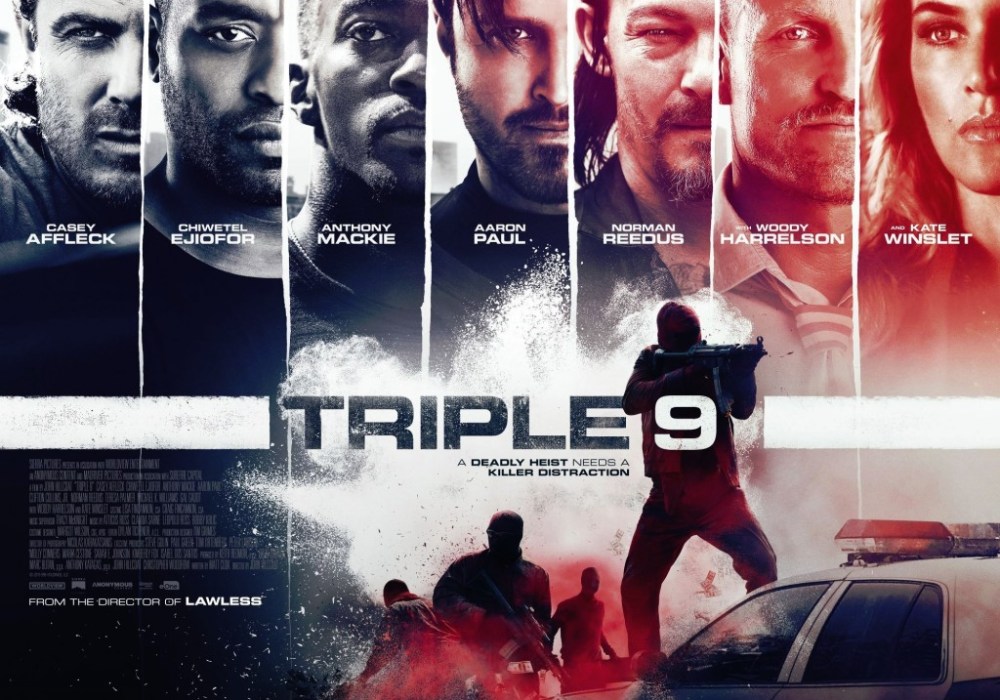
Triple 9

A.K.A what happens when bad movies happen to good actors

Sometimes you will go the cinema and see a film for one actor you particularly like. Occasionally, you are lucky enough to see a film that for two or three of actors who like. It’s rare to find a film that has an entire lead cast that you truly admire. Triple 9 has a cast made up of some truly talented actors (listed with my favourite of their works):

The trailer for the film looked engaging enough, full of twists and deceit. Then, last night at Cineworld’s Unlimited Secret Screening, I got to see Triple 9. The film is a flawed, convoluted and bitterly depressing 116-minute journey. In all honesty, I would have walked out at about 30 minutes in, if it were not for wanting to find out what happened to the characters played by the above actors along with the fact that I wanted to write a fully-informed review about it. My main hope from writing this review is to discover why I instinctively and vehemently did not like this movie.

Michael (Ejiofor) is the head of a criminal crew that is formed of cops and criminals. The film opens with Michael and his crew (Reedus, Mackie, Paul and Clifton Collins Jr.) undertaking a bank robbery. The men are vicious, with an arsenal of tools to threaten. These include guns, explosives and even a portfolio of information about the bank manager’s personal life to adequately blackmail. The crew get what they came for and leave, but their escape is made messy by greed, which leads to the accidental opening of a dye pack which marks all of them. This mistake aside, all appears well and they hand over the item they stole for gangster Irina Vlasov (Winslet). She withholds their payment however, as she wants them to commit an even more high-profile robbery. A robbery that the men think would be impossible. That’s when one of them realises that it would be possible if the gang splits into two. One half would commit the robbery itself, whilst the other half would provide the police with a distraction. The only crime that would distract an entire police force would be  a Triple 9 – the shooting of a fellow officer. The new partner of Marcus (Mackie) would be the ideal target. However Chris (Affleck) is the Sergeant Detective’s (Harleston) nephew, and both men are highly suspicious as to the identities of the crew.  

First and foremost, it is not the cast who are at fault with this movie.Each of the actors brings a great deal to role, not one of them phones in their performance. Each actor uses what little they have been given to great effect. It’s practically everything else that is a problem. The opening sequence is comprised of tight-framing, minimal lighting and dialogue that poses more questions than answers. By starting in media res (mid action) the film trying to engage you what is going on, but does not provide any reason to actually care about the characters who are participating in these events. This is true of the entire film, we are given little-to-no reason to care about any of the characters. The crew are not charismatic or conflicted enough to be anti-heroes, and the ‘heroes’ are too flawed to side with.

The story that then plays out appears cleverer than it actually is, often leaving the audience unsure what is going on but not motivated enough to figure it out. There is little connection between each scene, jumping around between different characters at different times, without any clarity of how much time has passed. It drifts between place, people and time without giving the viewer anything to anchor on. If a point is trying to be created through this technique, some attempt at social-cultural-political commentary, it does not succeed.

Then there’s the music which accompanies each sequence. The entire soundtrack is a lesson on how not-to-be-subtle, and how-to-bulldoze-your-audience. A soundtrack which is effective at building tension should be a mix of soft and loud to truly emphasize the points of tension. It should not be turned up to eleven for Each. And. Every. Single. Dramatic. Moment.

The cinematography is another example of how the film tried to be clever, but instead isolated the audience.  There’s shaky cam, fast-paced editing with a camera that moves too fast to allow the viewer to actually focus on anything. On the Sky Superscreen at the o2 Arena the effect was rather nauseating instead of tension-building.

Finally, for a cast of this skill and range, a director who could reign them in would be key- a key requirement that was clearly forgotten or ignored. At times many of the cast mumble their lines, making dialogue frequently incomprehensible. Perhaps this was a choice of tone, but frustrated audience is perhaps not really a tone. Many of the actors chew the scenery with over-acting and flailing about, always looking so bitter or impassive at what is going on. Then there’s Casey Affleck, not chewing the scenery but chewing gum in every single scene. His manner of chewing gum in this film rivals the mastication skills of a cow, imposing on his dialogue and stealing every scene he’s in just because it is so aggravating. Someone seems to have told him that his character must be channelled through his chewing gum habit, because Affleck seems to put every once of his acting skill into they way he chews that gum. I’ve never seen chewing gum chewed so aggressively or arrogantly outside of the secondary school I work out. He uses it to show the mood of his character, clearly using that instead of acting to provide any semblance of characterisation.

For a film that wants to be the next The Usual Suspects, L.A Confidential or Training Day Triple 9 is a film that is far too hurried (a remarkable feat at two hours long) and far-fetched to be so. For an account of corrupt cops that is completely true, and is far more powerful and gripping, watch Precinct Seven Five.

Joy

What is ‘Joy’?

The question above does not refer to eternal philosophical ideas, but is a question posed to director David. O. Russell. What is ‘Joy’? Is it a comedy, a tramedy, a somewhat biopic or an ironic look at the American Dream? In theory is shouldn’t be a bad thing that a film defies generic classification, that it is something new, fresh and different. However in this case this question is raised by how irregular in tone and pace the film is. The film is remarkably uneven, drifting from one genre to another. However, an incredible performance from Jennifer Lawrence anchors a film that overall doesn’t quite gel.

Joy (Jennifer Lawrence) is a divorced mother of two young children. Her ex-husband and failed musician Toni (Édgar Ramírez) lives in the basement. Her seemingly-agoraphobic divorcee mother (Virginia Madsen) doesn’t leave her bedroom and whiles away the days watching soap operas. Her lothario father Rudy (Robert De Niro) briefs comes to stay before finding love with rich but uptight Trudy (Isabella Rossellini). Her half-sister Peggy (Elisabeth Röhm) works with their father and constantly passively aggressively attacks Joy on a daily basis. All this is overseen by her loving Grandmother Mimi (Diane Ladd). Joy’s days are spent dealing with all of her family’s dramas, with life not having handed her a very even deck. Having spent the first half of childhood being incredibly creative, designing multiple inventions, her enthusiasm was crushed the day her parents split up.  17 years later Joy is not particularly happy, stuck with being her family’s errand girl. It is during one of these errands that Joy makes a new invention that she is sure will make a fortune. But persuading the world of the value of her idea, let alone even her family, will not be so easy. Yet a chance encounter with Neil Walker (Bradley Cooper) could be one step closer to the success she has always deserved. 

A great cast does not always make a great film, as some may view is true of ‘Joy.’ Though it does have some extraordinarily powerful scenes, some emotional hold-your-breath moments, that’s all they are – moments. For the film itself is rather meandering – moving in unexpected and somewhat underprepared ways. It muddles through the key events in Joy’s life in a rather lacklustre fashion – never quite achieving its potential. This could be for multiple reasons. One could be the source material, as this is not a biopic of real-life inventor Joy Mangano, but a blended narrative of multiple women O. Russell admired. Another could be the fact the film used four different screen editors, a decision that without true collaboration can result in four differently edited films being shoehorned together. Tonally the film aims for a quirkiness that seems remarkably forced, from the rather unrealistic quirks of the characters to the voiceover narration from Grandma Mimi, to the various time hops to some oddly-placed soap opera themed dreams.

Obviously once Joy has come up with her fantastic new idea it will not be easy to make it a reality, but the disequilibrium – Joy does something badass to fix it – temporary equilibrium – another bout of disequilibrium – does become rather repetitive after a while.  However is is that phrase ‘Joy does something badass to fix it’ that feels like the real point of this film. This is Lawrence’s third time at working with O. Russell and most of this ensemble cast and the benefits of that really shine through. The director knows how to help his lead achieve a star turn. And also her legacy in badass GIFS. Her performance is remarkable. Considering that she is potentially too young for this role Lawrence is incredible in how she interacts with the other characters, uses her voice to convey all manner of emotions and portray a world weariness that is beyond her years.

Overall ‘Joy’ in a enjoyable enough romp of a movie.  Though the film itself is rather direction-less Lawrence herself is a ‘Joy’ to watch.

Burnt

A rather overcooked romantic dramedy

Does anyone these days aspire to be Gordon Ramsey? Do they wish to control a kitchen as their lair, spewing and spouting swearwords and insults as they prowl? Ramsey had his peak popularity in the mid-noughties, which is probably when this film was first placed on the boil. It then got forgotten about, rushed to be finished with all of its ingredients past sell their best before date.

Adam Jones (Bradley Cooper) is in New Orleans shucking oysters, noting down the amount as he does so. He hits one million, downs his tools and walks out despots protestations of his employer. Those million oysters were his penance for his past indiscretions, now complete he can have a second chance. He goes to London to reunite his crew, although there is much bad blood between them. Adam was a rock star chef in 90s Paris – renowned for his ability and persona. However Adam was also a drugs, alcohol and sex addict who managed to burn all of his bridges who was forced to flee Paris and go into hiding. He must be forgiven by his old friends and new (Sienna Miller’s Helene) to his dream of three Michelin stars.

The film’s main ingredient (when will the cooking puns end?!?) is Bradley Cooper. Considering the fact the film’s main plot is so outdated it is perhaps the only reason people will go to see the film. However his character is so unappealing and unsympathetic that you’ll feel had. His character’s closest real-life counterpart is Gordon Ramsey, swearing continuously and having frequent blow-ups about food, with every other character either swooning over his apparent but unproven genius or admonishing him for wasting said-genius. There is genuinely no reason to like his character, which is this film’s fatal flaw. As the narrative limbers from one ‘disaster’ to a next tension is supposedly created by our concern on how he will cope/survive. If we don’t like the character enduring the trials then we don’t really care. This isn’t helped by the lack of realism within these trials – he is hounded by drug lords for the money he owes them. These drug lords are immensely polite, turning up occasionally to speak to him away from other people, and only visiting once or twice to hound him for the large amount he owes them. We are meant to care about Cooper’s character – experience concern that he may not achieve his ambition for three Mitchelin stars. Instead we experience disinterest or distain for such an ass-hat of a character.

Sienna Miller however is gutsy, transforming herself into a tattooed, pierced and partly shaven-haired single mother sous chef. Her character is far appealing than Cooper’s. Yet she is forced to endure conversations with Cooper’s character of the nature of food and eating. These conversations are nauseating to watch, not because they are hunger-inducing but for the sheer pretentiousness of their proclamations.  ‘We eat to stop eating.’ – That’s sooo deep! The rest of the friendship group are entertaining if one-note; the ex-prisoner, the novice, the daddy issues, the rival etc. The script is bland, drifting from one drama to another, and filled with stupid lines about how John Adams used to be an addict and how he hurt people when he was an addict. It’s all so ridiculous and bordering-on fluff.

If you’re seeing this for Bradley Cooper then don’t waste your time. If you’re seeing it for the food, just re-watch an episode of Hell’s Kitchen. An incredibly dated waste of a movie.

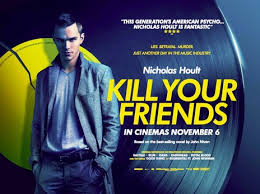
Kill Your Friends

How to succeed in business without any sense of morality

With a title like that, the content of this film really shouldn’t surprise you. We have copious usage of drugs and alcohol, some rather legendary use of swearing (‘Do these shoes look like the shoes of someone who gives a fuck about The Velvet Underground?’) and of course the aforementioned killing of friends. Why? Well it’s set in 1997 and it’s about the music industry. You don’t need to be musicophile to have a rough idea what the music industry was like in the 1990’s. The people at the top possessed little musical talent themselves and gave little care to whether the artists they were choosing to spend their thousands on were ‘good’ artists or in fact whether they were producing ‘art’. Could this unsigned act make me a fortune? Yes, well sign here on the dotted line. So you four girls can’t actually sing or dance, but you’re all rather fit..? Well The Spice Girls are big right now, so we’ll take you. We’ll just get recording artists to sing your music which you’ll mime, and we’ll give you a really crappy basic routine for everyone to copy. You’re hired! This is the sole focus of Kill Your Friends, a study in the middle management wanting to become the top dog focusing less on making good music but more on making lots and lots of money…

It’s 1997 and Britpop is ruling the airwaves. Twenty-seven year old A&R man Steven Stelfox (Nicholas Hoult) doesn’t like Britpop, or any other type of music at all actually. He’s not in the job for the music, he is far from a music puritan. He’s just in it for the money, lots and lots of money. Considering he works in an industry ‘no one knows anything’ there is little stability. Every deal you offer an act is make or break. If an act doesn’t sell, your career is broken. Fuelled by greed, ambition and Class-A drugs he craves the promotion to Head of A&R at his record label and will refuse to let his opposition, his ‘friends’, take the job from him. His calculating approach to manoeuvring the music industry will be taken to a murderous new level.

First things first – substitute music for Wall Street and 90s for 80s and this sounds rather like another film doesn’t it? There have been lots and lots of the reviews for Kill Your Friends that make a comparison between it and this other film. Let’s be straight, this is not the new American Psycho. Instead of a critique of the works of Huey Lewis and The New we have a reflection on the writing prowess of Paul Weller. Whilst is may sound like it, and makes some very noble steps to try and replicate it – Kill Your Friends is the inferior product by quite a long way. Having not read either books, I cannot comment on the book-to-film transition. However I can say from a film point of view American Psycho utilises filmic elements to greater effect, particularly in the representation of the central character which makes the audience question if the murderous acts actually happened or where in his mind. Kill Your Friends does not do this, and presents Steven’s homicidal behaviour with seemingly little consequences. It should also be said just how repellent Steven Stelfox is. He is horrific. Cold and calculating, with malice seeping from every pore, the audience is forced to spend 103 minutes with him. With no redeeming qualities whatsoever, it does become an endurance test. Whilst it should be stated that this is somewhat of a success on Hoult’s part, especially considering how likeable many of his other roles have portrayed him to be, the lack of bite or satire in the script rather ill-serves him.

That is the fatal flaw of this film. It doesn’t question the ethics, lack therefore of,  of these corporate men. It doesn’t poke fun at them, nor glorify it. As I stated in the start, if you even have a passing knowledge of the music industry, you’ll know what sort of scenes crop up in this film. There’s nothing new or particularly fresh. Whilst what is shown is good and well-acted, there are no surprises. The storyline follows Steven negotiating through one drama to the next. Considering how little we care about his character we are not really going to care if he gets caught. In fact considering the nature of his crimes, there is a degree of audience desire that is hoping he does get caught.

This film is joyless, grubby and gruelling. See at your peril.

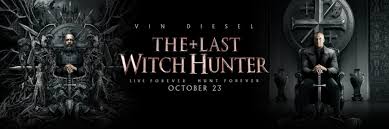
The Last Witch Hunter

Lightweight, idiotic and trashy – but not in a good way…

First with the positives; I got to walk on a red carpet last night! After picking up the tickets to the premiere from a tent just off Leicester Square Gardens, then seeing the hundred-odd people surrounding the red carpet, I then got to walk it! It was a pretty incredible experience. Although it was brief, and unsurprisingly no-one knew/cared who I was, it was a bit like walking on air. Perhaps more of a case of floating along than walking the red carpet. There was a brief Q&A before the actual screening of the film – with three of the main stars (Vin Diesel, Michael Caine and Rose Leslie) and director (Breck Eisner) which was also exciting – primarily as I can now say I was sat less than 20 feet away from Michael Caine. Now onto the less positive stuff; i.e. the film itself…

800-years-ago Kaulder (Vin Diesel) lost his wife and daughter to murdering witches. Determined for revenge/justice he joins a raid to destroy the Queen of the witches. Many of his peers die, but Kaulder does not. Kaulder is the last man standing in a face-off with the Queen, one which results in both of their apparent deaths. However, the Queen curses Kaulder in her last breaths to remain immortal – never to love and never to find peace. Now living in present day New York, Kaulder works with a religious sect to combat the thread of witchcraft. His liaison, Dolan 36 (Michael Caine), is one of his closest friends and about to retire leaving Dolan 37 (Elijah Wood) as his replacement. But when tragedy strikes, and Kaulder realises the Queen is returning, he must rely on help from the unlikeliest of people – a witch called Chloe (Rose Leslie).

Oh dear. Just, oh dear. This film is as good as its trailers (i.e a shambles). Again, as I have done with previous reviews, I will rely on bullet points to make my rant somewhat comprehensible.

  • The Plot – Derivative and out-dated. During the Q&A the director boasted of the film’s originality; proud of the fact it is not based on a comic book/tv series etc. After watching the film, this appears to be a flawed statement. The narrative is far from ambitious or new. The plot twist is immensely vanilla. All of the dialogue is just exposition, telling the audience what has happened/what will happen next. The scene with Max in the bakery, and the conversation between Kaulder and Dolan 37 exemplifies this, with Kaulder actually saying to 37, ‘Did you understand any of that?’ This is purely for the ‘benefit’ of the audience, who are clearly being presumed to be of minimal intellect. Kaulder then ‘kindly’ explains it to 37/us. The actual mission Kaulder is on is both absurd and poorly-paced, drifting from one set piece to the next. The story itself is messy, and how it is told it unbearably flat.
  • Gender roles – Who doesn’t love a casual bit of misogyny in their cinema? In a year that saw our silver screens graced with Imperator Furiosa (Charlize Theron) in Mad Max: Fury Road we have a film that returns us to the woman-as-sidekick/pretty face. Considering how fierce her turn as Ygritte in Game Of Thrones was, Leslie is ill-served here. Her character is a witch, dressed in black and with loads of jewellery (another tick for the lack of originality box). The character could have been given any career but no, Chloe works as a bartender. [Spoiler alert!] it gets burnt down at some point and she spends a good chunk of time blaming Kaulder, moaning that the bar was all she had. Clearly she had forgotten just how big her Central New York apartment is (a problematic feature of tv/film is giving broke characters unrealistically fabulous apartments – a topic for another time). She then spends much of the time in emotional turmoil and needing to be rescued. Her witch powers are the kind that requite her to sit still and go into people’s minds – disappointing considering she could have been scripted to instead kick ass with her powers or even be able to defend herself without his help. The fact Vin Diesel himself must be almost twice Leslie’s age, and his character about 775 years older, a suggested romantic subplot is both ridiculous and patronising. Why not hire an older actress if so insistent on partnering them off? The fact that her accent wavers from cut-glass to eardrum-slicing really doesn’t help her characters attempts at appeal.
  • Vin Diesel – Kaulder is sad (blank expression and monotonal voice). Kaulder is being sardonic (blank expression and monotonal voice). Kaulder is being brave (blank expression and monotonal voice). Vin Diesel crosses the line from being hilariously bad in this role to being depressingly bad. His attempts at quips and banter fall flat without intonation and emotion. Vin Diesel in person has a great deal of charm but is so unconvincing in this with an incredibly wooden performance. Coincidentally you’ll spend the whole film waiting to boom the line, ‘I am…’ Character traits for Kaulder are heavy-handed added on – his predilection for watches to show that he’s deep and reflects of time because he’s immortal. He drives a fast sports car because he can afford one as he’s lived forever. He only sleeps with air hostess as he has a fear of commitment. All of these attempts at providing depth instead reveal how transparent the plot and its characters are.
  • Direction – The special effects are so bland and unspectacular, almost sludgy in presentation. Even without advertising (which has a separate budget) this film cost $90 million to make. Where did it all go?

This film is not even entertaining to be ‘so bad it’s good’. It’s just bad. Bad and boring, which is an unforgiveable crime in cinema.  Avoid.

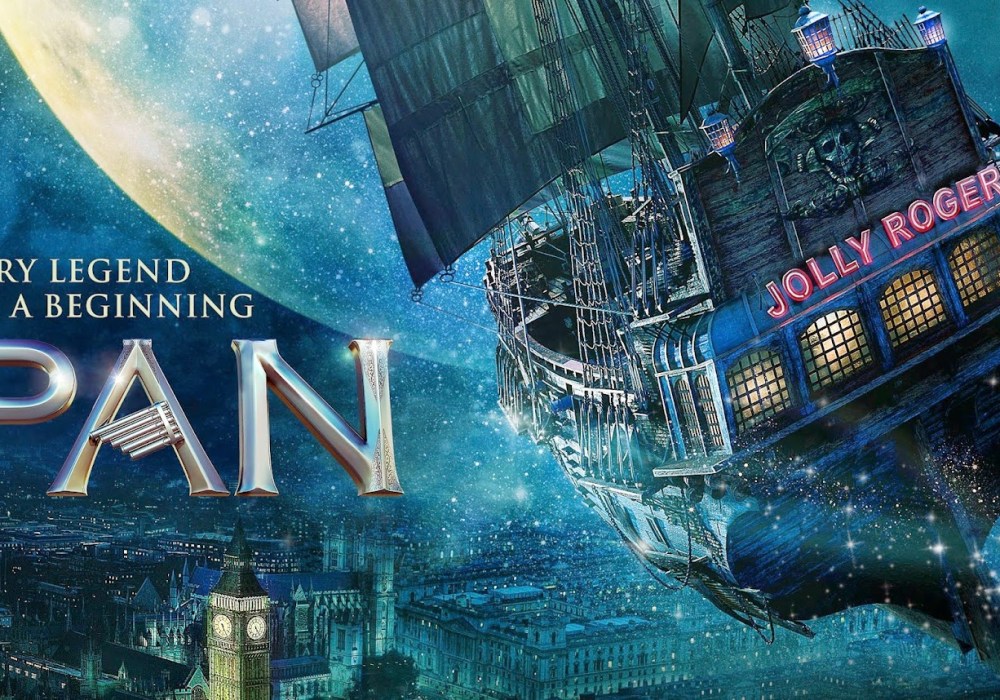
Pan

A Truly Magical Disappointment of a Film

The best way to describe the experience of watching this film is to rely on an analogy using The Great British Bake Off (or another cooking/baking show of your preference). Have you ever watched GBBO and observed someone producing a glorious looking cake that everyone talks about, so decide to have a go yourself? So you include all the ingredients they used; having added them at the same time and the same way, you then place it in the oven. However, when you open the oven to take out the cake you made it looks nothing like the cake you saw on the show. In fact your cake looks flat, plain and tastes nowhere as good as the cake appeared on TV. Now – replace the ‘you’ with ‘the production team of Pan’; the ingredients being the script, mise-en-scene, cast etc and the cake with Pan. That is what watching this film is like. Everything is there. It should work. It’s worked for so many other people. It just doesn’t work here.

It’s the middle of World War Two. Peter (Levi Miller) was abandoned by his mother (Amanda Seyfried) when he was only a baby. Left on the door steps of an orphanage he has lived his entire life there.  It is all he knows. The orphanage is managed by a tyrannical nun (Kathy Burke) who Peter suspects is making and hoarding a profit, leaving the boys in her charge eating gruel and wearing rags. Peter and his sidekick decide to investigate, and find a hoard both of food and gold. He also finds his personal record, including a letter from his mother who promises they’ll meet again, ‘In this world or another.’ They are found and punished; with Mother Superior ripping the note into pieces. Later that night they find out where the gold has come from, when a pirate ship comes to forcibly collect the young boys. After a scuffle with some fighter aircrafts, the pirate ship crosses the barriers of time and space to arrive in Neverland. In Neverland he will find fun and friendships, in the form of James Hook (Garrett Hedlund) and Tiger Lily (Rooney Mara), and together they will have to rise against the monstrous regime of Blackbeard (Hugh Jackman). Peter will discover his destiny and begin to become the future legend that is Peter Pan.

That plot summary makes the film sound exciting, right? That is ultimately what makes the film so disappointing, on paper it sounds good and on screen it looks good yet it doesn’t quite land. The audience are left watching sequences of increasing splendour and yet will remain impassive and disengaged with the events. The film becomes a case study in a failed attempt at Magical Realism. Upon analysis, there are a plethora of reasons as to why this is the case, though I shall just focus on the main two.

Cast: The cast were truly ill-advised on how to portray their characters. Jackman, as Blackbeard, spends all of his screen time dialled up to 11.  He’s almost like a pantomime dame chewing at the scenery. In a way this makes sense, as the film attempts to pitch an overly theatrical approach, yet it does little favours for Jackman who we have seen far better in so much more. If only he had some quieter moments, allowing for development of beats and nuances, it would have made for a more interesting performance. If acting is all about finding a balance between lights and shades, Jackman’s acting here is so bright it’ll blind. Then we’ve got Hedlund as Hook, played as a Southern gent cowboy-type. The clear intent was to make him an endearing character, shown to care about his friends and loyalties and make the audience wonder how he and Peter became such great enemies later on. It would have been a nice enough take on the character if Hedlund did not spend 2/3 of his lines hunched over, squinting them and barking them at his fellow cast. We get it, you’re stereotypically Southern – just please stop shouting! Rooney Mara as Tiger Lily starts high then gradually disappoints. She’s set up to be a great warrior, but little of this is actually shown. When announced that she was starring in this many were surprised, as Mara’s roles utilise her maudlin persona to great effect. The result in Pan is that she spends the entire film looking as if she doesn’t really want to be there. Which is hardly surprising considering how much source material the sequences with her and her tribe will provide for critics and theorists of cultural appropriation will provide. The only good thing to say about the film is that 13-year-old Levi Miller is a promising new talent who does a great job of carrying the heavy burden of this film.

Script: The need for prequels is a matter of personal opinion. The need for a decent script in prequel is not. This review should serve as a warning to those who want to write a prequel – do not do as this film does. It’s all fine and dandy to include references to the pre-existing film, cheeky lines acknowledging past references for the audience which hint at future inevitable events for the characters. But please, for the love of God, do not write them like they are in the screenplay for Pan. There are so many here, which are shoehorned in so poorly and recited by the actors so stiffly that I genuinely suspect they were written in the actual script like this:

Tiger Lily: What? Are you scared of CROCODILES?

Hook: NO! Now excuse me while I stick my HAND in the CROCODILE-INFESTED WATER.

Peter: Great. Now we’re lost!

Hook: Yes. We’re LOST BOYS!

Peter: Well we better think HAPPY THOUGHTS.

Peter: We’ll always be FRIENDS won’t we Hook?

Hook: Of course! What could ever happen to CHANGE that?

Mother: You’re my Peter. My PETER PAN.

Now, I may not have used exact phrasing there (I think my brain has tried to delete some of the film in a type of self-protection manoeuvre) but those references are as subtle stated as they are above. In fact, the only way they could have been made less subtle is by having the cast recite them turning to the camera with a raised eyebrow and nudging with their elbow. The intention of including these lines (though perhaps not in a manner as poorly as done here) is to establish a clear link between this film and the far far far superior 1953 animation and the 1911 novel. However, this has a counteractive effect, reminding the audience of how much they love either of the original products. Save the money of a cinema ticket and dig out your copy of the book or film.

This leads us to an ultimate conclusion, was this film really necessary? I’ve written in past reviews (Ant-Man and Fantastic Four are the first two that spring to mind) about the difficulties of origin stories. Did we really need to know what made Peter Pan into the Peter Pan? If they really thought people would care about the backstory between Hook and Pan why not show it instead of ending the movie with a heavy-handed sequence that signposted for a sequel – which may not be so inevitable considering Pan has royally bombed at the box office. To be so over-dependent on continuing the story on, instead of giving a satisfying if albeit temporary conclusion, is lazy storytelling.

This film overestimates how good or necessary it is. It manages to make the magical mundane and dreary – an unforgivable crime of cinema.