
documentary

Embrace
‘What Can I Do To Help Them?’

The Carnival of Dreams
“If you had been searching your whole life for something you love and you found it, what would you be willing to sacrifice?”
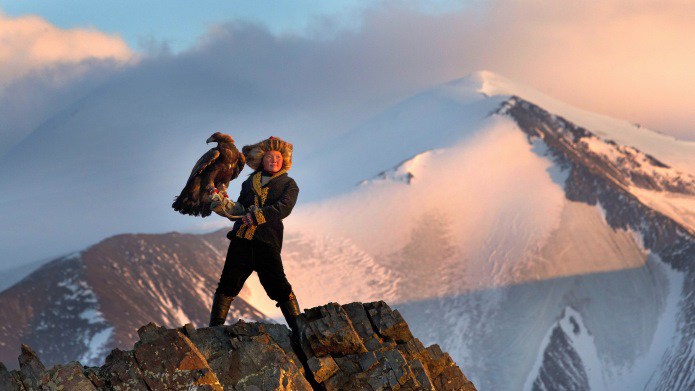
The Eagle Huntress
“You were as brave as any man. You really showed that nest who’s boss!”

The Music of Strangers
“Sometimes we can turn fear into beauty.”

Lo and Behold, Reveries of the Connected World
“Would it be useful for machines to fall in love?”

My Scientology Movie (Mini Review)
“Come on! Do I look brainwashed to you?”
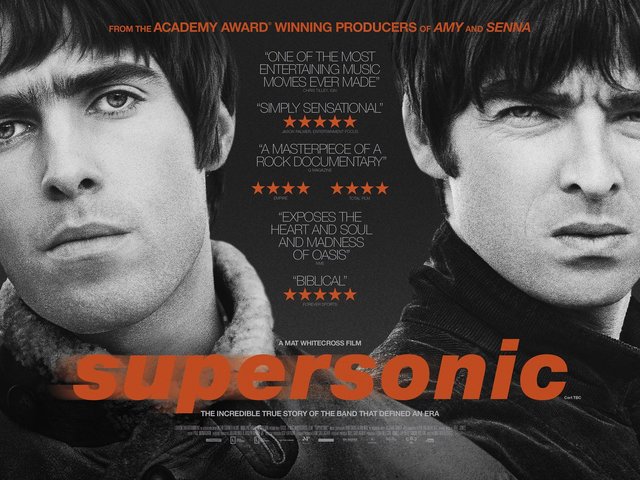
Supersonic (Mini Review)
“Yeah, you can kiss the sky – now give it a f***** love bite”
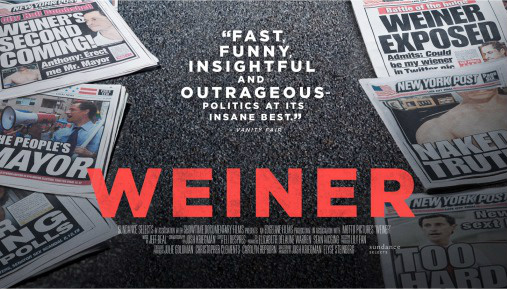
Weiner
A portrait of a fully exposed politician
What is made clear from the opening sequence of the film, and intermittently throughout, is that Anthony Weiner had all the qualities of a could-be-great politician. Married to a politically savvy wife (Huma – Hillary Clinton’s top aide) with an adorable young son it was clear this man had a reason to care about his city. He spoke passionately and articulately about important matters, a firm believer in Obama and medicare for all, whilst being immensely charismatic and camera friendly. If only he could have kept it in his pants.

Where to Invade Next
Michael’s Moore’s most optimistic documentary yet.
The tone of ‘Where To Invade Next’ means that in many ways it stands out against Moore’s previous documentaries. Instead of his typical approach of ‘Here’s what America does wrong!’ and ‘Here’s how America is awful compared to these countries!’ there’s a slight shift. Instead of the glass half-empty approach, ‘Look at how badly these things are done!’ he takes for the first in his career a glass half-full approach,’ Look at how good things could be!’ The result is no less powerful than his previous films and arguably by adding ‘hope’ to his vernacular he will inspire and motivate. Furthermore, the timing of its UK release (about two weeks before the referendum over whether to stay in Europe, aka. Brexit), provides much food for thought.
Under the (false) pretense that the government has asked him to advise them on ‘Where To Invade Next’ Michael Moore then’invades’ and travels around three continents to find what they are doing well and which ideas they could steal to use in America. These include:
- Italy: labor rights and workers’ well-being
- France: school meals and sex education
- Finland: education policy
- Slovenia: debt-free/tuition-free higher education
- Germany: labor rights and work–life balance
- Portugal: drug policy, and the abolition of the death penalty
- Norway: prison system
- Tunisia: Women’s rights
- Iceland: women in power and the financial crisis criminal investigation
By taking the form of a travelogue – instead of being goal-oriented (Roger & Me), a rage-driven societal critique (Bowling for Columbine) or to investigate inequalities within America (Sicko) – this feels like a fresh and revitalised Moore. One who is looking forward to solutions rather than expose the crimes. Arguably one of the main criticism against Moore and his documentaries is his over-simplifying of certain elements. It would be easy to argue that yes one of the above countries does do ‘X’ rather well, but have you seen how badly the issue over ‘Y’ is?!? But that’s not what this documentary is about. Yes Moore does still utilizes the comparison between his and other nations for effect (allocated holiday, school meals, taxes and criminality are stand-out) but his true purpose here is to look for other ideas. Instead of attacking the present he looks forward to the future and how things could be done.
I’ve seen a few critiques about this film and how this different approach shows that ‘Moore has gone soft.’ No. As any teacher (secondary school teacher working in the East End writing here) will tell you, when one approach doesn’t work you have to try others. If you constantly shout at a class they will soon be able to metaphorically put you on mute and tune you out. By trying out the rose-tinted glasses and using a more positive approach he may just retain more of our attention spans.
This does lead me on quite nicely to my personal stand-out part of the documentary: its mediation on the nature of education. I will admit that prior to this I knew nothing of France and its school meals system, nor of Finland and its education policy, but if what Moore explains is truly reflective of those respective nations – I really think here in the UK we have a lot to learn. I did cry during these sequences. I found numerous tears rolling down my cheeks when I saw the meals being offered to the children of these schools in France then compared them to those I’ve seen offered (as both student and teacher) at schools here. I cried when I heard the teachers of Finland talking about how school is about student personal development – not tests, grades or levels. I cried when I saw such happy children without the worry or concern I’ve come across as both student or teacher. You could argue that this was manipulation or simplification. Maybe.
But then again there’s a reason Moore didn’t visit the United Kingdom in this documentary. There’s a reason he didn’t recognise the UK as doing one of the above things particularly well. And, just maybe, that after seeing this you will see a reason that we shouldn’t leave when we’ve still got so much to learn.

 Charlotte Sometimes