Crimson Peak

A film review/love letter for Guillermo Del Toro’s macabre masterpiece.

Finally. Six months in and 40 reviews written this film comes along. A Neo-Gothic epic. This is my kind of movie. The Gothic is arguably one of cinemas most underappreciated genres. This is a huge error as the tropes of the Gothic allow itself to become the truest articulation of the psychological state. Guillermo Del Toro knows this. He’s made a career of it. And this film could be his mainstream opus. The intent and scope of Crimson Peak is worthy of the highest praise: the end product astonishingly beautiful.

As an aspiring author Edith Cushing (Mia Wasikowska) revels in Romantic turmoil.  Her father Carter (Jim Beaver) is devoted to her and her literary exploits; having lost his wife when Edith was ten he is all too aware of the loss and pain that love can bring. His protective paternal instincts kick in when a mysterious stranger arrives into town. Thomas Sharpe (Tom Hiddleston) intent is to persuade self-industrialist Carter to invest in his machinery – it’s the last hope for he and his sister Lucille (Jessica Chastain) to restore their family estate. Carter takes an instant dislike to the Sharpe siblings; upon observing Thomas’s intent towards his daughter he becomes determined to drive them apart. However, when tragedy strikes, Edith and Thomas are pushed further together – they marry and brings her to England. Upon arrival at Allerdale Hall, observing the decrepit building and the red clay-tainted oil that desecrates the landscape, Edith realises that she must try and escape the ghosts of the past and the threats in her future.

It is impossible to over-appreciate what Del Toro has achieved here. He has utilised the motifs of the genre – the double, the spiral staircase, the brooding stranger and the desperate maiden clasping at a candle which represents her life – to create a gloriously grotesque tribute to the original 1940s Gothics whilst utilising contemporaneous cinematic creativity. The Gothic triumphed in literature during the early 1800s, and peaked in cinema during the 1940s. Though set in the same era the filmic versions of the Gothic reflected the fears of the then-present. Women were leaving the household and entering the workplace; then forced back into the home when they returned from war. Unsurprisingly there was a flux of marriages; women agreeing to marry men they had just meet believing they would not return from war. Yet so of them did, and these women realised the once-romantic gesture had in fact resulted in their being married to strangers. Films like Rebecca, The Spiral Staircase, Secret Beyond The Door and Sleep, My Love utilised this intrinsic, yet utterly understandable fear to great effect. What united them thematically was a narrative that echoed Charles Perrault’s folktale Bluebeard – what is essentially a fable warning women against marrying alluring strangers. Why this is all relevant is because few new films, one that are not reliant on being literary adaptions, even attempt to make a film in this style – let alone join the canon.

An unholy union is made between set, music, cinematography and mise-en-scene. The sets in particular are astonishing and breath-taking – with so much to see it becomes almost overwhelming, echoing the confusion of our maiden in distress.  Crimson Peak is a product of passion. Every aspect has clearly been carefully chosen and with love, which pays off ten-fold in the film’s visceral emotive impact. Combined Wasikowska, Hiddleston and Chastain make a character triangle which entraps the viewer – ensnaring them in this house of fear. This is a world where ghosts breathe and houses bleed. Melodramatic? Yes. Unashamedly and unabashedly so. Whether the film ultimately gets lost at this point, with a third act that becomes overwhelmed by pastiche, is up for personal debate. Ultimately this film is delightfully creepy – with sumptuous sets, creepy casts and unforgettable visuals – it’s an archaic yet inviting film that demands watching.

A true auteur can provide the audience a return journey to another realm. It may not be a realm we would chose to escape to – as is this case it could be a world of terror and fear – yet it was one we are fully immersed in and find the greatest beauty within. Then we are returned – shaken, frightened, bleary-eyed yet grinning. Go watch Crimson Peak and experience it for yourself.
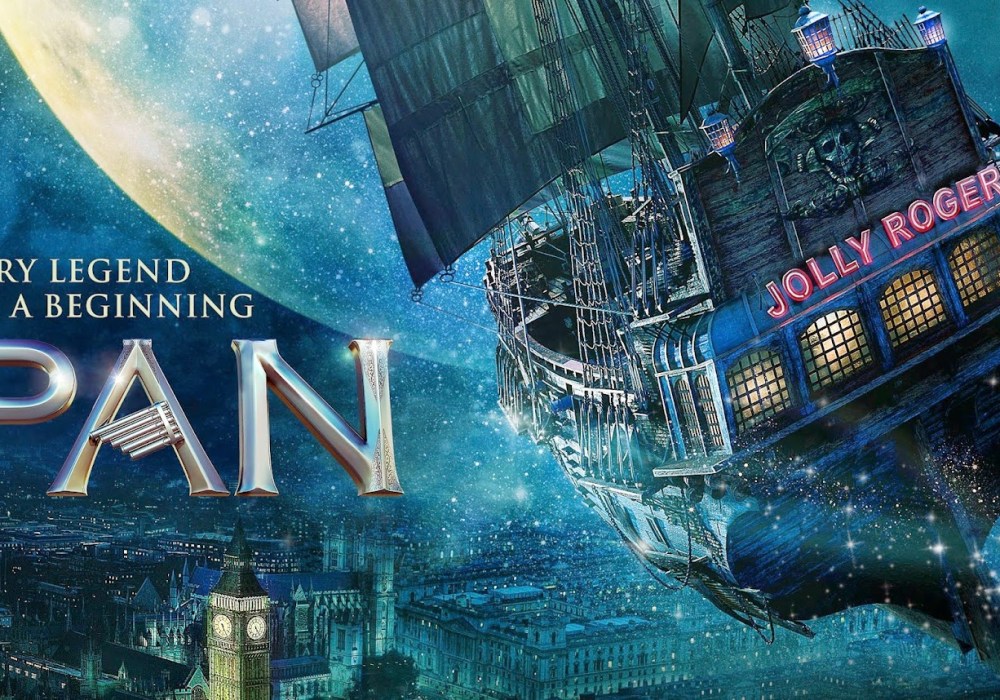
Pan

A Truly Magical Disappointment of a Film

The best way to describe the experience of watching this film is to rely on an analogy using The Great British Bake Off (or another cooking/baking show of your preference). Have you ever watched GBBO and observed someone producing a glorious looking cake that everyone talks about, so decide to have a go yourself? So you include all the ingredients they used; having added them at the same time and the same way, you then place it in the oven. However, when you open the oven to take out the cake you made it looks nothing like the cake you saw on the show. In fact your cake looks flat, plain and tastes nowhere as good as the cake appeared on TV. Now – replace the ‘you’ with ‘the production team of Pan’; the ingredients being the script, mise-en-scene, cast etc and the cake with Pan. That is what watching this film is like. Everything is there. It should work. It’s worked for so many other people. It just doesn’t work here.

It’s the middle of World War Two. Peter (Levi Miller) was abandoned by his mother (Amanda Seyfried) when he was only a baby. Left on the door steps of an orphanage he has lived his entire life there.  It is all he knows. The orphanage is managed by a tyrannical nun (Kathy Burke) who Peter suspects is making and hoarding a profit, leaving the boys in her charge eating gruel and wearing rags. Peter and his sidekick decide to investigate, and find a hoard both of food and gold. He also finds his personal record, including a letter from his mother who promises they’ll meet again, ‘In this world or another.’ They are found and punished; with Mother Superior ripping the note into pieces. Later that night they find out where the gold has come from, when a pirate ship comes to forcibly collect the young boys. After a scuffle with some fighter aircrafts, the pirate ship crosses the barriers of time and space to arrive in Neverland. In Neverland he will find fun and friendships, in the form of James Hook (Garrett Hedlund) and Tiger Lily (Rooney Mara), and together they will have to rise against the monstrous regime of Blackbeard (Hugh Jackman). Peter will discover his destiny and begin to become the future legend that is Peter Pan.

That plot summary makes the film sound exciting, right? That is ultimately what makes the film so disappointing, on paper it sounds good and on screen it looks good yet it doesn’t quite land. The audience are left watching sequences of increasing splendour and yet will remain impassive and disengaged with the events. The film becomes a case study in a failed attempt at Magical Realism. Upon analysis, there are a plethora of reasons as to why this is the case, though I shall just focus on the main two.

Cast: The cast were truly ill-advised on how to portray their characters. Jackman, as Blackbeard, spends all of his screen time dialled up to 11.  He’s almost like a pantomime dame chewing at the scenery. In a way this makes sense, as the film attempts to pitch an overly theatrical approach, yet it does little favours for Jackman who we have seen far better in so much more. If only he had some quieter moments, allowing for development of beats and nuances, it would have made for a more interesting performance. If acting is all about finding a balance between lights and shades, Jackman’s acting here is so bright it’ll blind. Then we’ve got Hedlund as Hook, played as a Southern gent cowboy-type. The clear intent was to make him an endearing character, shown to care about his friends and loyalties and make the audience wonder how he and Peter became such great enemies later on. It would have been a nice enough take on the character if Hedlund did not spend 2/3 of his lines hunched over, squinting them and barking them at his fellow cast. We get it, you’re stereotypically Southern – just please stop shouting! Rooney Mara as Tiger Lily starts high then gradually disappoints. She’s set up to be a great warrior, but little of this is actually shown. When announced that she was starring in this many were surprised, as Mara’s roles utilise her maudlin persona to great effect. The result in Pan is that she spends the entire film looking as if she doesn’t really want to be there. Which is hardly surprising considering how much source material the sequences with her and her tribe will provide for critics and theorists of cultural appropriation will provide. The only good thing to say about the film is that 13-year-old Levi Miller is a promising new talent who does a great job of carrying the heavy burden of this film.

Script: The need for prequels is a matter of personal opinion. The need for a decent script in prequel is not. This review should serve as a warning to those who want to write a prequel – do not do as this film does. It’s all fine and dandy to include references to the pre-existing film, cheeky lines acknowledging past references for the audience which hint at future inevitable events for the characters. But please, for the love of God, do not write them like they are in the screenplay for Pan. There are so many here, which are shoehorned in so poorly and recited by the actors so stiffly that I genuinely suspect they were written in the actual script like this:

Tiger Lily: What? Are you scared of CROCODILES?

Hook: NO! Now excuse me while I stick my HAND in the CROCODILE-INFESTED WATER.

Peter: Great. Now we’re lost!

Hook: Yes. We’re LOST BOYS!

Peter: Well we better think HAPPY THOUGHTS.

Peter: We’ll always be FRIENDS won’t we Hook?

Hook: Of course! What could ever happen to CHANGE that?

Mother: You’re my Peter. My PETER PAN.

Now, I may not have used exact phrasing there (I think my brain has tried to delete some of the film in a type of self-protection manoeuvre) but those references are as subtle stated as they are above. In fact, the only way they could have been made less subtle is by having the cast recite them turning to the camera with a raised eyebrow and nudging with their elbow. The intention of including these lines (though perhaps not in a manner as poorly as done here) is to establish a clear link between this film and the far far far superior 1953 animation and the 1911 novel. However, this has a counteractive effect, reminding the audience of how much they love either of the original products. Save the money of a cinema ticket and dig out your copy of the book or film.

This leads us to an ultimate conclusion, was this film really necessary? I’ve written in past reviews (Ant-Man and Fantastic Four are the first two that spring to mind) about the difficulties of origin stories. Did we really need to know what made Peter Pan into the Peter Pan? If they really thought people would care about the backstory between Hook and Pan why not show it instead of ending the movie with a heavy-handed sequence that signposted for a sequel – which may not be so inevitable considering Pan has royally bombed at the box office. To be so over-dependent on continuing the story on, instead of giving a satisfying if albeit temporary conclusion, is lazy storytelling.

This film overestimates how good or necessary it is. It manages to make the magical mundane and dreary – an unforgivable crime of cinema.

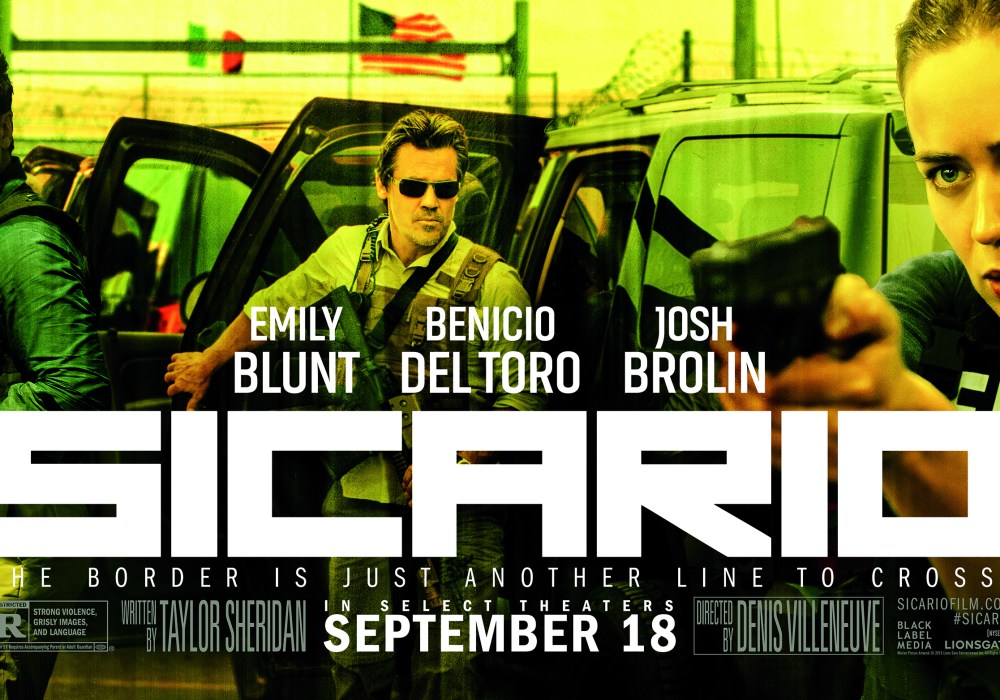
Sicario

The Closest We’ll get to Cinematic Masterpiece this year?

This film is unlike any other. It’s intelligent, provocative and deeply haunting. Shot and told with expert precision whilst feeding on audience paranoia and helplessness – this is not a film for the faint of heart. There are few films that have been, or that will be, released this year that will end with you leaving the cinema drained and exhausted (in a good way at least…)

Idealistic FBI agent Kate Macer (Emily Blunt) leads a kidnapping raid in Chandler, Arizona that results in a discovery far bigger and much more gruesome than was expected. Her findings cause Kate’s boss (Victor Garber) to recommend her to an elected government task force which has a sole focus of the ever-escalating war against drugs on either side of the US – Mexico border. After a brief interview Matt Graver (Josh Brolin) offers her the position, using her emotional ties to her previous case as reasoning to join his team. His team promises results far greater than those she can achieve in her current position, plus a chance to find and punish those involved in the tragedy she unintentionally unearthed. She accepts immediately.  Kate’s FBI partner Reggie (Daniel Kaluuya) is instantly distrustful of Matt and fearful for his partner’s well-being. Kate squashes his concerns, but when she arrives for her first day of work she realises how little she know and how little Matt will actually want to tell her. The unexplained arrival of mysterious Alejandro (Benicio Del Toro) furthers these worries, as does their preceding to fly with her to a different destination than the one declared to her and concealing their purpose for being there. Was Reggie right to have been so worried for Kate? Will Kate get to make the difference she wanted to? Will she even make it out alive? 

What truly makes this film enter the threshold into ‘great’ is the components that make it so taut, tense and thrilling. The acting is masterful – Blunt is understatedly brilliant as the at-times frustrating but always sympathetic Kate, Brolin’s Matt oozes charm with dark undertones and Del Toro lurks on the outskirts so intriguingly that his gradually revealed character arc is utterly enthralling. The music, and the superbly well-chosen moments when it is absent, frame each sequences with an eerie sense of both danger and inevitability. Not a shot or piece of dialogue is wasted – everything either contributes to the plot or the power of it. Aerial shots revel not in the landscape, but instead reveal the depth of the poverty and crime and the sheer vastness of it.

Where the film builds and retains most of its power is in its message. Whilst easy from trailers and posters to misconstrue as just another social-issue drama or drug-related thriller, Sicario has much more to offer. Few films have tackled the ‘war on drugs’ with such informed perception of the grey area surrounding it. The primary question is of lawlessness – who are the good guys in this war and who can be trusted? Most importantly – when the do the ends stop justifying the means? This is reflected upon in such a spectacularly suspenseful manner; it is rare to find a film that can leave an audience so fantastically haunted.

If you’re looking to spend two-hours in a realm of dread, brutality and nerve-destroying darkness then commit to numb ruminating…you’d best go buy your ticket!

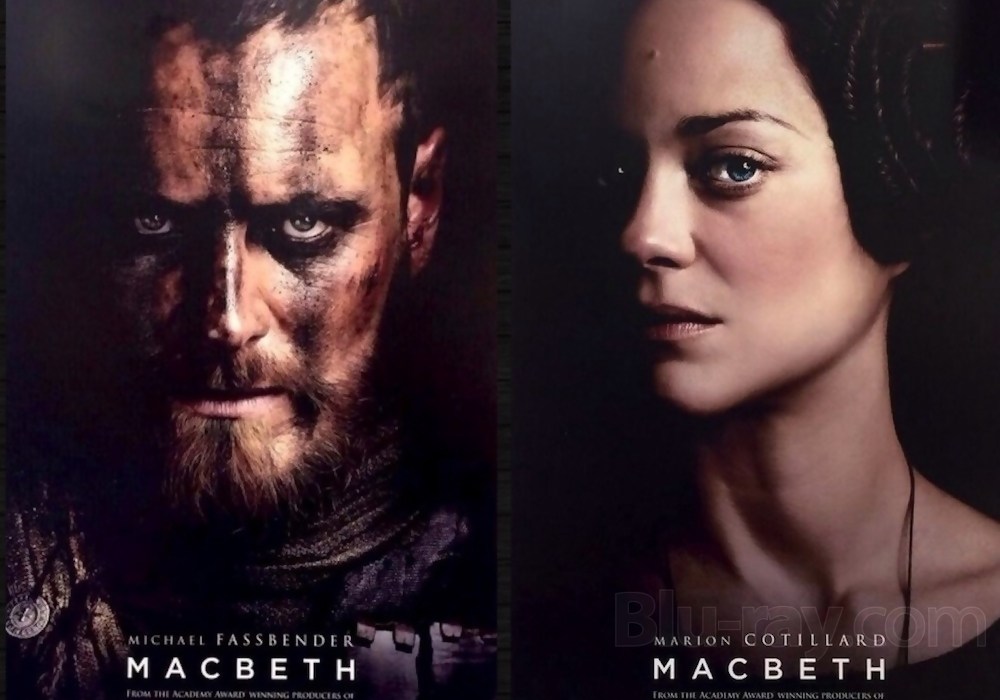
Macbeth (2015)

‘Be bold, bloody and resolute.’

The chances are you won’t be scheduling in this film for some light Friday night entertainment (if you are, well fair play. It takes many sorts to make a world.) You want to see Macbeth for its dark brooding plot (check), an examination of fatalism and master-level acting (double check). 2015’s version of Macbeth is quite like anything that has been seen before; becoming something both of our time and times past. Gone are the claustrophobic interior dialogues. They are instead, like the characters, exposed to the elements; then dwarfed and destroyed by them. This Macbeth belongs to the Scottish landscape, here which is cruel and brutal, again, like its characters.

The story is still the same: a warrior-noble man is informed of a prophecy that indicates he will become King of Scotland, is then pushed into regicide by this merciless formidable wife before descending into a world of psychotic delusion and pre-emptive murders. For the most part the screenplay is unaltered, with most speeches retained word-for-word. The most fascinating aspect of this new version is the new emphasis it places onto smaller moments of the play. Small beats are given volume louder than any of its filmic predecessors, offered a refreshing take on both story and characters. Gone is what often becomes a pantomime act of the central-duo, leaving behind what often becomes shouting of dialogue and wild gesturing and replacing it with a quieter sharper intensity. Lady Macbeth (Marion Cotillard) is no femme fatale who squawks and savages her husband’s masculinity. Cotillard plays Lady Macbeth with a commanding vulnerability, a woman who utilises her insecurities for benefit instead of concealing them with rage and anger. Her famous ‘Unsex me here’ monologue, along with her rebuffing of Macbeth’s cowardice, is made all the more sinister by her demurity.  By opening the film with a funeral, that of her young son, (a death which is only referred to briefly in the play) a sympathy is generated for her character, an attempt at a reasoning for what is to come.

This is used to similar effect with Macbeth (Michael Fassbender), and adds a dimension to his friendship with Banquo (Paddy Considine). Banquo has a young son who he is absolutely besotted by and is inseparable from. Whenever Macbeth is shown to be looking at the pair, a degree of jealously is implied, a bitterness of what may have been. Considering the witches’ prophecy declared Banquo’s heirs would later become king, it’s easy to see how Macbeth’s resentment turns into murderous intent. In fact Fassbender’s portrayal of Macbeth is so effective that it makes the majority of his actions more comprehensible than others who have taken the role. His take on ‘Is This A Dagger…’ is indelible, as his ‘Tomorrow and tomorrow and tomorrow.’ How he carries the character is also intrinsic to his interpretation. The play refers to Macbeth’s status as a great warrior, but this if often under-played by adaptations. This version shows this and revels in his ferocity on the battlefield; his domination over his opponents successfully alludes to the malice underneath. His subsequent gradual submission into his own world of distraught instability has echoes of what would now diagnose as post-traumatic stress disorder. The childish ease at which he and his wife openly accept the prophecy of the witches seems almost explained by anguish twisted into an embittered for retribution.

The two central performances are cemented by the supreme skill and ability of the supporting cast; Sean Harris’ Macduff is an impassioned ball of rage, David Thewlis a benevolent Duncan and the witches combine to make an omniscient presence that haunts both screen and characters. The editing heightens the emotional tension generated by the cast; slo-mo is carefully and calculatedly integrated to great effect. The final dénouement is intensified with the mise-en-scene; the fire of the woods transplant the final battle into a world that is reminiscent of Hell, replicating the character’s diabolic emotional turmoil. The smoky reds and orange immerse Macbeth and create an unforgettable sequence that is intrinsic in its potency.

A delicate balance between subtlety and artifice results in a compellingly powerful piece of cinema. Fassbender and Cotillard where born to play these characters.

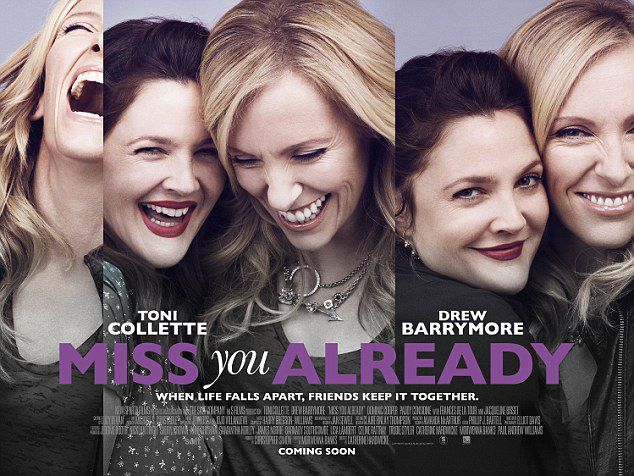
Miss You Already

An unsentimental yet sincere depiction of illness and friendship

It may not have a particularly original plot and may be presented in a way that is ultimately wildly manipulative (read as: you will cry) the film itself is admirable in what it, mostly, achieves. It presents a relatively honest depiction of breast cancer; the impact it places upon relationships both platonic and romantic along with the physical toll it takes. Whilst that alone is immensely refreshing, this is furthered by the presentation of a friendship that will resonate with audiences’.

Millie (Toni Collette) and Jess (Drew Barrymore) have been best friends since childhood. They have experienced every first together, everything from first kiss to first child, with their polar opposite personalities allowing them to bring out the best in each other. Whilst Jess is more conservative and stable, Millie is the overconfident and glamourous wild-child yet they are totally and completely inseparable. Both are happily married, yet rather than this separating them their respective husbands (Millie is married to Dominic Cooper’s Kit with Jess married to Paddy Considine’s Jago) and Millie’s two children instead make up one big family. But the family is rocked by Millie’s life-altering diagnosis of breast cancer, just as Jess finds out that she is pregnant with her much-longed for first child, which will put their friendship and their makeshift family to the ultimate test.

Collette does any amazing job (as is to be expected) playing Millie. Her acting, along with the screenplay and the film’s direction avoid what many similar films have done in the past, of making the person suffering from cancer into some sort of saint or martyr. Instead Millie stays the same as it is implied she always was – a mostly well-meaning but often not very nice person. This feature is really the film’s only comparatively unique feature. This, along with the portrayal of her treatment, make the film feel more honest and in a sense more brutal than others of this kind. Millie starts the film loud and vulgar, and although she spends the majority of the film in an oncology unit, she still stays the same person. Cancer doesn’t ‘fix’ her personalities ‘faults’, at times it only exacerbates them, consequently making her more relatable than many other presentations of the disease. It’s a reminder that cancer can, and with the current odds will, affect all of us whether we are good, bad or, like Millie, the grey area in-between.

However, it would be wrong to say this film is truly great or fully lives up to its potential. As we only see Jess and Millie’s friendship through flashback or montage, we are unable to fully latch onto their story. Aside from their respective health concerns, and a few references to a shared love of Wuthering Heights and R.E.M’s Losing My Religion, we aren’t really given enough about what makes them such good friends. The film constantly tells us this, but never shows us quite enough to engage us fully with their bond and ultimately does not earn the empathy it had the potential to do so.

Nevertheless, the ensemble cast, with Collette at the forefront, are all reliable and supply solid performances. Jacqueline Bisset is fantastic as Millie’s actress mother, Frances de la Tour momentarily steals the show in her short appearance as a wig-maker and Tyson Ritter (lead singer of All American Rejects) pops up as a swaggering barman.

From the opening of the film the inevitable outcome is presented, yet it will withhold interest and induce multiple bursts of tears throughout.

Bill

William Shakespeare: The Lost Years

Suffice to say, this is not another Bad Education Movie-style television to big screen disappointment of an adaptation. The team behind Horrible Histories have succeeded in translating their unique combination of historical-informed humour and slapstick. In fact Bill, along with Horrible Histories and their fantastical series Yonderland, has secured their place as natural successors to Monty Python and Blackadder.

Bill Shakespeare (Matthew Baynton) is a family man. He lives with his wife, Anne Hathaway (Martha Howe-Douglas), and their three children. Bill plays lute in a band called ‘Mortal Coil’, but after one concert where he tries to steal the spotlight he is told to ‘shuffle on’. It’s not us it’s you, they tell him. So Bill moves onto his next dream, being a playwright. As Stratford-Upon-Avon doesn’t actually have any theatres, he leaves his family to go and achieve his dream. In the process he befriends Christopher Marlowe and becomes embroiled in King Phillip II of Spain’s devious plot to murder Queen Elizabeth at a theatre production she is hosting.

The results are properly hilarious. The gag rate is so high, with most of it landing, that whilst laughing at one joke you may end up missing the next.  Of all the genres it is arguably comedy that is the hardest to do well. Aim too broad and you please no-one, aim too niche and you end up pleasing a minimal market. This irreverent biopic carefully, and to great effect, utilises modern references and a panto-esque tone to keep the audience tittering from start to finish. There are a few that are groan-worthy gags, a couple which are smirk-creating, many that are chuckle-inducing and a good handful of proper belly laughs. The team are not limited by their obligation to educate, as they were with the excellent Horrible Histories, and use that freedom to great effect. Considering we do not know what actually happened to Bill during the years between his abandoning his family in Stratford and emerging as royal playwright William Shakespeare, the events of this film are entirely plausible… well unlikely but possible.

One can only hope that situations such as Shakespeare educating Christopher Marlowe in ‘your mum’ jokes did in fact occur. If only because it leads to an immensely funny recurring gag within the film, that is seconded only by a henchman’s inability to understand the concept of a Trojan Horse. Other highlights include Helen McCory’s toothy and worn portrayal of Queen Elizabeth, some lovely throwaways about funding of the arts and a hilarious reference to ‘clunky exposition’. Baynton is excellent and rather endearing as an idealist and optimistic Shakespeare, as is Howe-Douglas as his under-appreciated wife.

Bill has a relatively taunt and witty script that has a joke for everyone. As expected the chemistry between the cast is electric, the gags reliably brilliant and the timing of them is spot-on. Well worth a watch.

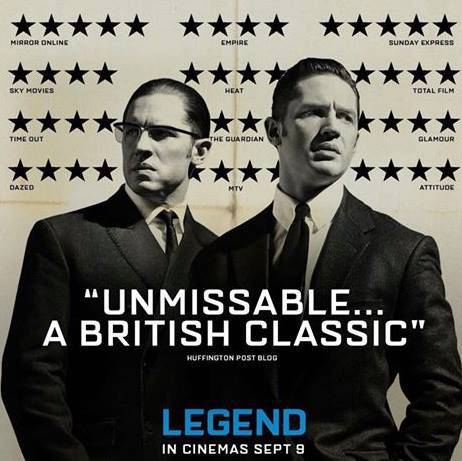
Legend

Two Tom Hardy’s don’t make for a Legend-ary film

On paper, this film seems like a great idea. The Kray twins were London’s most notorious gangsters – two men who both enjoyed being gangsters and what it entailed. Having Tom Hardy, one of cinema’s men of the moment, felt like a logical next step. After Armie Hammer successfully played the Winklevoss twins in The Social Network, having Hardy playing the central dual role didn’t seem outlandish. In practice, his performances do work. It’s the rest of the film that really doesn’t. With a wealth of material out there on the Krays, with so much of the truth being better than fiction, it’s frustrating how much Legend misses the mark.  Although the film is marked as charting ‘the true story of the rise and fall’ it does no such thing. The ‘true’ bit is questionable after some post-screening research, and ‘the rise and fall’ is false-advertising. The film opens when the Krays are comfortably on the rise (so much so they are under constant police surveillance) and ends just before the start of the fall. The decision to pick these two periods as plot-points seems questionable, as a narrative they are not the most engaging, nor do they provide the audience with enough information to get them engaged. Audience members will be left with countless unanswered questions, no information about how the pair actually achieved this ‘rise’ nor the events or the aftermath of the ‘fall’. It seems ridiculous for a film with a 130 minute running time  to have such serious gaps, even more so when it is filled with such needless fluff that make the film feel boring and far longer than the actual running time.

Our entry character into the world of the Krays is Frances Shea (Emily Browning). Frances meets Reggie Kray (Tom Hardy) as her brother (Colin Morgan) works for Reggie as a driver. It’s heavy-handedly alluded that Frances has a history of mental illness, she’s ‘fragile’ and just returned home after ‘being away’. Little more information or film time is given to this, which is unfortunate as it could have increased the impact of France’s characterisation. It’s also doubly unfortunate as it could have created a nice parallel with the character plotting of Ronnie Kray (also, Tom Hardy). In the film’s single funniest sequence we witness Reggie visiting his twin, whose prison sentence resulted in being institutionalised and being declared certifiably insane. During this sequence we are informed that whenever Ronnie was uncertain or confused by what people said he would respond ‘interesting’. It’s a quirky touch that could have been utilised for greater effect. Their reunion is intercut with a conversation with a Kray heavy negotiating with a physiatrist for an all-clear for Ronnie. Ronnie is released from the mental hospital, leaving Reggie to start balancing loyalties to the two most important people in his life – Frances and his brother. These relationships are the main focus of the film, not the brother underworld careers. If you were looking for a ‘proper gangster’ (a phrase of Ronnie’s) movie, you’ve come to the wrong movie.

Frances and Reggie date for an unspecified amount of time, then become engaged for an unspecified amount of time and then marry for an unspecified amount of time. Not having a timeline for this period is frustrating, and furthers the sense of the film drifting from one sequence to another. This is a fatal flaw for two reasons. Firstly, the film appears to have strived to place character development over story arc yet there is no stand-out antagonist, rarely a clear motivation for character’s actions, and often no clear link between sequential scenes.. The film tries to restrict itself to how these events impacted the relationship between Frances and Reggie. This leads to the film’s second major fault, which makes Legend such a muddled and convoluted mess. If Frances was our entry point, and the focus is on her viewpoint on events, why are we shown events that she was not at and would never have known about? Reggie and Ronnie attend events and confrontations that would have been concealed from France’s knowledge as, in their eyes, she would not have needed to know what was going on. This flawed decision is empathised with the use of voiceover narration, with Frances narrating the majority of events. The use of voiceover narration in Legend is not used to great effect, it’s cloying and sentimental. The fact she narrates over events that would have been unknown to her confuses whether her viewpoint is truly restricted, as it would have been during the time of the actual events, or has been promoted to omniscient which then undercuts the themes and tone of the film.

Watching Legend makes for an exasperating cinematic experience. The cast do a truly fantastic job with the material they have been provided with – Hardy is suitably magnetic as Reggie though a bit of a caricature as Ronnie, Browning gives her best performance to date and Taron Egerton steals every scene as Teddy Smith – but that material is banal and structurally incoherent. Disappointing.

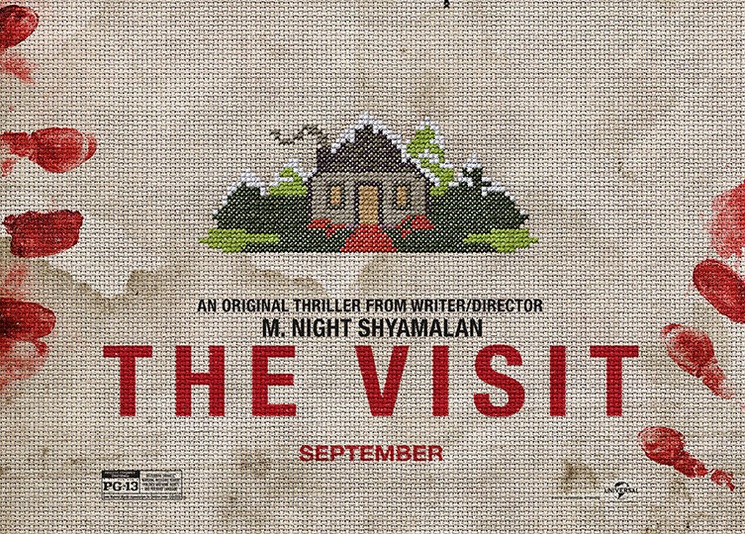
The Visit

Spoilers. Spoilers. Spoilers.

Aged nineteen a small town girl, living in a lonely world, ran away with a substitute English teacher. Her parents had tried to persuade her that it was an awful idea. They had begged her to stay. On that afternoon, before she fled, something ‘awful’ happened during that confrontation, which led to the relationship between her and her parents being severed. The girl and her now-husband had a baby girl shortly after, followed two years later by a baby boy. Ten years later the substitute English teacher ran away with another woman, leaving behind his wife and two young children. A difficult five years followed, with the three still struggling to come to terms with the abandonment. That’s when a message arrives from her parents, who found them online. They acknowledge that it may be difficult to re-establish their relationship with their daughter, but would love to start one with their grandchildren. The grandchildren agree and beg to visit their grandparents. The mother reluctantly agrees, sending them off to her old hometown, whilst she herself goes on holiday with her new partner.

The grandchildren make their own way there by train, and are met at the station by their anxiously waiting grandparents who are holding a banner decorated with welcomes. They drive back to the family home, and a mutual fondness is formed. The grandparents dot on the grandchildren and their quirks, and the grandchildren are bemused by these old folks whose bedtime is 9:30pm. At 10.15pm the granddaughter leaves her bedroom to be greeted by her grandmother pacing the downstairs in a trance and projectile vomiting. The next day this is explained away by a tummy bug.

For the rest of their week-long stay the grandchildren realise that there is more than just character quirks going on here, something is seriously wrong. What makes them think this? The grandfather stores hundreds of used adult diapers in the shed. The grandmother runs around the house naked at night scraping the walls and crawling around the floor. She sits in a rocking chair cackling to herself whilst staring at the wall. She chases them underneath the house. She has a breakdown whilst discussing ‘that afternoon’ and also spends one night waiting outside the grandchildren’s room holding a knife.

When having a conversation via Skype with their mother they hold the camera towards the grandparents and the plot twist is revealed – those are not actually their grandparents. The mother tells them to try to escape and that she is on their way. The grandchildren are trapped into playing a game of trivial pursuit, during the course of which all is revealed. For when the granddaughter escapes into the basement she find the bodies of an elderly couple – a framed photograph beside them reveals that they were her grandparents. The imposters are escaped mental patients, who wanted to pretend to have a family just for a week. They were jealous of the actual grandparents, who were volunteer therapists. In fact, the fake-grandmother had actually drowned both of her own children.

Two confrontations happen, with fake-grandfather rubbing a used diaper in the face of the grandson and the fake-grandmother chasing the granddaughter around a locked bedroom. The granddaughter kills the fake-grandmother with shards of a broken mirror. The grandson, with the aid of his sister, kills the fake-grandfather by slamming his head in the fridge doors multiple times. The mother then arrives and takes them to safety; the final scene has the mother revealing the ‘awful’ events of that afternoon fifteen years ago. She had slapped her mother and her father had slapped her in return. Fade to black.

There are so many issues with this film it is hard to start. So instead of a normal review, which would instead become an incomprehensible and lengthy rant, I will instead use bullet points to divide these issues into sections.

  • Child Safety: The fact the mother does not actually check the children have been collected by the right people. Yes, she has not seen or spoken her parents for fifteen years who explain her reluctance to do so, but surely any parent would want to perform some sort of check? This aspect then undermines and already ridiculous plot twist. During the week the mother tries to explain away the oddness of the grandparents by stating that they elderly. But, realistically, the problems that the grandchildren are describing cannot be explained by that when considering how old the grandparents should be. If the mother was nineteen when she had the children, the oldest of which is now fifteen, her parents really couldn’t be much older than seventy. When her children describe these incidents to her, wouldn’t she be shocked that her parents were acting in such a way?
  • Plot twist: After a week of increasingly terrifying antics from the grandparents – which they attempt to explain away with a night-induced form of sleep disorder as well as a– to explain be explained away by the fact ‘well, they were crazy’ is so flawed and archaic that it’s offensive. Considering this is 2015, to have a portrayal of escaped mental patients is already asking for trouble, but to then assign them traits such as staring into the distance at nothing, an obsession with bodily functions, homicidal tendencies (involving knives, hammers and ovens), crawling along floors, scrapping at walls and screaming is disturbing in its facileness. The fact that both grandparents try to explain away their behaviours with varying excuses such as dementia and Alzheimer’s may anger some, let alone the fact the children do not question whether these things could actually be related to the frightening behaviour of their grandparents, is also problematic.
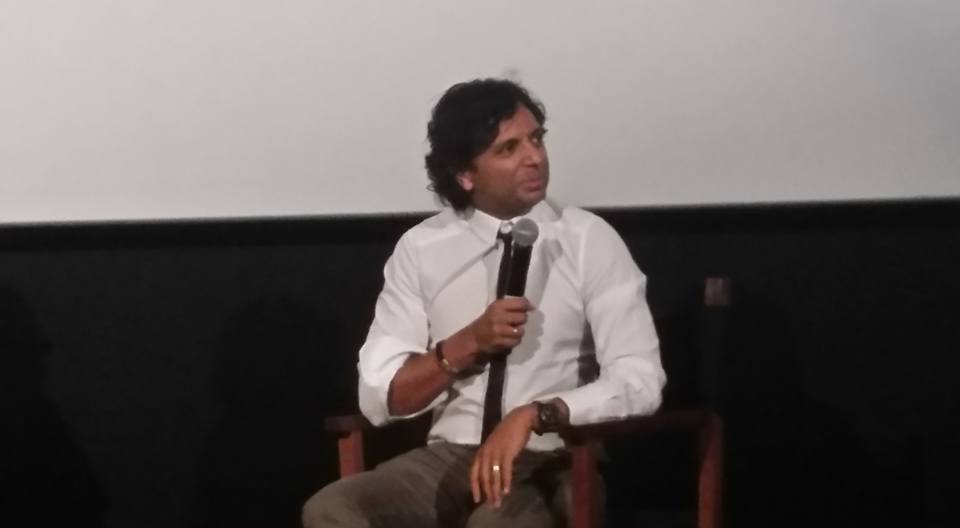
  • Storytelling: This is yet another M Night Shyamalan film that depends on a twist. The Sixth Sense is viewed as his best attempt at this, though that film only holds up for two viewings maximum before the novelty is shed. Interestingly, at the preview screening I attended Shyamalan was asked whether he wrote the plot twist first then filled in the rest. Shyamalan vehemently denied this, claiming he wrote stories about people and the twist followed. There is no evidence of this claim upon watching The Visit. Unlike The Sixth Sense, few will inflict a repeat viewing upon themselves. The film hinges on the twist, and your opinion on the twist will depend on whether you actually care about the main characters.
  • Characterisation: The grandchildren will divide audiences. 15-year-old Beca is a profoundly pretentious wanna-be documentary maker, who views life as a series of moments that she could record if they have the correct lighting and naturalistic elements. 13-year-old Tyler is a wanna-be rapper who tries to make up for his pre-pubescent features with attempts at charm and swagger. He likes to freestyle rap. They are each given a character trait which the film deems in need of ‘fixing’. Beca has low self-esteem and cannot look at herself in the mirror. Tyler is a germaphobe. Again, if you end up caring about the characters who may consider this important. Or, you may think it’s a waste of time.
  • Shaky Cam: Used to tell the entire film. Overused and nausea-inducing.
  • Genre mash-up: A blending of genres can work. This one doesn’t. Shyamalan explained that he wanted to blend family drama with the horror elements, along with comedy. The result is a film which is confused about what it actually wants it to be. It creates tension, sheds it to try to make you laugh, then tries for a quick scare.
  • Ending: Five people die during the film. By having a final sequence with the mother recounting the events of that afternoon fifteen years ago, reconnecting with herself and her past, then suggests that this was the entire purpose of the movie. That everything her children endured, and that those five people died for, was to allow her to come to terms with the events and herself. The fact the actual events of that afternoon remain secret creates tension that is bound for anti-climax. For what could be as awful as what her children endured, or the fact both her parents are now dead? Yes, the fact she hit her mother and her father retaliated was awful, but if one were to rank awful events during this film it would not own the number one place. The fact we are not given many opportunities prior to develop sympathy for her, reduces the emotional response that is supposed to be generated.

The Visit is only roughly ninety minutes long, but it feels like so much more. It’s bloated with ridiculousness, flawed ideas and frustrating characters.

M Night Shyamalan explaining his 'craft'

M Night Shyamalan explaining his ‘craft’

Gemma Bovery

As charming and bittersweet as it’s kindred text

This is not a modern-retelling of Gustave Flaubert’s Madame Bovery,or at least not a conventional update. With similar events and characters the film is instead a winsome, endearing if slightly flawed echo of the 19th Century novel.

Martin Joubert (Fabrice Luchini) moved from Paris to a small village in Normandy seven years previously to takeover his father’s bakery. Martin mostly enjoys village-life; the simple routines of making and selling bread, being a husband and a father. However his ‘years of sexual tranquility’ end upon the arrival of Gemma Bovery (Gemma Arterton) and her husband Charlie Jason Flemyng. Martin cannot believe the coincidence of this British couple with THAT surname taking up residence in his village which has links to Flaubert and his novel. Not only do their names link to the book, but their lives appear to be following the text also. Martin quickly engrains himself into their lives, taking it upon himself to mentor Gemma and guide her away from the tragic end of the eponymous Madame Bovery.

It would make sense to briefly talk about the main, and only, real flaw of this film before really getting into the good stuff. The film doesn’t really have a main focus, instead drifting from scenario to scenario through irregular pacing or, occasionally, irregular links. In fact between a promising first act and a surprising (and rather entertaining) third act, the middle does meander therefore reducing the tautness of the narrative.

But this is compensated by the film itself being utterly endearing. The village and it’s surrounding areas is beautifully shot, with the camera finding beauty in every shot. The main beauty is Gemma herself, who is adored by many men and the clearly the cinematographer. Happily the script and Arterton’s performance combined make this adoration understandable to be audience, creating a bewitching character who is both beguiling yet frustrating in behaviour.

With this film you are forced into a fantasy world, which you are immersed in quickly and readily. The film is fun and engaging but with a melancholic heart at the centre.  Gemma Bovery is pleasant and ambling depiction of how love can be fraught and frantic, full of yearning and seduction, adultery and scandal.

Man From U.N.C.L.E

A light-hearted and immensely entertaining spy caper

Finally, we get a proper Hollywood summer movie (admittedly slightly belatedly as the week of British summer time appears to have drawn to a close…) Nevertheless, this is the kind of film you’d expect to see, a fizzling and refreshing take of a much-loved genre. The story might not be the most original, or particularly remarkable, but the immensely charismatic performances of its stars make it a hilarious romp that is well-worth seeing.

It’s 1963. In the midst of a global stand-off, with the world on the on the cusp of nuclear war, ex-con turned leading C.I.A agent Napoleon Solo (Henry Cavill) is tasked with tracking down and rescuing Gabby Teller (Alicia Vikander). Her father, who is currently missing, was a Nazi scientist who worked for the U.S government due to his specialism of nuclear weaponry. Solo finds Gabby easily enough, but was being pursued by leading KGB agent Illyra Kuryakin (Armie Hammer) who is also on a mission to locate Gabby. A chase sequence follows, with Solo managing to get Gabby over the Berlin wall into West Berlin and leaving Illyra on the other side of it. That’s not the last the trio will see of each other, as the next day Solo’a American handler and Illyra’s Russian counterpart bring them to a meeting and announce that they will be working together to stop a pair of former Nazi’s who are forcing Gabby’s father to create their own personal nuclear weapon.  They must go undercover and work together to find Gabby’s father, however, Solo and Illyra are given private orders from their seniors to steal the data from the project for their respective governments.

What follows is a breezy, stylisation and oh-so elegant production. It’s an affectionate tribute to the Bond series and other espionage classics; a fun and frivolous, and even rather fresh, take on a much-worn genre. With a sparky soundtrack, gorgeous costumes and speedy editing to set the tone you’ll be kept engage from frame-to-frame. These features, along with the magnetic leads, make for a charming ride of a movie. Vikander is scintillating as a German mechanic who becomes embroiled in matters of international performance. Hammer is incredibly endearing as a Russian spy who may have a sweet heart within his looming psychique. Then we have Cavill whose charm, wit and suave emulates the pre- Daniel-Craig-era Bond.

It’s nothing particularly new, but with a few inventive twists and turns this makes for a laugh out loud cinematic gem.