Joy

What is ‘Joy’?

The question above does not refer to eternal philosophical ideas, but is a question posed to director David. O. Russell. What is ‘Joy’? Is it a comedy, a tramedy, a somewhat biopic or an ironic look at the American Dream? In theory is shouldn’t be a bad thing that a film defies generic classification, that it is something new, fresh and different. However in this case this question is raised by how irregular in tone and pace the film is. The film is remarkably uneven, drifting from one genre to another. However, an incredible performance from Jennifer Lawrence anchors a film that overall doesn’t quite gel.

Joy (Jennifer Lawrence) is a divorced mother of two young children. Her ex-husband and failed musician Toni (Édgar Ramírez) lives in the basement. Her seemingly-agoraphobic divorcee mother (Virginia Madsen) doesn’t leave her bedroom and whiles away the days watching soap operas. Her lothario father Rudy (Robert De Niro) briefs comes to stay before finding love with rich but uptight Trudy (Isabella Rossellini). Her half-sister Peggy (Elisabeth Röhm) works with their father and constantly passively aggressively attacks Joy on a daily basis. All this is overseen by her loving Grandmother Mimi (Diane Ladd). Joy’s days are spent dealing with all of her family’s dramas, with life not having handed her a very even deck. Having spent the first half of childhood being incredibly creative, designing multiple inventions, her enthusiasm was crushed the day her parents split up.  17 years later Joy is not particularly happy, stuck with being her family’s errand girl. It is during one of these errands that Joy makes a new invention that she is sure will make a fortune. But persuading the world of the value of her idea, let alone even her family, will not be so easy. Yet a chance encounter with Neil Walker (Bradley Cooper) could be one step closer to the success she has always deserved. 

A great cast does not always make a great film, as some may view is true of ‘Joy.’ Though it does have some extraordinarily powerful scenes, some emotional hold-your-breath moments, that’s all they are – moments. For the film itself is rather meandering – moving in unexpected and somewhat underprepared ways. It muddles through the key events in Joy’s life in a rather lacklustre fashion – never quite achieving its potential. This could be for multiple reasons. One could be the source material, as this is not a biopic of real-life inventor Joy Mangano, but a blended narrative of multiple women O. Russell admired. Another could be the fact the film used four different screen editors, a decision that without true collaboration can result in four differently edited films being shoehorned together. Tonally the film aims for a quirkiness that seems remarkably forced, from the rather unrealistic quirks of the characters to the voiceover narration from Grandma Mimi, to the various time hops to some oddly-placed soap opera themed dreams.

Obviously once Joy has come up with her fantastic new idea it will not be easy to make it a reality, but the disequilibrium – Joy does something badass to fix it – temporary equilibrium – another bout of disequilibrium – does become rather repetitive after a while.  However is is that phrase ‘Joy does something badass to fix it’ that feels like the real point of this film. This is Lawrence’s third time at working with O. Russell and most of this ensemble cast and the benefits of that really shine through. The director knows how to help his lead achieve a star turn. And also her legacy in badass GIFS. Her performance is remarkable. Considering that she is potentially too young for this role Lawrence is incredible in how she interacts with the other characters, uses her voice to convey all manner of emotions and portray a world weariness that is beyond her years.

Overall ‘Joy’ in a enjoyable enough romp of a movie.  Though the film itself is rather direction-less Lawrence herself is a ‘Joy’ to watch.

In The Heart Of The Sea

The mostly true story behind Herman Merville’s Moby Dick

For the next couple of weeks Star Wars: The Force Awakens will be dominating the cinemas. As a consequence the box office of many other films will take a hit, particularly those who have an audience that will overlap with it. This film is unlikely to be an exception. Though it is entertaining enough it is also remarkably old-fashioned, solid yet ultimately uninspiring.

Herman Merville (Ben Whishaw), having travelled a long distance, knocks on the door of Innkeeper Thomas Nickerson (Brendan Gleeson). Thomas is renowned as being the last survivor of the the last voyage of the Whaleship’ Essex’. Herman offers Thomas a large amount of money for the story, having heard rumours that it involves a monstrous whale. Thomas takes much persuading, by both Herman and his own wife (Michelle Fairley). The story goes back thirty years, to when a then 14-year-old Thomas signed on as a cabin boy for the ‘Essex’, a  ship owned by a greedy whaling company who had refitted the ship to participate in the lucrative whaling trade. Experienced whaler Owen Chase (Chris Hemsworth), who worked his way up in the industry, had been promised a promotion on the ‘Essex’ is informed that if he does this one last job as first mate he will finally get that promotion. Instead the role of captain goes to George Pollard (Benjamin Walker). Though his family have much experience in whaling, he does not. He has much theory but this is his first time of putting it into practice. Owen and George immediately clash as soon as the ‘Essex’ sets sail, with Matthew Joy (Cillian Murphy) playing intermediary. Months drag on and with little sign of whales they decide to go further out, to a place renowned for it’s countless whale occupants. It is also infamous as being dangerous, a land haunted by a monster whale. But plagued by greed and a desperate want to return home and end this horrific voyage. It’s the first time that Owen and George agree on something. It could also be their last as they soon discover, with deadly consequences, the monster whale is real. 

Sometimes the phrase ‘they don’t make them like they used to’ has positive connotations, indicating a degree of regret at how few films are as good as the one just seen. Otherwise the phrase is uttered with a degree of relief or surprise, that films like this don’t get made very often any more. The later interpretation is the one that is most accurate here. When watching it was hard not to bite back a smile at just how old-fashioned and almost dated certain elements were. We have the greedy corporation which happens to be led by Donald Sumpter, who is recognisable for playing characters with questionable ethics. The young boy being mentored by a heroic older figure, the fact he is an orphan means the older man becomes a surrogate father. George Pollard, whose family is historic and renowned for their role in the establishment of a whaling industry, is portrayed as a man born with a silver spoon in his mouth and a stick up his bum. Obviously because he is a foil to our hero, and was born into wealth and the role means he had to be portrayed with minimal sympathy and maximum arrogance… The examples are endless.

Primarily it is the characterisation of Owen Chase, played by Chris Hemsworth, that really stood out in this regard. (The fact he was played by a Hemsworth would have meant that he snared my interest no matter what…) Hemsworth’s portrayal of Owen is in that grey area of admiral attempt at convention into pastiche. Through lighting, framing, costume and positioning alone he is established as a Byronic hero. In fact it is almost surprising that each time the camera focuses upon him angelic music and a halo of light does not appear. Owen Chase is liked by all, known to be a ‘good man’. He is loyal to his friends, adored and admired by all, yet quick to anger and driven by personal gain. Though Hemsworth is a fine actor, his character he has so much effort placed into being admirable that Owen Chase ends up being rather hackneyed.

Aside from this, the narrative is engaging enough. The appearances of the whale are filled with enough tension to entertain. The effects, camerawork and performances are relatively impressive; as is the irony that surrounds the whole affair. The message of In The Heart Of The Sea and of Moby Dick is of greed and obsession.This film was due to be released nine months earlier, in March of this year, but was delayed as it was wanted to be released during Oscar-season and therefore be entered into the awards race. Instead of releasing it  during a down-time of cinema, when it would probably had a solid audience and box office takings, it will be released little over a week after the juggernaut that is Star Wars. Not only will The Heart of the Sea lose out on possible turnover, but it’s just not good enough for awards season. Perhaps it will win some for cinematography, sound or special effects, but there is little here that deserves anything more than that. Deciding to chase the metaphoric monstrous whale could prove fatal for this film.

Though mostly entertaining it strays too often to predictability. It’s also too vanilla to decide what genre it wants to be, if it had stuck to horror and developed the tone in that way then it would have been far more memorable that the bland romp that is presented instead.

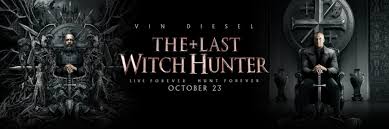
The Last Witch Hunter

Lightweight, idiotic and trashy – but not in a good way…

First with the positives; I got to walk on a red carpet last night! After picking up the tickets to the premiere from a tent just off Leicester Square Gardens, then seeing the hundred-odd people surrounding the red carpet, I then got to walk it! It was a pretty incredible experience. Although it was brief, and unsurprisingly no-one knew/cared who I was, it was a bit like walking on air. Perhaps more of a case of floating along than walking the red carpet. There was a brief Q&A before the actual screening of the film – with three of the main stars (Vin Diesel, Michael Caine and Rose Leslie) and director (Breck Eisner) which was also exciting – primarily as I can now say I was sat less than 20 feet away from Michael Caine. Now onto the less positive stuff; i.e. the film itself…

800-years-ago Kaulder (Vin Diesel) lost his wife and daughter to murdering witches. Determined for revenge/justice he joins a raid to destroy the Queen of the witches. Many of his peers die, but Kaulder does not. Kaulder is the last man standing in a face-off with the Queen, one which results in both of their apparent deaths. However, the Queen curses Kaulder in her last breaths to remain immortal – never to love and never to find peace. Now living in present day New York, Kaulder works with a religious sect to combat the thread of witchcraft. His liaison, Dolan 36 (Michael Caine), is one of his closest friends and about to retire leaving Dolan 37 (Elijah Wood) as his replacement. But when tragedy strikes, and Kaulder realises the Queen is returning, he must rely on help from the unlikeliest of people – a witch called Chloe (Rose Leslie).

Oh dear. Just, oh dear. This film is as good as its trailers (i.e a shambles). Again, as I have done with previous reviews, I will rely on bullet points to make my rant somewhat comprehensible.

  • The Plot – Derivative and out-dated. During the Q&A the director boasted of the film’s originality; proud of the fact it is not based on a comic book/tv series etc. After watching the film, this appears to be a flawed statement. The narrative is far from ambitious or new. The plot twist is immensely vanilla. All of the dialogue is just exposition, telling the audience what has happened/what will happen next. The scene with Max in the bakery, and the conversation between Kaulder and Dolan 37 exemplifies this, with Kaulder actually saying to 37, ‘Did you understand any of that?’ This is purely for the ‘benefit’ of the audience, who are clearly being presumed to be of minimal intellect. Kaulder then ‘kindly’ explains it to 37/us. The actual mission Kaulder is on is both absurd and poorly-paced, drifting from one set piece to the next. The story itself is messy, and how it is told it unbearably flat.
  • Gender roles – Who doesn’t love a casual bit of misogyny in their cinema? In a year that saw our silver screens graced with Imperator Furiosa (Charlize Theron) in Mad Max: Fury Road we have a film that returns us to the woman-as-sidekick/pretty face. Considering how fierce her turn as Ygritte in Game Of Thrones was, Leslie is ill-served here. Her character is a witch, dressed in black and with loads of jewellery (another tick for the lack of originality box). The character could have been given any career but no, Chloe works as a bartender. [Spoiler alert!] it gets burnt down at some point and she spends a good chunk of time blaming Kaulder, moaning that the bar was all she had. Clearly she had forgotten just how big her Central New York apartment is (a problematic feature of tv/film is giving broke characters unrealistically fabulous apartments – a topic for another time). She then spends much of the time in emotional turmoil and needing to be rescued. Her witch powers are the kind that requite her to sit still and go into people’s minds – disappointing considering she could have been scripted to instead kick ass with her powers or even be able to defend herself without his help. The fact Vin Diesel himself must be almost twice Leslie’s age, and his character about 775 years older, a suggested romantic subplot is both ridiculous and patronising. Why not hire an older actress if so insistent on partnering them off? The fact that her accent wavers from cut-glass to eardrum-slicing really doesn’t help her characters attempts at appeal.
  • Vin Diesel – Kaulder is sad (blank expression and monotonal voice). Kaulder is being sardonic (blank expression and monotonal voice). Kaulder is being brave (blank expression and monotonal voice). Vin Diesel crosses the line from being hilariously bad in this role to being depressingly bad. His attempts at quips and banter fall flat without intonation and emotion. Vin Diesel in person has a great deal of charm but is so unconvincing in this with an incredibly wooden performance. Coincidentally you’ll spend the whole film waiting to boom the line, ‘I am…’ Character traits for Kaulder are heavy-handed added on – his predilection for watches to show that he’s deep and reflects of time because he’s immortal. He drives a fast sports car because he can afford one as he’s lived forever. He only sleeps with air hostess as he has a fear of commitment. All of these attempts at providing depth instead reveal how transparent the plot and its characters are.
  • Direction – The special effects are so bland and unspectacular, almost sludgy in presentation. Even without advertising (which has a separate budget) this film cost $90 million to make. Where did it all go?

This film is not even entertaining to be ‘so bad it’s good’. It’s just bad. Bad and boring, which is an unforgiveable crime in cinema.  Avoid.

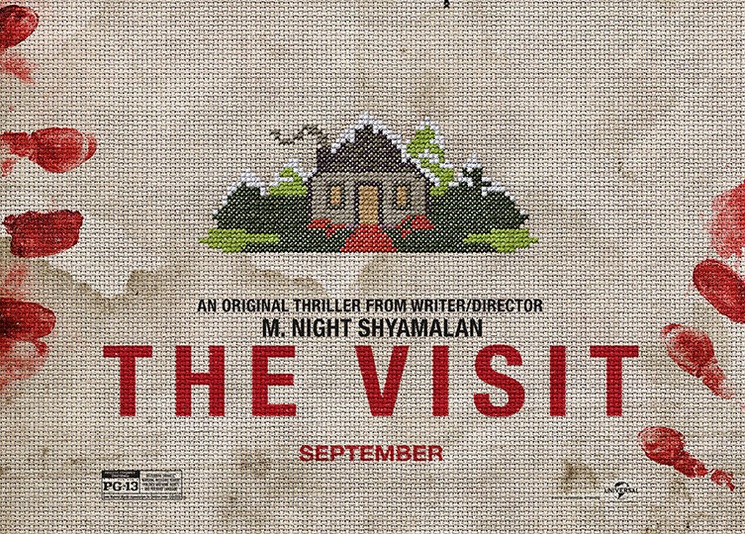
The Visit

Spoilers. Spoilers. Spoilers.

Aged nineteen a small town girl, living in a lonely world, ran away with a substitute English teacher. Her parents had tried to persuade her that it was an awful idea. They had begged her to stay. On that afternoon, before she fled, something ‘awful’ happened during that confrontation, which led to the relationship between her and her parents being severed. The girl and her now-husband had a baby girl shortly after, followed two years later by a baby boy. Ten years later the substitute English teacher ran away with another woman, leaving behind his wife and two young children. A difficult five years followed, with the three still struggling to come to terms with the abandonment. That’s when a message arrives from her parents, who found them online. They acknowledge that it may be difficult to re-establish their relationship with their daughter, but would love to start one with their grandchildren. The grandchildren agree and beg to visit their grandparents. The mother reluctantly agrees, sending them off to her old hometown, whilst she herself goes on holiday with her new partner.

The grandchildren make their own way there by train, and are met at the station by their anxiously waiting grandparents who are holding a banner decorated with welcomes. They drive back to the family home, and a mutual fondness is formed. The grandparents dot on the grandchildren and their quirks, and the grandchildren are bemused by these old folks whose bedtime is 9:30pm. At 10.15pm the granddaughter leaves her bedroom to be greeted by her grandmother pacing the downstairs in a trance and projectile vomiting. The next day this is explained away by a tummy bug.

For the rest of their week-long stay the grandchildren realise that there is more than just character quirks going on here, something is seriously wrong. What makes them think this? The grandfather stores hundreds of used adult diapers in the shed. The grandmother runs around the house naked at night scraping the walls and crawling around the floor. She sits in a rocking chair cackling to herself whilst staring at the wall. She chases them underneath the house. She has a breakdown whilst discussing ‘that afternoon’ and also spends one night waiting outside the grandchildren’s room holding a knife.

When having a conversation via Skype with their mother they hold the camera towards the grandparents and the plot twist is revealed – those are not actually their grandparents. The mother tells them to try to escape and that she is on their way. The grandchildren are trapped into playing a game of trivial pursuit, during the course of which all is revealed. For when the granddaughter escapes into the basement she find the bodies of an elderly couple – a framed photograph beside them reveals that they were her grandparents. The imposters are escaped mental patients, who wanted to pretend to have a family just for a week. They were jealous of the actual grandparents, who were volunteer therapists. In fact, the fake-grandmother had actually drowned both of her own children.

Two confrontations happen, with fake-grandfather rubbing a used diaper in the face of the grandson and the fake-grandmother chasing the granddaughter around a locked bedroom. The granddaughter kills the fake-grandmother with shards of a broken mirror. The grandson, with the aid of his sister, kills the fake-grandfather by slamming his head in the fridge doors multiple times. The mother then arrives and takes them to safety; the final scene has the mother revealing the ‘awful’ events of that afternoon fifteen years ago. She had slapped her mother and her father had slapped her in return. Fade to black.

There are so many issues with this film it is hard to start. So instead of a normal review, which would instead become an incomprehensible and lengthy rant, I will instead use bullet points to divide these issues into sections.

  • Child Safety: The fact the mother does not actually check the children have been collected by the right people. Yes, she has not seen or spoken her parents for fifteen years who explain her reluctance to do so, but surely any parent would want to perform some sort of check? This aspect then undermines and already ridiculous plot twist. During the week the mother tries to explain away the oddness of the grandparents by stating that they elderly. But, realistically, the problems that the grandchildren are describing cannot be explained by that when considering how old the grandparents should be. If the mother was nineteen when she had the children, the oldest of which is now fifteen, her parents really couldn’t be much older than seventy. When her children describe these incidents to her, wouldn’t she be shocked that her parents were acting in such a way?
  • Plot twist: After a week of increasingly terrifying antics from the grandparents – which they attempt to explain away with a night-induced form of sleep disorder as well as a– to explain be explained away by the fact ‘well, they were crazy’ is so flawed and archaic that it’s offensive. Considering this is 2015, to have a portrayal of escaped mental patients is already asking for trouble, but to then assign them traits such as staring into the distance at nothing, an obsession with bodily functions, homicidal tendencies (involving knives, hammers and ovens), crawling along floors, scrapping at walls and screaming is disturbing in its facileness. The fact that both grandparents try to explain away their behaviours with varying excuses such as dementia and Alzheimer’s may anger some, let alone the fact the children do not question whether these things could actually be related to the frightening behaviour of their grandparents, is also problematic.
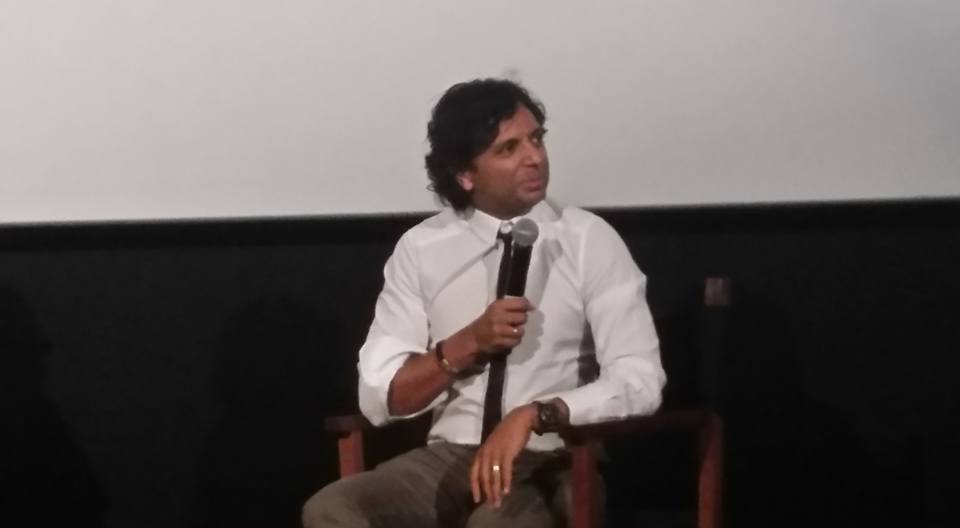
  • Storytelling: This is yet another M Night Shyamalan film that depends on a twist. The Sixth Sense is viewed as his best attempt at this, though that film only holds up for two viewings maximum before the novelty is shed. Interestingly, at the preview screening I attended Shyamalan was asked whether he wrote the plot twist first then filled in the rest. Shyamalan vehemently denied this, claiming he wrote stories about people and the twist followed. There is no evidence of this claim upon watching The Visit. Unlike The Sixth Sense, few will inflict a repeat viewing upon themselves. The film hinges on the twist, and your opinion on the twist will depend on whether you actually care about the main characters.
  • Characterisation: The grandchildren will divide audiences. 15-year-old Beca is a profoundly pretentious wanna-be documentary maker, who views life as a series of moments that she could record if they have the correct lighting and naturalistic elements. 13-year-old Tyler is a wanna-be rapper who tries to make up for his pre-pubescent features with attempts at charm and swagger. He likes to freestyle rap. They are each given a character trait which the film deems in need of ‘fixing’. Beca has low self-esteem and cannot look at herself in the mirror. Tyler is a germaphobe. Again, if you end up caring about the characters who may consider this important. Or, you may think it’s a waste of time.
  • Shaky Cam: Used to tell the entire film. Overused and nausea-inducing.
  • Genre mash-up: A blending of genres can work. This one doesn’t. Shyamalan explained that he wanted to blend family drama with the horror elements, along with comedy. The result is a film which is confused about what it actually wants it to be. It creates tension, sheds it to try to make you laugh, then tries for a quick scare.
  • Ending: Five people die during the film. By having a final sequence with the mother recounting the events of that afternoon fifteen years ago, reconnecting with herself and her past, then suggests that this was the entire purpose of the movie. That everything her children endured, and that those five people died for, was to allow her to come to terms with the events and herself. The fact the actual events of that afternoon remain secret creates tension that is bound for anti-climax. For what could be as awful as what her children endured, or the fact both her parents are now dead? Yes, the fact she hit her mother and her father retaliated was awful, but if one were to rank awful events during this film it would not own the number one place. The fact we are not given many opportunities prior to develop sympathy for her, reduces the emotional response that is supposed to be generated.

The Visit is only roughly ninety minutes long, but it feels like so much more. It’s bloated with ridiculousness, flawed ideas and frustrating characters.

M Night Shyamalan explaining his 'craft'

M Night Shyamalan explaining his ‘craft’

No Escape

Escape from [insert name of fictional Asian city here]

Considering the plot, characterisation and cinematography this film contains, it is not difficult to imagine it being made in the 1980’s (with Harrison Ford replacing Owen Wilson as the lead hero) or even the 1950’s (starring Jimmy Stewart). This is not a way of complimenting the film and suggesting it is timeless, anything but. This film is dreary, predictable and exceptionally dated. It’s portrayal of foreign conflict and politics is extremely problematic, a one-sided view of global issues that is almost xenophobic in presentation. The only thing that separates No Escape from a B-movie shown on the dark and misty unknown entities of Sky Movies channels after channel 315 is it’s talented cast, who are severely let down by the dross of a screenplay. Having not stayed for the end credits (in my desperation to leave the cinema)  I can only presume my hunch that the ‘research’ for this film was the greatest hits of The Daily Mail is in fact true…
Jack (Owen Wilson), an American engineer, leaves behind a failed business to drag his family to 
Southeast Asia to head his water manufacturing company’s new plant there. When they get there; they seem to be having problems, the electronics don’t work and rarely any cars are seen in the streets. When he goes to the market the next morning, he finds himself caught in the middle of a violent rebellion headed by armed rebels executing foreigners. Unbeknownst to Jack, just days before these armed rebels assassinated their prime minster. Jack must get back to the hotel and with the help of a mysterious British “tourist” (Pierce Brosnan), must get his family to the American Embassy in the midst of the chaos. But is there any escape? 
Firstly, the family. Jack is the archaic kind of hero of cinema long ago. He’s the Everyman. A husband. A father. By agreeing to this new job he has uprooted his family and doesn’t appreciate how they might feel, so he must learn his lesson through enduring this hero’s journey. He has a jarringly good range of survival skills; he knows instantaneously how to survive the most incredible and most ridiculous situations without having to think about it. Most depressingly of all, he is intentionally presented as all charmness and niceties whereas his wife Annie (Lake Bell) spends most of the film crying or with her face contorted into fear/outrage.  And, as bad as it will sound, their children are unbearably annoying. The majority of hurdles the family face are either caused by the children or severely complicated by the children. Pierce Brosnan enters, exits and reenters the film to little effect. His presence here echos something Micheal Caine declared when once asked about his role in Jaws: The Revenge,’ I have never seen it, but by all accounts it is terrible. However, I have seen the house that it built, and it is terrific.’ That must be the only reason that Brosnan is here giving a throwaway performance as a mysterious lothario Cockney.
The film’s biggest error is its portrayal of the ‘enemy’, The way the armed rebels are presented could have been an intelligent examination of ISIS or other militant groups. Instead they reflect the sentiments of those who use the term ‘swarm’ to label those currently seeking European asylum. They are characiatures: nameless, faceless and brainless. They are zombies, an epidemic the hero must save his family from.
No Escape mistakes creating tension by instead creating frustration. It’s one-part popcorn movie to two-parts shameless exploitation.

We Are Your Friends

You’ll Never Be Alone Again!

If you did not find yourself singing along when you read the above sentence, or are not aware of how that sentence links to the film’s title, this may not be the film for you. (Answer – it’s the central lyric to Justice Vs Simian’s 2008 hit ‘We Are Your Friends) The film is aimed squarely at Generation Y, bringing remnants of a traditional coming-of-age narrative together with modernity and scoring it with electronica. And it really works. Surprisingly so. It’s released at the perfect time, at the tail end of the summer, as the film reflects the comedown and bittersweetness this time of year brings. It’s the last party of the summer, are you in?

Cole (Zac Efron) is a 23-year old struggling DJ who lives in the San Fernando valley, the urbanised area on the other side of the Hollywood Hills, and dreams of becoming a world-renowned record producer. Cole’s three closest friends also dream of something big, something more than the lot they have been handed. Thursday night socials are the highlight of their week. The foursome spend the day hustling a crowd for nightclub, then reap the small rewards in the night with free drinks, the attention of women and the possibility of a small sum. During these night’s Cole gets to perform a set to warm-up the crowd for the headline act. It’s the only time he really feels alive. One night that headline act is James (Wes Bentley), a celebrity DJ who is losing the battles against his demons. He fears that he has lost his talent and relies on alcohol to push such thoughts away. His assistant and girlfriend Sophie (Emily Ratajkowski) loves him but is hurt to see him struggle in this way. James quickly becomes Cole’s mentor, becoming a big part of his life. So does Sophie, who Cole forms a connection with, which will force him into making difficult decisions about his future. 

Based on the trailers for We Are Your Friends it would have been easy to rule it out as an Entourage for the millennials. Cole’s crew is made up of similar archetypes as Entourage– the ‘hot head’, the ‘hustler’, the ‘brains’ and with Cole as the ‘talent’. Yet several aspects of the film prevent it from deserving this status, and in fact elevate it above it. Specifically the direction and cinematography. Directed and co-written by Max Joseph (one of the co-hosts of MTV’s Catfish) the film’s tone echoes the world it is set in: the humidity of LA, the tense uncertainty of their environment and the sheer unadulterated escapist joy that music can bring. Joseph makes some unique choices along the way with some stand-out sequences including the blend of live action and animation at the art gallery after-party and Cole’s scientific explanation of how to truly get the party started.  It’s the twist 2/3 into the film, along with a sleazy sub-plot, that brings the film back to Earth and makes this a far more realistic tale than the overindulgence and consumerist pornography of Entourage. We Are Your Friends is the Boulevard of Broken Dreams’ to the ‘Holiday’ of Entourage; this is a life in which the party isn’t always worth the resulting hangover.

Zac Efron excels in his role as lead. He brings an engaging mix of ambition and drive, retaining our sympathies throughout each difficult decision.  This film marks Emily Ratajkowski’s leading role (after rising to prominence in the music video for ‘Blurred Lines’) and she’s reasonably good with the material she has been given, stuck in a relationship in which she must watch her partner indulging in excess whilst having feelings for Cole. However in this film she does have an annoying habit of pouting after each utterance, and spends most of the film frowning. This could be an attempt at characterisation, but there could have been more done with the role of the enchanting muse.

The film, like it’s soundtrack, is pulsive and hypnotic. Watch this if you want to prolong your Summer for that little bit longer, or if you want to see a genuine feel-good movie.

Man From U.N.C.L.E

A light-hearted and immensely entertaining spy caper

Finally, we get a proper Hollywood summer movie (admittedly slightly belatedly as the week of British summer time appears to have drawn to a close…) Nevertheless, this is the kind of film you’d expect to see, a fizzling and refreshing take of a much-loved genre. The story might not be the most original, or particularly remarkable, but the immensely charismatic performances of its stars make it a hilarious romp that is well-worth seeing.

It’s 1963. In the midst of a global stand-off, with the world on the on the cusp of nuclear war, ex-con turned leading C.I.A agent Napoleon Solo (Henry Cavill) is tasked with tracking down and rescuing Gabby Teller (Alicia Vikander). Her father, who is currently missing, was a Nazi scientist who worked for the U.S government due to his specialism of nuclear weaponry. Solo finds Gabby easily enough, but was being pursued by leading KGB agent Illyra Kuryakin (Armie Hammer) who is also on a mission to locate Gabby. A chase sequence follows, with Solo managing to get Gabby over the Berlin wall into West Berlin and leaving Illyra on the other side of it. That’s not the last the trio will see of each other, as the next day Solo’a American handler and Illyra’s Russian counterpart bring them to a meeting and announce that they will be working together to stop a pair of former Nazi’s who are forcing Gabby’s father to create their own personal nuclear weapon.  They must go undercover and work together to find Gabby’s father, however, Solo and Illyra are given private orders from their seniors to steal the data from the project for their respective governments.

What follows is a breezy, stylisation and oh-so elegant production. It’s an affectionate tribute to the Bond series and other espionage classics; a fun and frivolous, and even rather fresh, take on a much-worn genre. With a sparky soundtrack, gorgeous costumes and speedy editing to set the tone you’ll be kept engage from frame-to-frame. These features, along with the magnetic leads, make for a charming ride of a movie. Vikander is scintillating as a German mechanic who becomes embroiled in matters of international performance. Hammer is incredibly endearing as a Russian spy who may have a sweet heart within his looming psychique. Then we have Cavill whose charm, wit and suave emulates the pre- Daniel-Craig-era Bond.

It’s nothing particularly new, but with a few inventive twists and turns this makes for a laugh out loud cinematic gem.

Trainwreck

It’s not quite a Trainwreck, but it’s not a home-run either.

Amy Schumer is America’s latest ‘alternative’ golden girl. With a hit sketch comedy series on comedy central, her renowned stand-up skills and now Trainwreck (which she both wrote and stars in) she’s being placed in the ranks alongside Lena Dunham (creator, writer and star of Girls) and Mindy Kaling (creator and star of The Mindy Project) in terms of ‘funny women who have something to say.’ It’s a lazy way of grouping (that’s Hollywood for you) but it doesn’t make a degree of sense; with all three women writing and portraying characters who are more life ‘real-life’ with ‘real’ issues and ‘real’ coping mechanisms. It’s also applicable for the film in question, with Schumer consequently being lauded for greatness with the comedy schtick she displays here.

Amy (Amy Schumer, who has admitted the role is a more intense version of herself) and her younger sister Kim (Brie Larson) are told by their father, from a young age that ‘monogamy doesn’t work. This why he and their mother are divorcing; explaining this to the girls using an analogy about dolls and would they really want to ‘only ever play with one doll their whole lives.’ It’s a clever and believable st-up, explaining adult Amy’s ‘promiscuous’ behaviour (let’s just ignore the loaded idea that such behaviour requires an explanation.) 23 year’s on from her dad’s announcement we are reintroduced to Amy who almost has sex with a guy she doesn’t really know, which goes less than smoothly before she ends feigning sleep. In a voice-over narration she pointedly informs us they we are not to feel sorry for her as she has a great job, a great apartment, great family and great friends. This is an aspect really emphasised within the trailers and promo, that Amy has a great life and doesn’t need a man.

However this is contradicted within 15 minutes when we enter her work place, a men’s magazine called S’Nuff. Her boss ( a near unrecognisable Tilda Swindon) is bold, brassy, frequently insulting and demanding. Yet it’s uncertain if we are actually meant to admire her, understanding that these traits are a unfortunate necessity to survive and succeed in the male-dominated industry that is journalism. What is most unsettling about Swindon’s presence her (she is fantastic nevertheless) is how media outlets have reacted to her appearance. She’s tanned, with blown out blonde hair, eyeliner and power suits. Many have been quick to say how ‘glamorous’ she looks, and with an unclear intention of whether she’s a caricature or a statement it’s unsettling as it’s almost saying that her over-the-top stylistics are an ideal whilst ignoring how immensely unlikeable her vulgar character is.

The film is also quick to point out that whilst Amy is having sex with multiple different partners, none of this sex is particularly enjoyable or fulfilling. In fact the sex scenes that the film shows (until she meets Bill Hader’s character) seem more endurance than anything else. Why have a film which makes such a big deal about how the main character is a free and single woman enjoying life, then reveal that it’s not all it’s cracked up to be? That’s the most difficult aspect of the film, and one which is confusing when considering the advertising and how this film is reflecting modern women. Is the film saying that any women who have a lifestyle like Amy’s and who believe they are enjoying it, are actually in denial and in desperate need of monogamy to ‘fix’ their lives and impose a traditional lifestyle? In fact this film could, depressingly, easily be read as an attack of post-feminism and an assertion of conservattist attitudes on ‘deviant’ women.  Because, aside from some of the over-the-top set pieces (director Judd Apatow’s specialty),  this film really is nothing more than a conventional romantic comedy. (Possible spoiler alert if you have never seen a romantic comedy.) Single girl thinks she has a good life, meets a ‘nice’ guy and learns the error of their ways. Then things go wrong, they break up and then she wins him back with a romantic gesture. There is nothing unconventional about that narrative (which at 2 hours running time really drags!) Nor is their anything unconventional about the jokes or humour, with a hit’n’miss joke rate of 3 misses to every one hit.

So why exactly is this film being heralded for being so ‘refreshing’? Because the reviews writing about it have never actually heard a typical conversation had by a group of women? Because a female character in a film got to say things that Seth Rogen has been saying on screen for decades? Or because cinematic gems from last year*, with slightly more original narratives and a refreshing look at female characters. went mostly unseen last year due to limited releases? Whilst Trainwreck is reasonably funny and entertaining, and would be an adequate movie to watch with friends and accompanied with alcohol, it’s merely a frequently used story with fancy accessories to repackage it.

  • *The Obvious Child
  • * In A World…
  • *Appropriate Behaviour