
war
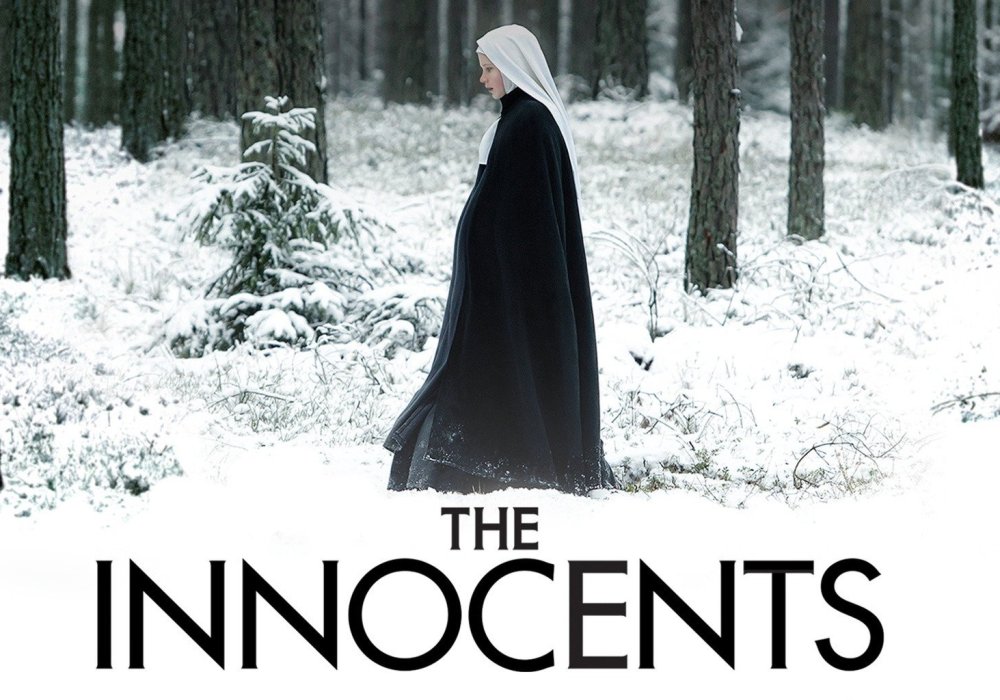
The Innocents
“Faith is twenty four hours of doubt and one minute of hope.”

War Dogs
“How did two twenty-something young men land a $300 million Pentagon contract?”
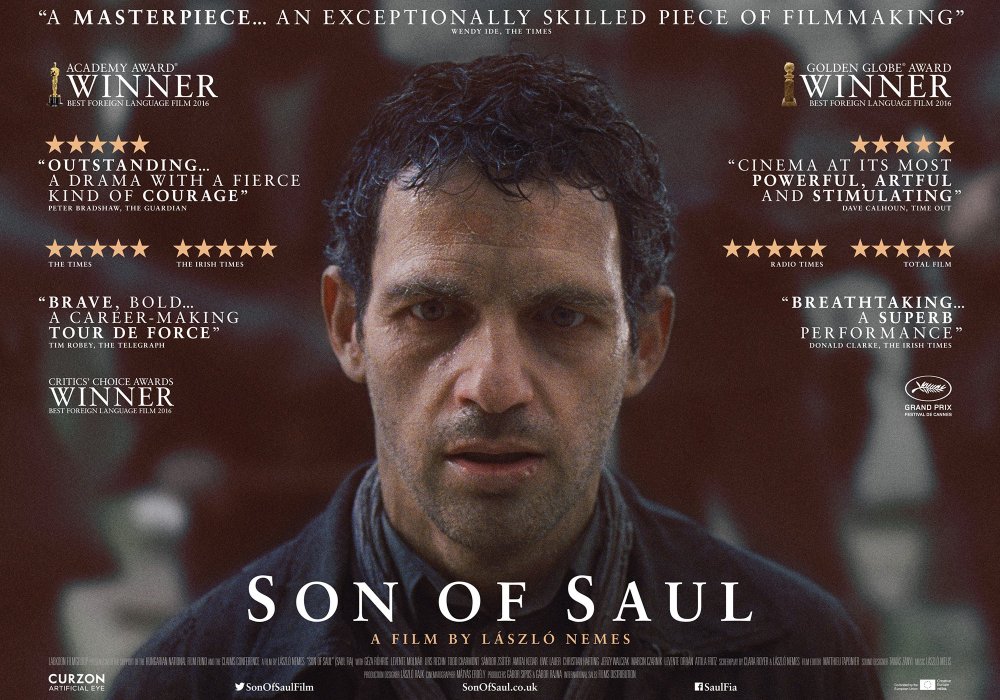
Son of Saul
A Masterpiece
When I left the mid-day screening of this film it was sunny outside. Bright rays gleamed upon the cinema and I glared at them. As I walked home there was a busker singing ‘Walking on Sunshine’. I glared at him. As I passed through a heaving farmers market I glared at the merry people chomping away. I couldn’t work out why I was reacting in this way. Ordinarily I would be thrilled by walking out of the cinema into sun. I would beam at a busker singing Katrina and the Waves 1983 seminal feel-good classic. And I’d probably only side-eye the hipsters filling the farmers market. Why was I so angry at everything? It seemed obvious that it was most likely my response to the film and the horrors it entailed. But these were not horrors that were new to me – I hadn’t learnt anything new and the events of the film were horrifically familiar.
That’s when I fully grasped just how masterful ‘Son of Saul’ is. It’s almost a rethink of how to portray the Holocaust – by not showing it at all. Gone are any attempts at glamorization, of showy melodrama or noble heroism. Instead we are shown pieces of events – snippets of the evil that took place only feature in the side of or outside of the frame. Overt dramatization is replaced by close-up and over-the-shoulder shots with shallow focus on our central characters face. We hear the events but we don’t see them – leaving the spectator’s imagination to join the dots and fill in the gaps. As Alfred Hitchcock said, “A glimpse into the world proves that horror is nothing other than reality.”.
It is 1944. Saul (Géza Röhrig) is a Hungarian-Jewish prisoner at Auschwitz who is part of the Sonderkommando unit. He is forced, under threat of death, to work for the Nazis in removing the “‘pieces” (the term used for bodies) from the gas chambers. Although the job delays his death it is only a temporary pardon – the job, and therefore his life, has an expiry date of five months which he is fast approaching. When clearing out the chambers post-gassing he finds a still-breathing boy that he believes to be his son. The Nazi doctors swiftly suffocate the boy and decide to have an autopost performed on him to find out how he survived. Saul desperately endeavours to stop the autopsy and find a Rabbi to lead a proper burial for the boy.
The events that follow are unforgettable in terms of content and portrayal – relentless and horrifying yet the carnage is skillfully implied as opposed to being explicitly shown. The two hours spent watching this film are two hours spent being a spectator in Hell. Death is not shown but instead resides off-frame – an omnipotent and omnipresent force haunting the frame. Just as one should not look directly into the sun we cannot look directly into the face of evil.
The opening sequence must be forever acknowledged in its audacity and its viscerality. We observe Saul as a sheepdog figure, one of many leading herds of bewildered people into what appears to be a changing room. An off-screen voice offers reassuring sentiments they are going for a shower and offers promises of what will follow. Our focus never leaves Saul’s face as we swiftly realise with unbearable inevitability what will happen next. We don’t see the people enter the gas chamber. We don’t see them die. But we do hear them die.
Rohrig’s performance is truly exceptional – his Saul is haunted and hollow. Grizzled by the unspeakable horror, his jaw is rigid with determination and his eyes are empty. We can only wonder how he keeps on living. The fact this is Rohrig’s first performance, as it is the director’s first feature, only adds to the remarkability of this film.
It is unbearably difficult to write this review – every word or phrase seems inadequate to fully describe the soul-altering experience of watching. It leaves you so numb you can no longer cry. Unlike any other Holocaust film there is nothing here to sweeten the devastating blow of watching this film – no beautiful musical score, no magical rescue and no story of redemption. It’s an intense and immersive experience with a the visceral immediacy it provokes that is ultimately necessary. Truly unforgettable.


Louder Than Bombs
What happens to a bomb that doesn’t explode?
My response to this film is surprisingly (well it would be to my past self) problematic. If I had reviewed it soon after watching yesterday I would have been rather damning of the film. Now, with roughly 28 hours worth of distance from seeing it, I feel slightly warmer towards it. (Only a few degrees mind – let’s not go crazy). With a level of retrospect I can admire the ideas and ambition of the film, something which I wouldn’t have been able to do initially after watching. However, whilst I may feel softer towards it I am still not a fan and think the film is largely unsuccessful it what it wants to achieve.
Three years ago famous war photographer Isabelle Reed (Isabelle Huppert) died in what most believed was a car accident. Now, as a museum retrospective of her life and works is fast approaching, her close friend is about to write an article about her in the New York Times and as he advises her widower Gene (Gabriel Byrne) he will mention in the article the fact that her death was most likely suicide. Gene must now find a way of telling his youngest son Conrad (Devin Druid) the truth before he finds out through other means. An opportunity to do so arrives when eldest son Jonah (Jesse Eisenberg leaves his wife and newborn daughter to come home and help look through his mother’s work space to find photos for the retrospective. Whilst home Jonah must find a way of coming to terms with the past in the form of ex-girlfriend, his brother’s difficult present and how his future role as a father may be shaped by his relationship with his own.
It’s interesting that through writing the above plot summary I found myself again warmly engaging with the key ideas of the film. All of us have been touched by some sense of loss and each of us will handle the grief in different ways – some may mentally stay in the past with that person whilst others may push such thoughts aside and stay primarily focused on the present and future.
All of the actors do a fine job in subtly portraying grief. Byrne’s father trying to do the right thing for his two boys whilst watching his relationships with both fade away truly pulls at the heartstrings and occasionally at the bone. Druid plays the difficult emotionally stunted teen finely and somewhat reflecting the universal horror of adolescence. As difficult as my audience-actor relationship is with Eisenberg (forgiveness for his version of Lex Luthor is still far far away) but at times I did appreciate his character Jonah. I can say quite honestly that in the film’s opening sequence I even enjoyed watching him.
But it’s Huppert’s grief that is perhaps the most visceral, even though it is she that is being grieved by the family she left behind. It is a roughly two minute sequence about halfway through the film that really demonstrates this. The camera just focuses on her face in close-up for two minutes. For those two minutes nothing else happens. But as we know her character and we know the emotional battles she suffered (between her art and being a mother/wife) we read the metaphorical scars on her face. We look into her eyes and see the utter despair. We look behind her mask in a way we either chose or are unable to do with each other in real life.
All of this being said I think these ideas are stunted by execution. Though the pontification and using on the nature of grief is extraordinary and truly applaudable, either through intention or accident we are unable to connect with any of the characters – all are pretty unlikeable on various levels and for various reasons. It’s this aspect of the film that will and has been truly dividing audiences. Perhaps it is intention – that grief cannot and should not be sugarcoated, sometimes it will bring out the worst in each of us. However I am in the camp that views this as a flaw and something that prevents me from truly connecting with the film.
Whilst I well and truly admire the film’s sentiments and ideas by borderline disdain for it’s characters stops me from truly appreciating its merits. The fact the film takes a rather poetic storytelling approach, of drifting between moments, of days being indefinable, of present day being interchangeable with memory, did was not cohesive enough for me. In some ways I write this paragraph with a degree of apology, as someone who lost a relative (my uncle) in June and will soon be facing the prospect of that first anniversary without him. Sometimes I reflect on whether I am grieving ‘properly’, if I am approaching my grief ‘healthily’ and if I am ‘normal’ in my response. The film carefully weaves these ideas into it’s narrative but somewhat abandons them in favour of artistic statement and style.
Whilst full of poignant moments the film is ultimately too cold and reserved to provide the cathartic intimacy it appears to wish to provide.


Eye in the Sky
A powerful and reflective examination of the cost of warfare.
Very few films are this good. It’s well-acted by a truly terrific cast, impeccably shot with a thrillingly taut script. It also poses such incredibly cerebral and difficult questions without copping out and providing easy answers. Then again, war itself doesn’t provide any easy answers.
Colonel Katherine Powell (Helen Mirren) arrives at a military base in Sussex to oversee a high-level mission, to capture Al-Shabaab extremists who are meeting at a safe-house in Nairobi. Jama Farah (Barkhad Abdi) is one of numerous undercover Kenyan field agents on the scene using covert surveillance. In Nevada USAF pilot Steve Watts (Aaron Paul) takes his seat alongside rookie Carrie Gershon (Phoebe Fox) to provide aerial surveillance (the Eye in the Sky). Lt. General Frank Benson (Alan Rickman) arrives at his work, an office in London, taking the seat at the head of a table with members of the government to oversee the operation. What starts of as a seemingly routine capture mission soon becomes deeply complicated when it’s discovered the extremists are preparing to send two suicide bombers into the busy city streets. The only option appears to be to drop a hellfire missile on the safe house, but a little girl is out on the street nearby who would be fatally injured in the process. Those involved are deeply conflicted about what to do, and time is quickly running out.
I do not say this words lightly, but I firmly believe that everyone should see this film. Far beyond the fact that it is superbly acted and written, things I will discuss shortly, few films about war are this suspenseful and affecting.. The very term ‘collateral damage’ is a term complicated enough when you reflect on the fact it is a label used for human beings caught in the crossfire but having the film truly immersing the audience debate generates a new level of soul searching. This is a genuine nail-biting thriller, with moments of true edge-of-your-seat-ness and wringing your hands in despair.
The cast for this film is awe-worthy and all of their performances justify completely justify that awe. This is one of two posthumous roles for Alan Rickman and serves as a reminder of what a genuine talent we lost this year. His iconic tone and manner are both fully in display here, truly serving his character and the film itself very well indeed. Helen Mirren is wonderful and fully believable as the stoic Colonel who watches her mission escalate from out of her control yet never losing her calm or nerve in the process. Aaron Paul is extraordinary as a man with two years experience in the job who is finally being told to pull the trigger, torn between duty and morality. Barkhad Abdi is one of the characters we know least about yet the strength and depth of his performance allows the audience to truly understand his role in events.
The script, cinematography, sound and performances of Eye in the Sky align to make this easily one of the best movies of the year so far. A riveting, fully entertaining yet equally chilling study of the morality of warfare. The questions it raises are not and cannot be truly answered yet will continue to haunt long after the credits roll.
This needs to be seen by all.

 Charlotte Sometimes