The Lady In The Van

British Cinema at its finest

This film is so warm, kind-hearted and endearing. Whilst on the surface it looks to be a meek and mild comedy about a nutty old lady it is so much more than that. It’s full of witty observations about society – the  lens is pointed firmly at liberals who have earned enough to become middle class yet feel a degree of guilt about their new-found  wealth – and how we do/don’t look after each other. Maggie Smith as the eponymous ‘Lady’ is magnificent,  bringing a richness and poignancy to a fiercely opinionated powerhouse of a figure. Should this be 80-year old Smith’s last leading role, it is one to be proud of. Her performance in this ‘Mostly True Story’ both perverse and profound in equal measure.

In the 1970s playwright Alan Bennett (Alex Jennings) moved into an affluent street in Camden. He swiftly became acquainted with his neighbours and the nomadic interloper Ms Shephard (Maggie Smith) known by many as the infamous ‘Ms Camden’. Ms Shepard, as Alan insists on calling her, lives in a van. The neighbours do not know why she lives in the van, or even who she is. Is she called Mary or Margret. What they do know is that she is homeless and prone to dictatorial ravings. Due to a mixture of guilt and territorial conviction they protest little (at least to her face)  as she drives around and parks up where ever she fancies. However, after council and double yellow line interference, she can no longer continuing temporarily pitching up where she choses. Loathe to offer too much help to the cantankerous old woman Alan lets her use his drive temporarily to park her Van. 15 years pass, with an often-reluctant Alan slowly-forming a bond with Ms Shepard. As time passes and takes its toll on Ms Shepard Alan begins to learn of the past that continues to consume her. 

This is the type of story that could only be true, it would be nigh-on impossible to create a character like Ms Shepard. The majority of her views were left in the dark ages and the way she treats those who try to help her is often despicable. And yet, when personified by Dame Maggie Smith, she is made almost loveable. Her hidden pain and turmoil often explaining some of her brusque character traits. Jennings is superb as her friend and foil, presenting the conflicted feelings Bennett himself had towards helping the formidable Shepard. The supporting cast are also extraordinary: Frances De La Tour, Jim Broadbent and Claire Foy to name just three, all bring various degrees of support to the grande dame of squalor that is Ms Shepard. The slow and tragic realization that Ms Shepard was more sinned against than a sinner is heart-breaking yet handled with such caution and care.

Considering the topic matter this film is ultimately uplifting, almost joyful in its exploration of what draws people to care and look out for one another.

Hunger Games Mockingjay Part 2

The least ‘Hunger Games’ of the ‘Hunger Games’ Franchise 

After 7 years it is time to say goodbye to Katniss Everdeen and the dystopian post-apocalyptic nation of Panem. Suzanne Collins mega-success trilogy was given what shall hereby be known as ‘The Harry Potter Treatment’ and had its final book split into two films *cough for more money cough*. How successful that decision actually was will divide audiences. Part two picks up straight after part one, literally straight after, with Katniss awakening from her reunion/fight with love-interest Peeta.

[2/3 of this review will be spoiler-free, the final 1/3 entitled ‘Ugly’ will not be]

Katniss (Jennifer Lawrence) awakens with injuries both physical (damaged vocal chords, swelling and bruising around her neck) and mental (having witnessed her once-fiancee’s resulting psychotic break after mental torture). Aware that the gentle and warm Ying to her brusque and cold Yang has been tortured, possibly beyond repair, her endeavour to destroy the totalitarian regime of President Snow (Donald Sutherland) is stronger and more determined than ever. Whilst continuing to undertake the P.R stunts set for her by President Coin (Julianne Moore) Katniss decides to set her own agenda by sneaking into the Capital and wreak her own personal vengeance against Snow. 

The Good

The acting in this film is absolutely top-class. Lawrence is continually astounding as Katniss, playing her with a believable and engaging distance. Katniss has seen and done to many horrific things – Jennifer manages to present this in such a way that the audience still manages to connect with Katniss even when Katniss disconnects herself from everyone on-screen. Moore is fantastic as President Coin, presenting a character with understated depth. Woody Harrelson is as enjoyable as ever as Haymitch, as is Elizabeth Banks as Effie. Though have far less to do in this than the three other films their roles are still scene-stealing. Donald Sutherland is so good at being bad, presenting Snow almost as Nero watching Rome burn. The stand-out has to be Plutarch as played by Phillip Seymour Hoffmann (who sadly passed away on Feb 2nd 2014, mid-way through filming this movie). Although Hoffmann’s presence in the film is not unexpected, he was present in the previous two films, there is still a slight and devastating surprise at seeing him on-screen. The success of his character is a staunch reminder of what a great loss he was.

The Bad

For many, ‘Mockingjay’ is the weakest of the literary trilogy. Tonally it is very different from the other two books, less ‘Battle Royale’ and more political assassination. With the film adaptations ‘Mockingjay Part One’ was rather exposition-heavy, a lot of talking and borderline critique of politics. This film is almost-stoppy starty in tone, with time often needlessly given to scenes which did not require quite-so-much screen time. There are many sequences in the film which are stand-out. When the Games themselves are brought into the Capital there are some real frights.  However there are many scenes which almost drag-along, talking about what characters are going to do next then showing them as opposed to getting straight into the action. The whole ’76th Hunger Games’ aspect is cut too-short far too-soon. There is also too much screentime given to pontifications on leadership and power, speeches which become rather mawkish after a certain amount of time.

The Ugly (Herebe the Spoilers!)

The ending. When referring to the ending I don’t mean the final face-off between Katniss and Snow, or Katniss’s decision over her love interests. I mean that final 2 minute long sequence with Katniss five years into the future. It’s exactly how the book ended, though that was set further into the future and was perhaps reduced to minimize any necessity for  Harry Potter epilogue-esque aging make-up, so arguably it’s the source material which is being questioned here as opposed to the film-makers.  It is truly hard to really feel comfortable with ‘that’ ending (with Katniss, Peeta and their two young children sat in a field). For a film which prides itself on it’s strong female lead, who was not laden with any limiting feminine attributes and could truly hold her own on a battlefield, then ending with the ‘reward’ of children and a nuclear family. On the one hand it could be read as symbolic, thanks to the actions of their parents these two children will not have to undergo the horrors of the Hunger Games. Yet it could easily be read as a patriarchal return, shedding her warrior status for frumpily-dressed mother. Either way, the ending is less than a bang and more of a whimper.

If you’ve seen the previous three films it makes sense to see the finale on the big screen. But lower your expectations, set them to’ very slightly disappointing’ and embrace the film for what it is. Whilst it may have uneven pacing, the ensemble cast present a masterclass in acting. Focus on enjoying the stand-out sequences and saying goodbye to some fantastic characters.

Burnt

A rather overcooked romantic dramedy

Does anyone these days aspire to be Gordon Ramsey? Do they wish to control a kitchen as their lair, spewing and spouting swearwords and insults as they prowl? Ramsey had his peak popularity in the mid-noughties, which is probably when this film was first placed on the boil. It then got forgotten about, rushed to be finished with all of its ingredients past sell their best before date.

Adam Jones (Bradley Cooper) is in New Orleans shucking oysters, noting down the amount as he does so. He hits one million, downs his tools and walks out despots protestations of his employer. Those million oysters were his penance for his past indiscretions, now complete he can have a second chance. He goes to London to reunite his crew, although there is much bad blood between them. Adam was a rock star chef in 90s Paris – renowned for his ability and persona. However Adam was also a drugs, alcohol and sex addict who managed to burn all of his bridges who was forced to flee Paris and go into hiding. He must be forgiven by his old friends and new (Sienna Miller’s Helene) to his dream of three Michelin stars.

The film’s main ingredient (when will the cooking puns end?!?) is Bradley Cooper. Considering the fact the film’s main plot is so outdated it is perhaps the only reason people will go to see the film. However his character is so unappealing and unsympathetic that you’ll feel had. His character’s closest real-life counterpart is Gordon Ramsey, swearing continuously and having frequent blow-ups about food, with every other character either swooning over his apparent but unproven genius or admonishing him for wasting said-genius. There is genuinely no reason to like his character, which is this film’s fatal flaw. As the narrative limbers from one ‘disaster’ to a next tension is supposedly created by our concern on how he will cope/survive. If we don’t like the character enduring the trials then we don’t really care. This isn’t helped by the lack of realism within these trials – he is hounded by drug lords for the money he owes them. These drug lords are immensely polite, turning up occasionally to speak to him away from other people, and only visiting once or twice to hound him for the large amount he owes them. We are meant to care about Cooper’s character – experience concern that he may not achieve his ambition for three Mitchelin stars. Instead we experience disinterest or distain for such an ass-hat of a character.

Sienna Miller however is gutsy, transforming herself into a tattooed, pierced and partly shaven-haired single mother sous chef. Her character is far appealing than Cooper’s. Yet she is forced to endure conversations with Cooper’s character of the nature of food and eating. These conversations are nauseating to watch, not because they are hunger-inducing but for the sheer pretentiousness of their proclamations.  ‘We eat to stop eating.’ – That’s sooo deep! The rest of the friendship group are entertaining if one-note; the ex-prisoner, the novice, the daddy issues, the rival etc. The script is bland, drifting from one drama to another, and filled with stupid lines about how John Adams used to be an addict and how he hurt people when he was an addict. It’s all so ridiculous and bordering-on fluff.

If you’re seeing this for Bradley Cooper then don’t waste your time. If you’re seeing it for the food, just re-watch an episode of Hell’s Kitchen. An incredibly dated waste of a movie.

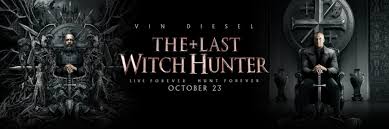
The Last Witch Hunter

Lightweight, idiotic and trashy – but not in a good way…

First with the positives; I got to walk on a red carpet last night! After picking up the tickets to the premiere from a tent just off Leicester Square Gardens, then seeing the hundred-odd people surrounding the red carpet, I then got to walk it! It was a pretty incredible experience. Although it was brief, and unsurprisingly no-one knew/cared who I was, it was a bit like walking on air. Perhaps more of a case of floating along than walking the red carpet. There was a brief Q&A before the actual screening of the film – with three of the main stars (Vin Diesel, Michael Caine and Rose Leslie) and director (Breck Eisner) which was also exciting – primarily as I can now say I was sat less than 20 feet away from Michael Caine. Now onto the less positive stuff; i.e. the film itself…

800-years-ago Kaulder (Vin Diesel) lost his wife and daughter to murdering witches. Determined for revenge/justice he joins a raid to destroy the Queen of the witches. Many of his peers die, but Kaulder does not. Kaulder is the last man standing in a face-off with the Queen, one which results in both of their apparent deaths. However, the Queen curses Kaulder in her last breaths to remain immortal – never to love and never to find peace. Now living in present day New York, Kaulder works with a religious sect to combat the thread of witchcraft. His liaison, Dolan 36 (Michael Caine), is one of his closest friends and about to retire leaving Dolan 37 (Elijah Wood) as his replacement. But when tragedy strikes, and Kaulder realises the Queen is returning, he must rely on help from the unlikeliest of people – a witch called Chloe (Rose Leslie).

Oh dear. Just, oh dear. This film is as good as its trailers (i.e a shambles). Again, as I have done with previous reviews, I will rely on bullet points to make my rant somewhat comprehensible.

  • The Plot – Derivative and out-dated. During the Q&A the director boasted of the film’s originality; proud of the fact it is not based on a comic book/tv series etc. After watching the film, this appears to be a flawed statement. The narrative is far from ambitious or new. The plot twist is immensely vanilla. All of the dialogue is just exposition, telling the audience what has happened/what will happen next. The scene with Max in the bakery, and the conversation between Kaulder and Dolan 37 exemplifies this, with Kaulder actually saying to 37, ‘Did you understand any of that?’ This is purely for the ‘benefit’ of the audience, who are clearly being presumed to be of minimal intellect. Kaulder then ‘kindly’ explains it to 37/us. The actual mission Kaulder is on is both absurd and poorly-paced, drifting from one set piece to the next. The story itself is messy, and how it is told it unbearably flat.
  • Gender roles – Who doesn’t love a casual bit of misogyny in their cinema? In a year that saw our silver screens graced with Imperator Furiosa (Charlize Theron) in Mad Max: Fury Road we have a film that returns us to the woman-as-sidekick/pretty face. Considering how fierce her turn as Ygritte in Game Of Thrones was, Leslie is ill-served here. Her character is a witch, dressed in black and with loads of jewellery (another tick for the lack of originality box). The character could have been given any career but no, Chloe works as a bartender. [Spoiler alert!] it gets burnt down at some point and she spends a good chunk of time blaming Kaulder, moaning that the bar was all she had. Clearly she had forgotten just how big her Central New York apartment is (a problematic feature of tv/film is giving broke characters unrealistically fabulous apartments – a topic for another time). She then spends much of the time in emotional turmoil and needing to be rescued. Her witch powers are the kind that requite her to sit still and go into people’s minds – disappointing considering she could have been scripted to instead kick ass with her powers or even be able to defend herself without his help. The fact Vin Diesel himself must be almost twice Leslie’s age, and his character about 775 years older, a suggested romantic subplot is both ridiculous and patronising. Why not hire an older actress if so insistent on partnering them off? The fact that her accent wavers from cut-glass to eardrum-slicing really doesn’t help her characters attempts at appeal.
  • Vin Diesel – Kaulder is sad (blank expression and monotonal voice). Kaulder is being sardonic (blank expression and monotonal voice). Kaulder is being brave (blank expression and monotonal voice). Vin Diesel crosses the line from being hilariously bad in this role to being depressingly bad. His attempts at quips and banter fall flat without intonation and emotion. Vin Diesel in person has a great deal of charm but is so unconvincing in this with an incredibly wooden performance. Coincidentally you’ll spend the whole film waiting to boom the line, ‘I am…’ Character traits for Kaulder are heavy-handed added on – his predilection for watches to show that he’s deep and reflects of time because he’s immortal. He drives a fast sports car because he can afford one as he’s lived forever. He only sleeps with air hostess as he has a fear of commitment. All of these attempts at providing depth instead reveal how transparent the plot and its characters are.
  • Direction – The special effects are so bland and unspectacular, almost sludgy in presentation. Even without advertising (which has a separate budget) this film cost $90 million to make. Where did it all go?

This film is not even entertaining to be ‘so bad it’s good’. It’s just bad. Bad and boring, which is an unforgiveable crime in cinema.  Avoid.

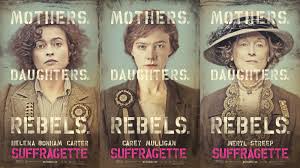
Suffragette

‘I’d rather be a rebel than a slave’

Upon reflecting on the important role the suffragettes have in history in their obtaining the right for women to vote, it’s incredibly hard to believe that in the eighty-seven years since all women in Britain over the age of 21 could vote this is the first movie to actually portray the events that provided the catalyst for the 1928 parliamentary decision. It was actually in 1918 that the first women of Britain could actually vote – but they had to be over the age of thirty and meet certain property conditions. Suffragette does not focus on either of those periods of time, but looks at what is perceived as a turning point in the movement – the early 1910s – when social views of the suffragette movement shifted. At the start of the era, like the start of the film, the media and therefore society is fiercely damning of these immoral women. By the end of the film, on the cusp of WW1, things had started to turn. That was through the great sacrifices by many women, and the ultimate sacrifice by one woman. That is the complete narrative arc of the film – whilst an excellent insight into this era it seems an unusual choice for a film which could have instead focused on portraying the actual granting of the vote. Consequently the impact of the film is almost limited, which, considering how much build-up and anticipation there was prior to release, may ultimately frustrate some viewers.

Bethnal Green, 1912. Maud Watts (Carey Mulligan) is a married mother in her early twenties. She works long hours in brutal conditions at a laundry, then goes home and cares for her young son and husband Sonny (Ben Whishaw). She’s aware of the women wanting the vote, but it seems so distant and irrelevant to her that she pays in little attention or mind. However a blossoming friendship with Violet (Anne-Marie Duff) leads to Maud giving a personal statement on her work and living conditions to a committee of MPs. ‘Laundry work is short if you are a woman’, she tells them. Maud’s mother died at work, scolded by a boiling vat of water. Maud has already been badly injured at work, and even faced sexual abuse. Should she have more children, her future-daughters will work there, facing the same risks and dangers. The cycle will continue, unbroken and relentless, unless Maud can do something to make it change. Violet invites Maud to attend a meeting with the East End Suffrage Movement. There she meets Edith Ellyn (Helena Bonham Carter), Emily Davison (Natalie Press) and later, albeit briefly, Emmeline Pankhurst (Meryl Streep). Maud tentatively but swiftly joins their ranks and campaigns for the right for women to vote but with the government, in the form of Inspector Arthur Steed (Brendan Gleeson), desperate to quell any uprising Maud is risking all she has to make a difference.

Perhaps because of the incredibly high expectations placed upon the film, it is not fully the fault of the film-makers that Suffragette does disappoint to some extent. The cast are truly extraordinary, and create characters so heart-breakingly believable that it would be nigh-on-impossible not to engage emotionally with this film. However, it doesn’t quite feel enough. Firstly, as previously mentioned, the creative decision to focus on less than three years is one worthy of debate. It allows a heightened focus on a short but important period of time, yet consequently drags out certain moments for too long. There is then the fact that, although Mulligan is fantastic in her role, Maud did not actually exist. Unlike the majority of other characters, Maud was a fictional creation for the purpose of the film. Though based in testimonies of real women from the era, her character arc is cherry-picked from multiple sources. The purpose of a composite character, as is true of this case, is to serve as a cipher; an ‘Every-Woman’ to act as an entry point and an emotional compass to the events we witness as an audience. For the most part this is successful, yet is at times almost frustrating. There are other characters in the story, real-women who do not get their voice heard as a result. Although the life of Maud is used to articulate the difficulties of life for the working class women, as opposed to the middle-class Mary Poppins suffragette, it feels rather rote. Maud, instead of feeling like a real character, almost feels like a narrative tool used to access the greatest hits of the suffrage. This has not been helped by the misleading advertising surrounding the film – yes Mulligan is our lead and Bonham Carter plays an important role, but Streep’s role is not nearly significant to require the top-billing the promotional material has given her. Although she does deliver a rather inspiring speech, her thirty-seconds of running time seems anti-climactic as a consequence.

Although Suffragette does offer some clear insight into the era, from the hunger strikes and force-feeding to the police brutality and social ostracisation that came with being a suffragette, it does not feel enough. Whilst it is a no-frills look into a momentous period of history, at times it feels more like a dry history lesson than the visceral and powerful movie these women deserve.

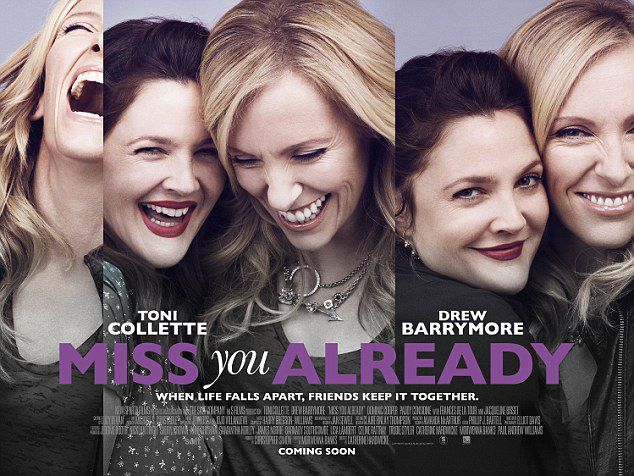
Miss You Already

An unsentimental yet sincere depiction of illness and friendship

It may not have a particularly original plot and may be presented in a way that is ultimately wildly manipulative (read as: you will cry) the film itself is admirable in what it, mostly, achieves. It presents a relatively honest depiction of breast cancer; the impact it places upon relationships both platonic and romantic along with the physical toll it takes. Whilst that alone is immensely refreshing, this is furthered by the presentation of a friendship that will resonate with audiences’.

Millie (Toni Collette) and Jess (Drew Barrymore) have been best friends since childhood. They have experienced every first together, everything from first kiss to first child, with their polar opposite personalities allowing them to bring out the best in each other. Whilst Jess is more conservative and stable, Millie is the overconfident and glamourous wild-child yet they are totally and completely inseparable. Both are happily married, yet rather than this separating them their respective husbands (Millie is married to Dominic Cooper’s Kit with Jess married to Paddy Considine’s Jago) and Millie’s two children instead make up one big family. But the family is rocked by Millie’s life-altering diagnosis of breast cancer, just as Jess finds out that she is pregnant with her much-longed for first child, which will put their friendship and their makeshift family to the ultimate test.

Collette does any amazing job (as is to be expected) playing Millie. Her acting, along with the screenplay and the film’s direction avoid what many similar films have done in the past, of making the person suffering from cancer into some sort of saint or martyr. Instead Millie stays the same as it is implied she always was – a mostly well-meaning but often not very nice person. This feature is really the film’s only comparatively unique feature. This, along with the portrayal of her treatment, make the film feel more honest and in a sense more brutal than others of this kind. Millie starts the film loud and vulgar, and although she spends the majority of the film in an oncology unit, she still stays the same person. Cancer doesn’t ‘fix’ her personalities ‘faults’, at times it only exacerbates them, consequently making her more relatable than many other presentations of the disease. It’s a reminder that cancer can, and with the current odds will, affect all of us whether we are good, bad or, like Millie, the grey area in-between.

However, it would be wrong to say this film is truly great or fully lives up to its potential. As we only see Jess and Millie’s friendship through flashback or montage, we are unable to fully latch onto their story. Aside from their respective health concerns, and a few references to a shared love of Wuthering Heights and R.E.M’s Losing My Religion, we aren’t really given enough about what makes them such good friends. The film constantly tells us this, but never shows us quite enough to engage us fully with their bond and ultimately does not earn the empathy it had the potential to do so.

Nevertheless, the ensemble cast, with Collette at the forefront, are all reliable and supply solid performances. Jacqueline Bisset is fantastic as Millie’s actress mother, Frances de la Tour momentarily steals the show in her short appearance as a wig-maker and Tyson Ritter (lead singer of All American Rejects) pops up as a swaggering barman.

From the opening of the film the inevitable outcome is presented, yet it will withhold interest and induce multiple bursts of tears throughout.

Bill

William Shakespeare: The Lost Years

Suffice to say, this is not another Bad Education Movie-style television to big screen disappointment of an adaptation. The team behind Horrible Histories have succeeded in translating their unique combination of historical-informed humour and slapstick. In fact Bill, along with Horrible Histories and their fantastical series Yonderland, has secured their place as natural successors to Monty Python and Blackadder.

Bill Shakespeare (Matthew Baynton) is a family man. He lives with his wife, Anne Hathaway (Martha Howe-Douglas), and their three children. Bill plays lute in a band called ‘Mortal Coil’, but after one concert where he tries to steal the spotlight he is told to ‘shuffle on’. It’s not us it’s you, they tell him. So Bill moves onto his next dream, being a playwright. As Stratford-Upon-Avon doesn’t actually have any theatres, he leaves his family to go and achieve his dream. In the process he befriends Christopher Marlowe and becomes embroiled in King Phillip II of Spain’s devious plot to murder Queen Elizabeth at a theatre production she is hosting.

The results are properly hilarious. The gag rate is so high, with most of it landing, that whilst laughing at one joke you may end up missing the next.  Of all the genres it is arguably comedy that is the hardest to do well. Aim too broad and you please no-one, aim too niche and you end up pleasing a minimal market. This irreverent biopic carefully, and to great effect, utilises modern references and a panto-esque tone to keep the audience tittering from start to finish. There are a few that are groan-worthy gags, a couple which are smirk-creating, many that are chuckle-inducing and a good handful of proper belly laughs. The team are not limited by their obligation to educate, as they were with the excellent Horrible Histories, and use that freedom to great effect. Considering we do not know what actually happened to Bill during the years between his abandoning his family in Stratford and emerging as royal playwright William Shakespeare, the events of this film are entirely plausible… well unlikely but possible.

One can only hope that situations such as Shakespeare educating Christopher Marlowe in ‘your mum’ jokes did in fact occur. If only because it leads to an immensely funny recurring gag within the film, that is seconded only by a henchman’s inability to understand the concept of a Trojan Horse. Other highlights include Helen McCory’s toothy and worn portrayal of Queen Elizabeth, some lovely throwaways about funding of the arts and a hilarious reference to ‘clunky exposition’. Baynton is excellent and rather endearing as an idealist and optimistic Shakespeare, as is Howe-Douglas as his under-appreciated wife.

Bill has a relatively taunt and witty script that has a joke for everyone. As expected the chemistry between the cast is electric, the gags reliably brilliant and the timing of them is spot-on. Well worth a watch.

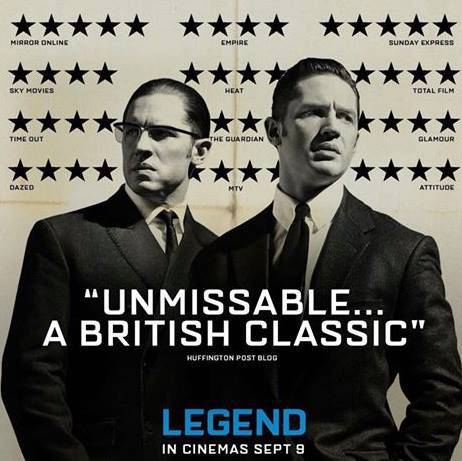
Legend

Two Tom Hardy’s don’t make for a Legend-ary film

On paper, this film seems like a great idea. The Kray twins were London’s most notorious gangsters – two men who both enjoyed being gangsters and what it entailed. Having Tom Hardy, one of cinema’s men of the moment, felt like a logical next step. After Armie Hammer successfully played the Winklevoss twins in The Social Network, having Hardy playing the central dual role didn’t seem outlandish. In practice, his performances do work. It’s the rest of the film that really doesn’t. With a wealth of material out there on the Krays, with so much of the truth being better than fiction, it’s frustrating how much Legend misses the mark.  Although the film is marked as charting ‘the true story of the rise and fall’ it does no such thing. The ‘true’ bit is questionable after some post-screening research, and ‘the rise and fall’ is false-advertising. The film opens when the Krays are comfortably on the rise (so much so they are under constant police surveillance) and ends just before the start of the fall. The decision to pick these two periods as plot-points seems questionable, as a narrative they are not the most engaging, nor do they provide the audience with enough information to get them engaged. Audience members will be left with countless unanswered questions, no information about how the pair actually achieved this ‘rise’ nor the events or the aftermath of the ‘fall’. It seems ridiculous for a film with a 130 minute running time  to have such serious gaps, even more so when it is filled with such needless fluff that make the film feel boring and far longer than the actual running time.

Our entry character into the world of the Krays is Frances Shea (Emily Browning). Frances meets Reggie Kray (Tom Hardy) as her brother (Colin Morgan) works for Reggie as a driver. It’s heavy-handedly alluded that Frances has a history of mental illness, she’s ‘fragile’ and just returned home after ‘being away’. Little more information or film time is given to this, which is unfortunate as it could have increased the impact of France’s characterisation. It’s also doubly unfortunate as it could have created a nice parallel with the character plotting of Ronnie Kray (also, Tom Hardy). In the film’s single funniest sequence we witness Reggie visiting his twin, whose prison sentence resulted in being institutionalised and being declared certifiably insane. During this sequence we are informed that whenever Ronnie was uncertain or confused by what people said he would respond ‘interesting’. It’s a quirky touch that could have been utilised for greater effect. Their reunion is intercut with a conversation with a Kray heavy negotiating with a physiatrist for an all-clear for Ronnie. Ronnie is released from the mental hospital, leaving Reggie to start balancing loyalties to the two most important people in his life – Frances and his brother. These relationships are the main focus of the film, not the brother underworld careers. If you were looking for a ‘proper gangster’ (a phrase of Ronnie’s) movie, you’ve come to the wrong movie.

Frances and Reggie date for an unspecified amount of time, then become engaged for an unspecified amount of time and then marry for an unspecified amount of time. Not having a timeline for this period is frustrating, and furthers the sense of the film drifting from one sequence to another. This is a fatal flaw for two reasons. Firstly, the film appears to have strived to place character development over story arc yet there is no stand-out antagonist, rarely a clear motivation for character’s actions, and often no clear link between sequential scenes.. The film tries to restrict itself to how these events impacted the relationship between Frances and Reggie. This leads to the film’s second major fault, which makes Legend such a muddled and convoluted mess. If Frances was our entry point, and the focus is on her viewpoint on events, why are we shown events that she was not at and would never have known about? Reggie and Ronnie attend events and confrontations that would have been concealed from France’s knowledge as, in their eyes, she would not have needed to know what was going on. This flawed decision is empathised with the use of voiceover narration, with Frances narrating the majority of events. The use of voiceover narration in Legend is not used to great effect, it’s cloying and sentimental. The fact she narrates over events that would have been unknown to her confuses whether her viewpoint is truly restricted, as it would have been during the time of the actual events, or has been promoted to omniscient which then undercuts the themes and tone of the film.

Watching Legend makes for an exasperating cinematic experience. The cast do a truly fantastic job with the material they have been provided with – Hardy is suitably magnetic as Reggie though a bit of a caricature as Ronnie, Browning gives her best performance to date and Taron Egerton steals every scene as Teddy Smith – but that material is banal and structurally incoherent. Disappointing.

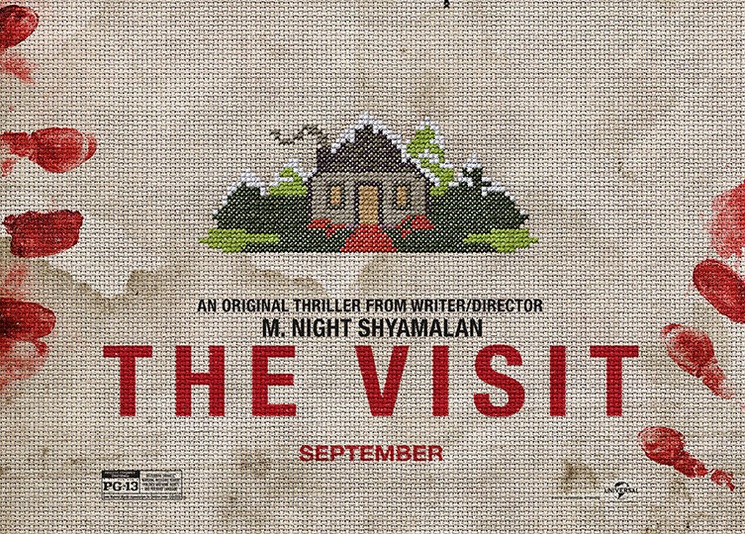
The Visit

Spoilers. Spoilers. Spoilers.

Aged nineteen a small town girl, living in a lonely world, ran away with a substitute English teacher. Her parents had tried to persuade her that it was an awful idea. They had begged her to stay. On that afternoon, before she fled, something ‘awful’ happened during that confrontation, which led to the relationship between her and her parents being severed. The girl and her now-husband had a baby girl shortly after, followed two years later by a baby boy. Ten years later the substitute English teacher ran away with another woman, leaving behind his wife and two young children. A difficult five years followed, with the three still struggling to come to terms with the abandonment. That’s when a message arrives from her parents, who found them online. They acknowledge that it may be difficult to re-establish their relationship with their daughter, but would love to start one with their grandchildren. The grandchildren agree and beg to visit their grandparents. The mother reluctantly agrees, sending them off to her old hometown, whilst she herself goes on holiday with her new partner.

The grandchildren make their own way there by train, and are met at the station by their anxiously waiting grandparents who are holding a banner decorated with welcomes. They drive back to the family home, and a mutual fondness is formed. The grandparents dot on the grandchildren and their quirks, and the grandchildren are bemused by these old folks whose bedtime is 9:30pm. At 10.15pm the granddaughter leaves her bedroom to be greeted by her grandmother pacing the downstairs in a trance and projectile vomiting. The next day this is explained away by a tummy bug.

For the rest of their week-long stay the grandchildren realise that there is more than just character quirks going on here, something is seriously wrong. What makes them think this? The grandfather stores hundreds of used adult diapers in the shed. The grandmother runs around the house naked at night scraping the walls and crawling around the floor. She sits in a rocking chair cackling to herself whilst staring at the wall. She chases them underneath the house. She has a breakdown whilst discussing ‘that afternoon’ and also spends one night waiting outside the grandchildren’s room holding a knife.

When having a conversation via Skype with their mother they hold the camera towards the grandparents and the plot twist is revealed – those are not actually their grandparents. The mother tells them to try to escape and that she is on their way. The grandchildren are trapped into playing a game of trivial pursuit, during the course of which all is revealed. For when the granddaughter escapes into the basement she find the bodies of an elderly couple – a framed photograph beside them reveals that they were her grandparents. The imposters are escaped mental patients, who wanted to pretend to have a family just for a week. They were jealous of the actual grandparents, who were volunteer therapists. In fact, the fake-grandmother had actually drowned both of her own children.

Two confrontations happen, with fake-grandfather rubbing a used diaper in the face of the grandson and the fake-grandmother chasing the granddaughter around a locked bedroom. The granddaughter kills the fake-grandmother with shards of a broken mirror. The grandson, with the aid of his sister, kills the fake-grandfather by slamming his head in the fridge doors multiple times. The mother then arrives and takes them to safety; the final scene has the mother revealing the ‘awful’ events of that afternoon fifteen years ago. She had slapped her mother and her father had slapped her in return. Fade to black.

There are so many issues with this film it is hard to start. So instead of a normal review, which would instead become an incomprehensible and lengthy rant, I will instead use bullet points to divide these issues into sections.

  • Child Safety: The fact the mother does not actually check the children have been collected by the right people. Yes, she has not seen or spoken her parents for fifteen years who explain her reluctance to do so, but surely any parent would want to perform some sort of check? This aspect then undermines and already ridiculous plot twist. During the week the mother tries to explain away the oddness of the grandparents by stating that they elderly. But, realistically, the problems that the grandchildren are describing cannot be explained by that when considering how old the grandparents should be. If the mother was nineteen when she had the children, the oldest of which is now fifteen, her parents really couldn’t be much older than seventy. When her children describe these incidents to her, wouldn’t she be shocked that her parents were acting in such a way?
  • Plot twist: After a week of increasingly terrifying antics from the grandparents – which they attempt to explain away with a night-induced form of sleep disorder as well as a– to explain be explained away by the fact ‘well, they were crazy’ is so flawed and archaic that it’s offensive. Considering this is 2015, to have a portrayal of escaped mental patients is already asking for trouble, but to then assign them traits such as staring into the distance at nothing, an obsession with bodily functions, homicidal tendencies (involving knives, hammers and ovens), crawling along floors, scrapping at walls and screaming is disturbing in its facileness. The fact that both grandparents try to explain away their behaviours with varying excuses such as dementia and Alzheimer’s may anger some, let alone the fact the children do not question whether these things could actually be related to the frightening behaviour of their grandparents, is also problematic.
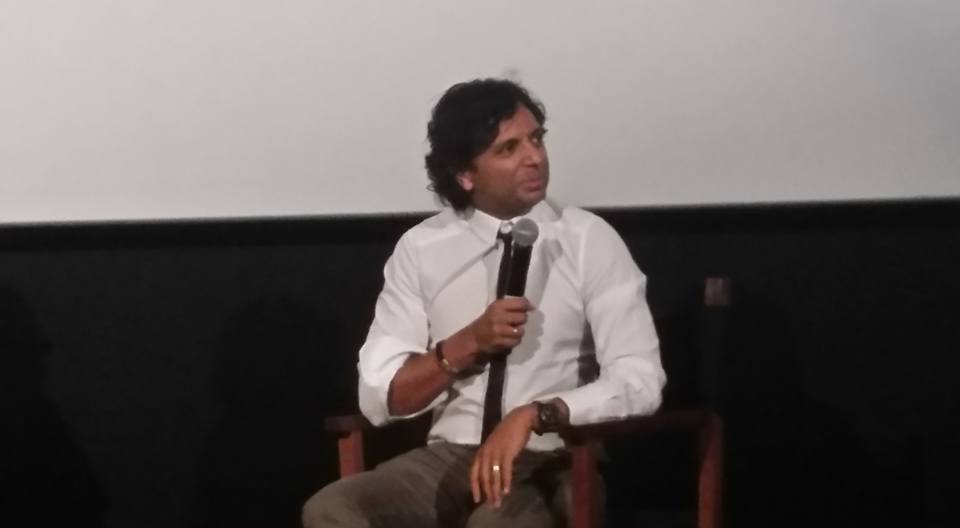
  • Storytelling: This is yet another M Night Shyamalan film that depends on a twist. The Sixth Sense is viewed as his best attempt at this, though that film only holds up for two viewings maximum before the novelty is shed. Interestingly, at the preview screening I attended Shyamalan was asked whether he wrote the plot twist first then filled in the rest. Shyamalan vehemently denied this, claiming he wrote stories about people and the twist followed. There is no evidence of this claim upon watching The Visit. Unlike The Sixth Sense, few will inflict a repeat viewing upon themselves. The film hinges on the twist, and your opinion on the twist will depend on whether you actually care about the main characters.
  • Characterisation: The grandchildren will divide audiences. 15-year-old Beca is a profoundly pretentious wanna-be documentary maker, who views life as a series of moments that she could record if they have the correct lighting and naturalistic elements. 13-year-old Tyler is a wanna-be rapper who tries to make up for his pre-pubescent features with attempts at charm and swagger. He likes to freestyle rap. They are each given a character trait which the film deems in need of ‘fixing’. Beca has low self-esteem and cannot look at herself in the mirror. Tyler is a germaphobe. Again, if you end up caring about the characters who may consider this important. Or, you may think it’s a waste of time.
  • Shaky Cam: Used to tell the entire film. Overused and nausea-inducing.
  • Genre mash-up: A blending of genres can work. This one doesn’t. Shyamalan explained that he wanted to blend family drama with the horror elements, along with comedy. The result is a film which is confused about what it actually wants it to be. It creates tension, sheds it to try to make you laugh, then tries for a quick scare.
  • Ending: Five people die during the film. By having a final sequence with the mother recounting the events of that afternoon fifteen years ago, reconnecting with herself and her past, then suggests that this was the entire purpose of the movie. That everything her children endured, and that those five people died for, was to allow her to come to terms with the events and herself. The fact the actual events of that afternoon remain secret creates tension that is bound for anti-climax. For what could be as awful as what her children endured, or the fact both her parents are now dead? Yes, the fact she hit her mother and her father retaliated was awful, but if one were to rank awful events during this film it would not own the number one place. The fact we are not given many opportunities prior to develop sympathy for her, reduces the emotional response that is supposed to be generated.

The Visit is only roughly ninety minutes long, but it feels like so much more. It’s bloated with ridiculousness, flawed ideas and frustrating characters.

M Night Shyamalan explaining his 'craft'

M Night Shyamalan explaining his ‘craft’

Pixels

This is not a film; it’s an endurance test.

The best simile to describe this film? It’s as if the writers of the film were like children on Halloween, though instead of pick’n mixing sweets they pick’n mixed pieces of a generation’s childhood nostalgia. Then, just like a child having a sugar rush before the inevitable crash and throwing up. The resulting technicolour vomit in this case is ‘Pixels’, which will leave you with the same feelings of regret and shame of a sweet-tooth binge. Throughout watching you’ll be left wondering who thought this mash-up of beloved video-games and crappy cinema was a good idea and why they spent $88 million making it. Before you carry on reading I will warn at this point that here be SPOILERS as this will not be a film review but will mostly become an essay on why this film is so bad and has had such negative reviews. Whenever one goes to see a film that has been as poorly received as this film, there is always a degree of hope that ‘Maybe it’s not as bad as the reviews say?’ or ‘Surely it has a couple of good moments!’ Prepare to be disappointed…

In case you’ve not seen the trailers, here is a plot summary. The film opens in the Summer of 1982, with 13-year olds Sam Brenner (later played by Adam Sandler) and Will Cooper (later played by Kevin James) excited by the opening of a video game arcade opening in their town. Both are naturals at the games, with Sam able to win most (but not all, hint hint!) games due to his innate ability to identify and memorise the formulas.  Will is good at crane machines (a skill momentarily useful later in the film, unsurprisingly). Will persuades Sam to enter the ‘Arcade Game Championships’ which their hometown is conventionally hosting, with Dan Aykroyd (WHY?!?) playing MC. He announces that a time capsule featuring aspects of the game championships is being launched into space (an example of the neon flashing exposition light I mentioned in my review yesterday!) They meet Ludlow Lamonsoff (later played by Josh Gad) who is opposed with a game character called Lady Lisa (more on this later) and befriend him as he is a kindred spirit. Sam breezes through the competition, but stumbles at the final hurdle when he loses playing Donkey Kong to Eddie Plant (later played by Peter Dinklage, another WHY?!?!).

The film then comes to the present day. Will is now president of the United States (no reason is given as to why this happened, how or what skills the man actually has to befit him of this title. He is a buffoon for the majority of the film, so maybe this is an attempt at satire?) It’s alluded that Sam never recovered from the loss, his second place status at a game championship scuppered his dreams of MIT and probable resulting success (because that is totally believable and not at all odd or regressive). Sam instead works for ‘Nerd’ a company who install electronics and software (because clearly a company supplying these skills had to be given that name). Whenever he arrives at a house for a job he must state, ‘Hello. I am a Nerd from Nerd Squad.’ (Yes, presumably someone got paid for this literary masterpiece.) At his latest job he meets a divorcee called Violet (Michelle Monaghan)  who lives with her son Matty. Sam bonds with Matty over video games (they are of seemingly similar maturity) and has a ‘moment’ with Violet where they almost kiss. Or, more accurately, he goes to kiss her and she refuses (of course, how dare she!) He berates her for being a snob as to why she din’;t kiss him (ignoring the fact he is a self-entitled man-child who is not the catch he seems to believe he is). He then throws back the killer line, ‘I’m a good kisser. All us nerd are. It’s because we’re so grateful.'( I, on the other hand, am grateful not to have meet such an arrogant arsehat.)

Sam gets a call from Will, telling him to get to the White House asap. He gets there and finds out that Violet wasn’t in fact following him in her care (because obviously he is such a catch that she will be so filled with regret for letting him go that she must follow and ensnare him) but is instead a Lieutenant Corporal. It turns out Earth has started been invaded by aliens using old video games to attack Earth (wonder who saw that coming from the opening? Maybe everyone?!?) They are told that first to three wins is the ultimate winner. If Sam and his arcade buddies loss, then it’s Game Over for Earth. After winning a level they are awarded a trophy, a ‘warrior’ from the opposition. After completing ‘Centipede’ in Hyde Park (overseen by Sean Bean. WHY?!?) then ‘Pac-Man’ in New York City they are awarded Q*bert (last seen in the far superior ‘Wreck It Ralph!) They then have a ball to celebrate (even though they still must complete one more challenge…) Sam and Violet bond (over her attractiveness and his infantility) when the aliens announce that Eddie, who had been released from prison (imprisoned for fraud. Surprising, as I thought a Lannister always paid their debts…sorry…not sorry.) to help the cause, had in fact cheated when playing ‘Pac-Man’. In fact Eddie even cheated during the championships, so Sam was the worthy winner that he always believed he was and spent the past 30 years brooding over (because that’s normal…) The aliens do not react will to that cheating, taking Matty as a trophy and sending their entire fleet to destroy Earth. However, they are given a reprieve within the invitation to enter the battleship and ‘meet the boss’ . The team split up. Violet, Sam and Will enter leaving behind Ludlow to ‘defend Earth’ (I wouldn’t hold out much for that.) He’s soon joined by Eddie, then Lady Lisa (the collection of pixels Ludlow had spent his life lusting over).

Meanwhile Sam, Eddie and Violet find out that the ‘boss’ is Donkey Kong. We are then given the unnecessary reminder that this is the only game Sam ‘sucks at.’ Yet, with the realisation that his 13-year-old self rightfully worn the world championships he is filled with enough confidence (as if he wasn’t inflated with enough of it) to beat Donkey Kong, rescue Matty and save Earth from annihilation. The aliens on Earth are destroyed, including Lady Lisa which devastates Ludlow. Yet somehow, during the awards ceremony for their ‘heroic’ efforts Q’bert transforms into Lady Lisa (no reason or explanation is given as to how or why). Fast forward to a year later, Ludlow and Lady Lisa are married and have five Q’bert children. THE END.

There are two main issues (of many) about this film that I really need to discuss. One, Lady Lisa. From the age of ten Ludlow worships her. Then she appears as a warrior for the opposition, but does not retain the pixel format of every other single alien and instead becomes human. She is incredibly attractive and Ludlow is overcome with emotion. Lady Lisa proceeds to fight Ludlow until he declares love for her. Obviously, as this is the kind of wish-fulfillment world this film is set in, his unrequited love and obsession with her is enough to persuade her to stop fighting him. Then when Ludlow announces to Eddie she is actually his fiancee she just smiles. When Q*bert then regenerates into her she is thrilled to see Ludlow. All of this is done without a single line from Lady Lisa herself, she does not utter a single word or do anything beyond looking gorgeous or briefly flailing a sword around. It’s the one of the more distressing negative stereotypes of ‘nerdom’, of obsessive and controlling lust and views of women as objects, brought to life.

Two, the film’s message is condescending garbage. The entire story-arch is to redeem Adam Sandler’s character, to give him the adulation and recognition he felt he always deserved. It’s as if they want him to represent every ‘nerd’ in the audience and try to clumsily reassure them that they aren’t actually wasting their lives playing videogames, you are actually heroes. It is this kind of ‘the geeks shall inherit the Earth’ bullshit narrative that is the waste of time, space and energy. It implies that anyone who thinks of themselves or is labelled as being anything considered ‘nerdy’ has this consuming desire to be appreciated for their niche skills asset or affirmation of self worth, which is total bollocks. f I want to spend hours playing zelda, Sims or song pop! Then that is my choice. I don’t need you patronising cockends telling me that’ll it’s fine and may even all for a greater cause. I know my ability of being able to guess an 80s song from 6 seconds of intro will never be called upon to help save the Earth, and I’ve no idea who these writers believe actually think in that way. Maybe themselves?

‘Pixels’ is a cynical and empty attempt to jump on the ‘nerdom’ bandwagon. A total misfire. A synthetic attempt which instead undermines and humiliates anyone who considers themselves ‘nerdy’.