
indie

Beast
‘You’re wounded. Well, I can fix that.’

Patti Cake$
‘Bow down, the Queen is the building…’
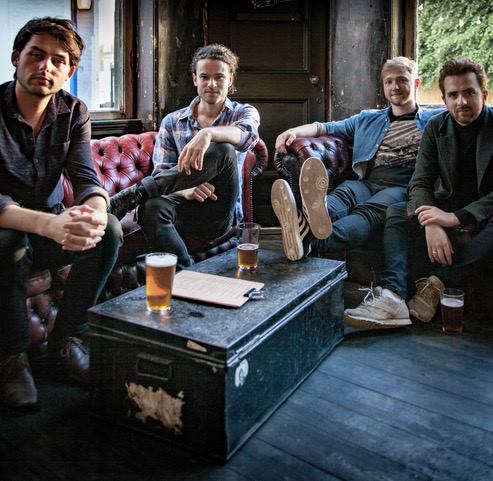
Sometimes I go to gigs!

Paterson
“Sometimes an empty page presents more possibilities.”

Kids In Love

Maggie’s Plan
A film well worth planning to see
You have a choice this weekend. You could see cold and divisive Neon Demon (click here for my review) or you could see this proper gem of a movie. It’s so warm and smart, meandering about with utterly superb dialogue. It’s immensely well observed and occasionally practically profound – just how much can we plan and how much do we leave to the hands of destiny?
Maggie (Greta Gerwig) wants a baby. Needs one even. Except she hasn’t got a partner so she’s going to go it alone and use a sperm donor. A friend from college, Guy (Travis Fimmel), is more than happy to help. Best friend Tony (Bill Hader) and his wife Felicia (Maya Rudolph) think she should wait a bit longer, just in case she meets someone. She does, and her plan is interupted by a meet-cute with married John (Ethan Hawke). An affair follows and he leaves his wife, Georgette (Julianne Moore), for Maggie. Three years later and Maggie has the child she was desperate for, but she’s starting to have serious doubts about her relationship with John. Maybe she can give him back to his first wife..?
Several reviews are referring to this film as a screwball comedy. Personally I think the pace is slightly too slow to categorise it as screwball – not a criticism as I love the pace but screwball comedies are noted for their break-neck speed of story and delivery. However, this has many other elements of screwball. Think Woody Allen meets Jane Austen in terms of the characters and their dialogue.Greta Gerwig provides another knitwear-atired delight (I really wish I was friends with her!) who is utterly sympathetic in a role that could easily not be. Maggie is simillar to Emma (title character of Austen’s 1815 novel) as she is a matchmaker who loves to be in control, who is unable to let other forces control hers or others lives.
Hawke is fantastic as John, both glorifying and sending up the figure of intellectual. He also delivers what will most likely be my favourite line of 2016 cinema – “Like is a language condom.” It’s obvious that he is having the time of his life playing this character, which hugely pays off as it’s delightful to watch. The interactions he has with Maggie both convert then subvert the expectations of the romantic comedy, resulting in the film being both old-fashioned yet astutely modern.
The scenes when Gerwig and Moore share screen time are truly electric. All too rarely do we get such well-rounded female figures on the screen at the same time, they bounce off each other and the result is electric. What’s fantastic is how layered Moore’s character is. It would have been all too easy to have her as a woman scorned, who pushed her incredible man away with the glacial and disinterested temperament. We quickly learn there is more to her character than her ex-husband revealed, and that John is far from a perfect husband.
A quick note has to be made of just how fantastic the supporting cast are. Bill Hader, yet again, is superb (I want to be his friend too!), Maya Rudolph has little screen time but contributes massively, Travis Fimmel is really likeable as Guy (far more interesting here than he was in Warcraft) and Wallace Shawn has a lovely little cameo.
It’s funny and quirky, may not be for everyone, but for many it will be a winning comedy-drama. An utter delight to watch!


Adult Life Skills
British indie at its finest
This film sums up what we Brits do well – a somewhat melancholic story told with warmth and humour. An unsentimental tale told with compassion. Also, puns. There is so much to love about this film that I suspect I’ll be championing it a long while yet.
Anna (Jodie Whittaker) is one week away from her thirtieth birthday. She works at a nature resort in a middle-of-nowhere part of Northern England, lives in the shed at the end of her mum’s garden and enjoys making films featuring her thumbs with smiley faces on them talking about nihilism. Due to the relatively recent death of her twin brother (Edward Hogg) she can’t face talking about her birthday, yet it seems everyone from mum Marion (Lorraine Ashbourne) and Grandma Jean (Eileen Davies) to her best friend Fiona (Rachael Deering) and Fiona’s sister Alice (Alice Lowe) to the boy who used to annoy her at school Brendan (Brett Goldstein) want to talk about both her Birthday and where her life is going.
Although the setting, the majority of the characters and their circumstances may not initially appear universal they really are. The film acts as a reflection on loss, self-isolation and the struggle to find who you are. Yes, as a 23 year old female that may appear more relevant to me than many others it’s relevant to us all. We all have experienced – be that aged 3, 23, 33,53 or 83 – a loss that derailed us, that either out of choice or not, took us on a course we never intended. Grief lasts far longer than the funeral and for some we wake up years later and look at metaphorically derelict path we ended up on. Anna’s self-loathing may be a concept I am all too aware of through personal experience, yet the battle to regain self-confidence is a ubiquitous challenge many of us have/will face. The fact we see such likeable and familiar-seeming characters facing this in ‘Adult Life Skills’ makes for a deep and visceral experience.
I apologise if the above paragraph made the film sound boring and serious. It really isn’t boring but it is somewhat serious, in terms of its themes not how it is told. It is properly funny quite often and whilst I did cry (I think it was at least three times) I did guffaw at least double that and left the screen grinning.
I loved every single one of the characters. I really felt like Anna became a friend whilst watching the film, she’s so well-rounded both in characterisation and performance. I’ve loved watching Whittaker in everything I’ve seen her in (Good Vibrations is my personal favourite) and her performance her is no exception. Fiona is brilliant as the best friend desperately trying to help her lost friend. Brett Goldstein, who was wonderful in last year’s little known indie flick SuperBob, is just as good here. He is great at playing a logical figure to Anna’s less-than-logical thought processes, providing a truly earnest performance. Pus the man is an expert at eyebrow acting.
‘Adult Life Skills’ is now easily in my top five films of the year so far. Whilst Mother’s Day (click here to read my review) may be filling cinema screens with a national release, profiting on cheap and disingenuous sentiment, it is films like this we should be rooting for. When the film ended it felt like I was saying goodbye to newfound friends. Yesterday’s preview was the first of my many watches of it.


Louder Than Bombs
What happens to a bomb that doesn’t explode?
My response to this film is surprisingly (well it would be to my past self) problematic. If I had reviewed it soon after watching yesterday I would have been rather damning of the film. Now, with roughly 28 hours worth of distance from seeing it, I feel slightly warmer towards it. (Only a few degrees mind – let’s not go crazy). With a level of retrospect I can admire the ideas and ambition of the film, something which I wouldn’t have been able to do initially after watching. However, whilst I may feel softer towards it I am still not a fan and think the film is largely unsuccessful it what it wants to achieve.
Three years ago famous war photographer Isabelle Reed (Isabelle Huppert) died in what most believed was a car accident. Now, as a museum retrospective of her life and works is fast approaching, her close friend is about to write an article about her in the New York Times and as he advises her widower Gene (Gabriel Byrne) he will mention in the article the fact that her death was most likely suicide. Gene must now find a way of telling his youngest son Conrad (Devin Druid) the truth before he finds out through other means. An opportunity to do so arrives when eldest son Jonah (Jesse Eisenberg leaves his wife and newborn daughter to come home and help look through his mother’s work space to find photos for the retrospective. Whilst home Jonah must find a way of coming to terms with the past in the form of ex-girlfriend, his brother’s difficult present and how his future role as a father may be shaped by his relationship with his own.
It’s interesting that through writing the above plot summary I found myself again warmly engaging with the key ideas of the film. All of us have been touched by some sense of loss and each of us will handle the grief in different ways – some may mentally stay in the past with that person whilst others may push such thoughts aside and stay primarily focused on the present and future.
All of the actors do a fine job in subtly portraying grief. Byrne’s father trying to do the right thing for his two boys whilst watching his relationships with both fade away truly pulls at the heartstrings and occasionally at the bone. Druid plays the difficult emotionally stunted teen finely and somewhat reflecting the universal horror of adolescence. As difficult as my audience-actor relationship is with Eisenberg (forgiveness for his version of Lex Luthor is still far far away) but at times I did appreciate his character Jonah. I can say quite honestly that in the film’s opening sequence I even enjoyed watching him.
But it’s Huppert’s grief that is perhaps the most visceral, even though it is she that is being grieved by the family she left behind. It is a roughly two minute sequence about halfway through the film that really demonstrates this. The camera just focuses on her face in close-up for two minutes. For those two minutes nothing else happens. But as we know her character and we know the emotional battles she suffered (between her art and being a mother/wife) we read the metaphorical scars on her face. We look into her eyes and see the utter despair. We look behind her mask in a way we either chose or are unable to do with each other in real life.
All of this being said I think these ideas are stunted by execution. Though the pontification and using on the nature of grief is extraordinary and truly applaudable, either through intention or accident we are unable to connect with any of the characters – all are pretty unlikeable on various levels and for various reasons. It’s this aspect of the film that will and has been truly dividing audiences. Perhaps it is intention – that grief cannot and should not be sugarcoated, sometimes it will bring out the worst in each of us. However I am in the camp that views this as a flaw and something that prevents me from truly connecting with the film.
Whilst I well and truly admire the film’s sentiments and ideas by borderline disdain for it’s characters stops me from truly appreciating its merits. The fact the film takes a rather poetic storytelling approach, of drifting between moments, of days being indefinable, of present day being interchangeable with memory, did was not cohesive enough for me. In some ways I write this paragraph with a degree of apology, as someone who lost a relative (my uncle) in June and will soon be facing the prospect of that first anniversary without him. Sometimes I reflect on whether I am grieving ‘properly’, if I am approaching my grief ‘healthily’ and if I am ‘normal’ in my response. The film carefully weaves these ideas into it’s narrative but somewhat abandons them in favour of artistic statement and style.
Whilst full of poignant moments the film is ultimately too cold and reserved to provide the cathartic intimacy it appears to wish to provide.


Victoria
A true feat of film-making. Truly extraordinary.
To put it simply, a ‘take’ refers to the period between a director saying ‘action’ and ‘cut’. It’s up to them or the cinematographer how long this period is. Typically the longer the take the more difficult the film-making process is as it requires actors to be in the right place, saying the right lines, nothing else interrupting the shot etc. Alfred Hitchcock experimented with this in 1948 making Rope which clocked in at 80 minutes and comprised of only 10 takes, the majority of which were shot in such a way to make the cuts seem seamless. It was an ambitious project which paid of in most regards, the murder and the main characters fear of being caught out in only heightened by the prolonged takes. The character cannot escape and neither can the audience. 68 years later we have Victoria which was filmed two years ago and rejected by many of Europe’s film festivals as they believed the filmmakers were lying on the submission sheet. What lie did they think the filmmakers were proclaiming? Well the film-makers claimed that Victoria, which is 2 hours and 18 minutes long, was shoot using only one take. The most unbelievable thing about this? It’s the truth.
Victoria (Laia Costa) moved from her hometown of Madrid to Berlin three months ago. She works in a coffee shop for less than minimum wage and doesn’t really know anyone in her new city. In the hours before her early morning shift she decides to go clubbing and dances alone quite happily. On her way out of the club she bumps into a group of four men – informal group leader Sonne (Frederick Lau) who Victoria feels an instant spark with, Boxer (Franz Rogowski), Blinker (Burak Yigit) and Fuß (Max Mauff) – who promise to show her ‘real Berlin’. Victoria agrees and what first follows is a fun night for Victoria, seeing parts of Berlin she had never seen before and connecting quickly with Sonne. When Boxer receives a phone call and claims that the group need Victoria’s help. It is her connection with Sonne that prompts her to make the first in a series of bad decisions and things take a dark turn before spiralling out of control.
I repeat. The entire film is only one take long. It cannot be overemphasised how incredible this is, what a triumph of filmmaking it is and what an astounding experience of film-watching it creates as a result. It’s breath-taking, wondrous, exhilarating and utterly compelling. As it is shot though one-take it is shot in real-time. This is important to note as it adds to the authenticity, we watched events play out and escalate. We cannot question how we got from the first frame to the last as we witnessed very moment and decision which lead the characters there. And these moments don’t just take place in one room – the characters travel all over the city, up ladders, jammed into cars and lifts, dancing across the street and running across it too – and the camera is always there watching and following. Incredibly this also manages to feel gimmick-free. Instead we feel like we’ve tagged along for a night out, been immersed in the spontaneity and intensity of this world, then kicked out of the club and ditched at the end of the film. There is a reason that the cinematographer Sturla Brandth Grøvlen receives first credit ahead of director and writer Sebastian Schipper as Victoria is an example of true technical mastery. The camerawork is dazzling ambitious, pulsating and gripping.
The performances are mostly improvised, which only adds to the feeling of authenticity and believability. This is next level realism as we get to experience this world as it happens. It’s a huge credit to the relatively inexperienced cast that they only had to shoot the film three times, this being version two. It’s only after seeing the film, when you see what they had to achieve and endure, that you can truly appreciate the level of skill being utilised here.
It’s divine. A sensational watch. It needs to be seen.
 Charlotte Sometimes