london

The Pass
“You gotta take your chances when you can because life ain’t fair. And when it comes down to it, I don’t have room for emotions.”
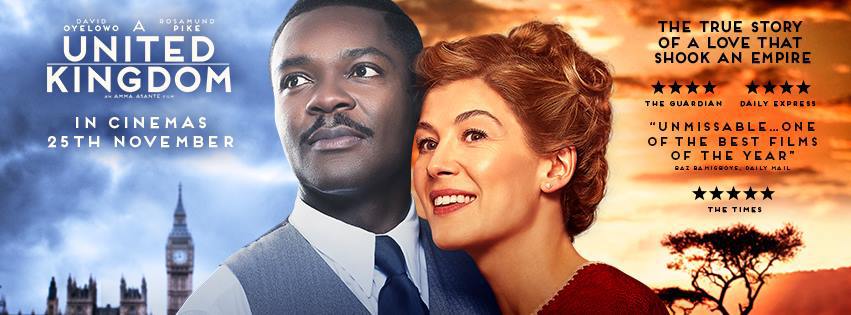
A United Kingdom
“No man is free who is not master of himself.”

A Streetcat Named Bob
“I’m ready. I’ve got Bob. He’ll look after me.”
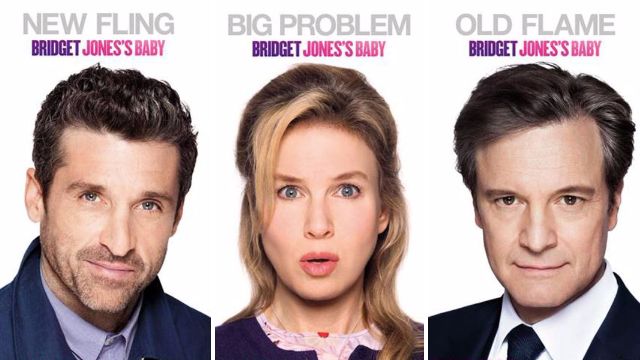
Bridget Jones Baby
“I am ready to roll with the ironic bearded hipsters.”

Brotherhood
A fitting end to a solid British trilogy

Kids In Love

High-Rise
‘Where are those happy days, they seem so hard to find.”
41 years after its publication, J. G. Ballad’s High-Rise proves itself to be scarily accurate in its predictions of the then-future and our now-present. The film adaptation is equally brutal and dark, tinted with the blackest of humours. Deciding to set it in the time period in which it was written, director Ben Wheatley succeeds in using Ballad’s bleak hypothesises of societal hierarchy to transform the big screen into a mirror reflecting our darkest innermost fears. This review comes from the preview screening and Q&A session I attended at the British Library (Hello to Galia, Alison and Alex…)
London. 1975. Dr Robert Laing (Tom Hiddleston), a psychologist, movies into a high-rise building having been seduced by the lifestyle it would bring with it. The building itself is isolated from the rest of London and is so self-contained with a supermarket, gym and swimming pool that, aside from work, there is little reason for the residents to leave. They are cut off from the rest of society in their luxury tower block. The higher your floor the higher your status – Laing takes up residence on floor 25, his new friend Charlotte Melville (Sienna Miller) is on floor 26 and the architect of the building, Anthony Royal (Jeremy Irons) and his wife Ann (Keeley Hawes), take up the entire top floor. Laing also comes into contact with a family relegated to the second floor, BBC documentary-maker Richard Wilder (Luke Evans), his heavily pregnant wife Helen (Elisabeth Moss) and their two children. When Wilder becomes so embittered by the social hierarchy he decides it will be the focus of his next project. A dangerous situation develops causing a domino effect which leads to the fragmentation of the residents and formulation of violent tribes.
Where to start when reviewing this film? It’s excellent, terrific and truly haunting in equal measures. Like many of Ben Wheatley’s films High-Rise is of the ‘well-that-escalated-quickly’ genre. However, this film does not require a suspension of belief for the dissention into madness. Whilst accelerated the resulting horrors stems from social resentment that has been apparent since time immemorial. History showcases time and time again society’s that form then self-destruct that little exposition is required in High-Rise to explain why things get so bad so quickly (not that I can really imagine Wheatley wanting to spoon-feed us in this way). The script is bitterly funny, laden with comments that are iceberg-en in terms of depth. Social commentary is rarely this sharp-tongued, appalling yet absurdly funny.
Wheatley doesn’t waste a shot in the telling of this story; countless viewings would be required to access even half of the detail and imagery it possesses. And practically every shot could be printed out as a still and put on a wall, for the cinematography and mise-en-scene is otherworldly in its beauty. There’s the generic, unbranded supermarket made of quadrilaterals in primary colours, the kaleidoscopic parties of the various factions, the riding of a white house across the luminescent greenery of the rooftop garden and the seemingly innocent shades of grey of a certain floor 25.The blend of lighting and framing makes for sequences that are fraught, depraved and agitating. This is only exasperated by the incredible soundtrack, with two appearances of ABBA’s ‘S.O.S’ (hence the subheading of this review) that bring chills in way that one would never have though possible. At one point the BAFTA award makes a cameo, which Wheatley later explained he chose to include as it ‘would be the closest he’d ever get to an actual BAFTA’. It would be an utter travesty if for visuals and soundtrack alone High-Rise is not recognised and justifiably awarded.
Speaking of awards, there’s then the performances of the cast. Hiddelston as Dr.Laing, a self-contained possessor of wide-eyed optimism and underlying volcanic rage, is a match made in heaven. Wheatley spoke of his having Hiddelston’s ‘photo on the fridge’ during pre-production and casting as they (they being Wheatley and wife Amy Jump who wrote the script) viewed him as the perfect candidate. But, whilst Moss, Miller, Hawes and Irons are all good in equal measure it is Luke Evans performance that is stand-out to that of Hiddelston’s. If Laing is untapped rage cloaked in a suit, then Evans as Wilder is the untamed man. Evans must have come close to the edge in making this film, for his character is a powerhouse of bitterness and injustice whose raging against the machine is awash with inevitable destruction.
With so many reasons to see High-Rise; the performances, the script, the visuals are just three broad reasons which should justify you’re purchasing a ticket upon the film’s release next week.
Go see it and be haunted for days afterwards.

Pride and Prejudice and Zombies
45% Pride and 45% Prejudice and 10% Zombies
In 2004 Simon Pegg, Nick Frost and Edgar Wright created a new hybrid genre called Zombie-Romantic-Comedy (ZomRomCom) with Shaun of the Dead. In 2007 an American author took this one step further and wrote a parody novel of Jane Austen’s classic Pride and Prejudice by adding in zombies. Nearly 10 years later, after years of development hell (heh, that term has rarely been so apt) we have the film adaptation. It may not be the most haunting (heh) Austen adaptation, nor will it give others a run for their money (heh, running from zombies) but it is more than entertaining and worth a watch. My main criticism, as you may have noticed from the subtitle is that the zombies make up a small proportion of the film, a too small proportion to really make the most of the high concept.
It is a truth universally acknowledged that a zombie in possession of brains must be in want of more brains. – Elizabeth Bennett. In a world that has been overrun by zombies for almost a hundred years, young women have more than enough to worry about than finding a husband. At least that is what Elizabeth Bennett (Lily James) thinks, and her four sisters agree to varying extents. Their mother Mrs Bennett (Sally Phillips), however, believes otherwise. Mr Bennett (Charles Dance) disagrees with his wife wholeheartedly, which is why he had his girls spend much of their childhood in China, training in the arts of killing zombies, moulding them into fearsome zombie-killing army. When Mr Bingley (Douglas Booth) reopens a residence nearby, he hosts an introductory ball to which the Bennetts are invited. It’s there that Elizabeth meets Colonel Fitzwilliam Darcy (Sam Riley) , a haughty monster-hunter renowned and feared for his zombie-killing skills. When the ball is invaded by zombies the Bennett sisters dazzle Darcy and Bingley with their skills, affection and admiration begins. But will the course of love ever run smooth whilst the undead stalk the Earth?
Overall, the film really succeeds for the first fifteen minutes. The concept feels fresh and funny, the zombie/romance balance is level (something I fear I will never get to write again…) and it’s a pleasurable novelty to see the key events of Austen’s novel enhanced by zombie tropes. There’s also a truly beautiful animated story-book style opening sequence, voiced by the legend that is Charles Dance, that informs us of how the zombies came to be. Unfortunately, the remaining 80-odd minutes of the film are not as pleasurable. The ZomRom balance (I’m going to copyright that phrase) does not really warrant the ‘and’ of the title. Maybe it should be Pride and Prejudice and a few zombies and lots of talking about zombies (though perhaps that is not as catchy). When the zombies are actually on-screen it provides some of the best moments, producing a couple of jumps and a fair few laughs. But there is too much talking about strategies for dealing with zombies as opposed to fighting them.
However, it’s not all bad. The cast for this film is so good, and so well suited for their roles, that you actually wish this was just a straight-forward adaptation of Pride and Prejudice. Lily James, who shone in War & Peace last year’s Cinderella, is superb as a feisty and witty Elizabeth. She manages to make Elizabeth’s progression into a trained warrior seem almost plausible. She has great chemistry with Sam Riley’s Darcy, providing a degree of sexual tension previously unseen in adaptations of this work. Austen would have approved I suspect. However, as Parson Collins, Matt Smith steals every scene he is in. It’s great to see Smith in another comedic role (aside from his marmite take as The Doctor). Here his timing is brilliant and his ability to make a relatively small role stand out speaks volumes about his ability. Another wonderful surprise is Lena Headey as the one-eyed-eye-patch-wearing Lady Catherine de Bourgh, who snarls her way through her too-few-scenes.
To conclude, this is a more than fine way to while away two hours. The cast is superb, the script has enough charm, and the novelty just great enough to entertain. Whilst easy to bemoan the minimal zombie presence, this is an excellent attempt at a twist on a classic with a fantastic cast who prevent it from being a forgettable B-movie.
Action, romance and zombies. Something for everyone with this film.

The Lady In The Van
British Cinema at its finest
This film is so warm, kind-hearted and endearing. Whilst on the surface it looks to be a meek and mild comedy about a nutty old lady it is so much more than that. It’s full of witty observations about society – the lens is pointed firmly at liberals who have earned enough to become middle class yet feel a degree of guilt about their new-found wealth – and how we do/don’t look after each other. Maggie Smith as the eponymous ‘Lady’ is magnificent, bringing a richness and poignancy to a fiercely opinionated powerhouse of a figure. Should this be 80-year old Smith’s last leading role, it is one to be proud of. Her performance in this ‘Mostly True Story’ both perverse and profound in equal measure.
In the 1970s playwright Alan Bennett (Alex Jennings) moved into an affluent street in Camden. He swiftly became acquainted with his neighbours and the nomadic interloper Ms Shephard (Maggie Smith) known by many as the infamous ‘Ms Camden’. Ms Shepard, as Alan insists on calling her, lives in a van. The neighbours do not know why she lives in the van, or even who she is. Is she called Mary or Margret. What they do know is that she is homeless and prone to dictatorial ravings. Due to a mixture of guilt and territorial conviction they protest little (at least to her face) as she drives around and parks up where ever she fancies. However, after council and double yellow line interference, she can no longer continuing temporarily pitching up where she choses. Loathe to offer too much help to the cantankerous old woman Alan lets her use his drive temporarily to park her Van. 15 years pass, with an often-reluctant Alan slowly-forming a bond with Ms Shepard. As time passes and takes its toll on Ms Shepard Alan begins to learn of the past that continues to consume her.
This is the type of story that could only be true, it would be nigh-on impossible to create a character like Ms Shepard. The majority of her views were left in the dark ages and the way she treats those who try to help her is often despicable. And yet, when personified by Dame Maggie Smith, she is made almost loveable. Her hidden pain and turmoil often explaining some of her brusque character traits. Jennings is superb as her friend and foil, presenting the conflicted feelings Bennett himself had towards helping the formidable Shepard. The supporting cast are also extraordinary: Frances De La Tour, Jim Broadbent and Claire Foy to name just three, all bring various degrees of support to the grande dame of squalor that is Ms Shepard. The slow and tragic realization that Ms Shepard was more sinned against than a sinner is heart-breaking yet handled with such caution and care.
Considering the topic matter this film is ultimately uplifting, almost joyful in its exploration of what draws people to care and look out for one another.
 Charlotte Sometimes